RE+ Battery Storage Booth Planning
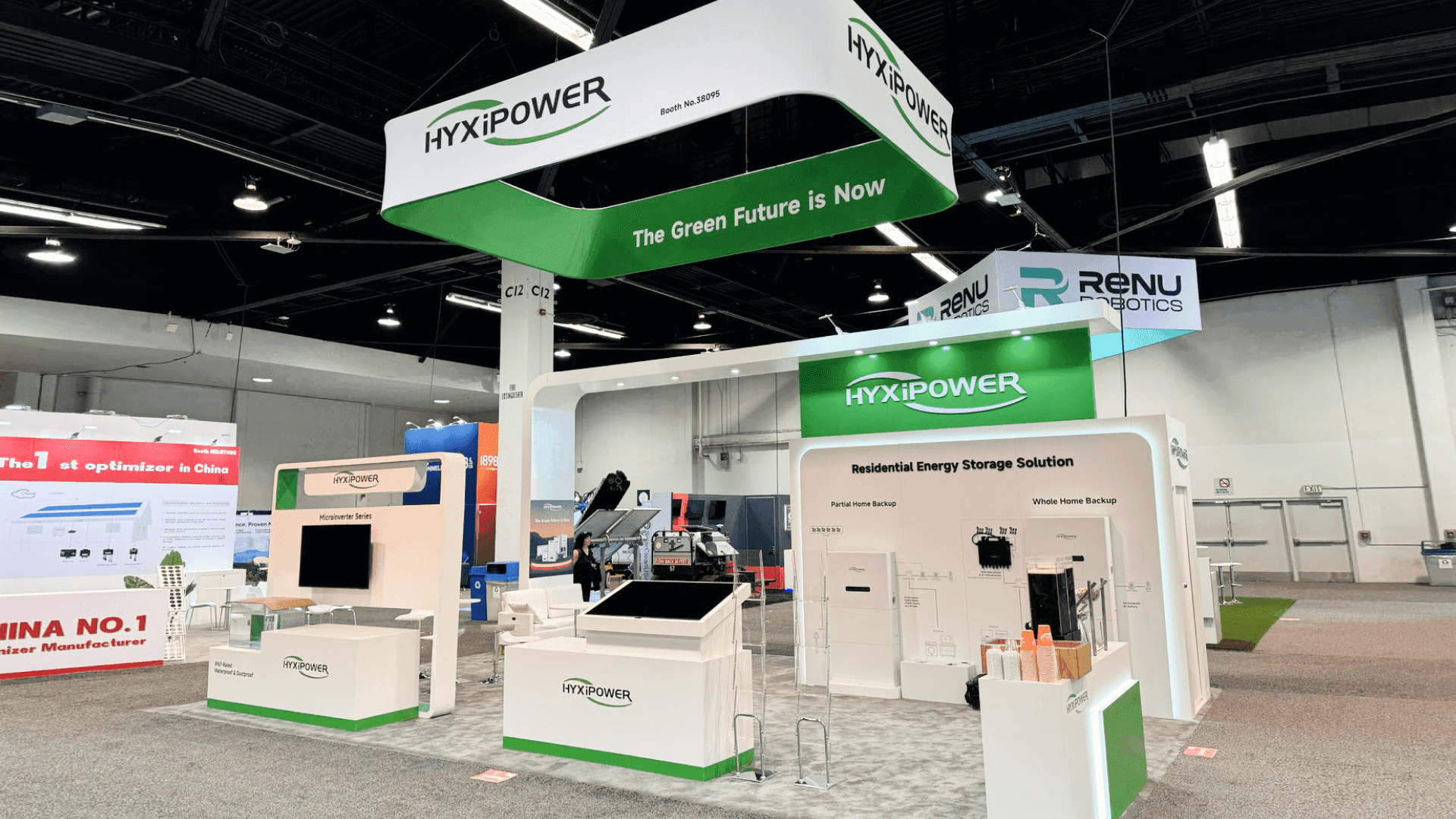
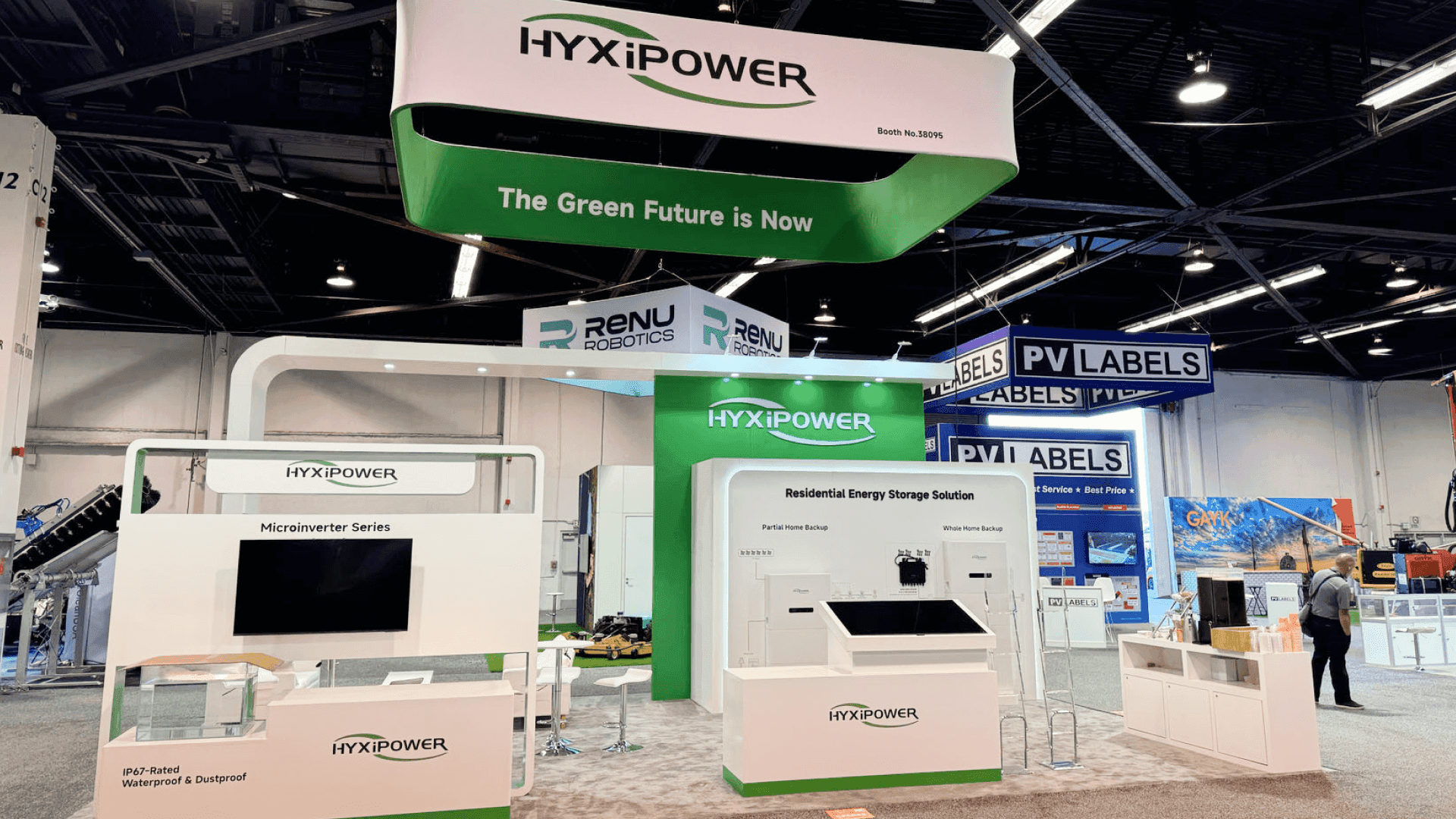
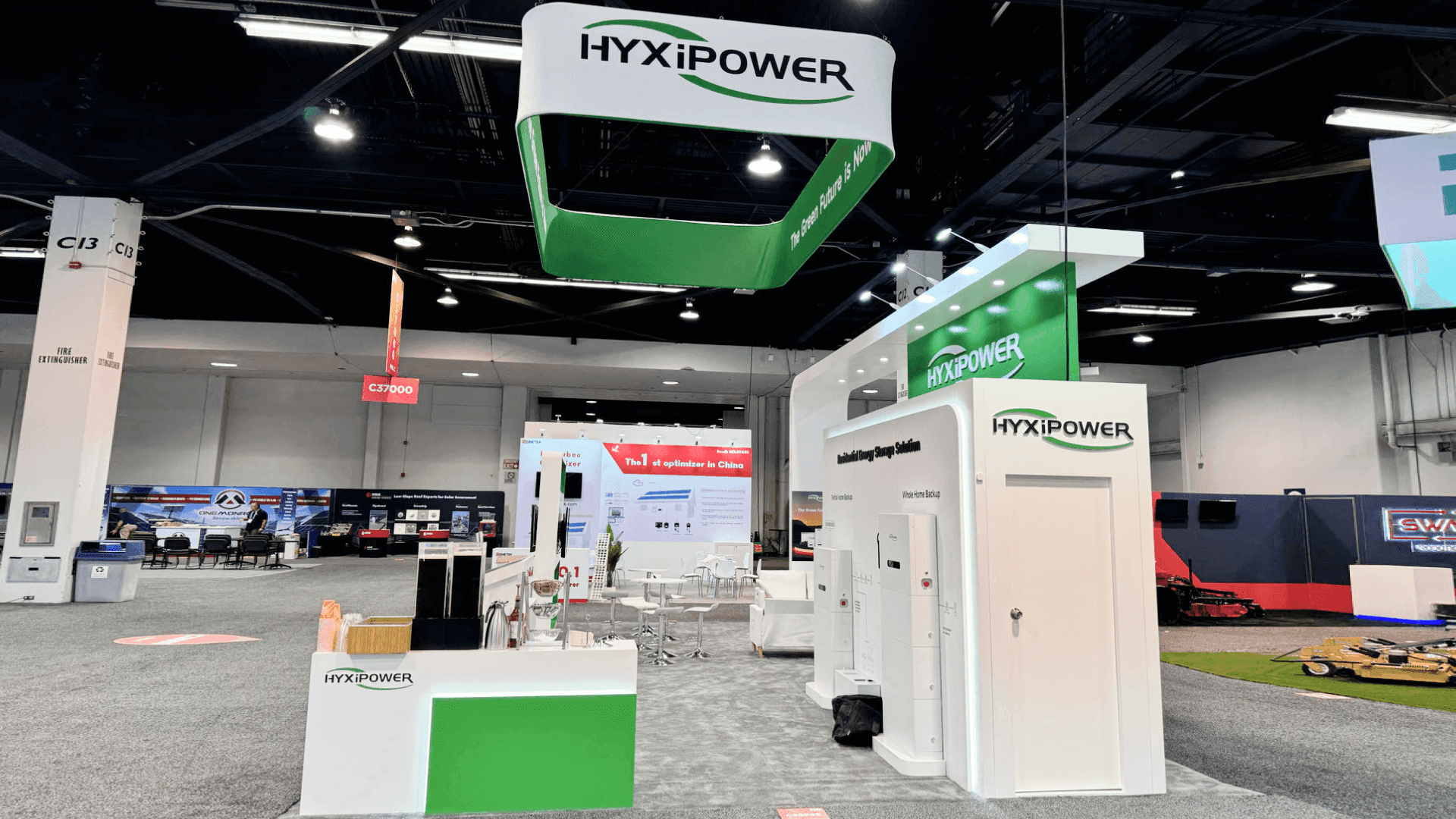

How should exhibitors explain a BESS system at RE+?
The cabinet should be the physical anchor, not the entire explanation. A strong BESS booth connects the hardware to controls and monitoring, gives safety and thermal management a clear proof layer, and then shows the grid, backup, commercial, or solar-plus-storage application the system is designed to serve.
A full-size battery cabinet communicates scale immediately, but it does not explain capacity, controls, monitoring, safety, thermal management, or what the system is intended to do. Most of the buyer's real questions begin after the hardware has already been recognized.
That is the distinctive storage problem inside an RE+ trade show booth: the cabinet remains the visual anchor while EMS data, system diagrams, safety information, and application context explain the system behind it. Instead of displaying those layers with equal weight, the booth should reveal them in the order buyers are likely to need them.
Full-size storage hardware also has to reach and operate inside the Las Vegas Convention Center. Cabinet access, electrical paths, monitoring screens, working clearance, and final positioning therefore affect the layout before the technical story is finished. A 20x30 booth becomes useful when the cabinet, EMS layer, safety explanation, storage, and project conversations can no longer occupy one shared zone.
Why Exhibitors Choose Circle Exhibit
Clear scope, transparent quote review, nationwide booth support, and efficient setup planning for qualified rental and custom exhibit projects.
48hr
Setup Window
10+
Years Since 2014
U.S.
Trade Show Support
Real
Booth Project Proof
Battery storage booth size depends on whether the story is software-led, anchored by one physical cabinet, or built around several storage systems and applications. More space becomes useful when hardware, controls, proof layers, and technical conversations need independent working areas.
A 10x20 booth can work when EMS, monitoring, models, smaller components, or diagrams carry more of the story than full-size storage hardware.
A 20x30 booth footprint gives hardware viewing, monitoring, safety messaging, storage, and deeper buyer discussion independent working areas.
A 20x20 booth can support a primary storage product with monitoring, safety information, and open technical interaction around it.
A 30x40 booth becomes more relevant when several systems, controls, applications, and meeting functions need to remain distinguishable.
A battery cabinet can make the physical system visible, but many of the questions buyers care about—operating state, controls, monitoring, performance, and system response—live outside the cabinet itself. The booth therefore has to connect the hardware with the evidence that explains what the BESS is doing.
The solar and battery storage demo planning framework examines that hardware-to-data relationship in more detail, including how monitoring information can show cause and effect instead of functioning as a standalone dashboard. That distinction is especially useful for storage exhibits where the cabinet, EMS, technical proof, and application story all need to remain understandable as one system.
A strong BESS display should reveal the system in layers: the physical cabinet establishes scale, controls and monitoring explain operation, safety and performance build trust, and the final application explains why the system exists.
The cabinet establishes scale, construction, and product identity while leaving enough surrounding visual space for the technical explanation to develop.
EMS screens and system diagrams show how the physical hardware is monitored and controlled, keeping the data connected to something buyers can see.
Safety systems, thermal management, certifications, and performance information answer the proof questions that follow once buyers understand the basic system.
Grid support, backup power, commercial storage, solar-plus-storage, and other project requirements explain why the system exists. In a solar-plus-storage exhibit at RE+, PV modules, inverters, monitoring, and storage hardware also need to read as parts of the same project story.
Battery storage exhibits need to connect cabinets, modules, power electronics, monitoring, safety, and application context as one understandable system.
RE+ 26 runs November 16–19, 2026 at the Las Vegas Convention Center, with exhibits and show-floor activity November 17–19.
Storage buyers may need to discuss capacity, controls, safety, grid use cases, project fit, and system integration rather than only view the physical cabinet.
Not Sure Which Booth Size You Need?
Not every exhibitor knows whether a 10x20, 20x20, 20x30, or larger booth is the right fit. Circle Exhibit can help review your event goals, product display needs, demo areas, meeting space, storage, budget scope, and setup timeline before you choose a booth size.
EMS Data Has No Physical Reference
Safety Information Takes Over the First Read
1
Decide Which Storage Application Leads
2
3
4
Rental When the Explanation Is Mostly Digital
Rental can work when screens, diagrams, smaller hardware, counters, storage, and technical conversations carry most of the system story.
Custom When BESS Hardware Becomes Part of the Architecture
Integrated cabinet surrounds, purpose-built mounts, embedded EMS screens, custom safety presentation, or multiple technical zones can make an RE+ trade show custom exhibit more appropriate than a standard system.
Hybrid When the System Changes but the Brand Environment Does Not
Reusable structure can remain in place while cabinets, EMS screens, diagrams, and application messaging change from project to project.
Full-size hardware should reach its final location before finished fixtures reduce the available route.
EMS displays, powered equipment, and cable paths should follow the final physical layout rather than an assumed product position.
Cabinet movement and equipment adjustment should happen before sensitive screens, graphics, labels, and final presentation surfaces are exposed.
After installation, check whether cabinet → EMS → safety/performance → application can actually be understood in sequence.
For a BESS-led exhibit, RE+ trade show booth planning provides the overall event context, 20x30 booth planning helps separate cabinet viewing from EMS and project discussion, booth design and engineering supports cabinet and screen integration, and logistics and pre-show coordination helps protect hardware access during setup.
Need a Flexible RE+ Battery Storage Booth Rental?
A rental approach can work when the BESS story is led by screens, diagrams, compact hardware, counters, storage, and meetings rather than integrated full-size cabinet structures.
How should an RE+ booth explain a BESS system?
Use the physical cabinet as the anchor, then connect it to monitoring, controls, safety, performance, and the application. Buyers should not have to infer how those pieces fit together.
What booth size works for a battery storage exhibit?
How should EMS and monitoring screens be displayed?
How should battery safety information appear in the booth?
What should be confirmed before BESS hardware is installed at RE+?
READY TO PLAN YOUR NEXT BOOTH?
Let’s Build a Booth That Fits Your Event
Share your event name, booth size, city, timeline, product display needs, and design references. Circle Exhibit will review your project direction and help you choose a rental-friendly or custom exhibit path.
3000+
Booth Projects Supported
50+
U.S. Event Cities
Transparent
Quote Review
Cabinet positions, screen integration, structural supports, electrical locations, and technical fixtures should be resolved before fabrication.
System diagrams, safety messaging, use-case graphics, performance information, and labels help turn the physical cabinet into an understandable BESS story.
Cabinet delivery, crate order, equipment access, screens, and technical display components need a sequence that keeps the booth workable during setup.
Heavy hardware placement, structures, electrical access, graphics, and final system testing need to come together in the right order.
For broader energy exhibit planning across RE+, battery storage, BESS displays, solar equipment, grid technology, energy equipment demos, graphics, logistics, and Las Vegas show-site setup.