What Orgill’s Concept Stores Already Do for Buyers
Orgill’s Real World Model Concept Stores let buyers consider assortment, placement, store format, and merchandising together rather than as isolated display choices. Shoppable Showcases offer another way to discover products, giving the event its own store-level and product-discovery environments.
An exhibitor booth has a narrower job: clarify the category relationship, use case, or comparison that matters for the brand’s own offer. The official features supply the wider retail frame; the booth needs only the part that helps a buyer make one product decision.
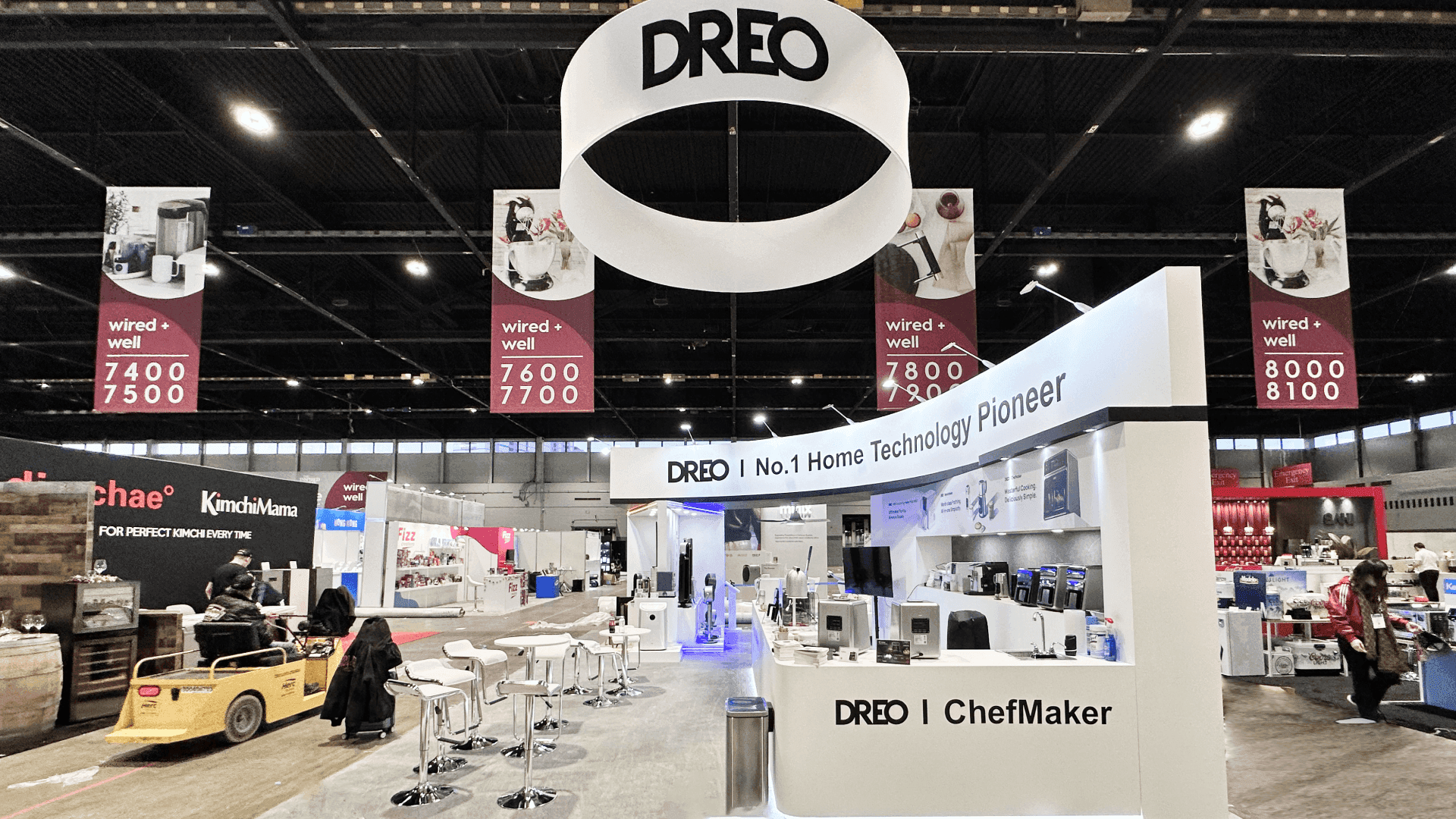
A focused application setting helps buyers understand where products belong without recreating a complete retail store.
Your Booth Needs One Retail Decision, Not a Complete Store
Before planning scenery, ask the team to finish one sentence: Before I leave this booth, I need to decide whether this product… Most useful answers fall into one of three areas.
Category Placement
A product can be easy to recognize but difficult to place. Buyers may need one department label, category relationship, project reference, or adjacent item to understand where it fits; show that relationship and stop there.
Customer or Store Use Case
Sometimes the category is obvious, but the intended user or store problem is not. Establish who will buy, use, recommend, or explain the item and what practical need it addresses without turning the booth into a consumer campaign or training program.
Product Difference
In a familiar category, the decision may come down to differences among models, materials, functions, packaging, applications, or related items. Show only the distinctions that change the evaluation; pricing, margins, order quantities, forecasts, and inventory economics belong in a separate commercial discussion.
All three can appear, but one must lead and the others should support it. Choose the retail decision that the product cannot communicate on its own; that is the part of the store setting the booth needs to reproduce.
Use Only the Store Context the Product Cannot Explain Alone
Test every proposed retail cue by temporarily removing it from the plan. If buyers could still place, use, and compare the product just as easily, the element is probably decoration rather than decision support.
Buyer uncertainty | Context that can answer it | Context that usually adds little |
|---|---|---|
Where does the product belong? | One shelf, wall section, category marker, or relevant adjacent item | A complete department or store aisle |
Who is it for or where is it used? | One recognizable customer profile or application setting | A fully decorated room or lifestyle scene |
What needs to be compared? | Only the relevant models, material samples, or package formats | The full catalog or every available variant |
The visual order should remain obvious: the product leads, the retail cue explains it, and the conversation point stays available without competing for attention. If the setting makes the item harder to see, handle, or compare—or blocks staff access—it has taken too much space.
A 10x20 usually supports one clear contextual display; a 20x20 can separate that setting from buyer review, and a 20x30 can accommodate several related product zones. Extra square footage improves access and separation, but it is not a reason to rebuild an entire store.
The Gasland 20x30 retail booth provides a useful built reference from KBIS rather than an Orgill example. Its kitchen wall and island establish the appliance use setting without closing off the products or visitor access.
Know When the Retail Setting Is Taking Over the Booth
The setting has stopped earning its space when:
Visitors remember the scene but cannot identify the hero product.
Shelves, props, or decorative elements make the main items harder to reach, inspect, or compare.
Supporting merchandise appears as important as the offer meant to lead.
The retail treatment displaces staff conversations, working storage, replenishment, or product handling.
The team must explain the setting before buyers understand where the product belongs.
Store context has become excessive when it creates more questions about the setting than it answers about the product.
When the same problem affects graphics, counters, screens, or the rest of the exhibit, the simpler booth design framework explains how to review low-value elements after the footprint, products, and staffing have been fixed.
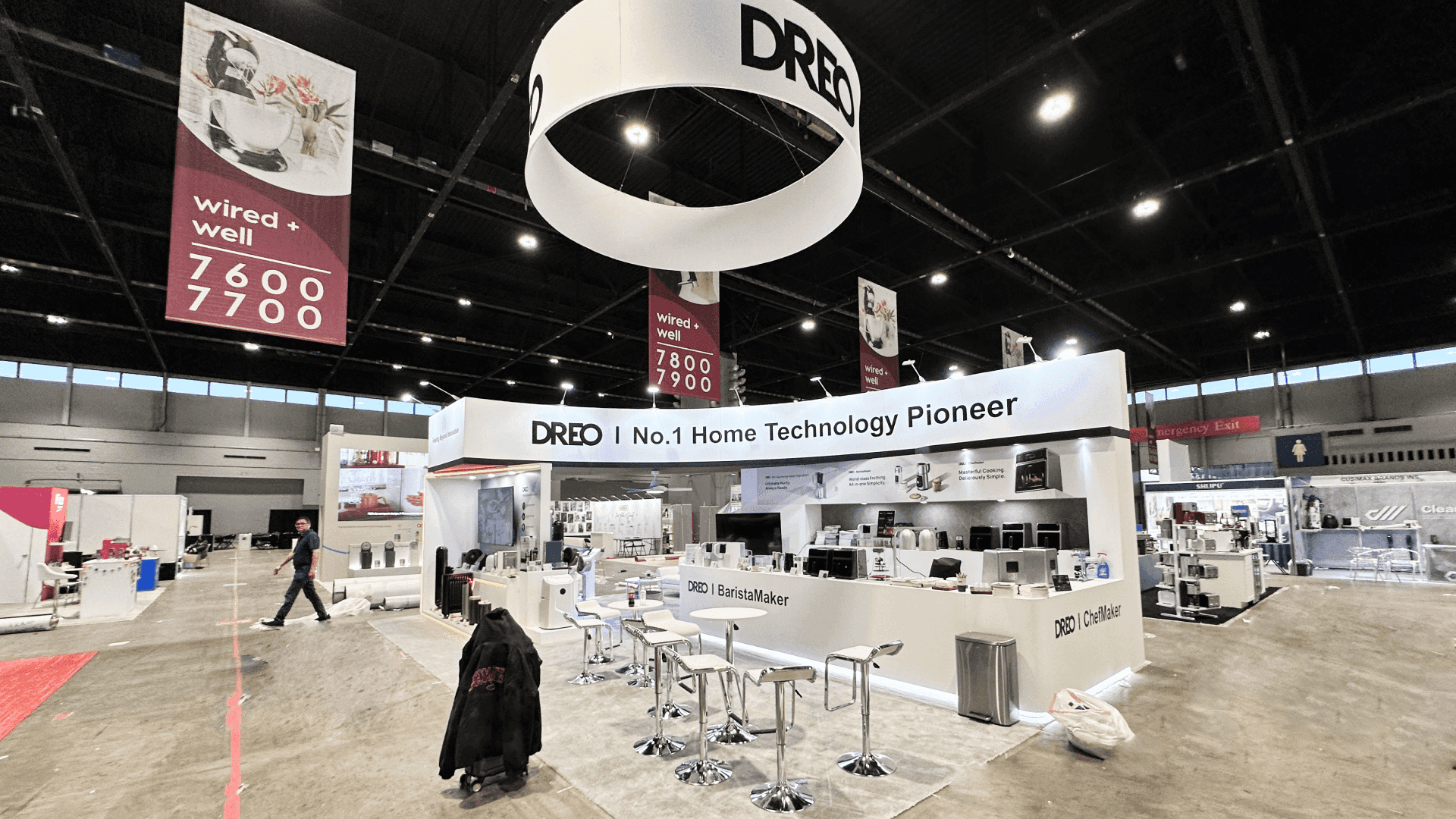
Once the retail decision is clear, the layout can reserve separate space for product access, comparison, storage, and follow-up.
Turn the Context Decision Into a Merchandising Brief
Once the team agrees on how much of the store to show, give the design team a brief with six inputs:
Primary retail decision: The one judgment the booth must help the buyer make.
Hero product: The product or product family that controls the visual hierarchy.
Essential context cue: The store, category, or application reference the product cannot communicate alone.
Required buyer interaction: What buyers need to touch, inspect, or compare.
First staff conversation: Where the initial product discussion should begin.
Off-display materials: Which products, packaging, samples, documents, and replenishment materials need to remain available but in storage.
The brief should define what the exhibit must communicate and support, not prescribe shelf counts, product-wall construction, fixture specifications, review-point design, or storage dimensions.
The next planning step is the Orgill merchandising booth guide, which applies those inputs to product grouping, buyer access, display requirements, review space, and a workable footprint.
Frequently Asked Questions
Can supporting products help explain an Orgill booth’s retail context?
Yes, when they clarify a category relationship, application, or comparison that the hero product cannot explain alone. Keep them visibly secondary and include only the items needed for that judgment. If buyers cannot tell which product is being evaluated, the supporting assortment has stopped providing context and started competing for attention.
How much retail context is enough for an exhibitor booth?
There is enough when buyers can tell where the product belongs, who it serves, and what they should examine or compare next. Every additional scene, prop, or supporting item should resolve a different uncertainty. If it does not add information that changes or clarifies the evaluation, it does not need space in the booth.
What changes if the product appears in an Orgill Shoppable Showcase?
First confirm the current participation, display, packaging, and product-information requirements with the event or Orgill team. Keep the product name, packaging, and primary identifiers clear wherever the item appears. Showcase participation does not change the booth’s central decision: include only the retail cues buyers need to evaluate the product.
Does a retail-style Orgill booth require a custom build?
Not necessarily. An adaptable rental system can support branded graphics, counters, display surfaces, and working storage while creating a credible retail setting. A custom build becomes relevant when special structures, integrated equipment, or product-specific application settings cannot be supported effectively with adaptable components.