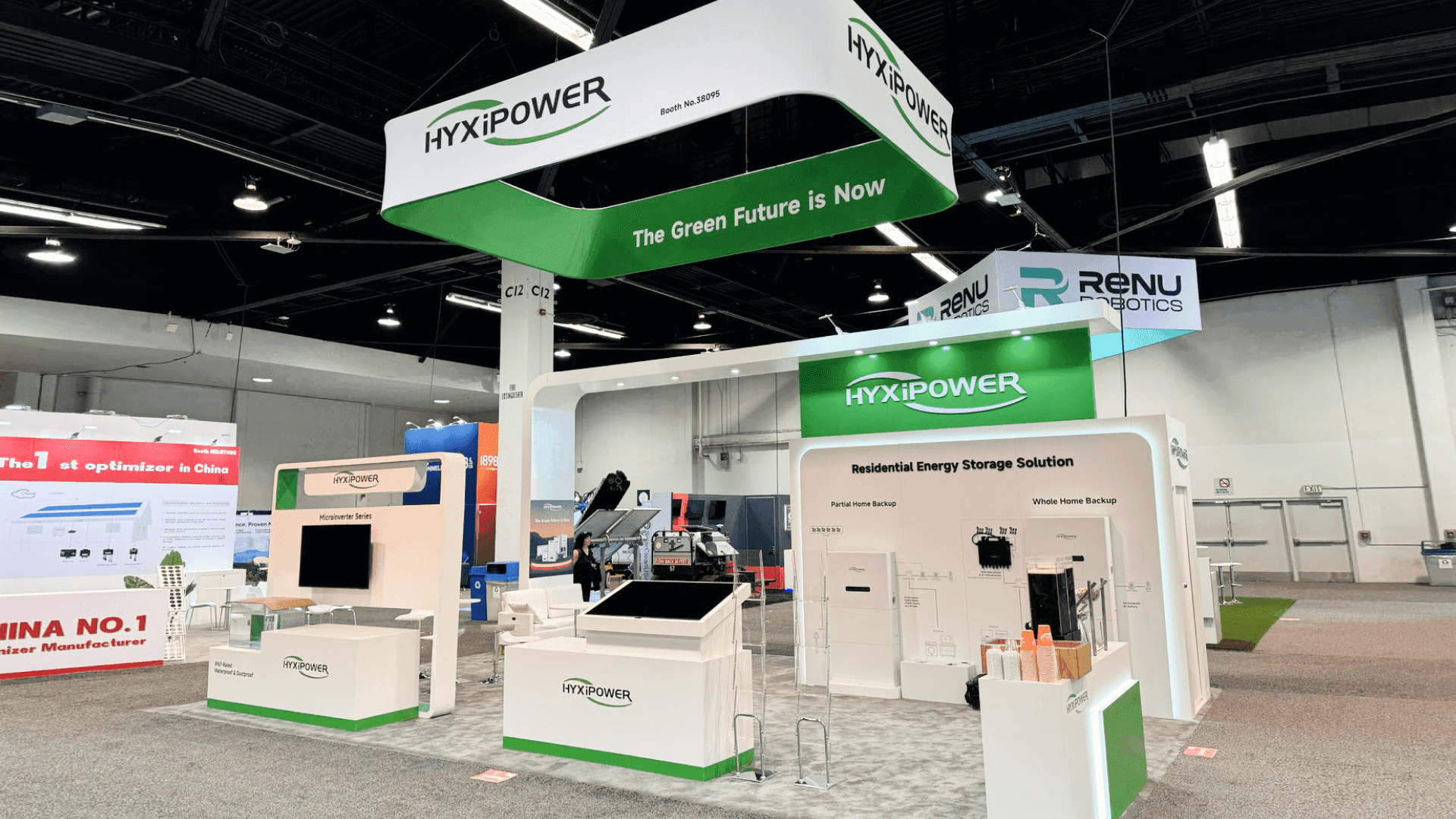
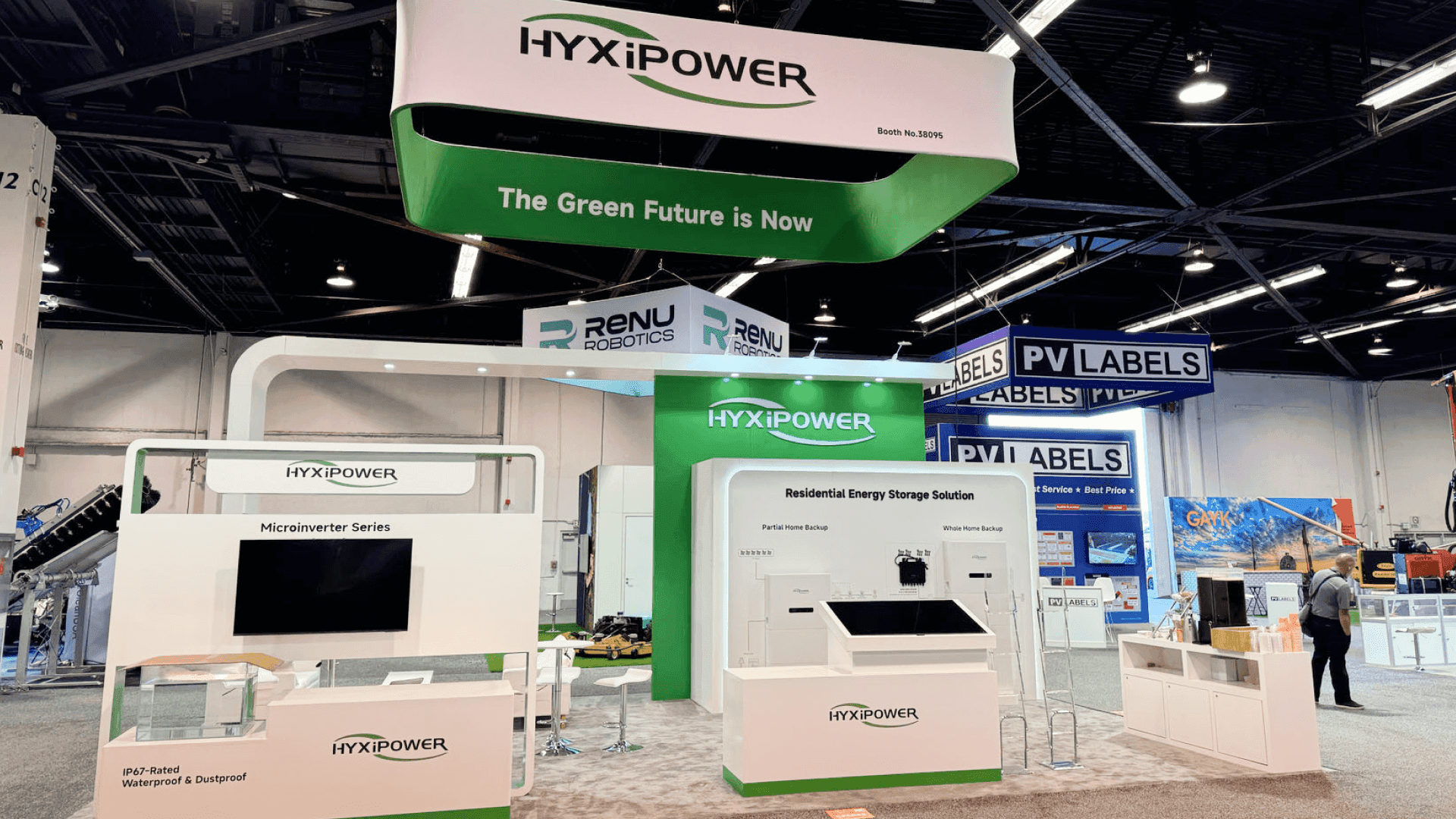
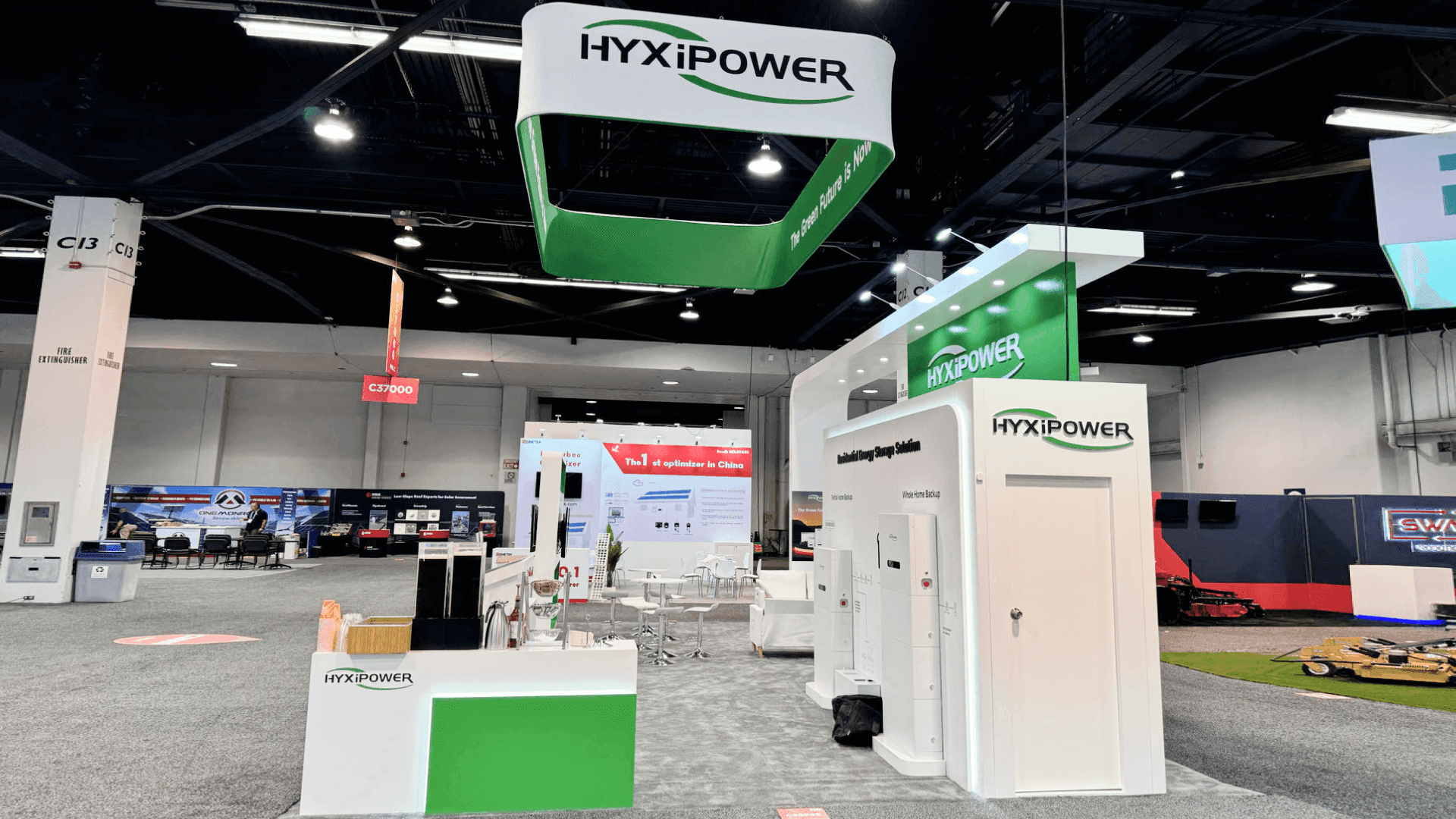
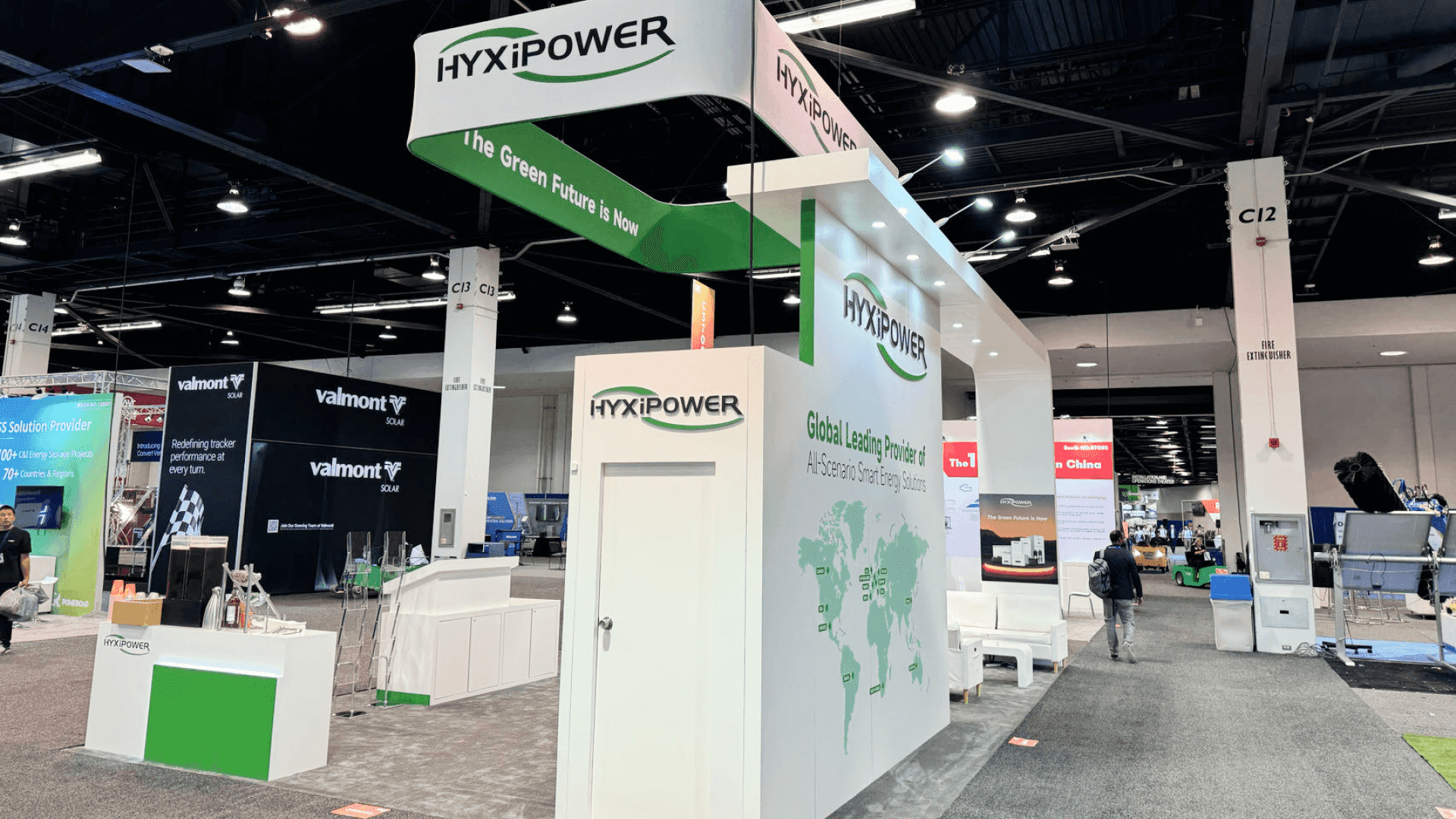
At RE+ 2024, HyxiPower needed a 20×30 space that could explain complex products fast—inverters, microinverters, and residential energy storage—while staying clean, bright, and easy to navigate during peak traffic. We delivered a crisp, high-contrast booth built for “walk-up understanding”: a high-visibility hanging sign for distance recognition, a product-story wall that reads from the aisle, and demo counters positioned for repeatable staff workflows.
If you’re planning this show, the RE+ environment rewards booths that keep demos consistent while protecting walkways and short meeting moments—see the RE+ event page for venue-facing planning considerations and execution notes.
Because Anaheim Convention Center move-in is timing-sensitive (freight windows, dock access, labor calls, and electrical readiness), we treated labeling, crating logic, and install sequencing as part of the design—not an afterthought—so the build landed in the right order and the booth could go show-ready without last-minute reroutes. (Service link) Learn more about pre-show logistics & coordination.
For exhibitors scaling a clean-energy demo footprint, our 20×30 booth size guide breaks down what changes when you add more product stations—power planning, storage space, and on-site sequencing.
💼
Client:
📅
Year/Exhibition:
📍
Location:
📐
Size:
🏢
Industry:
🏢
Venue Context:
Challenge
HyxiPower’s booth had to convert high-volume “walk-by” traffic into real stops—without turning the space into a crowded showroom. The key requirements were:
Instant category clarity: visitors should understand “storage + inverter ecosystem” in seconds, even before a conversation starts.
Demo-first counter layout: fixed, repeatable demo positions for screens, sample units, and product touchpoints—so staff can run consistent demos all day.
Power + cable discipline: reliable power distribution for multiple demo surfaces, with clean cable paths and protected device placement.
Tall visibility without clutter: a hanging sign and strong green/white brand language that reads across the hall.
Installation sequencing built-in: counters, graphics, and AV had to land in a specific order to keep labor time efficient and avoid rework during compressed move-in.
Design vs. On-site Execution
The design treated the 20×30 footprint like a “clean energy showroom with a workflow.” Visitors first see the brand and category message from distance (hanging sign + high-contrast fascia), then naturally move toward demo counters that show the product story in logical steps: microinverters and inverter control on one side, residential energy storage solutions on another.
For execution, we planned counter placements, device mounting points, and cable routing early—so the on-site crew could install AV and electrical cleanly without last-minute changes. The result is a booth that stays tidy under show pressure: demos remain consistent, staff circulation stays open, and conversations can happen without blocking the aisle.
This project was also featured in our portfolio gallery, showcasing real show-floor visuals and exhibit highlights from the event.
View the HyxiPower Booth at RE+ project gallery for on-site photos and visual references.
Hanging Sign for Hallway Recognition
A bold overhead sign establishes “brand-from-distance” visibility—critical at RE+ where clean energy brands compete for attention across wide aisles.
Residential Energy Storage Story Wall
A large-format storage narrative wall supports quick education: the visual hierarchy helps visitors grasp “whole-home backup” and system context before they reach the counter demos.
Microinverter + Screen Demo Counter
A dedicated counter for microinverter demos keeps screens and product touchpoints aligned, with cable routing planned for a clean presentation under bright show lighting.
Central Demo Table Built for Repeatable Walk-Ups
A central demo surface supports high-frequency explanations without crowding: staff can run a consistent “show-and-tell” sequence while keeping circulation predictable.
On-site Highlights
Keep demos consistent during peak traffic
Protect walkways while supporting real conversations
Reduce AV + electrical friction on install day
Build “brand-from-distance” without visual noise
Sequence the build like a checklist, not a scramble
Outcome
The hanging sign and high-contrast fascia made the booth readable across wide aisles, improving discovery before staff engagement.
Fixed demo positions and predictable counter spacing kept product explanations consistent even when traffic spiked.
Planned sequencing for crates, counters, graphics, and AV minimized last-minute reroutes and helped crews stay efficient.
Visitors could quickly connect the dots between storage, inverters, and microinverters through simplified messaging and zoning.
At RE+, attention spans are short and product complexity is high. The goal isn’t to say everything—it’s to make the first 10 seconds work: clear category signal, a clean demo surface, and a path that lets staff repeat the same story without congestion. For HyxiPower, we treated execution as part of design—power planning, labeling, and sequencing—so the booth stayed calm even when the hall got busy.
FAQ
Q1: What booth size works well for energy storage and inverter demos at RE+?
A: A 20×30 is a strong middle ground—large enough for multiple demo counters and storage messaging, but still manageable for staffing and traffic control when zoning is clear.
Q2: How do you keep power and cables clean in a demo-heavy booth?
A: Plan dedicated equipment zones, fixed screen locations, and protected cable paths early—so power distribution and AV routing don’t end up visible on the show floor.
Q3: Is a hanging sign worth it for RE+ exhibitors?
A: If the hall is competitive and aisles are wide, a hanging sign helps with distance recognition—but it must align with rigging coordination and install sequencing.
Q4: What messaging format works best for complex clean energy products?
A: Use “category-first” headings tied to real objects—battery storage, inverters, microinverters, backup power—so visitors can understand the story before staff engagement.
Q5: What should be planned early to avoid install delays at Anaheim Convention Center?
A: Confirm freight timing, labor calls, electrical readiness, and crate labeling/sequence—so counters, graphics, and AV install in the right order without rework.