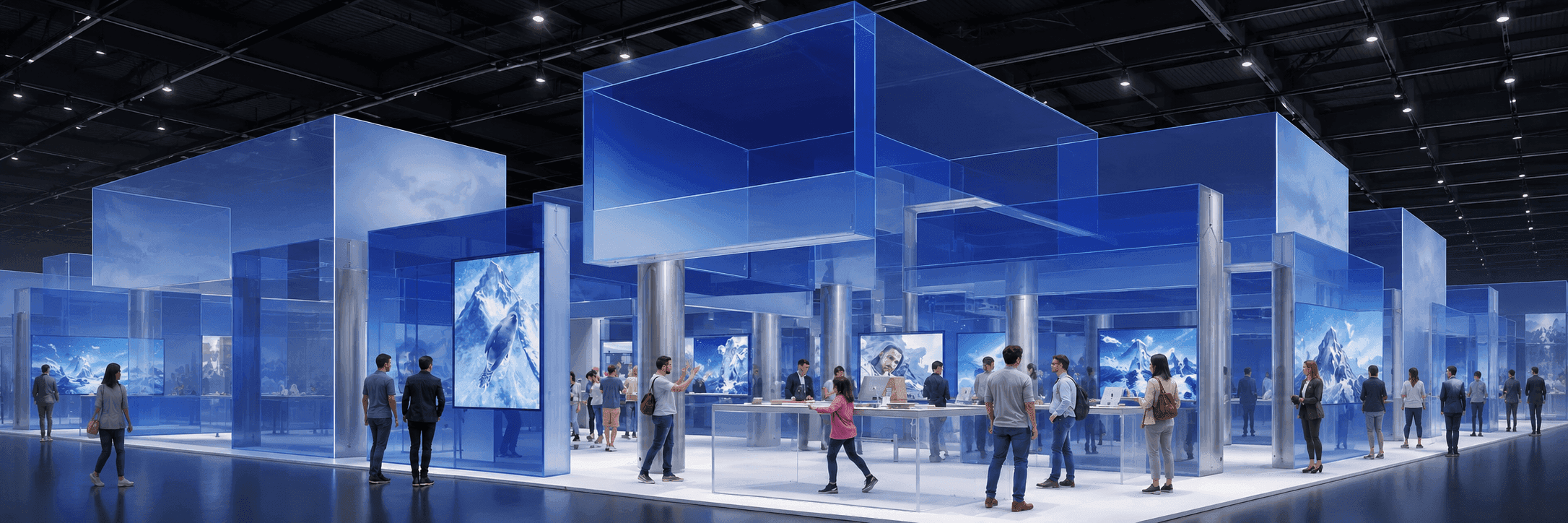
30x40 Trade Show Booth Size and Layout Planning
A 30x40 trade show booth provides 1,200 sq. ft. of exhibit space for larger product demonstrations, buyer meetings, displays, screens, storage, branded structures, and staff operations.
The extra space is useful when several activities need to happen at the same time. Start with the visitor path and primary booth purpose, then decide how much of the footprint should remain open.
What fits inside a 30x40 trade show booth?
A 30x40 trade show booth measures 30 feet by 40 feet, providing 1,200 square feet of floor space.
This footprint is often used for larger island exhibits because it can separate active product demonstrations from meetings, reception, storage, screens, and staff circulation. The actual layout should still follow the assigned open sides and surrounding aisle traffic.
30 ft. × 40 ft.
1,200 sq. ft. footprint
More room for multiple visitor activities, products, meetings, and operational support.
Multiple Active Zones
Demo + meeting + display
Several functions can operate without forcing visitors and staff into the same circulation path.
Multi-Aisle Visibility
Designed around the actual open sides
Graphics, product displays, screens, and reception should respond to how visitors approach the booth.
Larger Back-of-House Capacity
Las Vegas Show-Site Support
Samples, tools, equipment, literature, spare parts, staff belongings, and daily show supplies can be integrated into the booth instead of becoming visible clutter.
Start With the 30x40 Footprint and Open Sides
Before choosing the architecture, confirm how the booth connects to the surrounding aisles.
A 30x40 footprint with four open sides behaves differently from a space with one dominant traffic aisle or a partially enclosed side. Reception, demonstrations, meeting rooms, large products, screens, and storage should follow those real approach patterns.
Four-Side Island Access
Keep important corners visually open and avoid surrounding the footprint with large walls or counters.
A central brand feature, product display, tower, screen structure, or storage core can create a strong anchor while allowing visitors to enter from several directions.
Three-Side Access
Use the less active side for deeper functions such as storage, service access, screen backing, or a more private meeting area.
The remaining sides can stay open for product interaction and visitor entry.
Two Primary Traffic Sides
Place the strongest product, demonstration, or brand message where visitors are most likely to approach.
Quieter conversations and operational functions can sit deeper inside the booth rather than competing with the main aisle.
Controlled Product or Demo Access
Some large products, vehicles, technical demonstrations, or live presentations need defined standing and operating space.
In these cases, fewer intentional entry points may work better than leaving every edge completely open.
Do not assume all sides will function equally. Use the actual exhibitor floor plan before finalizing walls, counters, product placement, or meeting rooms.
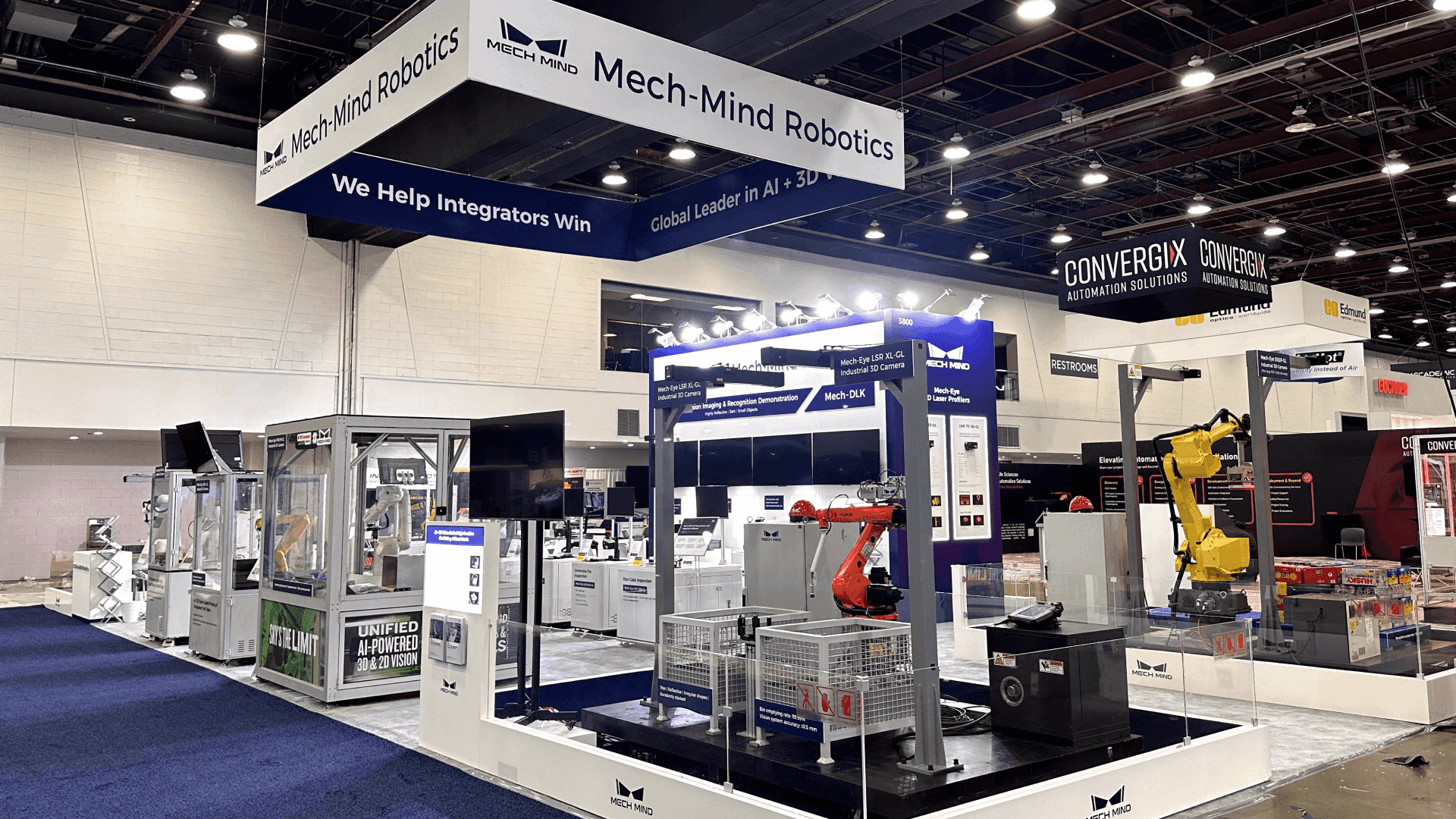
When a 30x40 Trade Show Booth Makes Sense
A 30x40 booth becomes useful when a smaller island can technically hold the required functions, but cannot separate them well enough during show hours.
Large Product or Equipment Demonstrations
Larger equipment, vehicles, physical products, or staffed demonstrations need more than their own dimensions.
Visitors also need room to stand, watch, compare, ask questions, and continue moving through the booth.
Demos and Buyer Meetings at the Same Time
A 30x40 footprint can keep active demonstrations closer to the aisle while moving qualified conversations or semi-private meetings farther inside the booth.
This reduces competition between traffic and longer buyer discussions.
Multiple Product Stories
When several product families, demo stations, screens, or buyer groups need their own context, the extra space allows each zone to remain readable without creating one oversized display area.
Strong Brand Presence + Real Operations
Large graphics, hanging signs, screen walls, storage, samples, equipment, staff supplies, meeting furniture, and reception all consume usable space.
A 30x40 booth gives those supporting functions room to work without taking over the visitor experience.
Common 30x40 Island Booth Layouts
There is no single correct 30x40 layout. The strongest plan depends on what visitors should notice first and what activities must operate at the same time.
Central Brand Anchor + Perimeter Demos
Best for:
technology, product launches, multi-product exhibits, equipment demonstrations
Use a central tower, storage core, architectural feature, or branded structure as the visual anchor.
Demo counters, screens, or product stations can face the strongest aisle approaches around the perimeter.
Works well with:
Central structure · Multiple demos · Overhead branding · Integrated storage
Watch for:
Oversized central structures that leave narrow circulation around the outside.
Demo Zone + Private Meeting Side
Best for:
technical products, software, B2B sales, longer buyer conversations
Give one section of the booth to active demonstrations and another to meetings or deeper consultation.
Reception and storage can help transition visitors between the two.
Works well with:
Product demo · Reception · Semi-private meetings · Screens · Storage
Watch for:
Meeting rooms positioned directly on the strongest entry path.
Large Product Display + Consultation
Best for:
vehicles, machinery, industrial products, automotive products, physical equipment
Plan the large product first, including viewing distance, operating clearance, staff access, lighting, and visitor standing space.
Use the remaining footprint for product explanation, consultation, supporting displays, and brand messaging.
Works well with:
Vehicle or equipment display · Product walls · Demo counters · Consultation space
Watch for:
Planning around the physical product dimensions but forgetting the space required around the product.
Open Center + Multiple Product Stations
Best for:
exhibitors with several smaller products or demonstrationsKeep the center relatively open while distributing product displays, screens, counters, or staffed stations around the booth.
Visitors can enter from several sides and choose the product or conversation most relevant to them.
Works well with:
Multiple stations · Open circulation · Screens · Product displays · Standing conversations
Watch for:
Adding furniture later and gradually turning the open center into a bottleneck.
30x40 and Large Island Booth Project References
Real projects help show how larger footprints change the relationship between products, meetings, graphics, visitor flow, storage, and show-site execution.
The examples below include one confirmed 30x40 project and several nearby large-island references selected for different planning challenges.
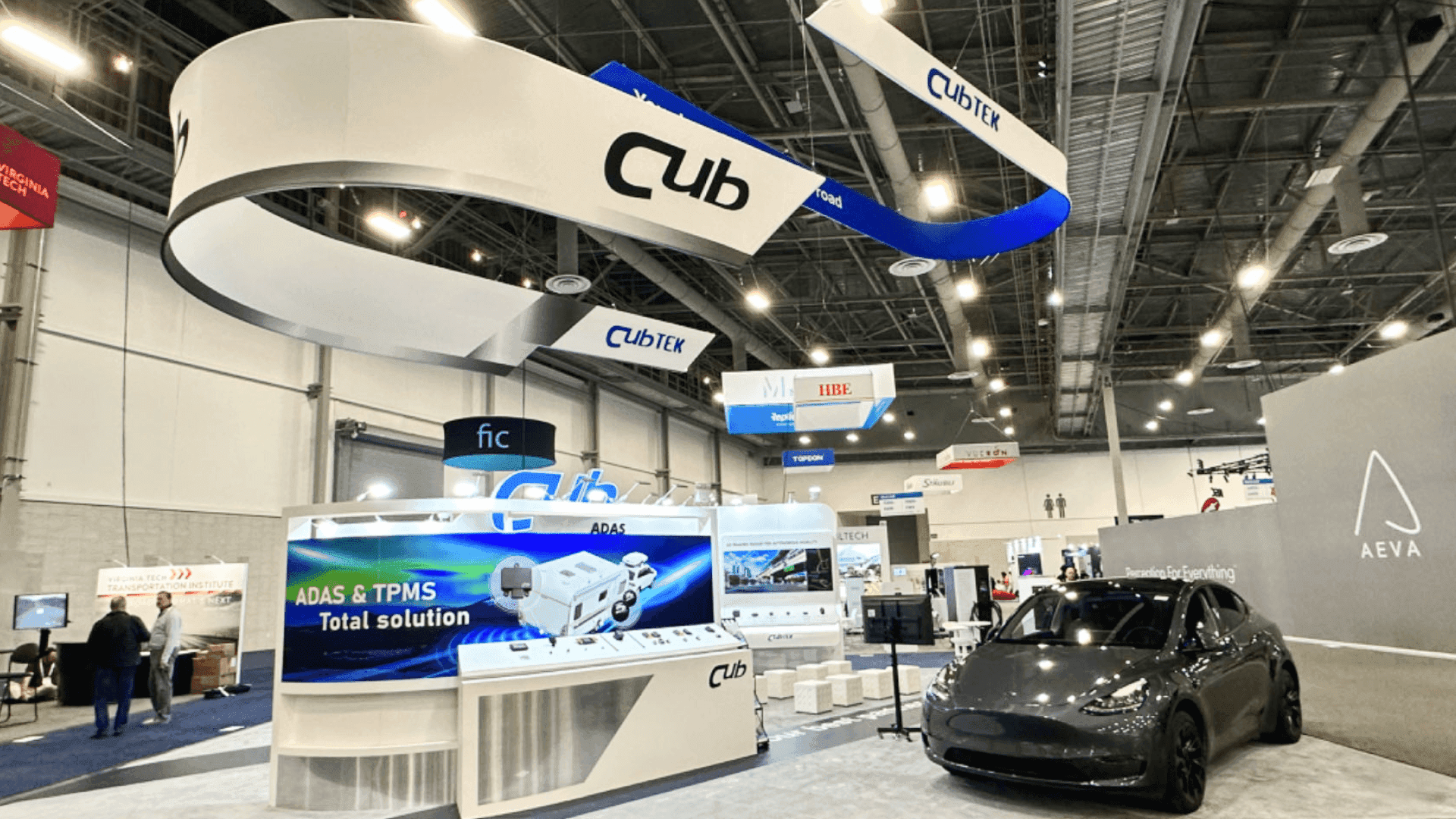
CUB — CES 2024
30x40 Booth · LVCC West Hall
A 30x40 CES booth built around vehicle-centered engagement, automotive electronics, ADAS product storytelling, multi-aisle visibility, and show-floor execution.
The project shows how a large product can become the main visitor anchor without eliminating surrounding demo and conversation space.
View CUB CES 2024 Case Study

UGREEN — CES 2024
Large Island Reference · Las Vegas
A large technology exhibit using overhead branding, product storytelling, screens, and structured product zones to remain readable across a busy show floor.
Use this project as a reference for long-range branding and multiple technology product stories inside one large island environment.
View UGREEN Project

GTECHNIQ — SEMA Show 2023
Large Island Reference · LVCC
A vehicle-led exhibit combining automotive product storytelling, product display, graphics, lighting, visitor circulation, and a highly visible island structure.
This is a useful reference when the physical vehicle or equipment becomes part of the booth experience rather than a separate display object.
View GTECHNIQ Project
Want to compare more large island layouts, graphics, fabrication, and installation details? View more trade show booth case studies, review SEMA booth planning for vehicle displays, or explore Las Vegas automotive trade show booth planning for larger vehicle displays, product walls, demo counters, graphics, logistics, and show-site setup needs.

Is 30x40 the Right Booth Size?
The question is not whether every requested feature can fit on a floor plan. The question is whether those functions can operate together without creating unnecessary congestion or unused space.
20x30 — 600 sq. ft.
A 20x30 trade show booth can work when the exhibit needs a primary demo or product area, meetings, reception, and storage but does not need several large activity zones at the same time.
Choose 20x30 when:
The program is focused and the larger functions can share a controlled footprint.
30x30 — 900 sq. ft.
A 30x30 booth gives exhibitors a balanced square island with enough depth for multiple demos, meetings, storage, and open circulation.
Choose 30x30 when:
You need several functions but do not need the additional 300 sq. ft. for larger products, deeper meetings, or more back-of-house space.
30x40 — 1,200 sq. ft.
The 30x40 footprint gives larger products, multiple demonstration areas, meeting spaces, storage, screens, and staff operations more room to work independently.
Choose 30x40 when:
The extra space solves a real visitor-flow, product, meeting, or operational requirement—not simply because a larger footprint is available.
What Changes in a 30x40 Trade Show Booth Design?
Moving to 1,200 square feet does more than add floor space. Structure, graphics, product integration, storage, utilities, packing, and installation all become more connected.
Structural and Overhead Planning
Large walls, towers, storage rooms, screen structures, lightboxes, and hanging signs should be planned as one system.
Their position affects sightlines, visitor entry, lighting, power, rigging, crate size, and installation sequence.
Graphic Hierarchy by Viewing Distance
A 30x40 booth needs more than large graphics.
Primary branding should work from across the aisle, secondary messaging should become clear as visitors approach, and detailed product information should support people already inside the booth.
Avoid giving every wall and screen equal visual priority.
Product, AV, Power, and Data Requirements
Products and demonstrations should be confirmed before the layout moves too far into design.
Dimensions, service access, screens, lighting, power, internet, cable routing, product replacement, and staff operation can all affect the usable footprint around a demo.
Meeting Privacy Without Closing the Booth
Private or semi-private meetings may be useful, but enclosed rooms should not consume the strongest traffic corners or turn the booth into a series of walls.
Use the level of privacy that the conversation actually requires.
Storage and Back-of-House
Samples, tools, packaging, replacement graphics, cleaning materials, literature, staff belongings, devices, spare parts, and daily supplies need a planned location.
Storage should be accessible to staff without forcing them to cross a buyer meeting or active demo area.
Packing and Installation Sequence
A larger island may involve multiple crates, structural sections, flooring, graphics, lighting, screens, furniture, products, and overhead components.
The design should consider which pieces need to arrive and install first.
Before freight moves to the venue, booth fabrication and prebuild checks can help confirm fit, graphics, hardware, finishes, and installation readiness.
Rental-Friendly or Custom 30x40 Booth?
A 30x40 trade show booth can use rental components, custom fabrication, or a combination of both.
The right direction depends on how specialized the architecture and product integration need to be—not simply on booth size.
Rental-Friendly 30x40 Booth
A rental-friendly approach can work well when the booth needs:
reusable structural components
branded wall and SEG graphics
demo counters
screens
reception
meeting furniture
integrated storage
lighting and flooring
flexibility between multiple shows
The structure can remain adaptable while graphics, layouts, and selected elements change between events.
Explore 30x40 Rental Designs
Custom 30x40 Booth
A more custom build becomes useful when the project needs:
unique architecture
specialized product integration
vehicle or equipment integration
custom display fixtures
larger private meeting rooms
specialty finishes
overhead branding
a structure built around a multi-show brand program
For more specialized fabrication and show-site requirements, review Las Vegas trade show booth builder support.
Las Vegas trade show booth builder support.
30x40 Booth Execution in Las Vegas
For Las Vegas shows, a 30x40 booth should connect the final layout with the actual event and venue schedule before freight reaches the show floor.
Large island projects may involve:
multiple crates
advance warehouse or direct-to-show freight
drayage and material handling
rigging and hanging signs
electrical and data placement
product or vehicle positioning
installation labor
final graphic and lighting checks
dismantle and outbound freight
At venues such as LVCC, Venetian Expo, Mandalay Bay, and Caesars Forum, these requirements should be checked against the specific exhibitor manual rather than assumed from another show.
For Las Vegas projects, review exhibit installation and dismantle planning before move-in.

Common 30x40 Booth Mistakes to Avoid
More square footage creates more options, but it also makes weak planning easier to hide on a rendering.
Too Many Focal Points
If every wall, product, screen, tower, and counter tries to become the main attraction, visitors may not understand what matters first.
Choose one primary visual or interaction anchor.
Closing the Strongest Entry Sides
Large walls, meeting rooms, storage structures, and oversized counters can reduce the value of an island footprint.
Protect the strongest visitor approaches before placing enclosed functions.
Demo Crowds Spill Into Circulation
A large demonstration needs room for the product, operator, viewers, questions, and people leaving the area.
Do not plan the demo only around the equipment footprint.
Meeting Rooms Take Over the Booth
More space does not automatically justify larger enclosed rooms.
Protect enough floor area for product interaction, circulation, reception, and spontaneous conversations.
Storage and Utilities Come Too Late
Power, data, samples, tools, staff belongings, cleaning materials, replacement products, and spare parts all need space.
Adding them after the layout is approved usually takes space away from visitors.
Before You Approve a 30x40 Booth Layout
Confirm the Open Sides
Use the actual floor plan and identify the strongest aisle approaches before finalizing architecture.
Define the Main Visitor Action
Decide what visitors should notice and do first: see a product, watch a demo, enter a conversation, or explore several product stations.
Map Visitor Standing Space
Allow room around demos, products, screens, and reception—not just around furniture and structure.
Separate Active and Quiet Functions
Keep demos, product traffic, meetings, and staff operations from competing for the same circulation path.
Lock Product and Technical Requirements
Confirm product dimensions, screens, power, internet, lighting, cable routes, counters, and technical access before production.
Plan Graphics by Distance
Identify what visitors should read from across the aisle, at the booth edge, and after they enter.
Reserve Storage and Staff Support
Plan supplies, samples, tools, literature, staff belongings, and daily operating items before the remaining floor space is assigned.
Review Freight, Installation, and Dismantle
Confirm crate logic, installation sequence, overhead elements, product placement, final booth checks, and move-out requirements before shipping.

Continue Planning Your 30x40 Booth
Compare larger booth layouts, rental designs, and planning resources before confirming demos, meetings, and display zones.

FAQs
Quick clarity on scope, timeline, and execution workflow
Is a 30x40 booth considered an island booth?
A 30x40 footprint is commonly used as a large island exhibit when all four sides are exposed to aisles. However, the actual booth type and number of open sides depend on the space assigned by the show organizer. Confirm the official floor plan before designing the layout.
How much space does a 30x40 trade show booth provide?
What can fit inside a 30x40 trade show booth?
When should exhibitors choose 30x40 instead of 30x30?
Can a 30x40 booth use both rental and custom components?
Planning a 30x40 Booth for an Upcoming Trade Show?
Share your show name, venue, product type, booth goals, timeline, and the activities that need to happen inside the space.
Circle Exhibit teams can review the 1,200 sq. ft. footprint, open sides, visitor flow, demo zones, meetings, storage, graphics, structure, fabrication, logistics, and show-site requirements before the booth moves into production.