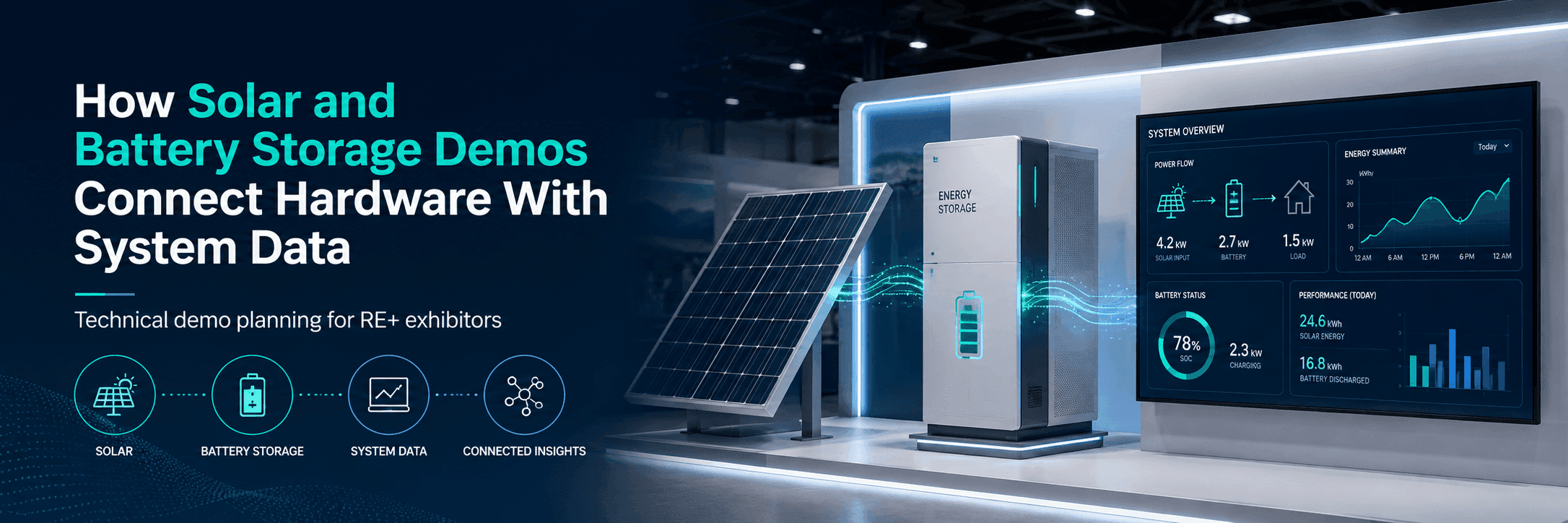
The Hardware Is Visible, but the System Behavior Is Not
Physical hardware can establish scale, construction, interfaces, and product identity. It does not automatically reveal the system state—the operating condition currently shown through controls or monitoring.
A solar module does not visually explain what the inverter or monitoring layer is doing.
A battery cabinet does not show, by appearance alone, whether the system is charging, discharging, responding to a control input, or operating under another condition the exhibitor wants to explain.
That gap is where the demonstration begins.
Instead of surrounding the product with more specifications, first identify the behavior the hardware cannot show on its own. The product provides the physical reference; the demonstration needs to make the missing behavior visible.
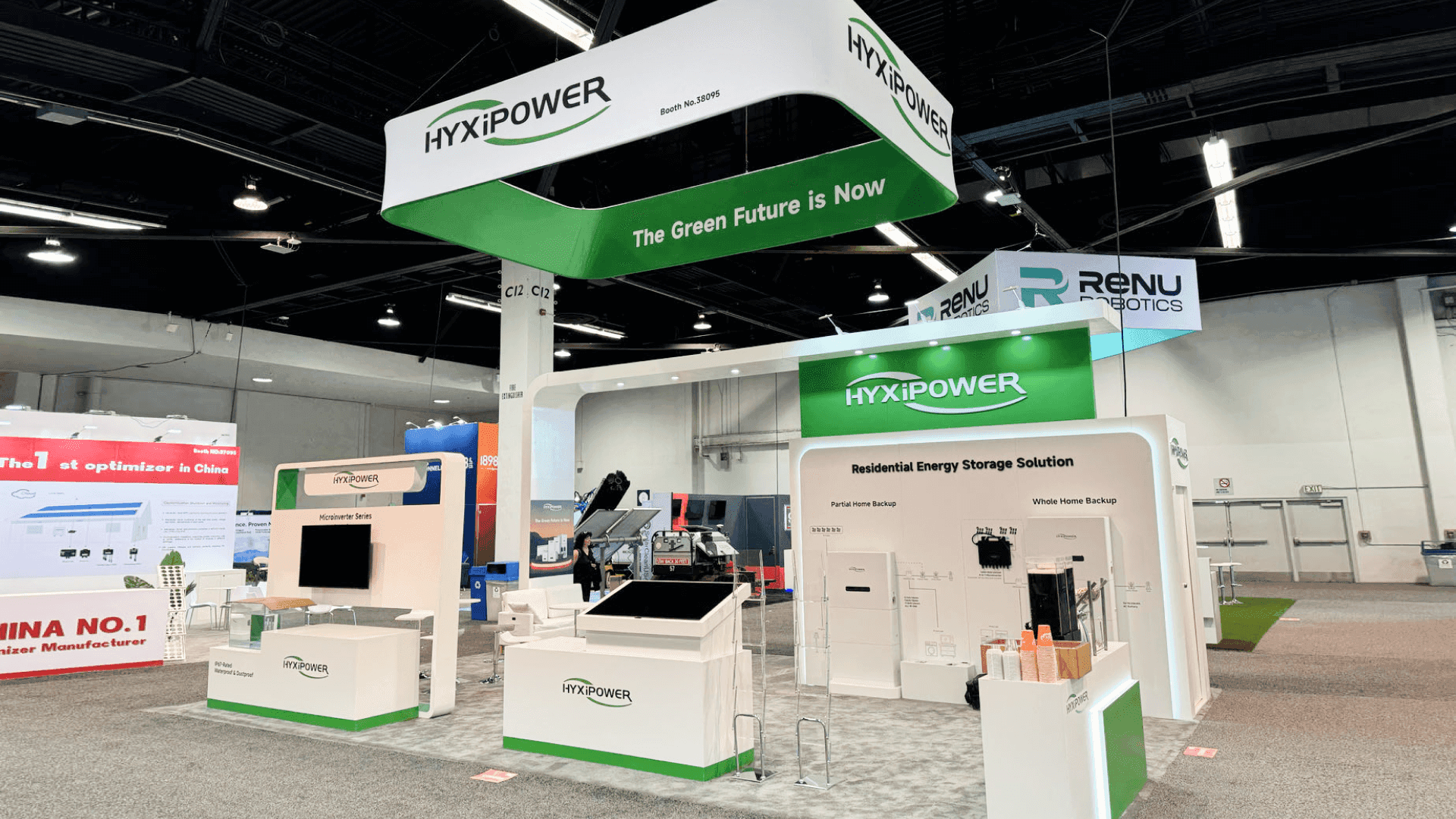
A strong solar demo keeps the physical product and its operating data connected so buyers can understand what the system is doing, not just what the hardware looks like.
Decide What the Demo Needs to Prove
Several technical points may matter, but one demonstration rarely needs to prove all of them at once.
A better starting question is:
What should the buyer understand differently after watching this demo?
The answer might involve a change in operating condition, the relationship between a product and its monitoring layer, or the response of one component within the larger system.
Once that question is clear, every screen, metric, diagram, animation, and staff explanation has a job.
If an element does not help answer the main technical question, it probably belongs in the deeper conversation rather than in the demonstration itself.
Show Cause and Effect, Not Just a Dashboard
A dashboard can display information without proving anything.
For a technical demonstration to work, the buyer needs to understand three things: what changed, what caused the change, and what the result means.
For example, if a control action changes the operating condition shown on a monitoring screen, the important part is not simply that a number moved. The buyer needs to understand what changed in the system and why that change matters.
The proof might come from monitored equipment, a controlled interface, a simulation, or a simplified operating sequence. A complete working energy system does not need to be reproduced on the show floor.
One understandable cause-and-effect relationship is usually more useful than a dashboard showing many values with no clear hierarchy.
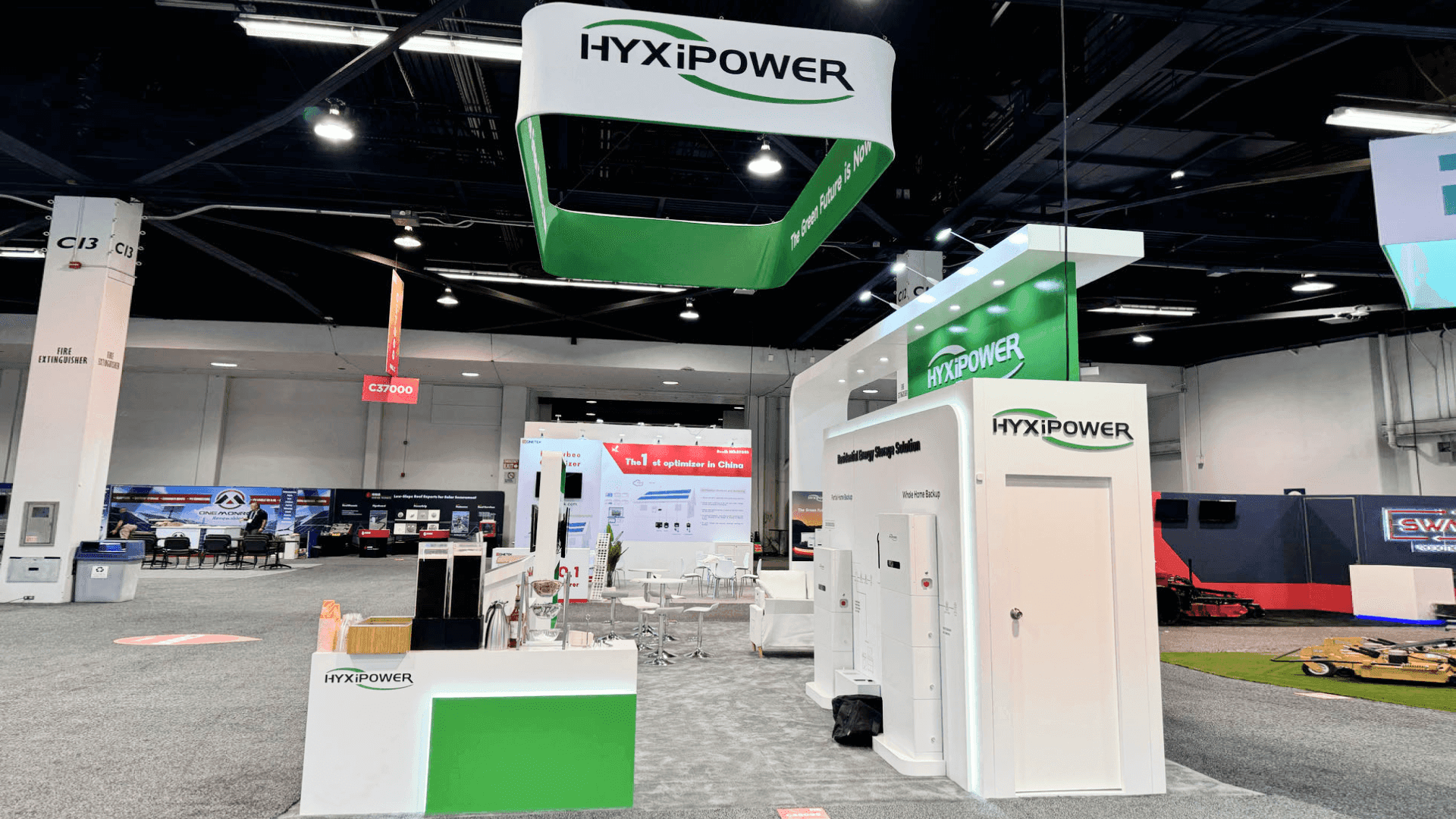
BESS demonstrations work best when cabinet hardware, EMS data, and system behavior read as one technical story instead of separate displays.
Tie the Data Back to the Hardware
Even useful data becomes harder to understand when the buyer cannot tell what physical system it refers to.
If an inverter value appears on a screen, the connection between that information and the equipment should be obvious.
If an EMS—energy management system—shows a change in operating state, the buyer should not have to guess which cabinet or system condition the data represents.
That does not simply mean placing a monitor beside the product.
The more useful question is:
What am I looking at physically, and what does this data tell me about it?
Proximity, labeling, a simplified system diagram, or a deliberately matched hardware-and-screen presentation can make that connection clear without adding another layer of explanation.
Solar and Battery Demos Need Different Proof
Solar and battery storage may use similar screens, diagrams, and physical display elements, but the proof buyers need is not necessarily the same.
In a solar demonstration at RE+, the physical product may need to connect visibly to inverter behavior, monitoring, system output, or project-level evidence. The data helps explain what happens beyond the module itself.
A battery storage demonstration at RE+ often starts from a different reference. The cabinet establishes the physical system, while EMS information, operating state, performance, or another monitored response provides evidence the cabinet itself cannot show.
The same display technology can support both demonstrations.
What changes is the technical relationship that needs to be proven.
Know When to Move From Proof to Project Discussion
A demonstration does not need to complete the entire sales or engineering conversation.
Once the buyer understands the hardware, the behavior being shown, and what the evidence means, the demo has largely completed its task.
Questions about project fit, integration, engineering requirements, procurement, or deployment can move into a longer discussion without forcing the main demonstration to carry every detail.
When the hardware demonstration and a longer technical conversation need to remain active at the same time, a 20x30 booth footprint can provide useful separation without turning booth size into the subject of the demonstration.
The important boundary is simple:
The demo proves the technical relationship. The next conversation applies that proof to the buyer's project.
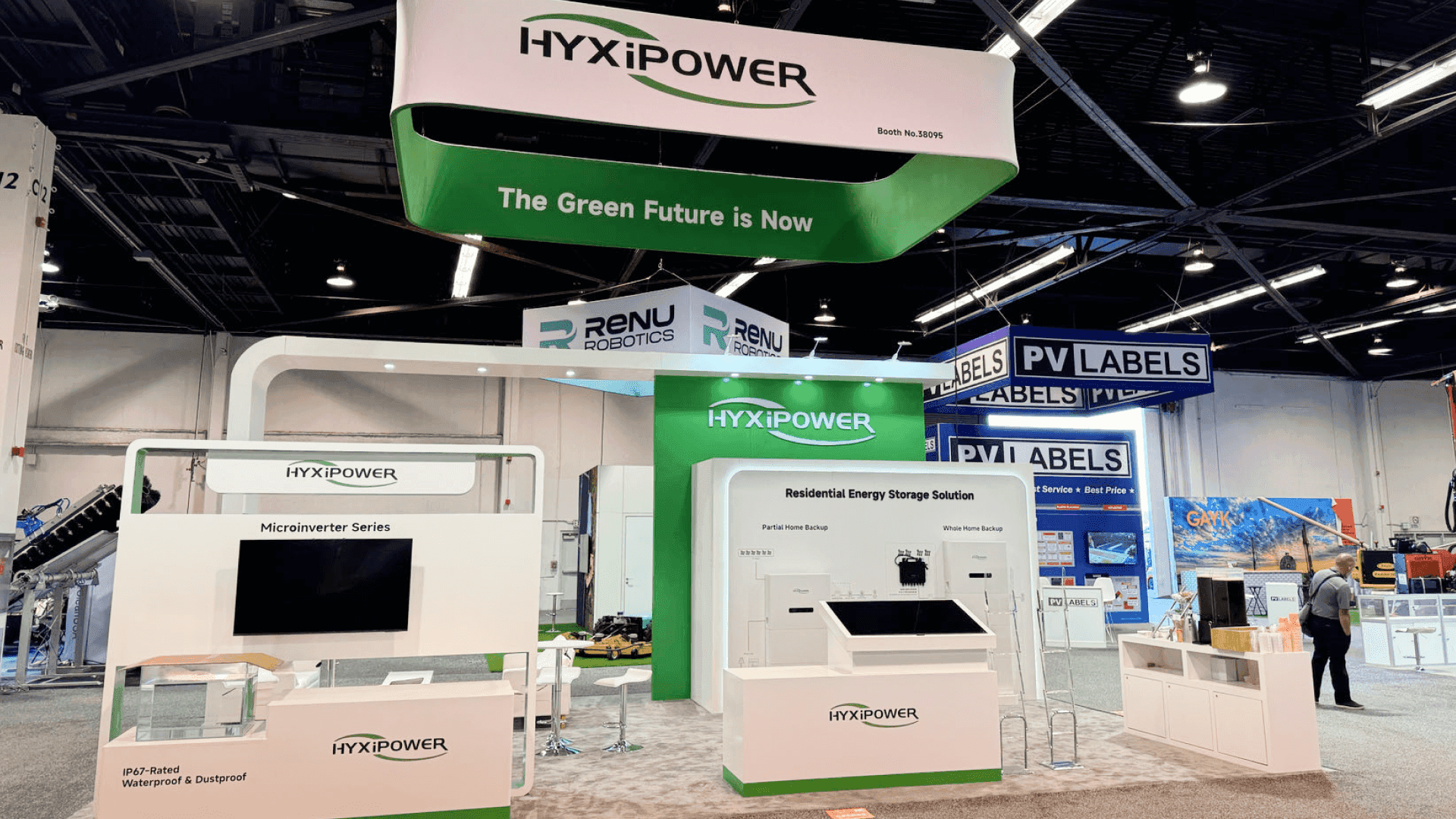
The most useful technical demos show a clear relationship between the physical equipment, a change in system behavior, and the data that proves what happened
Set the Product, Screen, and Data Relationship Before Booth Engineering
The physical product and the evidence used to explain it should be treated as one technical presentation before the booth layout is finalized.
If buyers need to look at a cabinet while reading its operating data, that viewing relationship matters.
If a screen explains a specific physical product, its position should make that reference obvious.
If a diagram connects two parts of the system, it needs a meaningful relationship to those products rather than whatever wall space remains after the booth has been designed.
These decisions affect more than graphics. They influence product position, screen direction, viewing relationships, and the technical logic of the demonstration.
That relationship should be resolved during booth design and engineering, before fabrication turns temporary assumptions into fixed positions.
Final Note
A solar or battery storage demo does not become more convincing simply because more hardware or more data is visible.
A better test is one question:
What can the buyer understand about this system now that the physical product alone could not show?
If the hardware provides the reference, the system behavior becomes observable, and the evidence clearly explains what changed and why, the demonstration has done its job.