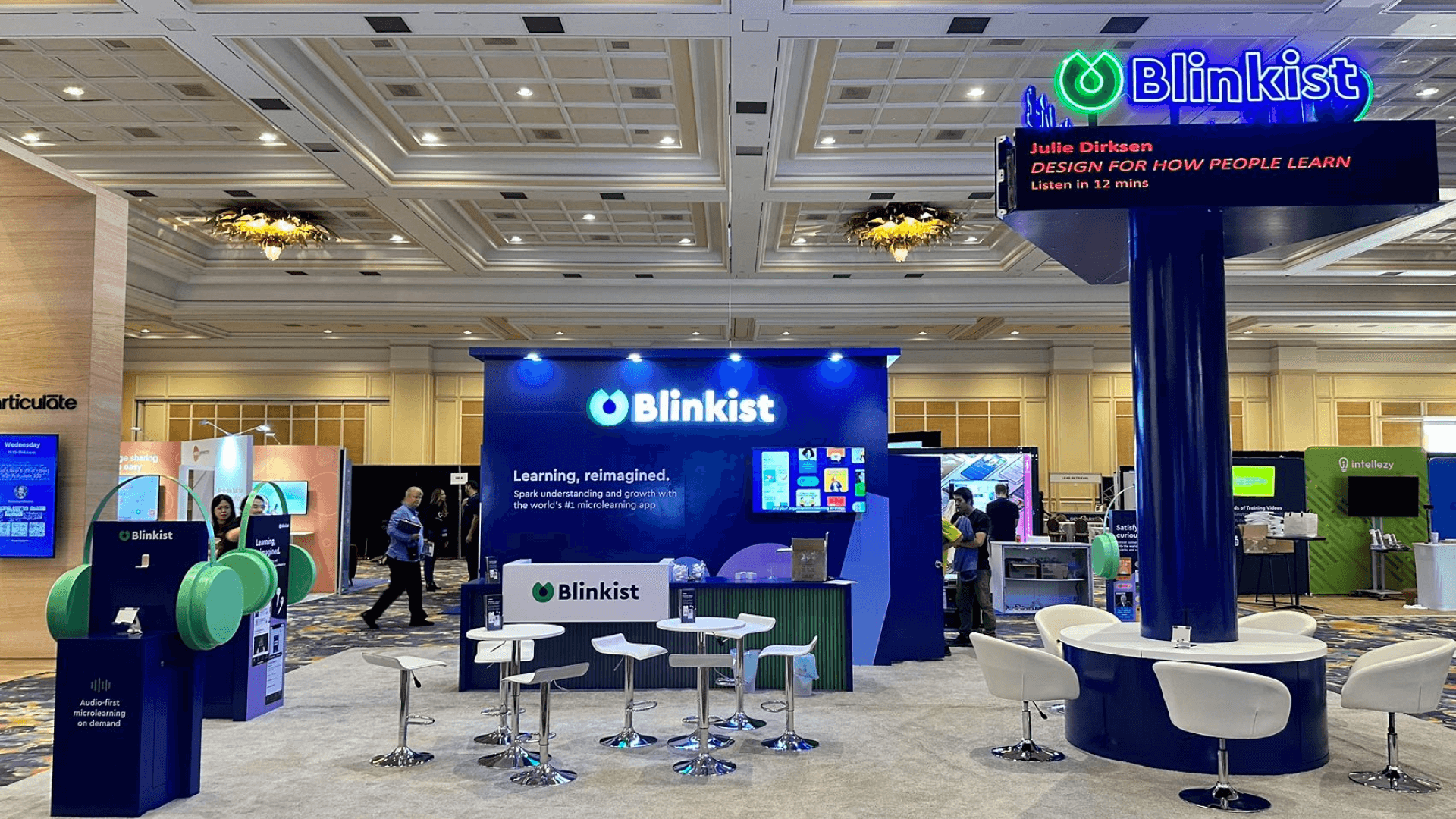
Blinkist brought a 20×30 booth to DevLearn, built to turn an audio-first microlearning product into something visitors could understand in seconds through space, form, and repeatable interaction. Instead of treating the booth like a generic software display, the layout used oversized headphone demo stations, open walk-up edges, and a central branded hub to make the product feel physical without losing clarity. In a learning technology show where attendees compare platforms quickly, the booth needed to explain “what this is” almost immediately while still giving the team room for deeper conversations.
Because DevLearn traffic moves fast, we treated circulation, demo readiness, screen placement, and cable routing as part of the booth system from day one. That allowed Blinkist to run short, repeatable product interactions while keeping the footprint open and easy to navigate. Instead of forcing every visitor into the same path, the booth supported quick entry, visible demo touchpoints, and cleaner transitions into seated conversations, which is exactly what a strong 20×30 booth size guide needs to solve in a demo-led environment.
To keep the installation predictable at MGM Grand, we planned the booth around device setup, mounted display sequencing, power access, and the practical timing needed to get every interaction point live before traffic started. That preparation mattered because an EdTech booth like this only works when the demos feel effortless on opening day. The same logic sits behind logistics and pre-show coordination, where show-floor performance depends on what gets solved before the first crate is opened.


💼
Client:
📅
Year/Exhibition:
📍
Location:
📐
Size:
🏢
Industry:
🏢
Venue Context:
Challenge
The main challenge was translation. Blinkist is built around audio-first microlearning, which means the product experience does not automatically become visible in a trade show environment. At DevLearn, the booth had to make that experience tangible without overexplaining it. Visitors needed to understand the value quickly, move naturally through the space, and engage with demos in a way that felt immediate rather than staged. That required the booth to balance strong visual identity with product interaction, all inside a 20×30 footprint.
The second challenge came from show-floor execution. Demo-heavy EdTech booths depend on more than graphics. Screens, devices, audio touchpoints, counters, and seating all have to support a clear use sequence. If mounted elements, power access, and demo hardware are not organized before installation starts, the booth can lose clarity very quickly. That is why this case also supports logistics and pre-show coordination. For a booth like this, readiness is what makes the concept feel smooth on opening day.
Design vs. On-site Execution
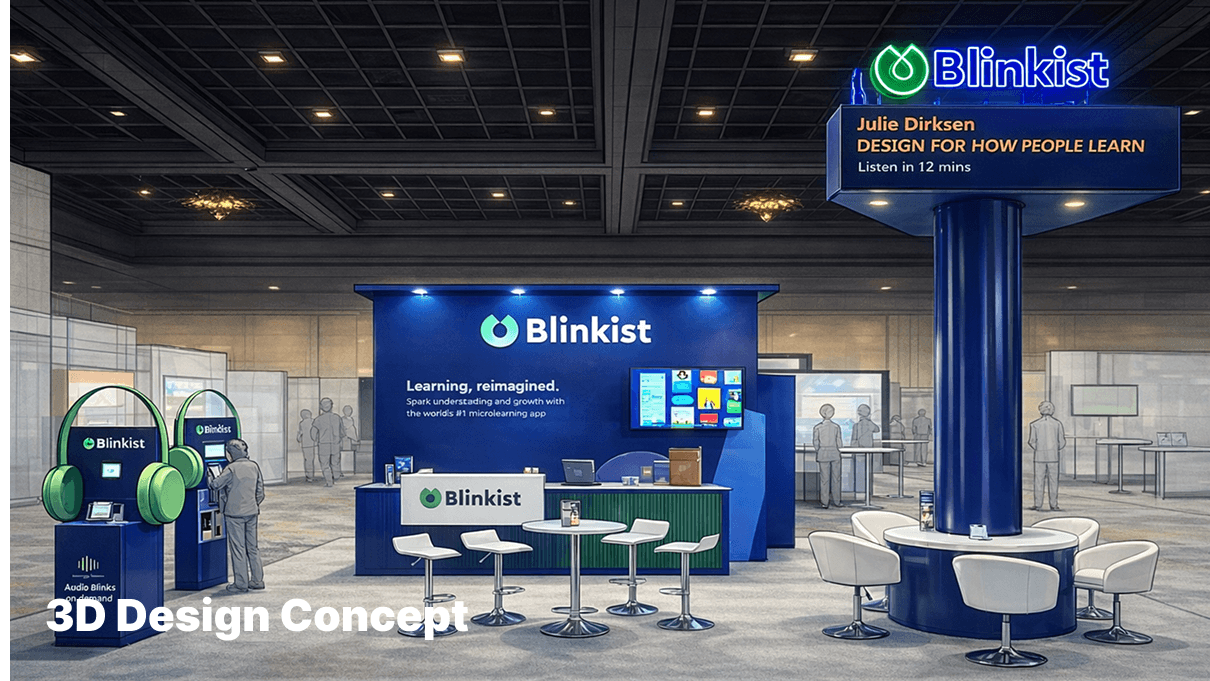
The concept was built around controlled engagement. Instead of treating the booth like a static software display, the layout created a sequence of experiences: brand recognition first, product curiosity second, and longer conversation third. Giant headphone-shaped demo stations gave the booth a clear visual hook, while the central structure and open perimeter helped visitors move through the space without friction. The goal was not to overload the footprint with screens, but to create a booth where the product could be experienced in a way that felt memorable and easy to understand.
On site, that concept only worked because the install sequence protected the same priorities as the layout. Demo points had to stay clean, the LED ring element had to feel intentional rather than decorative, and the booth needed enough breathing room to avoid congestion around the main interaction areas. In a booth like this, layout logic and show-floor execution are tightly connected, which is exactly why 20x30 trade show booth size planning is the right supporting size page for this case.
This project was also presented in our portfolio gallery, highlighting real show-floor visuals and exhibit highlights from the event.
View the Blinkist booth at DevLearn 2023 project gallery for on-site photos and visual references.
Immersive Headphone Demo Stations
Custom headphone-shaped stations turned the core audio product into a physical, instantly understandable experience. They helped the booth stand out while giving visitors a direct and memorable way to sample the Blinkist platform.
Central LED Hub & Seating
The central column, paired with a 360-degree LED ticker ring, worked as both an information hub and a circulation anchor. Seating underneath created a calmer zone for longer conversations without disconnecting from the rest of the booth.
Open Reception Edge
A front-facing reception point helped the booth stay welcoming from multiple directions. It supported quick entry, short introductions, and easy handoff into the product-demo areas without creating a hard front barrier.
On-site Highlights
This booth worked because the execution system supported the product experience from the beginning. In a DevLearn environment, screens, audio-led demos, mounted elements, power planning, and open circulation all influence whether the booth feels usable on opening day. The following highlights show how show-floor execution helped keep the Blinkist booth clear, interactive, and operational under real Las Vegas conditions.
Key Design Features & Show Floor Presence
Audio Experience Made Physical
Strong Visual Hook Without Clutter
Open Multi-Directional Flow
Central Information Anchor
Brand Clarity Through Experience
Outcome
The booth made an audio-based learning platform easier to understand in a physical setting, helping visitors grasp the product more quickly through interaction rather than explanation alone.
Open circulation and visible demo moments helped the booth capture attention naturally and convert pass-by interest into real product interaction.
By separating quick product touchpoints from longer conversation areas, the booth supported repeated demos without losing flow during busier periods.
Because the booth was planned around hardware placement, circulation, and operational testing, it could open in a cleaner and more presentation-ready condition.
What made this booth work was not just the visual identity. It was the fact that the product experience and the booth experience were designed to reinforce each other. For a brand like Blinkist, the challenge was never going to be solved by adding more screens or more messaging. The booth had to make people feel the logic of microlearning quickly, which meant giving each interaction point a clear purpose and keeping the space open enough for traffic to move naturally around it.
Practical takeaway: when an EdTech product is intangible, the booth should not try to imitate a generic software display. It should turn one real behavior of the product into a spatial system that people can step into, test, and remember. That is also where an experienced Las Vegas trade show booth builder adds real value—by making sure the booth is not only expressive, but fully workable on the floor under real installation and demo conditions.
Quick Q&A
Q: What made the Blinkist booth stand out at DevLearn?
A: It turned an audio-based product into a physical experience through oversized headphone demo stations, a central LED hub, and a layout that made the booth easy to enter and easy to understand.
Q: Why was a 20×30 footprint effective for this booth?
A: It provided enough room to separate quick demo moments from seating and longer conversations, while still keeping the booth open and easy to navigate in a high-traffic environment.
Q: What was the biggest execution priority for this kind of EdTech booth?
A: Demo readiness. Power, mounted elements, devices, cable routing, and visitor flow all had to be solved early so the booth felt operational rather than improvised when the show opened.
Q: Why did the central LED ring matter?
A: It acted as both a visual signal and a functional anchor, helping organize the booth while reinforcing the Blinkist content story in a way that visitors could absorb quickly.
Q: What is the most overlooked detail in a demo-led learning technology booth?
A: Sequence control. When demo hardware, screens, counters, and seating are not installed in the right order, even a strong concept can lose clarity and usability before opening.