
Robotics Trade Shows for Exhibitors
Robotics exhibitors have to plan around more than graphics and meeting space. A working robot may need movement clearance, utilities, controlled viewing, technical staff, screens, reset access, and room for buyers to understand what the system is actually doing.
Explore major robotics trade shows by event environment, then move into the planning path that fits the robot, demo cycle, booth size, and show-floor requirements.

How should exhibitors compare robotics trade shows?
Start with the physical demonstration.
An industrial robot cell, warehouse AMR, drone system, laboratory automation platform, and surgical robot do not use the show floor in the same way. Movement, safety, utilities, viewing distance, technical explanation, and buyer interaction can all change from one event to another.
Once those requirements are clear, it becomes much easier to choose the right booth size and decide whether the project fits a rental, hybrid, or custom exhibit.
Robotics Trade Shows by Event Environment
Robotics events are more useful to compare by how the technology is evaluated than by simply grouping everything under “robotics.”
Industrial Robotics & Smart Manufacturing
These shows place robotics inside production, automation, machine vision, manufacturing systems, and industrial equipment.
Automate
Automate brings robotics, machine vision, motion control, sensors, and industrial automation into a demo-heavy environment. The booth needs to keep the system visible while leaving enough room for equipment, operating clearance, screens, and technical conversations.
Explore Automate booth planning

IMTS
At IMTS, robotics is evaluated alongside machine tools, inspection systems, manufacturing software, and production equipment. A useful booth connects the automation system to a clear manufacturing task rather than presenting the robot as an isolated machine.
Explore IMTS booth planning

FABTECH
FABTECH exhibitors may be showing robotic welding, fabrication systems, automation equipment, or process technology. Product samples, technical data, operator space, and the working demo all need to stay connected without making the booth difficult to enter.
Explore FABTECH booth planning
Warehouse, Autonomous & Mobile Robotics
Here, movement and real operating workflows become more important.

ProMat Robotics & Warehouse Automation
AMRs, AGVs, robotic picking, controls, and warehouse software often need to be shown as part of one process. At ProMat, the challenge is giving the system enough room to move while visitors can still understand what enters the workflow, what the robot does, and what changes afterward.
Explore ProMat robotics demo planning

Commercial UAV Expo
Drone exhibitors often present the aircraft together with sensors, payloads, inspection data, mapping outputs, or operating software. Even without live flight inside the booth, the exhibit should connect the hardware with the field task buyers are evaluating.
Explore Commercial UAV Expo booth planning

CES Robotics
CES puts robotics inside a much broader technology environment. Humanoid robots, consumer systems, mobility products, AI-enabled machines, and emerging hardware need to make their purpose clear quickly from the aisle.Demo visibility, charging, reset access, screens, and crowd flow should be resolved before the booth architecture becomes the focus.
Explore CES robotics booth planning
Laboratory & Medical Robotics
Scientific and clinical events add another layer: the booth often has to explain the workflow around the robot, not just the machine itself.

SLAS Laboratory Automation
SLAS exhibitors may combine robotic workstations, liquid handling, laboratory instruments, sample management, imaging, and software. Visitors should be able to follow the process from sample entry to a visible result without losing sight of the equipment doing the work.
Explore SLAS booth planning

AUA Surgical Robotics
Surgical robotics combines hardware, visualization, instruments, software, and clinical workflow. The booth needs enough separation for operation and technical access while still giving clinicians and buyers a clear view of how the system fits into the procedure.
Explore AUA surgical robotics booth planning
Need help planning a booth for one of these shows? Review more Las Vegas trade show booth case studies.
What Changes Between Robotics Trade Shows?
The robot may stay the same. The environment around the demonstration often does not.
Movement & Safety
A static display needs little operating clearance. An AMR, cobot, robotic cell, or moving platform may need a defined operating zone, visitor boundary, operator position, and reset area.
The goal is not to hide the product behind barriers. It is to make the demo easy to watch without compromising how the system is operated.
Infrastructure
Robotics demos may depend on power, charging, wired data, sensors, control hardware, compressed air, computers, screens, fixtures, or client-owned equipment.
Those dependencies should be known before flooring, counters, walls, cable routes, and storage are finalized.
Proof & Visibility
The most important part of the demonstration is not always easy to see.
Screens, cameras, samples, result displays, and workflow graphics can show what the robot detected, moved, processed, inspected, or produced.
Demo Flow
A working robotics booth has a cycle:
prepare → run → observe → explain → reset
The layout should support that cycle while allowing new visitors to enter and qualified buyers to continue a technical conversation nearby.

Booth Size Planning for Robotics Exhibitors
Choose the footprint from the robot and its operating requirements—not from staff count alone.
10x20 — Compact or Contained Demo
A 10x20 booth can work for compact cobots, machine-vision stations, tabletop automation systems, static robots, or screen-led demonstrations with limited movement.
View 10x20 Booth
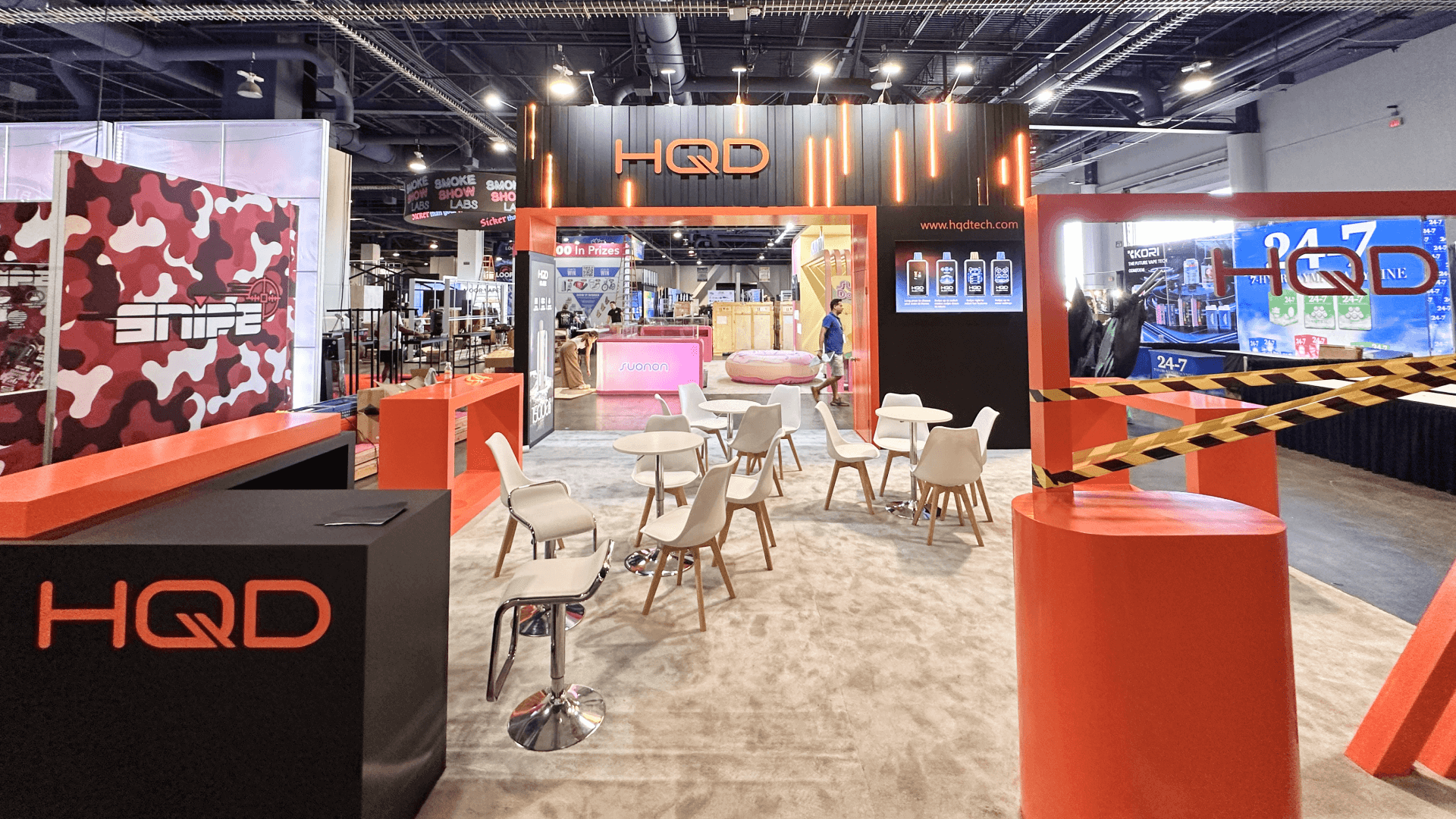
20x20 — One Main Robotics Demo
A 20x20 booth gives more room to separate the working demo from visitor viewing, screens, reception, storage, and technical conversations.
This size works well when one main system carries the exhibit.
View 20x20 Booth
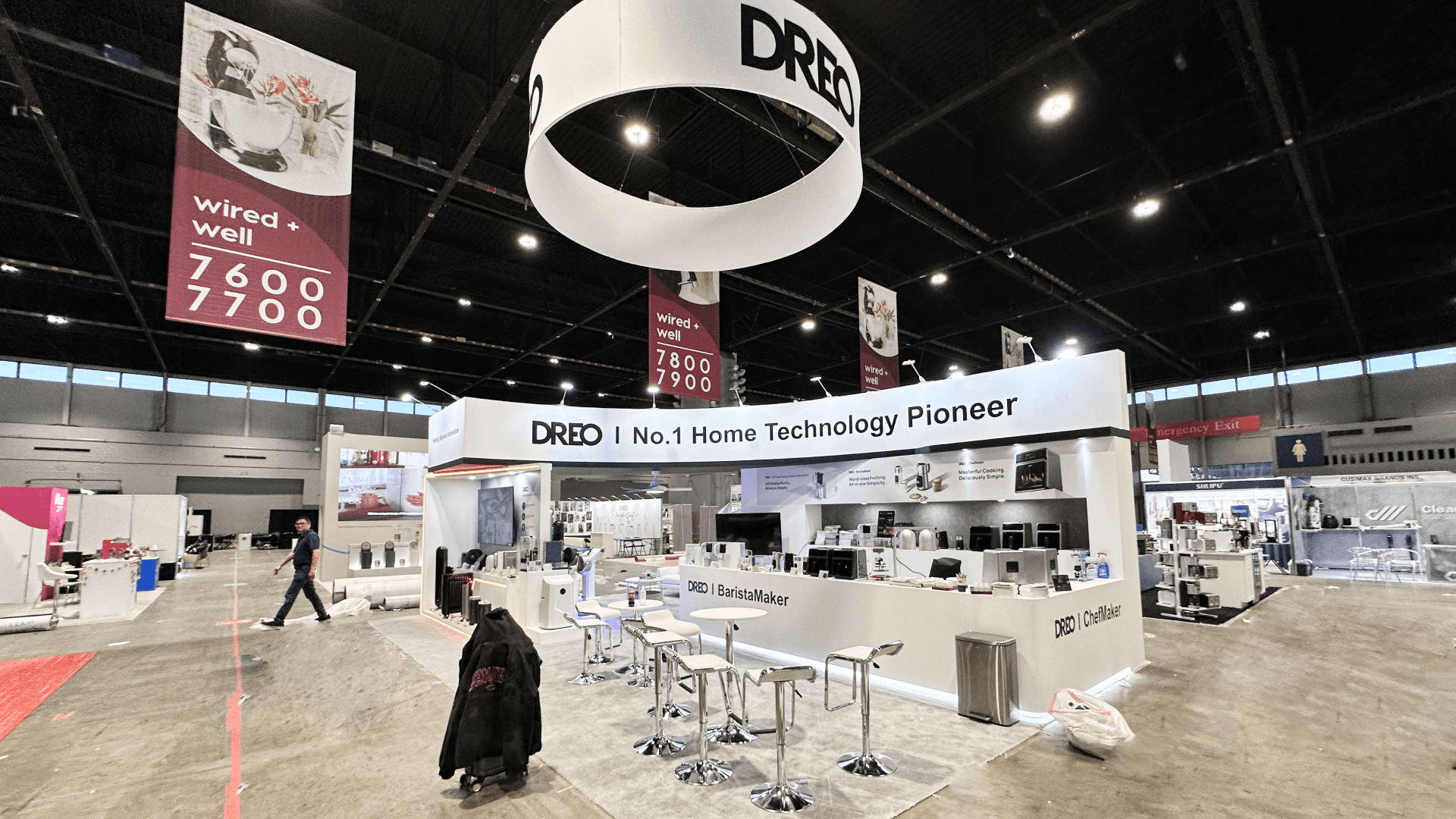
20x30 — Demo + Technical Conversation
A 20x30 booth becomes useful when the robot needs a larger operating area, several demo positions, more equipment, or a meeting zone that should not interrupt the demonstration.
View 20x30 Booth
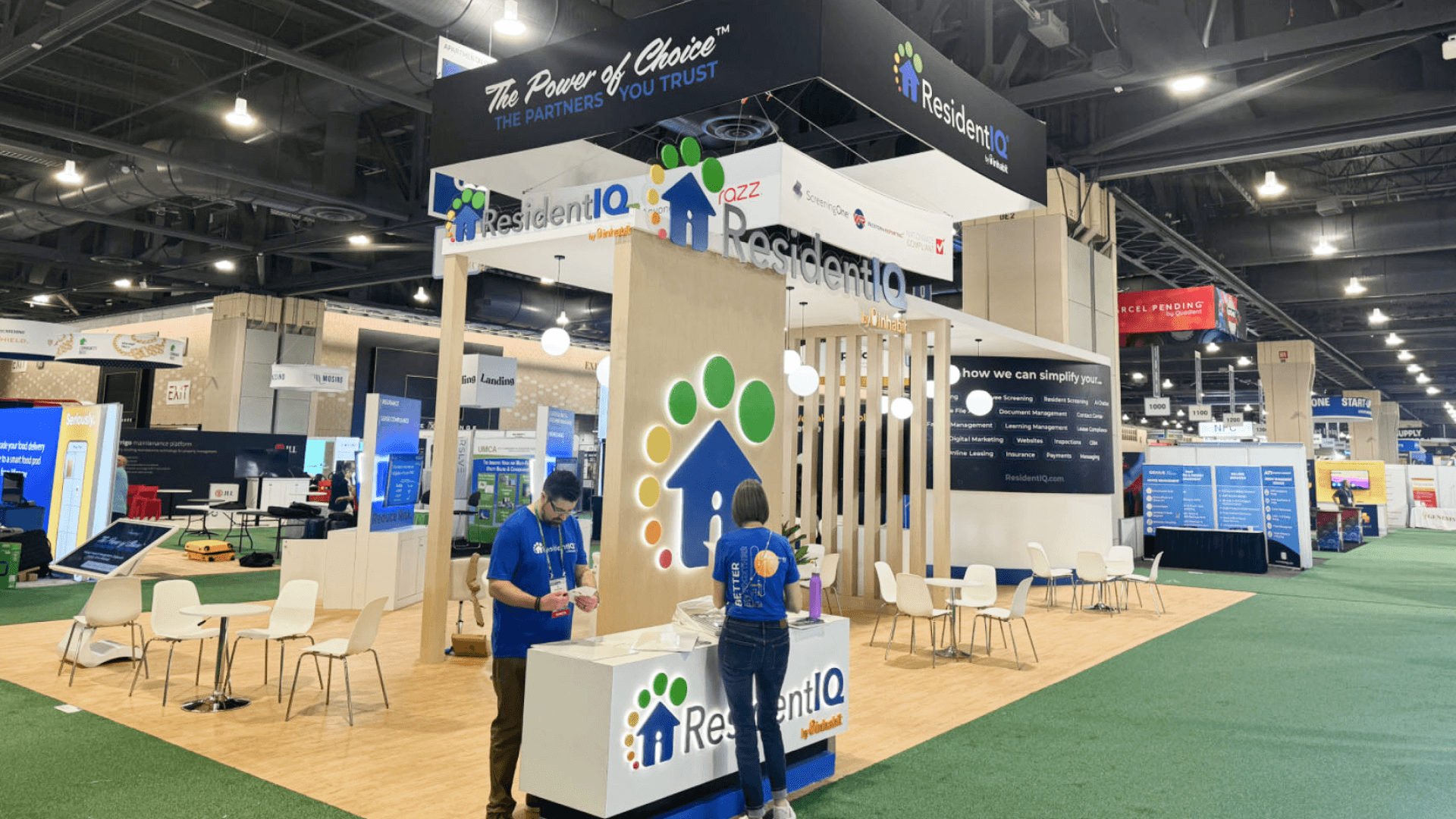
30x40+ — Robotics Cells & Multi-System Exhibits
A 30x40 booth or larger island can support robotic cells, multiple systems, larger equipment, controlled viewing, stronger long-range branding, technical support areas, and private meetings.
View 30x40 Booth
Larger island booths make sense when multiple product teams, presentations, executive meetings, or more complex technical systems need independent working zones.

Not Sure Which Booth Size Fits the Robot?
Before choosing a footprint, confirm:
the physical dimensions of the robot and related equipment;
the full movement or operating envelope;
where visitors can safely stand;
utilities such as power, data, charging, or compressed air;
screens and control hardware;
the length of the demo and reset cycle;
storage and service access;
whether technical conversations need their own space.
Circle Exhibit can review these requirements before the booth structure is locked.
Rental, Hybrid or Custom?
Robotics exhibits should not be forced into one standard booth type.
Demo-Ready Rental
Rental architecture can work well when the robot or automation system is compact and largely self-contained.
It is a practical option for projects that mainly need branded walls, screens, counters, storage, open visitor access, and limited equipment integration.
Best suited to:
compact cobots, machine vision, controllers, sensors, software-led robotics, and smaller technical demos.
Hybrid Exhibit
A hybrid exhibit combines reusable rental architecture with custom components built around the equipment.
This can be a better fit when the robot requires a dedicated opening, custom demo table, platform, safety boundary, integrated screen, special cable route, or other product-specific interface.
The booth architecture stays reusable while the demonstration zone adapts to the machine.
Custom Exhibit
A custom build becomes more relevant when the equipment controls the entire floor plan.
Large robotic cells, several operating systems, heavy machinery, specialty structures, major AV integration, larger movement zones, or stronger architectural branding may require the booth to be developed around the demonstration from the beginning.
Discuss Your Robotics Booth Requirements
From Demo Plan to Show Floor
Robotics projects often arrive as several separate systems: booth structure, client-owned equipment, screens, controls, utilities, safety components, tools, and demo hardware.
The installation plan needs to bring those pieces together in the right order.
Prebuild & Equipment Fit
Interfaces, clearances, flooring, screens, access points, and product placement should be checked before freight moves.
Explore booth fabrication and prebuild checks
Logistics & Arrival Sequence
Booth freight and client equipment should arrive according to the order in which the installation team needs them.
Explore logistics and pre-show coordination
Installation & Demo Testing
The booth is not finished when the structure is standing. Time is still needed for utilities, equipment placement, commissioning, connectivity checks, and final demo testing.
Explore on-site installation support
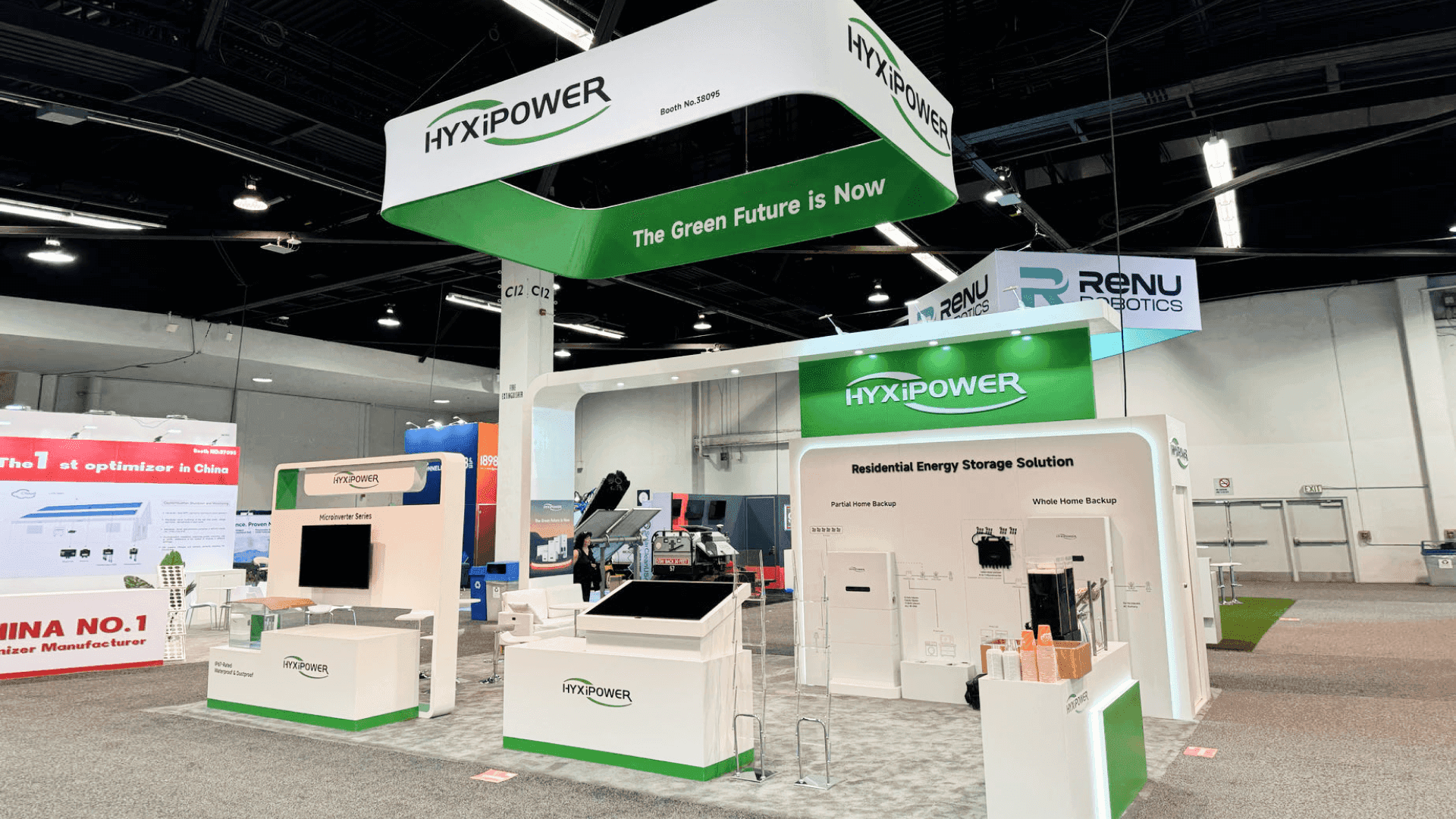
Real Booth References for Robotics & Automation Products
Real projects help show how operating space, screens, branding, equipment, and visitor flow translate into a physical exhibit.
Mech-Mind — Automate 2025
Robotics · Machine Vision · Live Demo
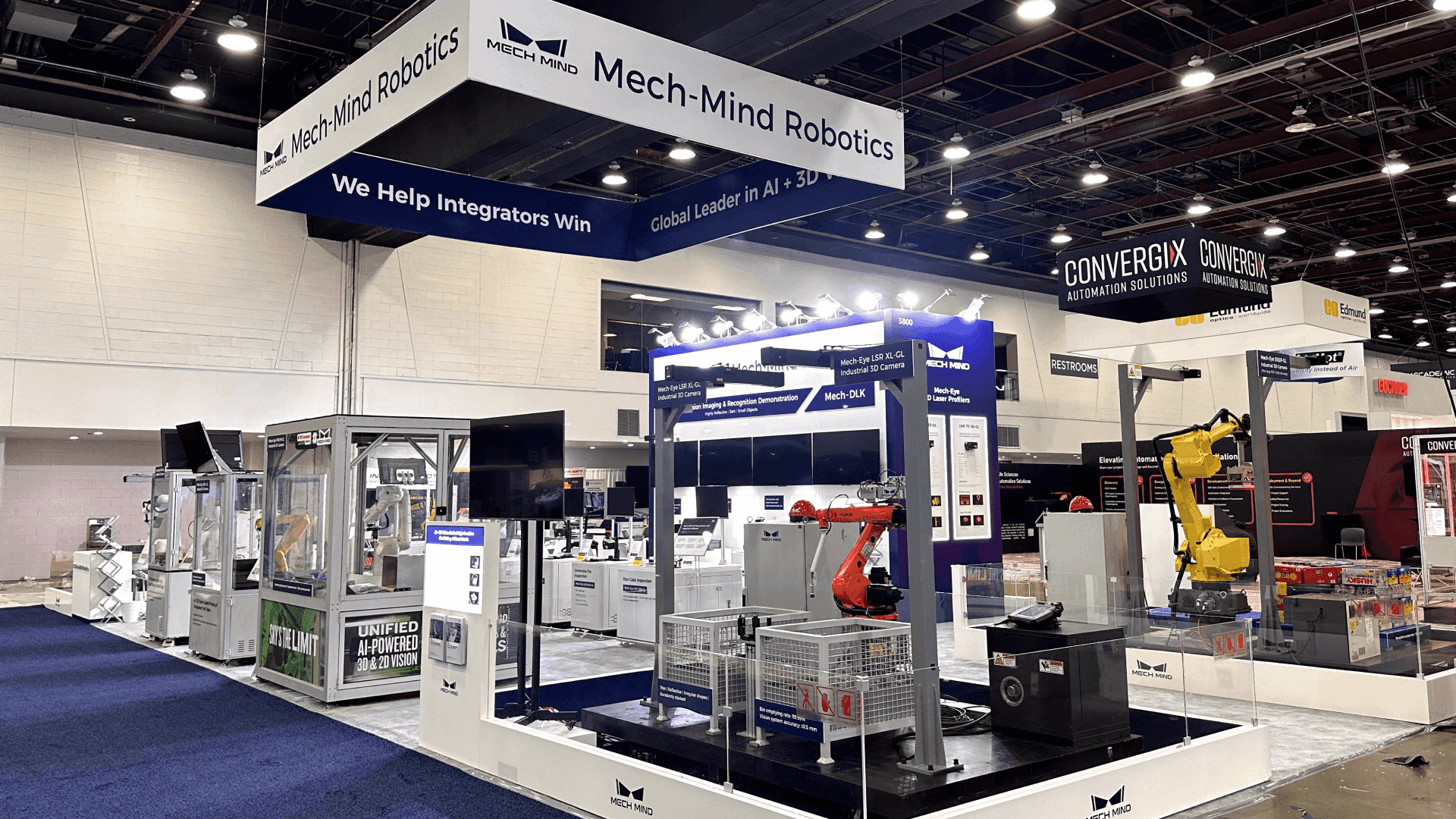
A robotics-focused exhibit built around visible technical demonstrations, digital screens, clear product messaging, and controlled visitor access. It is a useful reference for keeping a compact robotics demo open to the aisle without losing operating space.
View the Mech-Mind robotics booth case study

Taiwan Excellence-Automate 2025
Industrial Automation · Multi-Brand Demos · 20x30
A 20x30 pavilion supporting several automation and robotics product stations inside one shared environment. Open circulation, demo counters, screens, overhead identity, and repeatable equipment setup helped multiple technologies operate without turning the booth into a row of isolated displays.
View the Taiwan Excellence Automate case study
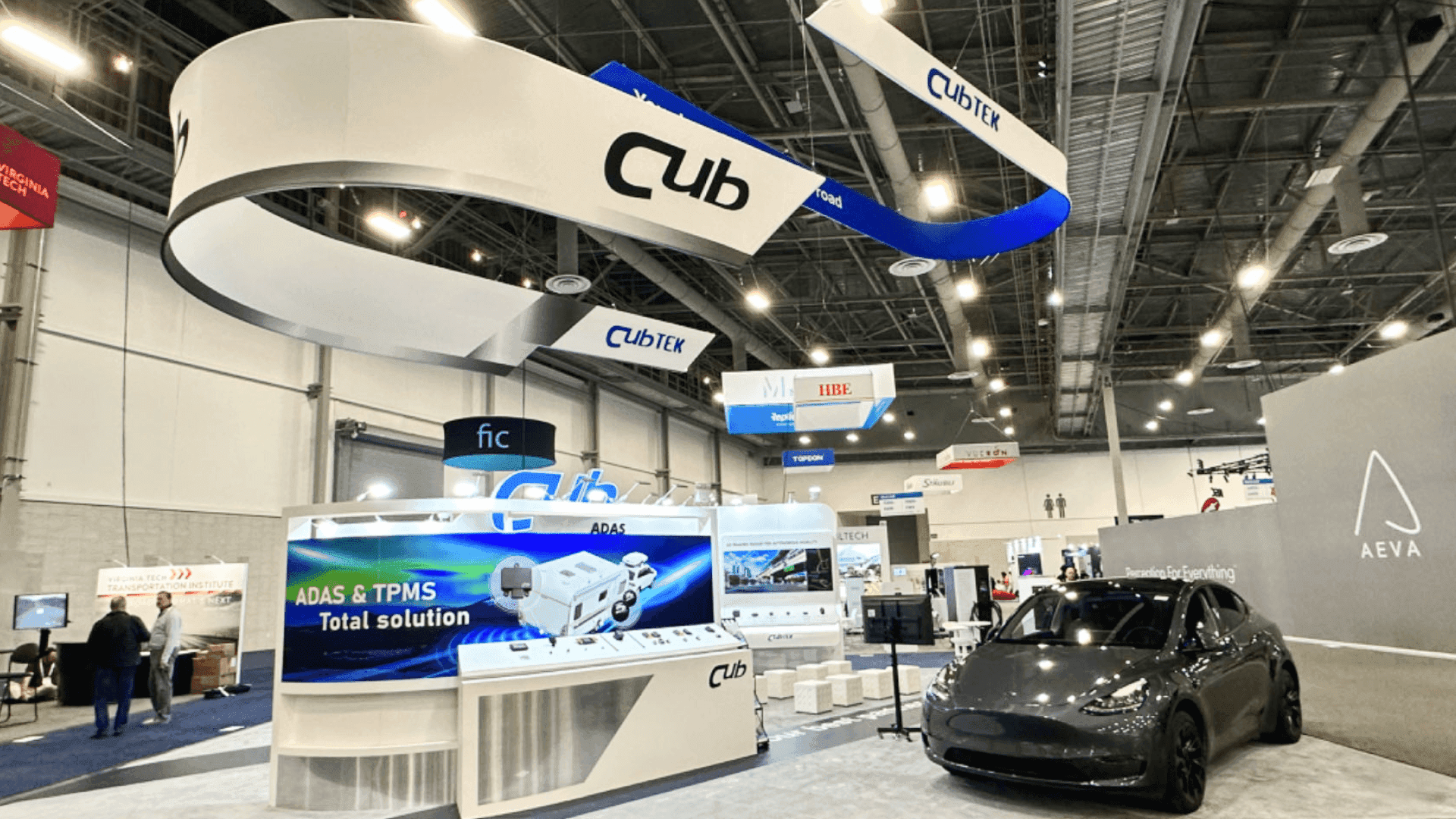
CUB-TEK — CES 2024
Automotive Technology · Sensors · Physical Product Display
A larger technology exhibit combining physical products, automotive systems, digital presentation, and open visitor circulation. It provides a useful reference for robotics and mobility exhibitors that need hardware, sensing technology, and technical explanation in the same footprint.
View the CUB-TEK CES project
Robotics, Automation & AI Trade Shows
Robotics increasingly overlaps with AI, machine vision, autonomous systems, and intelligent control, but the booth-planning starting point is different.
This page begins with the physical system: movement, equipment, safety, utilities, viewing, and operating space.
If the primary challenge is explaining an AI software platform, enterprise AI product, or AI workflow across different event environments, use the AI trade shows for exhibitors collection.
Plan Around the Demonstration
Do not start with:
“We need a 20x20 booth.”
Start with:
“What must the system do during the show?”
Once the robot footprint, movement, visitor viewing, utilities, demo cycle, technical conversations, and equipment requirements are clear, the right booth size and build direction become much easier to define.
Frequently Asked Questions
What types of robotics trade shows are included on this page?
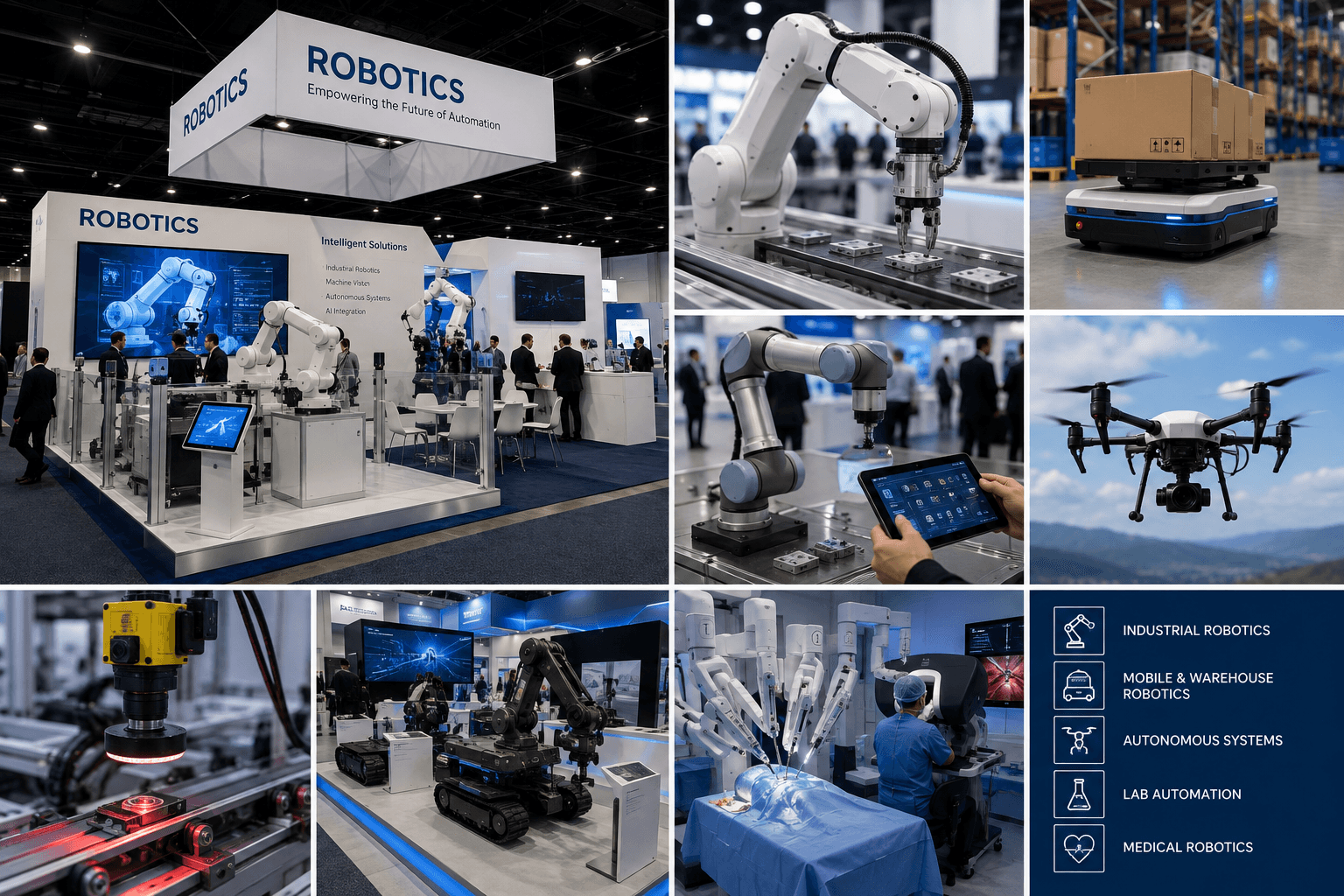
This collection covers industrial robotics and smart manufacturing, warehouse and mobile robotics, UAV and autonomous systems, laboratory automation, and surgical robotics. Each environment creates different product demonstration and buyer evaluation requirements.
What booth size works for a robotics exhibitor?
Can a robotics exhibitor use a rental booth?
What should be planned around a live robot demo?
Planning a Robotics Trade Show Booth?
Share the event, booth size, robot or automation system, equipment dimensions, movement requirements, utilities, demo cycle, meeting needs, timeline, and any current design references.
Circle Exhibit can review the project around the actual demonstration and help define a practical rental, hybrid, or custom exhibit direction—including fabrication readiness, logistics, installation, and show-floor setup.