For Automate 2025, Mech-Mind Robotics needed a compact 10×20 footprint that could still support live robotics demos, crisp product education, and strong aisle visibility. Circle Exhibit delivered a clean, high-contrast build with a clear visitor flow, AV-ready product storytelling, and safety-forward demo zoning—designed for fast on-site execution.


💼
Client:
📅
Year/Exhibition:
📍
Location:
📐
Size:
🏢
Industry:
🏢
Venue Context:
Challenge
Mech-Mind’s exhibit had to balance hands-on robotics demonstrations with technical product messaging—all inside a tight 10×20 footprint. The space needed:
A clear separation between demo activity and walk-up product education
Safety-first boundaries around moving equipment while keeping sightlines open
Reliable power + AV routing for multiple screens and demo stations
Strong brand presence from multiple approaches in a busy automation hall
Practical, fast build decisions that reduce on-site surprises (rigging, lighting, cable management, and traffic control)
Design vs. On-site Execution
The design focused on a single, readable story from aisle to demo: visitors first encounter high-level brand messaging, then move naturally toward interactive demo zones and technical displays. To keep installation efficient, we planned clean cable paths, screen mounting points, and dedicated equipment positions early—so the on-site crew could execute quickly without rework. The result is a booth that feels open and technical at the same time: strong contrast, controlled lighting, and purposeful boundaries that protect the demo while inviting conversation.
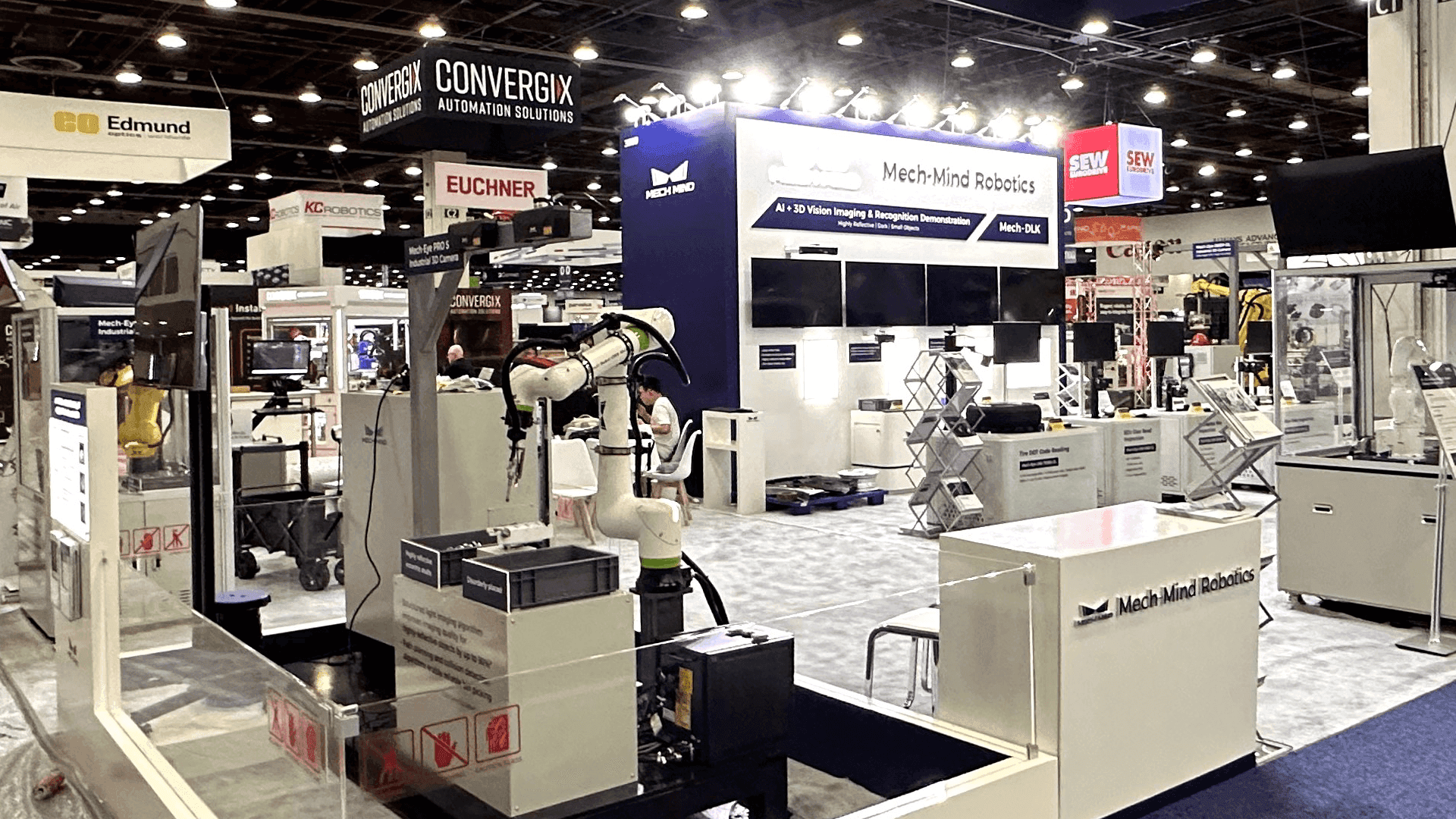
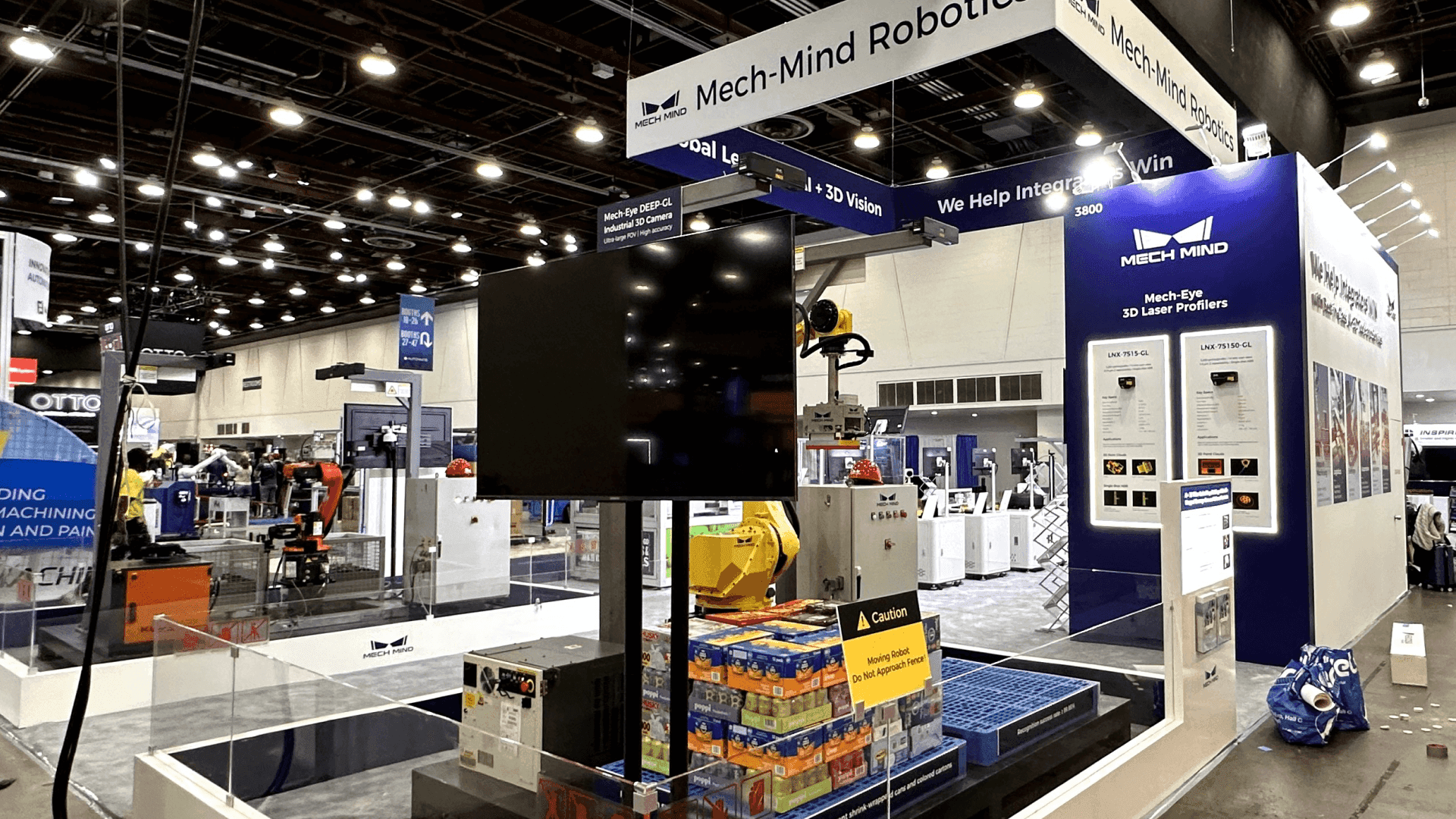
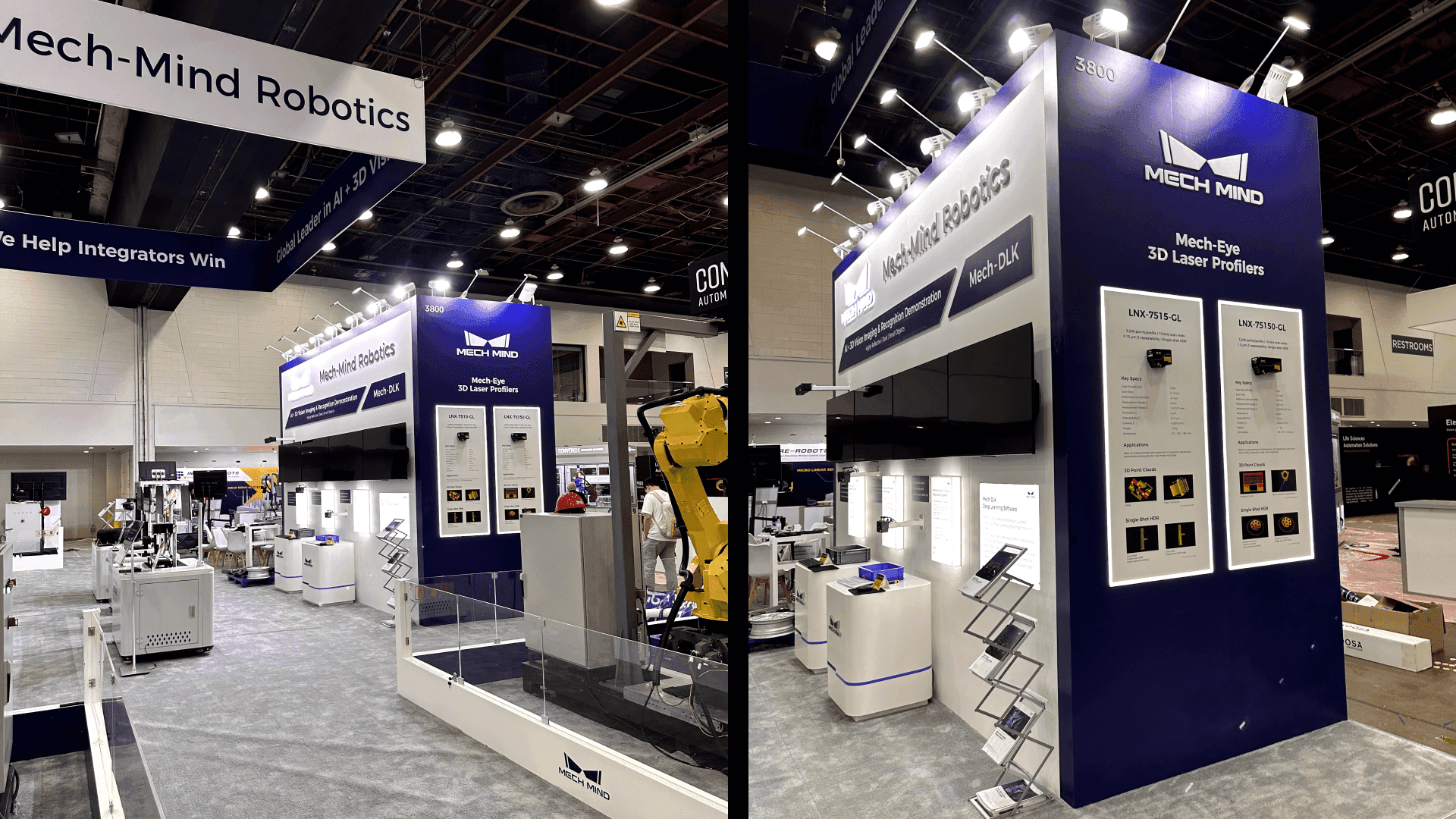
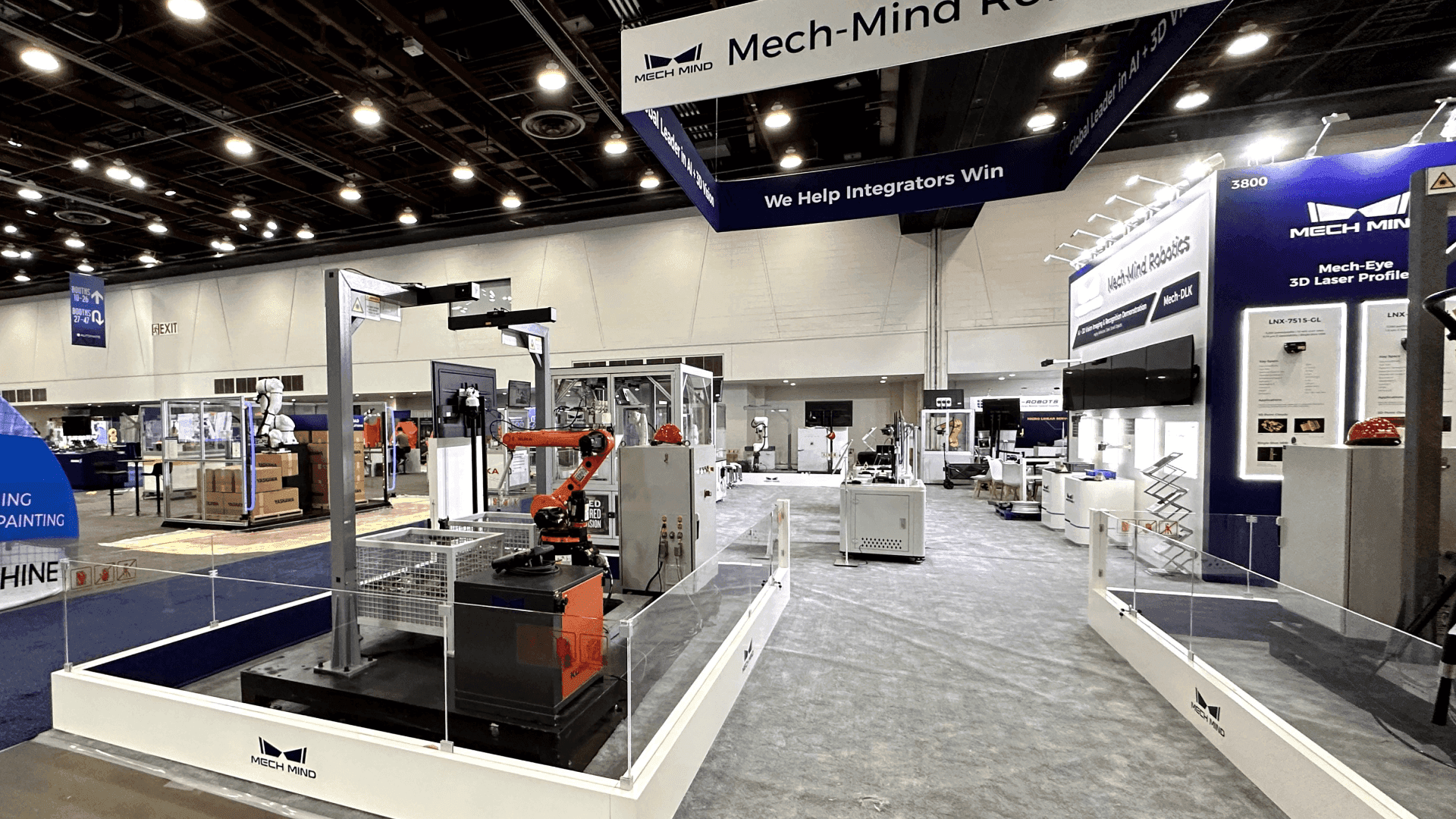
Robotics Demo Cell With Controlled Perimeter
A defined demo area uses clear boundaries to manage safety and crowding while maintaining visibility into the action. This supports live motion demos without blocking adjacent product stations.
Multi-Screen Product Education Wall
A streamlined backwall layout supports multiple screens and technical panels for quick scanning—ideal for industrial audiences comparing specs, applications, and system performance.
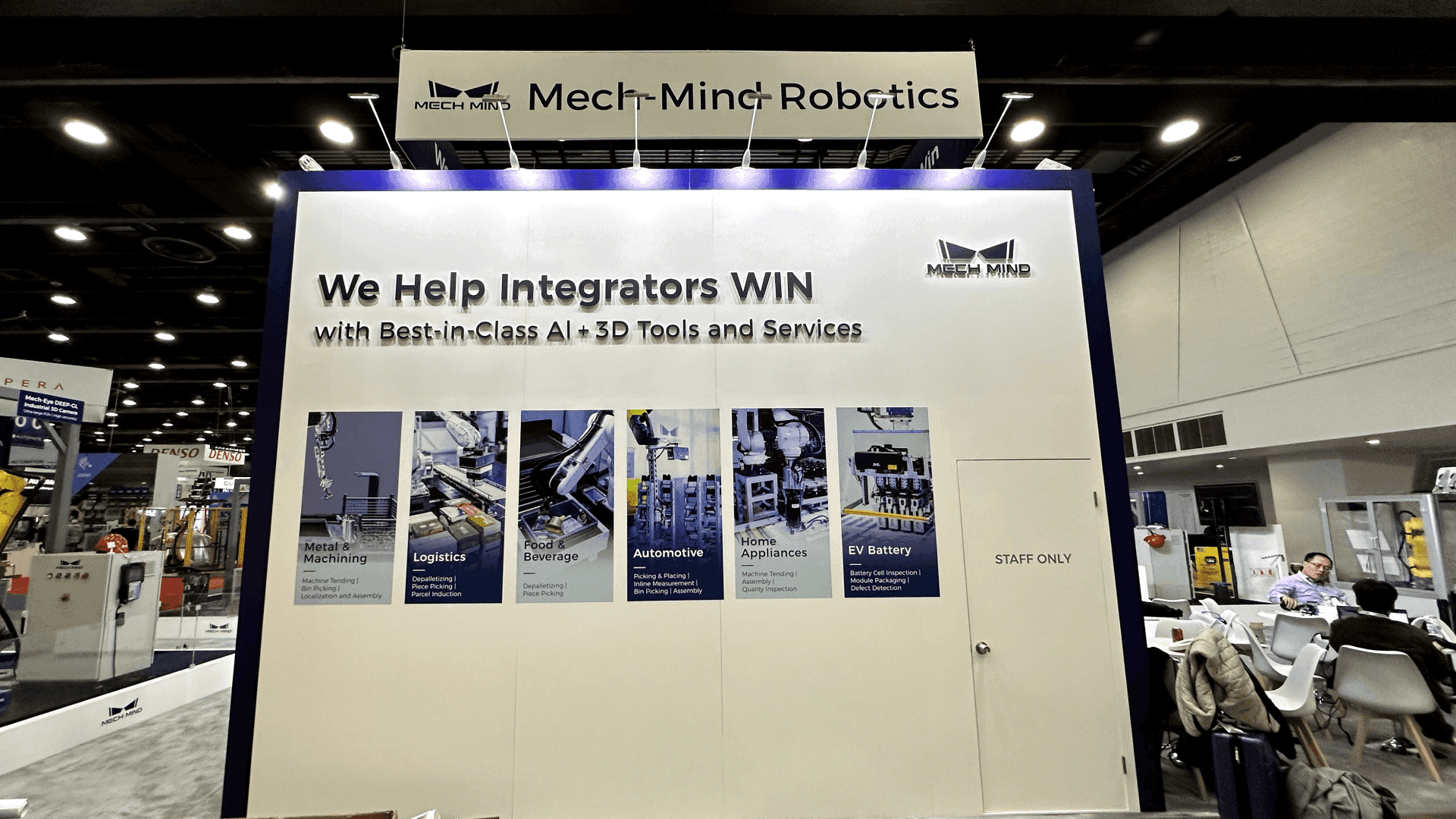
Application Messaging That Reads From the Aisle
Large-format messaging (integrators, AI + 3D tools, and application categories) is positioned to stay readable under show lighting, helping the booth communicate value before staff engagement begins.
Vertical Branding Tower + Lightbox Product Panels
A tall brand structure with illuminated product panels adds height and authority—crucial in a compact footprint—while keeping the core floor plan functional for demos and meetings.
Keep the demo safe without hiding it
Reduce friction for AV + power deployment
Make the booth readable in under 3 seconds
Prevent bottlenecks in a compact footprint
Support real sales conversations on the floor
Outcome
messaging → product education → demo engagement
controlled demo area that still stays visually open to the aisle
structure supporting multiple screens without cable clutter
visibility via tower + overhead signage presence
In automation shows, the booth has to do two jobs at once: prove capability (live demos) and explain complexity fast (technical messaging). For Mech-Mind, we treated the 10×20 footprint like a “mini lab”: controlled demo boundaries, clear category-based storytelling, and strong vertical branding. The key is not adding more elements—it’s making every element do double duty: guide traffic, carry message, and support the demo team.
FAQ
Q1: What booth size works best for live robotics demos at Automate?
answer: For motion demos with robots, a 10×20 can work if you define a dedicated demo zone and keep the perimeter clear; larger footprints help, but zoning and sightlines matter more than raw size.
Q2: How do you keep a robot demo safe while still attracting visitors?
answer: Use a controlled perimeter (clear barriers / defined boundaries) and place the robot cell so the audience can watch from a safe edge—without blocking walkways or product stations.
Q3: What AV setup is most important for machine vision and inspection exhibits?
answer: Prioritize stable mounting for multiple monitors, clean cable routing, and glare control—so vision outputs, inspection results, and UI screens remain readable under show lighting.
Q4: How should industrial exhibitors present technical specs without overwhelming visitors?
answer: Group content by application (e.g., inspection scenarios, integrator workflows, 3D vision tasks) and use short headings that reference real objects like robots, cameras, laser profilers, and inspection targets.
Q5: What should be planned early to avoid on-site delays for robotics booths?
answer: Plan power drops, cable paths, screen locations, and equipment footprints in advance—especially for robots and vision systems—so on-site crews aren’t forced into last-minute reroutes.