IFT FIRST Ingredient Booth Planning for Food Ingredient Exhibitors
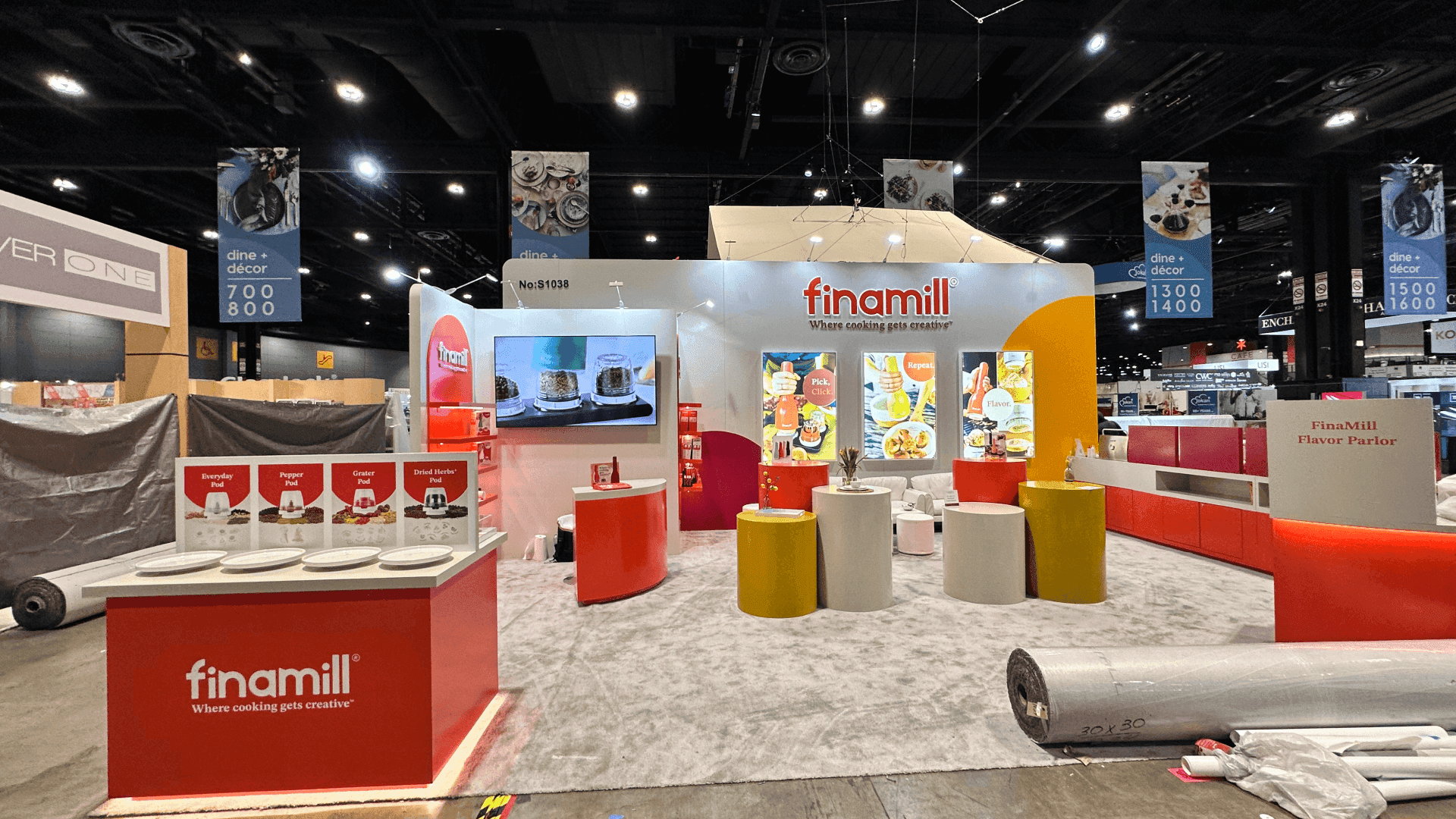


How should food ingredient exhibitors plan a booth for IFT FIRST?
Food ingredient exhibitors at IFT FIRST should plan around how visitors compare samples, understand product claims, and see where an ingredient fits in real applications. The booth needs clear sample grouping, readable labels, space for technical questions, and a counter layout that does not slow down traffic.
IFT FIRST ingredient booth planning starts with sample clarity. Visitors need to understand what the ingredient is, where it fits, and why it matters without reading a wall of technical copy or waiting for a long explanation.
This page supports the main IFT FIRST booth planning hub by focusing on ingredient-led displays, sample counters, application examples, product labels, and technical buyer conversations. For compact startup displays, see IFT FIRST Startup Pavilion booth planning.
Because IFT FIRST is held at McCormick Place, ingredient exhibitors should plan counter placement, sample reset, graphics, storage, and setup timing before move-in. For local execution context, review Chicago exhibit support for ingredient exhibitors and compare layouts such as 10x20 trade show booth planning.
Why Exhibitors Choose Circle Exhibit
Clear scope, transparent quote review, nationwide booth support, and efficient setup planning for qualified rental and custom exhibit projects.
48hr
Setup Window
10+
Years Since 2014
U.S.
Trade Show Support
Real
Booth Project Proof
Ingredient booth size should match the number of samples, categories, staff members, and technical conversations expected at the booth. The layout should make comparison easy without crowding the counter.
A 10x20 booth works for one main sample counter, category signage, product labels, storage, and short buyer conversations.
A 20x30 layout fits several ingredient lines, application displays, demo counters, meeting space, and stronger aisle visibility.
A 20x20 booth gives more room for sample groups, screen content, staff flow, storage, and deeper technical discussions.
A hybrid booth can combine rental structure, custom counters, shelving, graphics, and meeting space for a more complete ingredient display.
For more detailed planning, the food ingredient exhibitor booth planning guide explains how to organize ingredient samples, application examples, product claims, booth size, storage, and buyer conversations before finalizing an IFT FIRST ingredient booth.
Ingredient booths need to make sample comparison, product function, application value, and buyer follow-up easy to understand in a short visit.
Group samples by application, category, benefit, or product family so visitors can compare them without confusion.
Claims, performance points, and application notes should be short enough to read from both the aisle and the counter.
Finished-product examples, use-case visuals, or formulation stories help visitors understand where the ingredient fits.
Ingredient conversations often go beyond a sample handoff, so the booth needs room for questions, notes, and follow-up.
This page focuses on ingredient samples, application examples, product claims, and buyer conversations at IFT FIRST.
IFT FIRST 2026 takes place July 12–15 at McCormick Place in Chicago.
Ingredient exhibitors speak with R&D teams, product developers, buyers, and technical decision-makers.
Not Sure Which Booth Size You Need?
Not every exhibitor knows whether a 10x20, 20x20, 20x30, or larger booth is the right fit. Circle Exhibit can help review your event goals, product display needs, demo areas, meeting space, storage, budget scope, and setup timeline before you choose a booth size.
Keeping Samples Organized
Making Claims Easy to Read
1
Group Samples by Buyer Logic
2
3
4
Rental Booth for Focused Ingredient Displays
A rental booth works well for a focused sample counter, clean graphics, product labels, storage, and a simple buyer conversation flow.
Custom Build for Complex Ingredient Stories
A custom build is better when the booth needs multiple sample zones, custom counters, shelving, lighting, stronger branding, or a more specific application display.
Hybrid Booth for Samples and Meetings
A hybrid setup can combine rental structure with custom counters, branded graphics, storage, screen content, and meeting space for a flexible ingredient booth.
Confirm counters, graphics, samples, storage, and booth materials before move-in so the display can be checked early.
Samples, labels, product cards, and counter surfaces should be easy to refresh during busy traffic.
Counter layout, graphics, storage, staff flow, and product handling need to work together in one clear display plan.
Before opening, check whether sample groups, claims, application examples, and staff positions are clear from the aisle.
IFT FIRST Ingredient Booth Support
Plan an ingredient booth around sample counters, application examples, product claims, storage, buyer conversations, and McCormick Place setup.
What should an IFT FIRST ingredient booth include?
It should include organized samples, clear product claims, application examples, counter space, storage, and room for technical buyer conversations.
What booth size works best for ingredient exhibitors?
How should ingredient samples be organized?
Do ingredient booths need application examples?
Why is setup planning important for ingredient booths?
READY TO PLAN YOUR NEXT BOOTH?
Let’s Build a Booth That Fits Your Event
Share your event name, booth size, city, timeline, product display needs, and design references. Circle Exhibit will review your project direction and help you choose a rental-friendly or custom exhibit path.
3000+
Booth Projects Supported
50+
U.S. Event Cities
Transparent
Quote Review
Plan product labels, claim graphics, application visuals, and branded surfaces that make ingredient value easier to read.
Coordinate samples, booth materials, storage, graphics readiness, freight timing, and setup sequence before arriving at McCormick Place.
Shape the booth around sample counters, application displays, staff flow, storage, and technical buyer conversations.
Use 20x20 booth planning when ingredient exhibitors need several sample groups, screen content, storage, and space for deeper conversations.
Compare 20x30 booth planning when the display includes multiple ingredient lines, application examples, meeting space, and stronger aisle visibility.