MRO Americas Trade Show Booth Planning


How should exhibitors plan a booth for MRO Americas?
Start by deciding what visitors need to evaluate. A software provider may need a guided maintenance-workflow demo, while a parts or equipment supplier may need inspection and comparison space. That choice should determine footprint, meeting capacity, storage, AV, freight requirements, and how much custom engineering the exhibit actually needs.
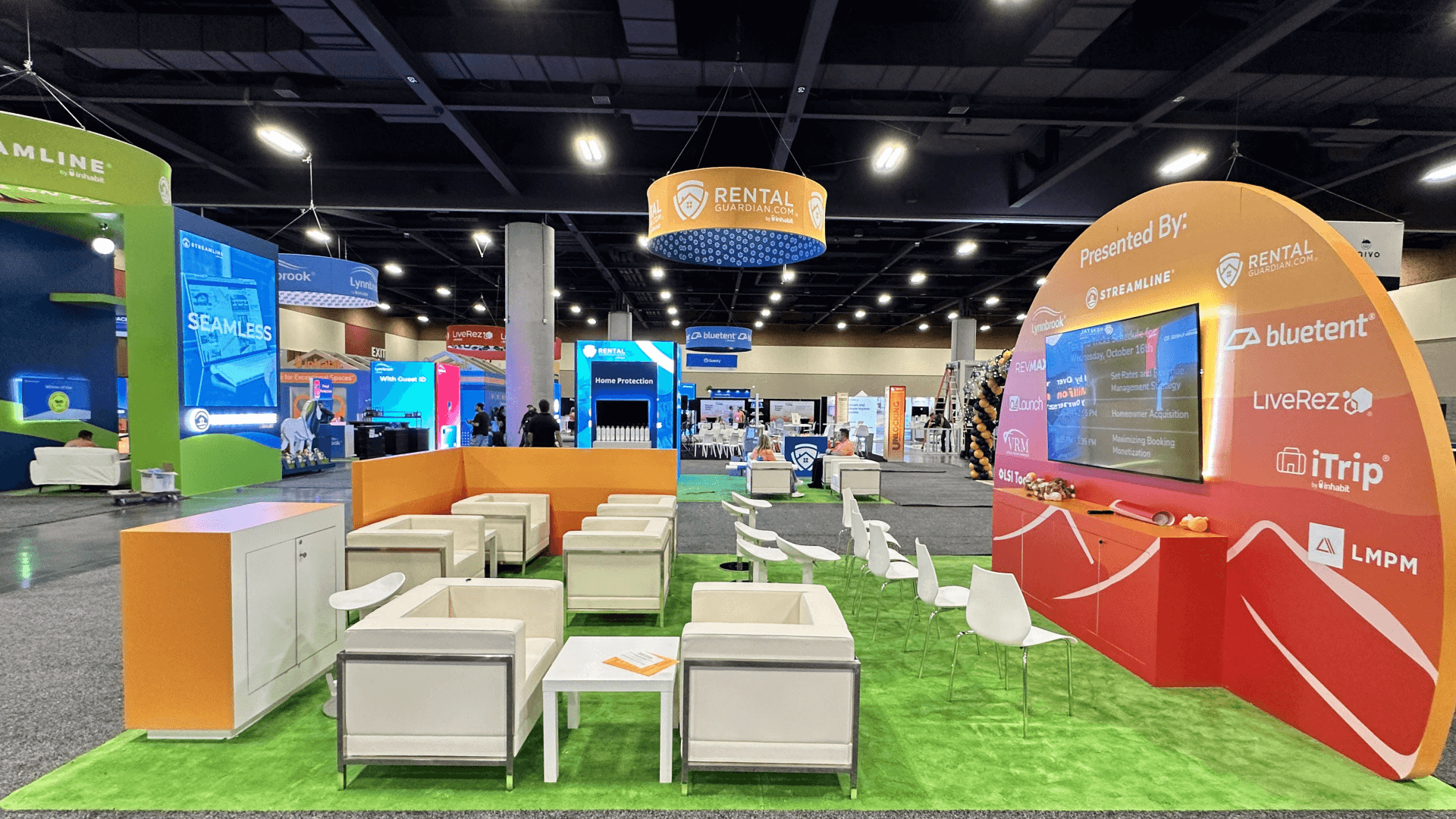
MRO Americas brings together exhibitors with very different booth requirements. Software companies need to make digital maintenance workflows easy to follow, while parts, component, and equipment suppliers need enough room for buyers to inspect and compare physical products. A focused 10x20 can support one primary evaluation task; when evaluation, technical discussion, and storage need to happen at the same time, 20x20 booth planning becomes a more useful reference.
For digital MRO exhibitors, the main challenge is turning a software workflow into something buyers can understand and evaluate during a short visit. When guided demos, technical proof, and specialist handoff become the core booth task, MRO Americas digital MRO and software demo booth planning provides the more focused planning path.
Venue requirements shape the final layout as well. At the Orange County Convention Center, power, internet, screens, product dimensions, freight, and installation dependencies should be resolved before production is released. Once those event-specific requirements are clear, teams that need broader fabrication and show-site coordination can continue with trade show booth design and build in Orlando
Why Exhibitors Choose Circle Exhibit
Clear scope, transparent quote review, nationwide booth support, and efficient setup planning for qualified rental and custom exhibit projects.
48hr
Setup Window
10+
Years Since 2014
U.S.
Trade Show Support
Real
Booth Project Proof
Size should reflect how many meaningful activities need to happen at once. Product or demo footprint, visitor capacity, technical conversations, meetings, staff positions, and storage matter more than choosing a standard booth size first.
A 10x20 works well when one product family, guided demo, or primary technical conversation drives the visit. Limiting secondary functions helps the exhibit stay easy to read. See 10x20 booth planning.
A 20x30 is useful when product or demo activity needs separation from meetings, visitor capacity increases, or the exhibit carries more technical support equipment. See 20x30 booth planning.
A 20x20 gives evaluation, conversation, storage, and staff movement more breathing room without automatically becoming a multi-zone environment. Review 20x20 trade show booth planning.
A larger footprint can support multiple technical zones, larger exhibit items, scheduled meetings, storage, and several teams operating in parallel. Scale still needs a clear hierarchy. Review 30x40 booth planning.
TechHub exhibitors first need to separate what belongs in a five-minute presentation from what should wait for the booth. Deciding what fits into the TechHub PitchFest—and what belongs in the booth helps keep the short presentation focused while preserving deeper workflow, technical proof, and specialist discussion for the next conversation.
For tools and test equipment, the more important question is whether the equipment actually needs to run live. Live operation only earns its place when it closes a real proof gap; otherwise, a static or hybrid approach may support the buyer’s evaluation more clearly.
An MRO exhibit does not need every possible feature. It needs a clear message, one primary place for evaluation, a path into deeper conversation, and support functions that stay in the background until needed.
Visitors should be able to tell what the company helps maintain, repair, inspect, supply, manage, or improve before they encounter detailed technical information.
Give the core product, workflow, equipment, or capability one obvious place in the exhibit instead of spreading equal emphasis across every offering.
When a visitor raises a technical, sourcing, or implementation question, the next staff member or discussion area should be easy to identify.
Storage, meeting furniture, staff supplies, devices, literature, and lead capture should support the buyer journey without taking over visitor-facing space.
Software, parts, equipment, and MRO service exhibitors may meet similar buyers but require different ways to present and discuss technical capabilities.
MRO Americas takes place April 13–15, 2027 at the Orange County Convention Center in Orlando, Florida.
Technical and purchasing teams often follow a workflow, inspect a product, compare capabilities, or ask detailed questions before moving into deeper discussions.
Not Sure Which Booth Size You Need?
Not every exhibitor knows whether a 10x20, 20x20, 20x30, or larger booth is the right fit. Circle Exhibit can help review your event goals, product display needs, demo areas, meeting space, storage, budget scope, and setup timeline before you choose a booth size.
Technical Detail Can Hide the First Buyer Decision
More Functions Can Weaken the Primary Task
1
Decide What the Buyer Must Evaluate First
2
3
4
Use Rental When the Structure Is Not the Main Technical Requirement
A rental system can work when branded walls, counters, screens, storage, and meeting furniture support the evaluation without specialty engineering. Review Orlando trade show booth rental when a reusable rental structure fits the program.
Use Custom When Technical Functions Must Be Integrated
Custom design becomes more useful when equipment, media, specialty displays, hidden storage, unusual dimensions, or a controlled visitor sequence need to be engineered into the exhibit. Design and engineering support is the more relevant next step.
Use a Reusable Hybrid When the Program Travels
A reusable structure can combine repeatable architecture with custom graphics, demo elements, product fixtures, and storage when the same program needs to adapt across several aviation events.
Identify which products, equipment, crates, or technical systems need to arrive or be positioned before other parts of the exhibit can be completed.
Power, internet, AV, charging, and equipment connections should follow the actual evaluation environment rather than being added after counters and walls are fixed.
Review the current-year exhibitor and venue documents for services, approvals, and dependencies that may affect the selected layout before production is released.
Review the exhibit as a visitor would: aisle message, evaluation point, technical conversation, lead capture, storage access, and staff handoff.
Need a Flexible MRO Americas Booth Rental in Orlando?
A rental booth can support branded walls, technical displays, demo areas, meeting space, and storage without requiring a fully custom structure. It works well when the exhibit needs flexibility while keeping the buyer evaluation path clear.
What should determine the first layout decision at MRO Americas?
Start with what the visitor needs to evaluate. That decision should come before booth size, furniture, finishes, or meeting-room planning.
How should software and physical-product exhibitors plan differently?
When should technical conversations move away from the main evaluation area?
What should determine booth size?
What should be confirmed before production is released?
READY TO PLAN YOUR NEXT BOOTH?
Let’s Build a Booth That Fits Your Event
Share your event name, booth size, city, timeline, product display needs, and design references. Circle Exhibit will review your project direction and help you choose a rental-friendly or custom exhibit path.
3000+
Booth Projects Supported
50+
U.S. Event Cities
Transparent
Quote Review
Choose this path when physical products need to be selected, inspected, compared, demonstrated, stored, and positioned for technical conversations.
Open the venue page when utilities, freight, installation, material handling, or other OCCC-specific questions begin to affect the exhibit plan.
Use this guide when the main question becomes how evaluation, technical conversation, storage, and staff activity fit inside a 20x20 footprint.
Move to this page when product, workflow, AV, storage, structural, or visitor-flow requirements need to become a buildable exhibit system.
Review this page when the decision shifts from event strategy to a reusable rental structure, branded components, counters, storage, and Orlando delivery.