IACP 2026 Vehicle and Mobile Unit Booth Planning


How should an IACP vehicle booth be planned?
Start with the actual vehicle envelope and the visitor perimeter around it. Only then add screens, product explanation, meeting space, storage, and power. IACP's 20x20 island minimum, vehicle registration, static-display rules, electrical layout, and vehicle move-in sequence determine whether the selected footprint is actually workable.
A vehicle booth starts with a fixed object that cannot be resized to rescue a crowded floor plan. Vehicle width and length are only the beginning: doors, compartments, mounted equipment, the primary viewing side, visitor clearance, and the route used to position the unit all consume usable booth area.
IACP adds specific constraints to that geometry. Vehicles require at least a 20x20 island, must be registered and shown on the booth floor plan, have fuel and battery restrictions, and cannot be moved during show hours. Oversize units also follow a separate move-in schedule.
Those vehicle-specific decisions sit inside the wider IACP 2026 booth planning process, where demo requirements, buyer conversations, storage, utilities, and OCCC execution also need to be coordinated. For a vehicle exhibitor, however, the first question is more specific: how much functional space remains after the unit, access points, viewing perimeter, and spotting path are drawn.
Why Exhibitors Choose Circle Exhibit
Clear scope, transparent quote review, nationwide booth support, and efficient setup planning for qualified rental and custom exhibit projects.
48hr
Setup Window
10+
Years Since 2014
U.S.
Trade Show Support
Real
Booth Project Proof
IACP's 20x20 rule sets the minimum allowed footprint, but the functional footprint depends on what remains after the vehicle itself is placed. Viewing clearance, staff access, doors or compartments that need to open, screens, meeting space, and product explanation all compete for the area around the unit.
A 20x20 island booth can work when the vehicle still leaves enough room for visitors to view the main product side, staff to access the unit, and required doors or equipment to remain usable. If those activities spill into the aisle, the minimum footprint is no longer functioning well.
A 30x40 booth becomes more practical when the vehicle must share the exhibit with another equipment zone, meaningful meeting capacity, storage, or stronger long-range identification.
A 20x30 booth gives the vehicle more separation from a screen, secondary equipment demo, reception point, or technical conversation. This size becomes more useful when those activities would otherwise occupy the same viewing perimeter.
A larger island may be needed when multiple major units or an oversize mobile platform would otherwise force vehicle access, visitor viewing, demo activity, and other booth functions into the same space.
A vehicle footprint can only operate as planned after the unit reaches its assigned position on the show floor. IACP freight, vehicle, and firearm inbound routes follows the vehicle from registration and assigned arrival through entry and spotting, ending where vehicle-specific booth planning begins: the final booth position.
The vehicle itself determines sightlines, access, product explanation, and installation sequence. The floor plan needs to show how visitors inspect the unit—not merely where the vehicle fits.
Identify the side containing the main equipment, compartment, interface, cabin, mount, or product feature. The aisle message and screen should support that side rather than compete with it.
Doors, hatches, storage bays, mounted equipment, and other moving or accessible components need their working clearance included in the plan.
Screen content, components, diagrams, or recorded operation should explain functions that cannot be demonstrated while the vehicle remains static or powered down.
Furniture, closets, counters, and screens should not occupy the clearance required to position the unit or inspect its main product side.
IACP requires every displayed vehicle or mobile unit to occupy at least a 20x20 island booth.
The parent IACP 2026 conference takes place at the Orange County Convention Center in Orlando.
Displayed vehicles must be registered by September 9, 2026, and their position must appear on the booth floor plan.
Not Sure Which Booth Size You Need?
Not every exhibitor knows whether a 10x20, 20x20, 20x30, or larger booth is the right fit. Circle Exhibit can help review your event goals, product display needs, demo areas, meeting space, storage, budget scope, and setup timeline before you choose a booth size.
The Vehicle Can Hide the Booth Behind Itself
A Static Vehicle Needs Another Way to Show What Cannot Run Live
1
Confirm the Exact Unit Before Drawing the Booth
2
3
4
Rental — When the Vehicle Is Already the Main Exhibit
Rental walls, screens, counters, graphics, and storage can work when the vehicle provides the main physical presence and the surrounding structure only needs to support identification, product explanation, and buyer conversations.
Hybrid — When More Booth Functions Need to Fit Around the Vehicle
A hybrid build becomes useful when screens, meeting space, storage, or branded structure need more customization, but the vehicle viewing perimeter and spotting path still have to remain open and independent of the structure.
Custom — When the Structure Depends on the Vehicle
Custom fabrication is more relevant when platforms, specialty equipment interfaces, built-in product displays, or other structural elements must align directly with the vehicle's dimensions, access points, or operating features.
IACP requires displayed vehicles to be registered by September 9, 2026, with the exact location shown on the booth floor plan. Confirm the unit dimensions and orientation before finalizing surrounding walls, counters, or access paths so the vehicle can be spotted without forcing late layout changes.
Fuel is limited to one-eighth of a tank or three gallons, whichever is less. Starting batteries must follow IACP disconnection requirements, and electric vehicles cannot remain powered on during show hours.
Vehicles larger than 7.5 feet wide by 18 feet long have a dedicated move-in window on October 21 from 1:00–5:00 p.m. Other vehicles follow their assigned Target Time and Freeman spotting process.
Island booths require an electrical layout showing the planned power distribution. Hanging signs are allowed only over island booths, with a current maximum overall height of 25 feet.
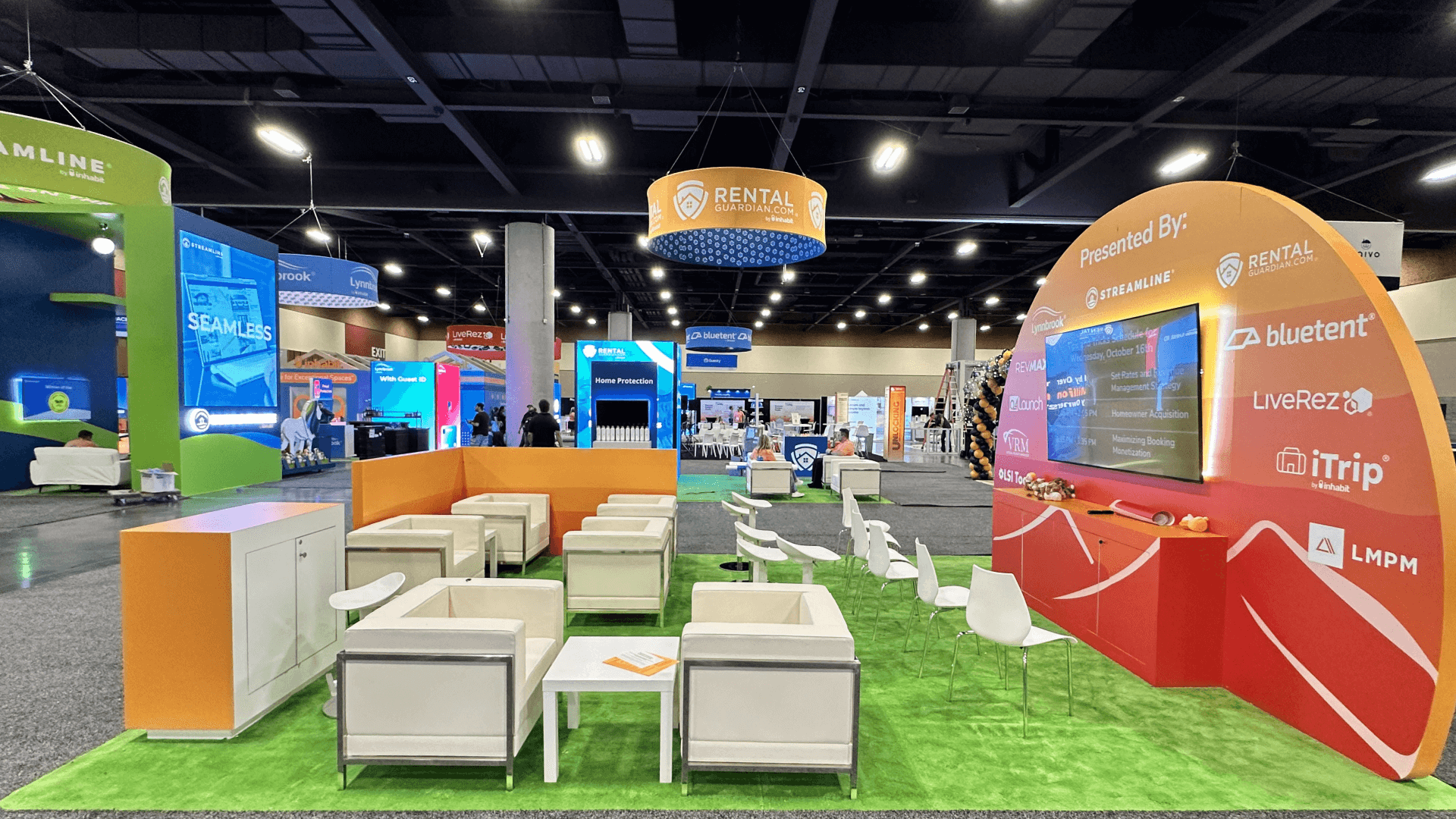
Rental Structure Around an IACP Vehicle Display
Rental walls, screens, counters, graphics, and storage can frame the vehicle without unnecessary custom structure. Keep the viewing perimeter, access points, spotting path, and island power requirements clear.
What is the minimum booth size for an IACP vehicle?
A vehicle or mobile unit requires at least a 20x20 island booth at IACP 2026. The functional footprint may need to be larger once access and viewing clearance are drawn.
When is IACP 2026 vehicle registration due?
What fuel and battery rules apply to an IACP display vehicle?
Does the vehicle have to appear on the booth floor plan?
When do oversize vehicles move into IACP 2026?
READY TO PLAN YOUR NEXT BOOTH?
Let’s Build a Booth That Fits Your Event
Share your event name, booth size, city, timeline, product display needs, and design references. Circle Exhibit will review your project direction and help you choose a rental-friendly or custom exhibit path.
3000+
Booth Projects Supported
50+
U.S. Event Cities
Transparent
Quote Review
Return to the full IACP exhibitor planning map, including other product and execution scenarios.
Review what the minimum island footprint can support after vehicle clearance is accounted for.
Compare additional room for screens, secondary demos, conversations, and storage.
Translate vehicle dimensions, access clearance, utilities, and structure into buildable drawings.
Coordinate vehicle timing, booth freight, product arrival, and the show-site sequence.