What Do the 2027 Hall C Expo Hours Actually Allow?
Channel Partners Conference & Expo runs March 15–18, 2027, but the Channel Partners exhibition floor in Hall C has published opening hours only for March 15–17. Thursday is not another scheduled Hall C Expo session, so exhibitors cannot count it as an additional day for demonstrations or walk-in booth meetings.
The organizer's 2027 Event Hours establish these operating windows:
Date | Hall C Expo Hours (PT) | Duration | Planning Impact |
|---|---|---|---|
Monday, March 15 | 3:00–5:30 p.m. | 2.5 hours | Limited room to move fixed appointments or demonstrations within the session. |
Tuesday, March 16 | 10:00 a.m.–4:00 p.m. | 6 hours | More flexibility to separate activities while allowing for preparation and equipment resets. |
Wednesday, March 17 | 11:00 a.m.–4:00 p.m. | 5 hours | The final Hall C session must accommodate remaining commitments and any unavoidable overlap. |
Channel Partners Expo occupies Hall C, Level 2, at Venetian Expo. The co-located MSP Summit Expo uses Hall D, which also opens Monday from 10:00 a.m. to 2:00 p.m. before its afternoon session. That additional morning window applies to Hall D, not Hall C. Both halls currently list the same Tuesday and Wednesday hours.
These public exhibition hours do not establish move-in, installation, or dismantling times. Exhibitors need the current show-service documents to confirm those separate requirements.

Illustrative three-day Hall C operations plan showing how meeting commitments, demonstrations, and shared specialists affect booth scheduling. Activity times are examples, not official show programming.
Which Meetings and Demos Deserve Protected Time?
A calendar becomes difficult to manage when tentative activities are treated like confirmed appointments. A partner meeting with agreed participants and a start time is a commitment. So is a live demonstration whose schedule has already been shared with visitors. An unannounced product overview offers more flexibility and can usually move without disrupting another person's plans.
The resources behind each activity matter just as much as the time slot. A partner meeting may require both an account manager and a technical specialist; a demonstration might depend on that same specialist, a prepared software environment, or equipment used elsewhere. Walk-in visitors cannot be scheduled, but they can receive an initial explanation at reception and arrange a more detailed discussion later. The booth does not need to deliver a full technical presentation to everyone immediately.
When two activities compete for resources, make the least disruptive adjustment first:
Move provisional activities. Reschedule a demonstration or introduction whose time has not been promised to visitors.
Adjust the presentation format. Use a shorter, accurate explanation when a full walkthrough is unnecessary or impractical.
Check qualified alternatives. Another representative can take over only if they can handle the relevant questions or equipment.
Review the space plan. Consider separate positions when independently staffed activities must run simultaneously.
If two promised commitments still conflict, the affected visitors must agree to a change. Another counter cannot make an unavailable specialist free, just as moving a demonstration will not fix a reception area blocked by meeting furniture.
The next step is to apply these distinctions to the actual Expo sessions rather than treating each activity as an isolated calendar entry.
Build a Three-Day Hall C Booth Operations Matrix
Consider the same hypothetical connectivity software supplier throughout the show. Its team has one technical specialist, a partner account manager, and reception coverage. The initial layout provides a shared area for longer conversations and product demonstrations.
Before approving that arrangement, the team checks its meeting commitments, proposed demonstrations, and available resources against each Hall C session.
Illustrative Channel Partners 2027 Booth Operations Matrix
Date / Hall C Hours (PT) | Protected Activity | Flexible Activity | Staff / Equipment Dependency | Conflict / Overlap | Adjustment Decision | Booth Layout Consequence | Daily Readiness / Reset |
|---|---|---|---|---|---|---|---|
Monday, Mar 15 3:00–5:30 p.m. | Confirmed 3:30–4:00 p.m. partner meeting | Proposed 3:45 p.m. live demo; walk-in introductions | Meeting and demo require the same specialist | One person cannot lead both | Keep the meeting; move the proposed demo or offer a brief, accurate overview | Shared space may still work if activities are staggered; reception stays open | Confirm meeting details, specialist availability, and demo readiness |
Tuesday, Mar 16 10:00 a.m.–4:00 p.m. | Illustrative demos promised for 11:00 a.m. and 2:00 p.m. | Walk-ins and longer technical questions | One specialist and one demo station | A long discussion could delay the next demo | Protect promised start times; arrange deeper questions separately | Reuse the demo station between presentations | Check screens and restore the prepared demo between sessions |
Wednesday, Mar 17 11:00 a.m.–4:00 p.m. | Illustrative 1:00 p.m. account meeting and 1:00 p.m. live demo | Short introductions and walk-ins | Account manager and specialist can work independently | Both activities need the shared presentation area | Plan separate positions before production or agree to change one time | Meeting and demo may need distinct positions; reception remains accessible | Test both positions, viewing angles, and equipment before opening |
Only the published Hall C Expo hours are official. All appointments, demo times, staffing arrangements, and operational decisions in this example are hypothetical. They are not organizer programming or visitor traffic forecasts.
What the Matrix Tells the Exhibitor
The three sessions reveal different constraints. Monday's conflict belongs to the specialist, not the floor plan: adding a second counter cannot make one person available for two activities. Tuesday's presentations can share the same equipment because their promised times are separate, provided longer technical discussions do not delay the next start.
Wednesday is different. The account manager and technical specialist can work independently, but their commitments compete for the same physical position. That conflict needs a layout decision before production, or an agreed change to one of the appointments.
The longest Expo session does not necessarily create the greatest space requirement. The booth must accommodate its highest unavoidable overlap, not simply the total number of meetings or demonstrations. When activities can share time, additional stations may sit unused. When independently staffed activities must happen together, the layout needs to support both without compromising reception or visitor access.
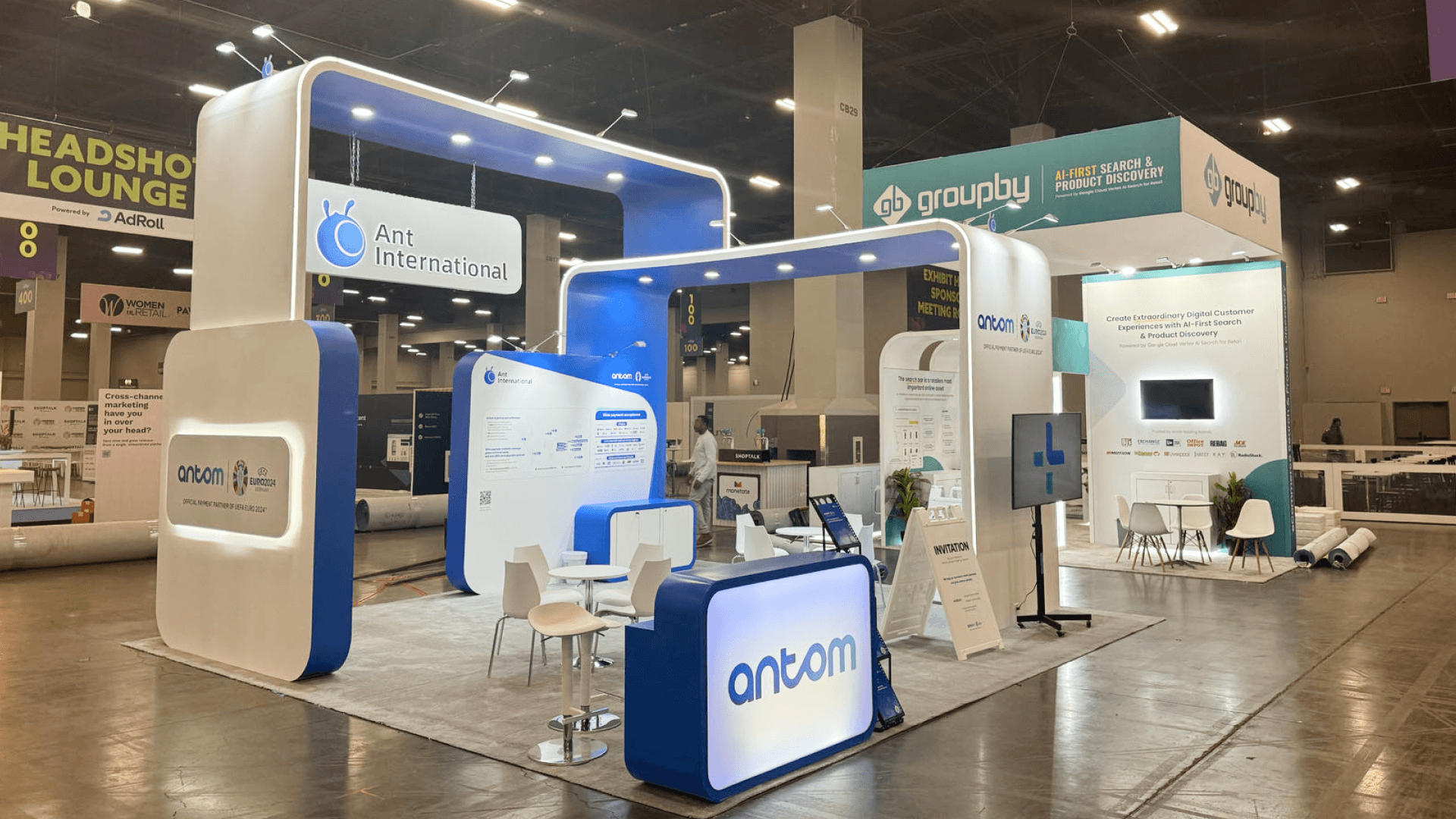
A 10x20 booth may support sequential meetings and demos, while a 20x20 layout offers more separation for simultaneous activities. Both are illustrative planning examples.
When Does the Schedule Require More Booth Space?
The operations matrix identifies unavoidable overlap; the floor plan determines whether that overlap is practical. A shared presentation area may be enough when a demonstration ends before a partner discussion begins, provided equipment resets and furniture changes do not delay the next commitment.
A booked meeting creates a different space requirement from a live demonstration. An advisor may be discussing a supplier relationship behind a partition while another visitor approaches the booth. In partner recruitment booth layouts, meeting privacy should not hide the welcome point or force new arrivals through an occupied conversation area.
Software demonstrations introduce their own constraints. During MSP workflow demos, visitors need to see the relevant result while the presenter retains access to the controls. A nearby technical discussion should not block the screen or interrupt the next group waiting to watch.
A 10x20 footprint may accommodate one focused demonstration and a compact conversation point when longer activities happen in sequence. A 20x20 may provide more workable separation when independent teams must run meetings and demonstrations at the same time. These are planning examples, not confirmed Channel Partners 2027 booth inventory.
Before increasing the footprint, test three conditions against the actual layout:
Reception: Can new visitors find and reach the welcome point while a meeting is underway?
Screen visibility: Can attendees read the important demonstration content without crowding another activity?
Staff circulation: Can presenters and account managers reach their positions without interrupting either group?
If the layout passes those tests during the busiest unavoidable overlap, more floor space may offer little benefit. If it fails, consider repositioning the existing areas before moving to a larger footprint. Additional space makes sense only when the necessary activities still cannot operate independently within the current configuration.
What Must Be Confirmed Before the Booth Plan Is Final?
The completed schedule should now provide enough information to specify how the exhibit will be used. A Hall C Booth Layout Brief records the actual space, equipment, and service requirements without reproducing the full staff schedule.
Hall C Booth Layout Brief
Booth Assignment: Confirmed Hall C location, contracted dimensions, open sides, and applicable exhibitor rules.
Peak Activity Overlap: Meetings, demonstrations, and reception tasks that genuinely need to run simultaneously.
Reception Access: The welcome position and visitor path that must remain available during other activities.
Meeting Area: Seating, privacy, and equipment required for confirmed partner appointments.
Demo Area: Screen sightlines, operator access, audience space, and the devices used in the presentation.
Technical Services: Power, connectivity, cable access, and service orders that require confirmation.
Delivery Responsibilities: Structure, graphics, furniture, installation, and the party responsible for each item.
Daily Readiness: Who checks devices, restores approved demo content, and prepares meeting materials before each session.
With these details in place, booth design and engineering can test whether the planned activities fit the actual footprint and identify any structural or equipment changes required.
A Las Vegas booth rental may be sufficient when standard counters, screens, seating, and modular partitions meet the brief. Unusual mounting, protected hardware, or more demanding separation may require targeted engineering or custom components rather than an entirely different exhibit.
Any outstanding organizer approvals, service requirements, or deadlines should remain marked for confirmation. The public Expo schedule does not establish electrical-order deadlines, construction permissions, or move-in arrangements.
Frequently Asked Questions
Are Channel Partners Expo and MSP Summit Expo hours the same in 2027?
Not on Monday. Channel Partners Expo in Hall C opens from 3:00–5:30 p.m. PT, while MSP Summit Expo in Hall D also has a 10:00 a.m.–2:00 p.m. session. Both halls currently publish the same Tuesday and Wednesday hours. Exhibitors should use the schedule for their assigned hall.
Should Monday's short Hall C session be filled with booked meetings?
Not necessarily. Confirmed appointments deserve their agreed times, but the team also needs to account for promised demonstrations, specialist availability, and walk-in reception. Filling the entire 2.5-hour session with meetings may leave too little room for another important activity. The choice should follow actual commitments rather than assumptions about visitor traffic.
What must be checked before the final Hall C operations schedule is approved?
Confirm the assigned booth, current exhibitor instructions, promised meeting and demo times, qualified staff, and technical requirements. Check that simultaneous activities have workable positions and that required services can be arranged. Organizer approvals and deadlines should be verified against current documents rather than an earlier year's manual.
Conclusion
A calendar can accommodate every planned activity and still produce an unworkable booth when two commitments require the same person or space. Using the published Hall C sessions to test those dependencies gives exhibitors time to adjust provisional activities, protect promised appointments, and resolve unavoidable overlap before production.
The three-day operations matrix establishes what the team can realistically deliver. The resulting layout brief turns those commitments into practical requirements for reception, meeting space, demonstrations, and equipment.