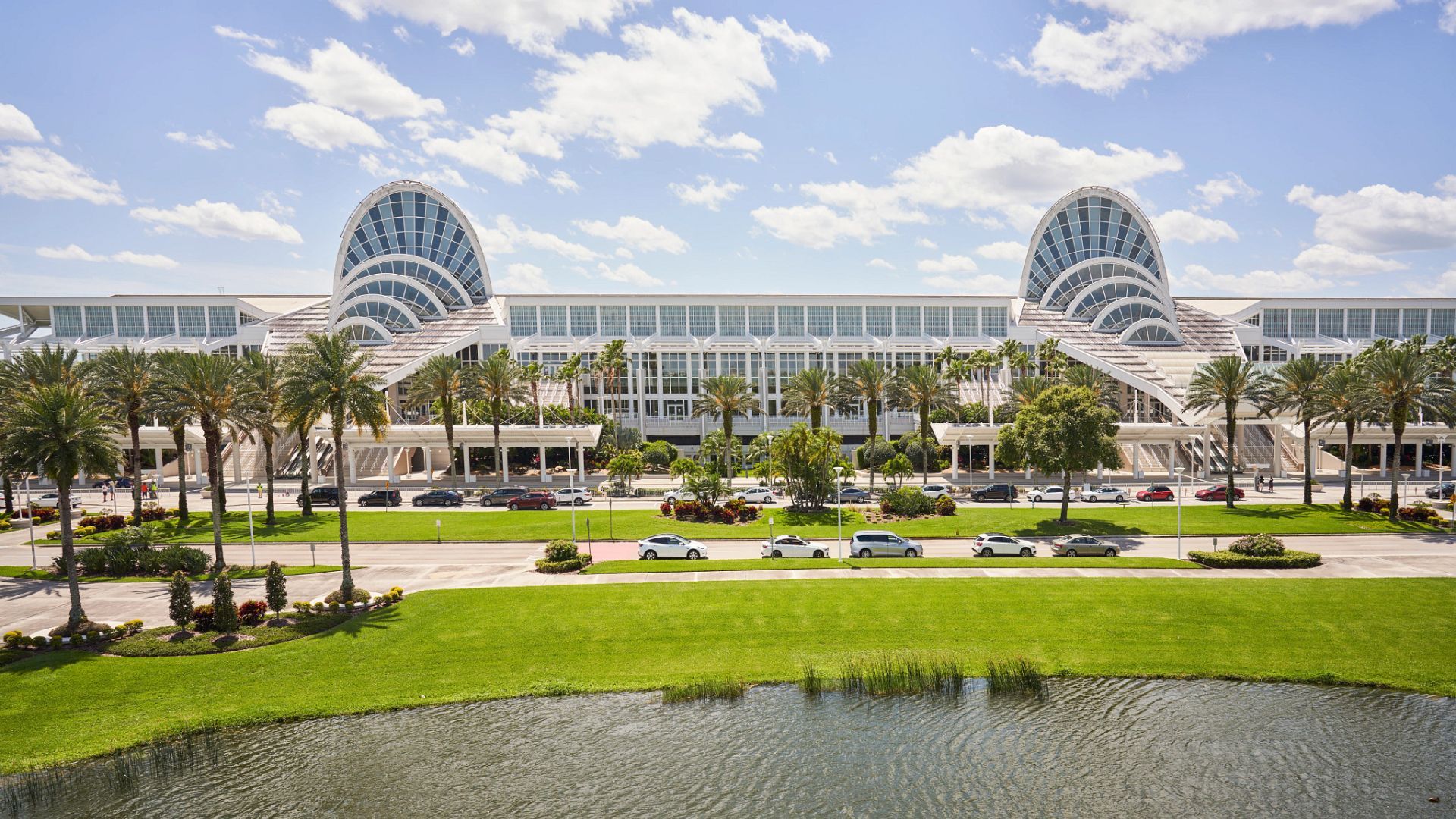
Orlando Sports & Outdoor Trade Show Booth Planning
Foodservice booths have to work during the show—not just look finished before the doors open.
A packaged food brand may need sampling and cold storage. An equipment manufacturer may need power, water, drainage, service clearance, and room for buyers to watch a machine operate. A restaurant technology company may need screens and short product demos without interrupting the product experience around it.
Plan the booth around what buyers need to taste, watch, compare, and discuss.

What Should Foodservice Exhibitors Plan for an Orlando Trade Show Booth?
Start with the product experience.
Decide whether buyers need to taste a sample, watch equipment run, compare products, inspect packaging, or understand a restaurant workflow. Then plan the counters, utilities, storage, cleaning access, staff positions, and buyer conversation space around that action.
A booth that works well at opening time should still be easy to operate several hours later.
Foodservice Booth Planning Needs
Foodservice exhibits usually have more moving parts than a simple display booth.
Sampling & Tasting
Keep the sample handoff easy to reach without letting a line block the aisle or the rest of the booth.
Storage, serving materials, waste, replenishment, and cleanup should stay close to the sampling point but out of the buyer path.
Equipment Demonstrations
Buyers need a clear view of the product while staff still have enough room to load, operate, clean, and reset it.
Build the demonstration around the equipment—not around an empty floor plan.
Utilities & Service Access
Power, water, drainage, ventilation, data, and service panels can determine where equipment actually belongs.
Confirm them before counters, flooring, and decorative walls lock the layout in place.
Product & Menu Messaging
A buyer should be able to understand the product category, application, or operating benefit before the staff explanation becomes detailed.
Use the booth to make one main product story easy to follow.
Storage & Reset
Samples, ingredients, packaging, utensils, catalogs, staff items, and replacement stock disappear quickly during a busy show day.
Give them a real storage location instead of relying on spare space behind the counter.
Major Foodservice Trade Shows in Orlando
Orlando foodservice events bring together operators, equipment buyers, restaurant brands, pizzeria owners, chefs, distributors, and commercial kitchen professionals—but the booth needs change depending on what is being evaluated.
Florida Restaurant Show
Restaurants · Foodservice · Hospitality · Products & Operations
Venue: Orange County Convention Center
Florida Restaurant Show brings restaurant and foodservice operators together with products, equipment, technology, ingredients, services, and operating solutions.
The 2026 show is held at OCCC and is co-located with Pizza Tomorrow Summit, giving exhibitors access to overlapping restaurant and pizzeria audiences.
For exhibitors, the first question is simple:
What should the operator understand or experience before the sales conversation begins?
Booth planning focus
Food and beverage sampling
New product launches
Restaurant equipment
Packaging and presentation
Menu applications
Restaurant technology
Product storage
Buyer conversations
Show-day reset
Read Florida Restaurant Show Product Launch Planning

Pizza Tomorrow Summit
Pizza · Equipment · Ingredients · Operations
Venue: Orange County Convention Center
Pizza Tomorrow Summit runs alongside Florida Restaurant Show and focuses on the products, equipment, ingredients, services, and operating ideas used by pizzerias and pizza businesses.
The strongest booth usually does not try to tell every restaurant story at once.
An oven manufacturer may need a controlled equipment demonstration. An ingredient company may need tasting and application examples. A technology provider may need to show how one workflow changes in a pizza operation.
Booth planning focus
Pizza equipment
Ovens and prep systems
Ingredients and samples
Product applications
Operational technology
Live demonstrations
Utility access
Storage and reset
Pizzeria buyer conversations
Read Florida Restaurant Show + Pizza Tomorrow Booth Messaging

The NAFEM Show
Commercial Kitchen Equipment · Refrigeration · Warewashing
Venue: Orange County Convention Center
The NAFEM Show returns to Orlando in 2027 and focuses on commercial foodservice equipment and supplies, including cooking, refrigeration, ice, warewashing, storage, serving, and connected kitchen systems.
This is the most equipment-led event in the group.
Booth planning has to account for product dimensions, operating clearance, utilities, service access, freight sequencing, and enough room for buyers to compare equipment without stepping into staff work zones.
Booth planning focus
Cooking equipment
Refrigeration and ice
Warewashing
Prep and storage systems
Connected kitchen equipment
Equipment comparison
Power, water, and drainage
Technical access
Buyer and dealer meetings
View NAFEM Booth Planning
Plan Around What Buyers Need to Experience
A foodservice booth should be built around the part of the product that needs to be proven in person.
Before choosing counters, walls, furniture, or screens, answer four questions.
1. What Does the Buyer Need to Taste, Watch, or Compare?
A packaged food may need tasting.
An oven may need a live operating cycle.
A refrigeration product may need buyers to inspect capacity, access, controls, or workflow.
A software product may need a short screen demonstration.
Define the experience before deciding where everything goes.
2. What Has to Happen Behind the Demo?
Every public-facing interaction creates support work.
Sampling may require restocking and waste handling. Equipment may need loading, cleaning, service access, or temperature control. Screens may need power and network access.
Keep that support work close enough to be practical without putting it in the buyer path.
3. Which Utilities Control the Layout?
List the real operating requirements before production:
Electrical
Water
Drainage
Ventilation
Data
Equipment clearance
Service access
If the product cannot operate where the design places it, the layout is not finished.
4. How Does the Booth Reset During the Day?
The booth should not depend on an end-of-day cleanup to look organized.
Plan where used materials go, where replacement samples come from, who resets the station, and how staff reach storage without crossing the buyer flow.

Rental Booth Design Collections
Booth Size Planning for Orlando Foodservice Exhibitors
Choose the footprint around the product experience, utility needs, storage, and number of buyer conversations happening at once.

10x20
Rental Booth Designs
Works well for: One focused packaged product, tasting station, compact equipment display, or restaurant technology demo with light storage and short buyer conversations.Keep the counter simple and leave enough open space for visitors to stop without forming a line across the booth.
Explore 10x20 Rental Designs

20x20
Rental Booth Designs
Works well for: Several products, a controlled tasting or demonstration area, accessible storage, screens, and a small buyer discussion zone.Use the additional width to separate product interaction from staff reset and storage instead of filling the booth with more counters.
View 20x20 Designs

20x30
Rental Booth Designs
Works well for: Larger foodservice equipment, repeated demonstrations, multiple product categories, stronger utility needs, storage, and separate technical or buyer conversations.A 20x30 footprint makes it easier to keep the public demo active while staff operate or reset equipment nearby.
View 20x30 Designs

30x30
Rental Booth Designs
Works well for: Multiple equipment systems, several live experiences, larger cooking or refrigeration products, hospitality space, storage, and island layouts with traffic from several aisles.Use clear zones for demonstration, viewing, technical access, and meetings so the booth does not become one large equipment display.
View 30x30 Designs
Foodservice Booth Planning References
Circle Exhibit does not currently have a large Orlando foodservice case library.
The projects below are used for specific planning similarities: Orlando product execution, appliance demonstrations, product education, visitor flow, and larger display zoning. They are not presented as Florida Restaurant Show, Pizza Tomorrow, or NAFEM projects.

Gasland — KBIS 2025
20x30 · Orlando Appliance Product Display
Gasland is a useful Orlando reference for appliance-led product presentation, open buyer access, branded product walls, and the amount of space larger kitchen-related products need around them.
For foodservice exhibitors, the relevant lesson is simple: let buyers see and approach the equipment before furniture and graphics begin competing for floor space.
View Orlando Product Display Projects

ChefRobot — CES 2024
20x30 · Appliance Demo & Visitor Flow
ChefRobot used demo stations, screens, branded counters, appliance presentation, and open circulation inside a 20x30 footprint.
The show is different, but the operating problem is relevant to foodservice exhibitors that need buyers to watch a product work without blocking the next demonstration.
View the ChefRobot 20x30 Project
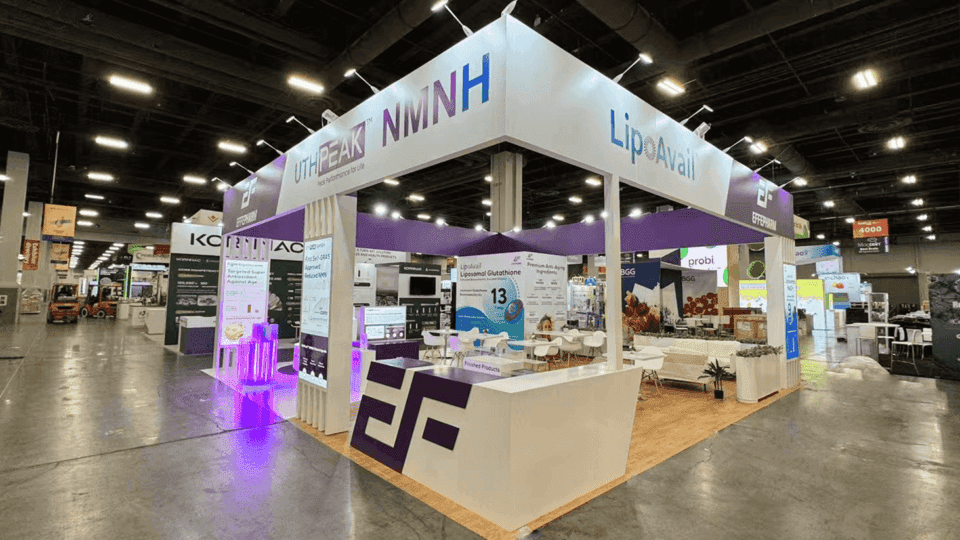
EF — SupplySide West 2024
30x30 · Product Education & Buyer Conversations
EF's 30x30 island booth used product education areas, branded counters, open meeting space, and multi-side visibility.
For ingredient, nutrition, packaged-product, or sampling exhibitors, it is a useful reference for keeping product explanation and buyer conversations visible without turning the floor into a dense display wall.
View the EF 30x30 Project
OCCC Planning for Foodservice Trade Shows
Florida Restaurant Show, Pizza Tomorrow Summit, and The NAFEM Show all use the Orange County Convention Center.
That means foodservice exhibitors need to think about more than the booth structure itself.
Equipment Freight Comes First
Large ovens, refrigeration units, prep equipment, counters, crates, and display fixtures need an installation sequence.
Heavy or difficult-to-move products should reach their final position before booth finishes make the route narrower.
Sampling Needs Support Space
Sampling counters also need:
stock
serving supplies
waste
replacement product
staff access
cleaning materials
Keep these functions close without putting them in the public-facing presentation.
Utilities Need Real Locations
Power, water, drainage, data, and other operating needs should be mapped to the actual product position.
Do not finalize the visual layout and treat utilities as a later technical detail.
Final Testing Is Part of Setup
Before the show opens, test the exhibit the way staff will actually use it.
Check:
equipment startup
utilities
screens
storage access
sample flow
cleaning access
staff positions
buyer sightlines
Plan for an OCCC Trade Show Booth


From Foodservice Demo Planning to Orlando Show-Site Setup
Foodservice booths work best when product planning and show-site execution are handled as one sequence.
Design & Engineering
Plan around equipment dimensions, demonstration areas, counters, storage, buyer movement, service clearance, and real utility locations.
Trade Show Design & Engineering
Graphics & Brand Presentation
Make the product category, application, key benefit, menu use, or operating value easy to understand before a visitor needs a long explanation.
Graphics & Brand Presentation
Logistics & Pre-Show Coordination
Coordinate equipment freight, booth materials, utilities, storage needs, product arrival, move-in timing, and the installation sequence before OCCC setup begins.
Logistics & Pre-Show Coordination
Installation & Dismantle
Structure, counters, equipment, utilities, graphics, screens, and final product placement need to happen in the right order so the team still has time to test and reset the booth.
Show-Site Installation & Dismantle
Continue Planning Your Orlando Foodservice Booth
Once the right event environment is clear, these pages go deeper into the booth itself.
Orlando Trade Show Booth Rental
Compare customizable booth structures for equipment displays, tasting counters, product launches, storage, buyer meetings, graphics, and Orlando show-site setup.
Explore Orlando Booth Rental
Orange County Convention Center
Review Orlando booth planning around freight, utilities, rigging, installation, and exhibitor services at OCCC.
View OCCC Booth Planning
The NAFEM Show
Plan around commercial kitchen equipment, utilities, product comparison, technical access, and buyer conversations.
View NAFEM Booth Planning
Orlando Trade Shows
Explore other Orlando Event pages and booth-planning resources.
Browse Orlando Trade Shows

Orlando Foodservice Trade Show Booth Planning FAQs
What should a foodservice trade show booth include?
Start with what the buyer needs to experience. Depending on the product, the booth may need tasting counters, operating equipment, product displays, utility access, storage, cleaning space, screens, and room for buyer conversations. The layout should support the complete product experience rather than only the aisle-facing presentation.
What booth size works well for foodservice exhibitors?
Which foodservice trade shows take place in Orlando?
How should a booth be planned for food or beverage sampling?
What should exhibitors confirm before operating foodservice equipment?
Can a rental booth work for foodservice trade shows?
Build the Booth Around the Product Experience
A foodservice booth should make it easy for buyers to taste, watch, compare, and ask the next useful question.
Share your Orlando event, booth size, equipment or product list, sampling requirements, utility needs, storage, and buyer-meeting goals. Circle Exhibit can help shape the exhibit around what actually needs to happen during the show.