Choose the Buyer Who Must Understand the Booth First
Start with the audience most likely to lead to the conversation the exhibitor wants—an evaluation, sourcing discussion, or sales conversation. For one brand, that may be a restaurant operator considering a product across several menu or operating needs. For another, it may be a pizzeria operator whose day-to-day workflow makes the product immediately relevant.
Do not make this choice based only on which audience is larger. The stronger question is which group is closest to the business outcome the exhibitor wants from the show. If that group walked past because the exhibit felt too general, would that be a bigger loss than failing to speak directly to a secondary audience?
Distributors, dealers, chefs, and other foodservice professionals may still be important. They simply do not need equal prominence in the opening communication unless they are also a primary commercial target.
By the end of this step, the exhibitor should be able to name one audience that needs to understand the offer first.
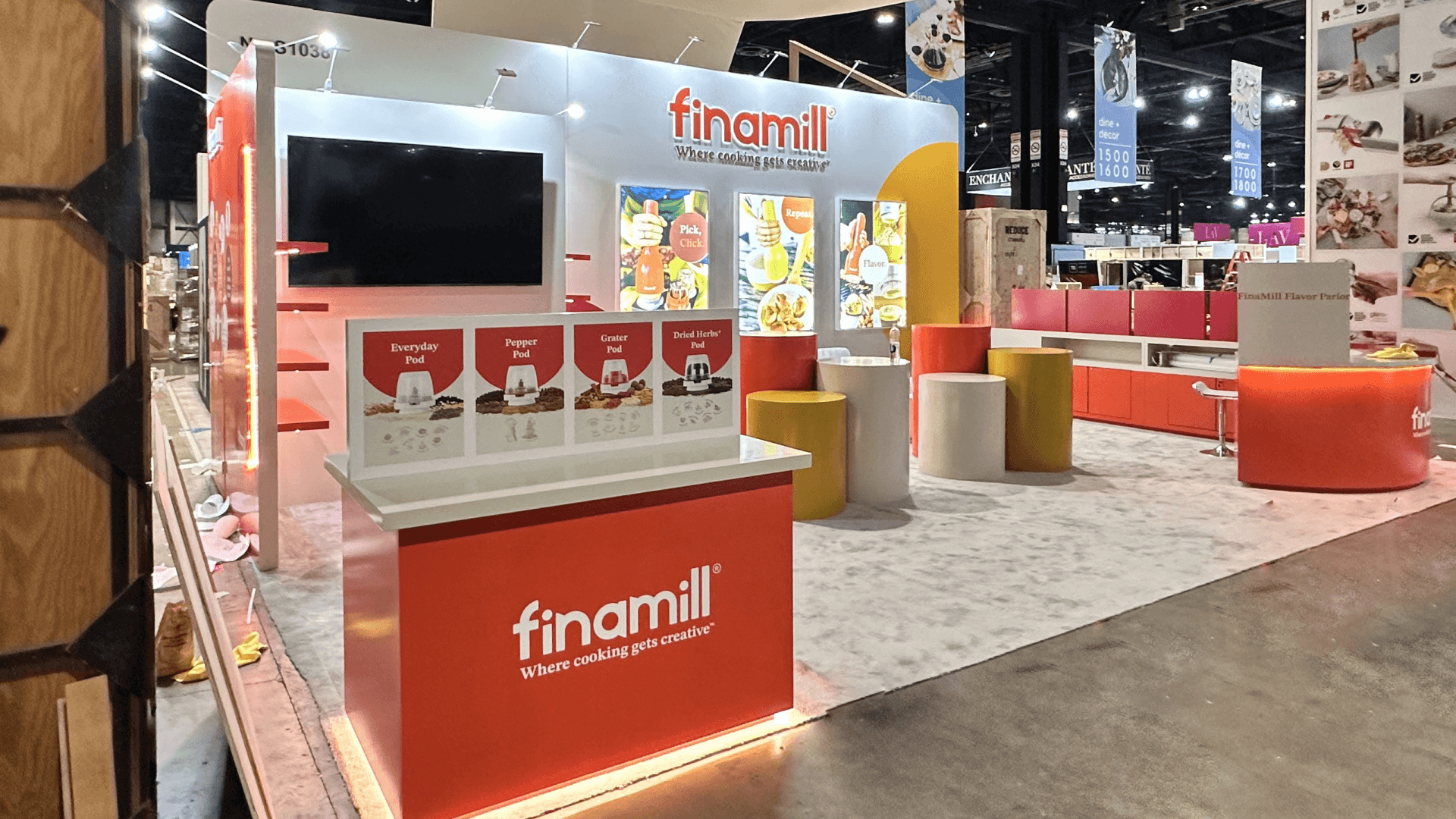
A focused booth message helps restaurant and pizzeria buyers understand the product category and its primary use before secondary applications are introduced.
Lead With One Primary Use Case
Once the audience is clear, decide what that person should care about first.
A product can work in both general restaurant operations and pizza-focused environments without giving both applications equal prominence. The lead use case should explain the value quickly and connect directly to the primary audience’s operating reality.
Consider a refrigeration product that works across several restaurant formats. If its clearest advantage at this event is keeping pizza ingredients accessible during high-volume preparation, that pizza-specific application may deserve the lead. The broader restaurant use can remain visible as supporting context rather than becoming a second headline.
A crossover use case earns space only when it adds relevance without forcing the visitor to interpret another story. It may fit in supporting copy, a product card, a screen, or the conversation after the main application is already understood.
For food and beverage exhibitors, tasting may be the clearest way to prove the featured use case. When the product depends on that interaction, the exhibit also needs to support food and beverage sampling without letting the mechanics of sampling take over the positioning.
Try removing the secondary application for a moment. If the main audience still understands what the product is and why it matters, the hierarchy is probably clear enough.
Build the Aisle Message in Layers
The aisle does not need the whole product story. It needs enough information for the right visitor to understand what is being shown and why it deserves attention.
Start with the product category. Then connect it to the operating problem or application that matters most to the primary audience. Proof points, secondary applications, technical detail, and broader brand claims can follow once that first connection has been made.
A phrase such as “Innovative Foodservice Solutions” may describe the market, but it gives a restaurant operator or pizzeria owner little reason to stop. More specific language does more work: the visitor should be able to identify the offer and its main operational relevance without waiting for a staff explanation.
Deeper information can appear as the visitor moves closer. Supporting copy can add proof, product displays can show secondary applications, and staff can handle details that do not belong in the first line of communication.
Once the hierarchy is settled, it should carry through the booth’s graphics and brand presentation, so the visual treatment reinforces the same priority instead of introducing a competing one.
From the aisle, two answers should be easy to grasp: What is this? Why does it matter to me?
Qualify Crossover Buyers After They Stop
A focused first impression does not mean ignoring people outside the primary audience.
Once someone stops, staff can identify the operating context with one simple question:
“What type of operation are you buying for?”
That answer can steer the conversation toward a restaurant, pizza, distribution, or other foodservice application without changing the exhibit’s primary position.
A restaurant operator may want to discuss labor, menu flexibility, or service efficiency. A pizzeria operator may focus on a narrower pizza-related application. A distributor may care about how the product fits across several customer types.
The emphasis can change, but the core value proposition should not. The opening question should continue the story that brought the visitor into the exhibit rather than introduce an unrelated claim.
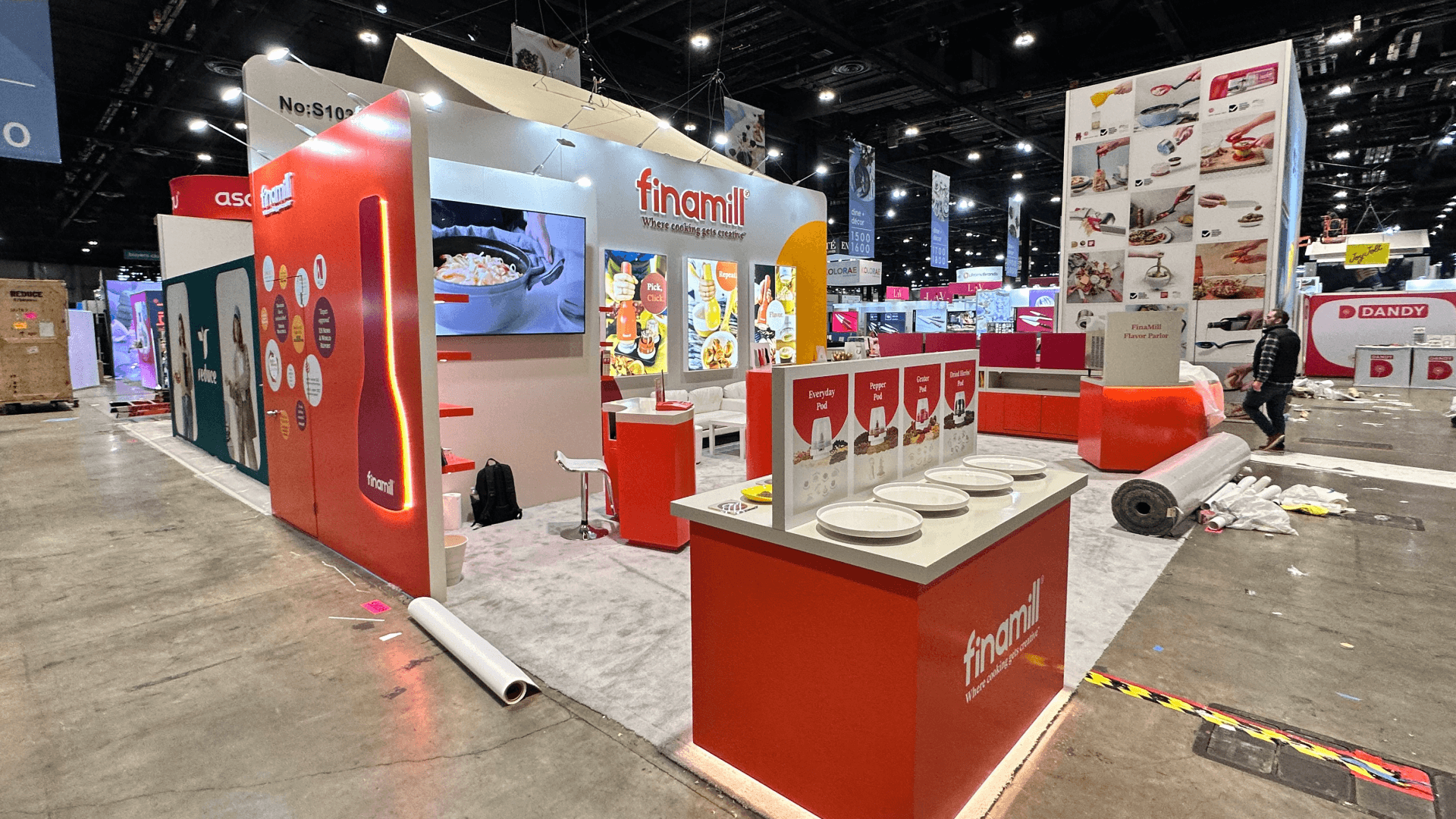
Supporting copy and staff conversations can address crossover buyers without making the main aisle message too broad.
Avoid Shared-Audience Messaging Mistakes
The most common failure is trying to make every possible audience feel equally addressed in the first few seconds. The copy becomes inclusive, but the reason to stop becomes weaker.
A second problem appears when two valid ideas are given equal headline weight. A broad restaurant benefit and a pizza-specific application may both matter, but if neither clearly leads, the visitor has to decide what the exhibit is really about.
Overly broad category language creates a different kind of blur. Terms such as “foodservice solutions” can describe an industry without explaining the product’s strongest operational value. At the other extreme, pizza-specific language can unnecessarily narrow an offer whose strongest commercial relevance is broader.
The handoff to staff can also break the positioning. If the exhibit introduces one use case and the opening conversation immediately shifts to another, the visitor effectively receives two different stories.
The test is consistency: the headline, supporting copy, and first conversation should all reinforce the same primary position.
Before You Finalize the Booth Message
Before the messaging moves into production, five decisions should be settled:
Decision | Decision to finalize |
|---|---|
Primary Buyer | Identify the buyer group the exhibit needs to engage first. |
Primary Use Case | Choose the operational application that gives that buyer the strongest reason to stop. |
Secondary Crossover Use Case | Keep a second application only if it adds relevance without competing with the primary one. |
Aisle Message | Make the product category and primary value understandable before staff explanation is needed. |
Staff Qualifier | Use one simple question to direct crossover buyers toward the most relevant conversation. |
When these five decisions support the same position, the exhibit can stay focused without giving up relevant restaurant, pizza, distribution, or broader foodservice opportunities.
FAQ
What if my product does not have a strong pizza-specific use case?
Do not create one simply because Pizza Tomorrow Summit is co-located with the show. If the clearest value belongs to broader restaurant operations, keep the lead positioning restaurant-focused and bring in pizza relevance only where the product genuinely fits.
Should distributor messaging appear on the booth if operators are the primary audience?
Usually as supporting information rather than the main headline. If restaurant or pizzeria operators are the priority, distributor relevance can appear in secondary copy or the staff conversation unless distributors are also a primary commercial target.
Can a secondary use case appear on a screen or product card instead of the main headline?
Yes. A screen, product card, or supporting message can give a crossover application visibility without forcing it to compete with the primary aisle communication. The main position should still be clear first.