What Makes Up a Modular Exhibition System?
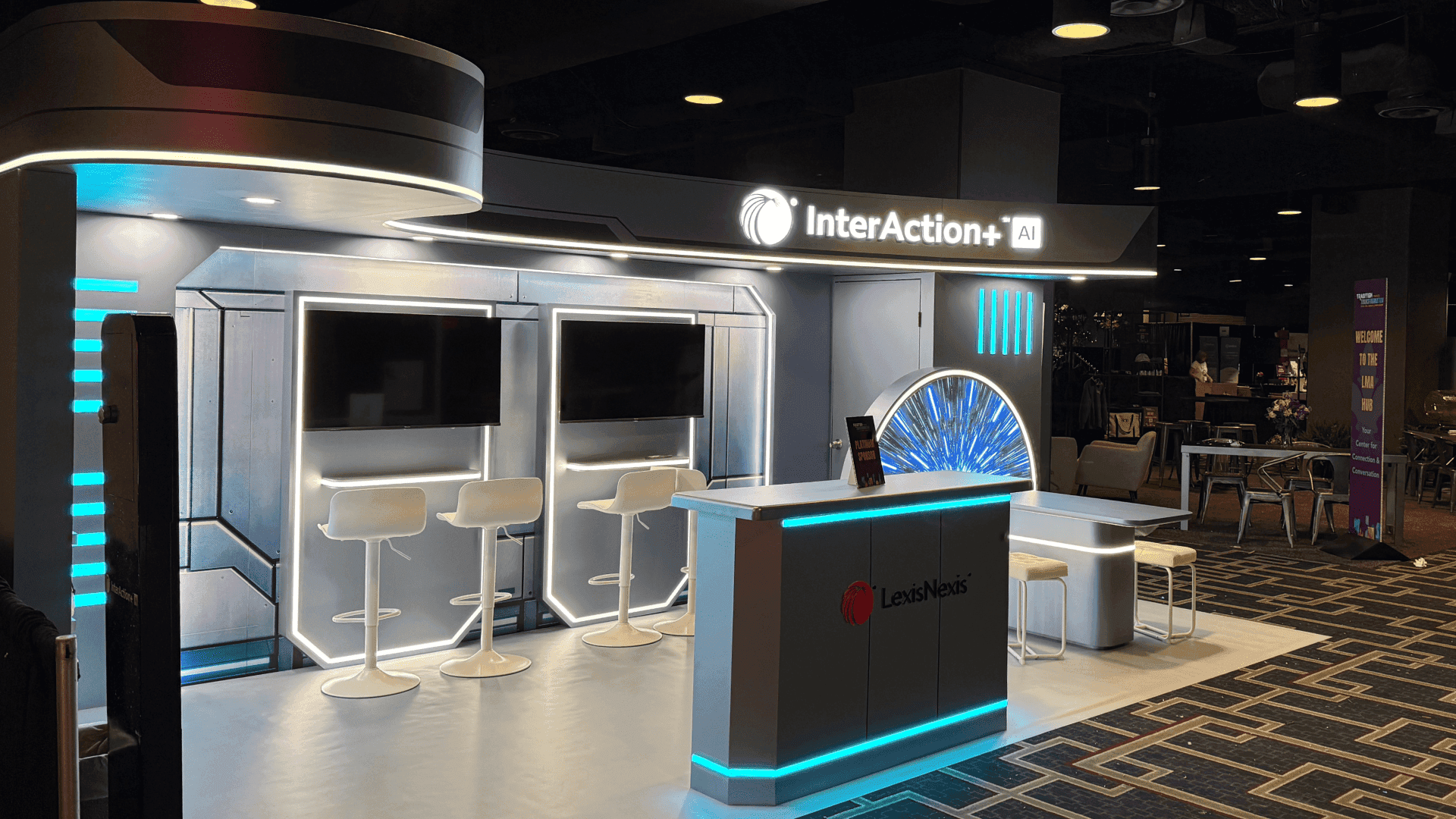
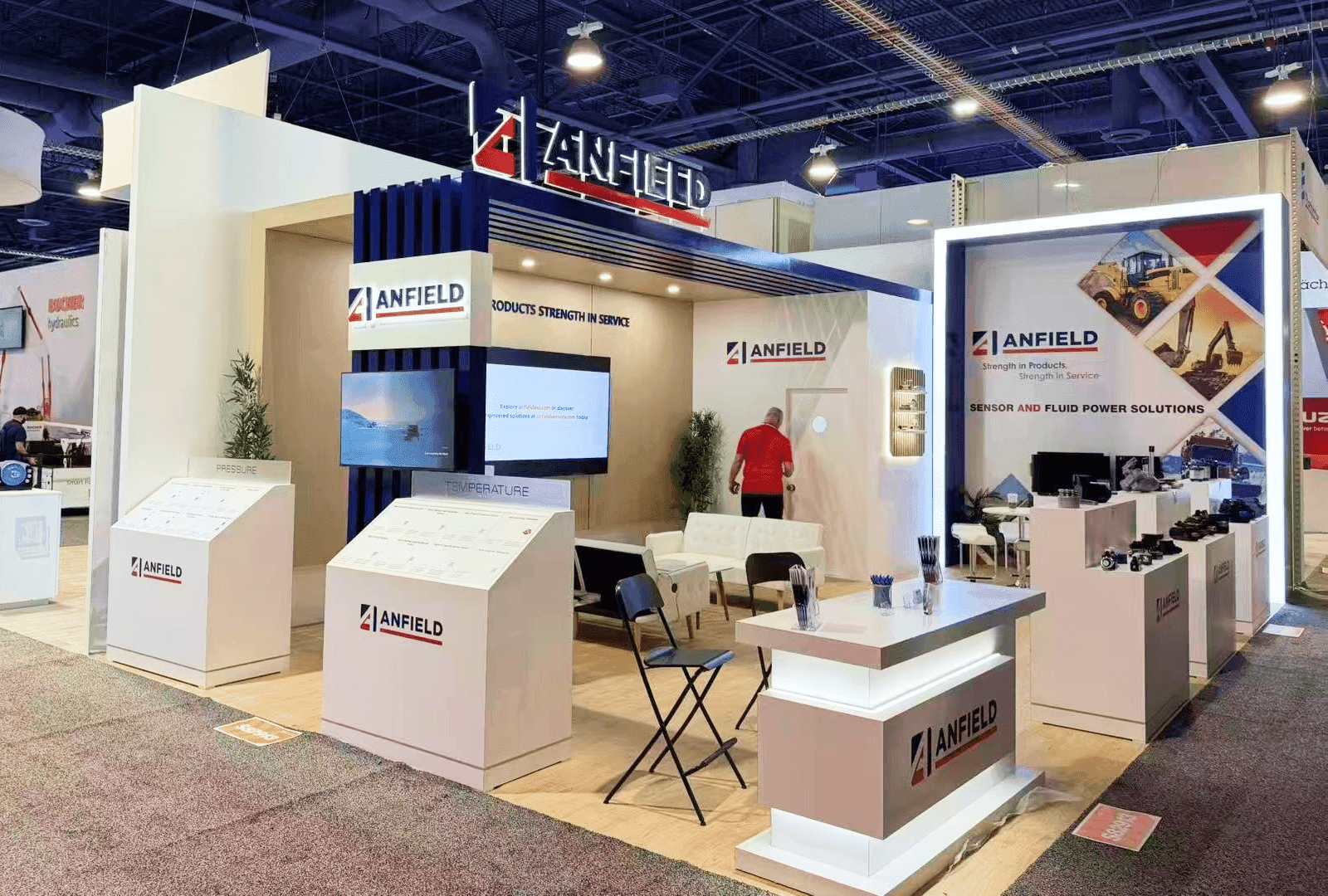
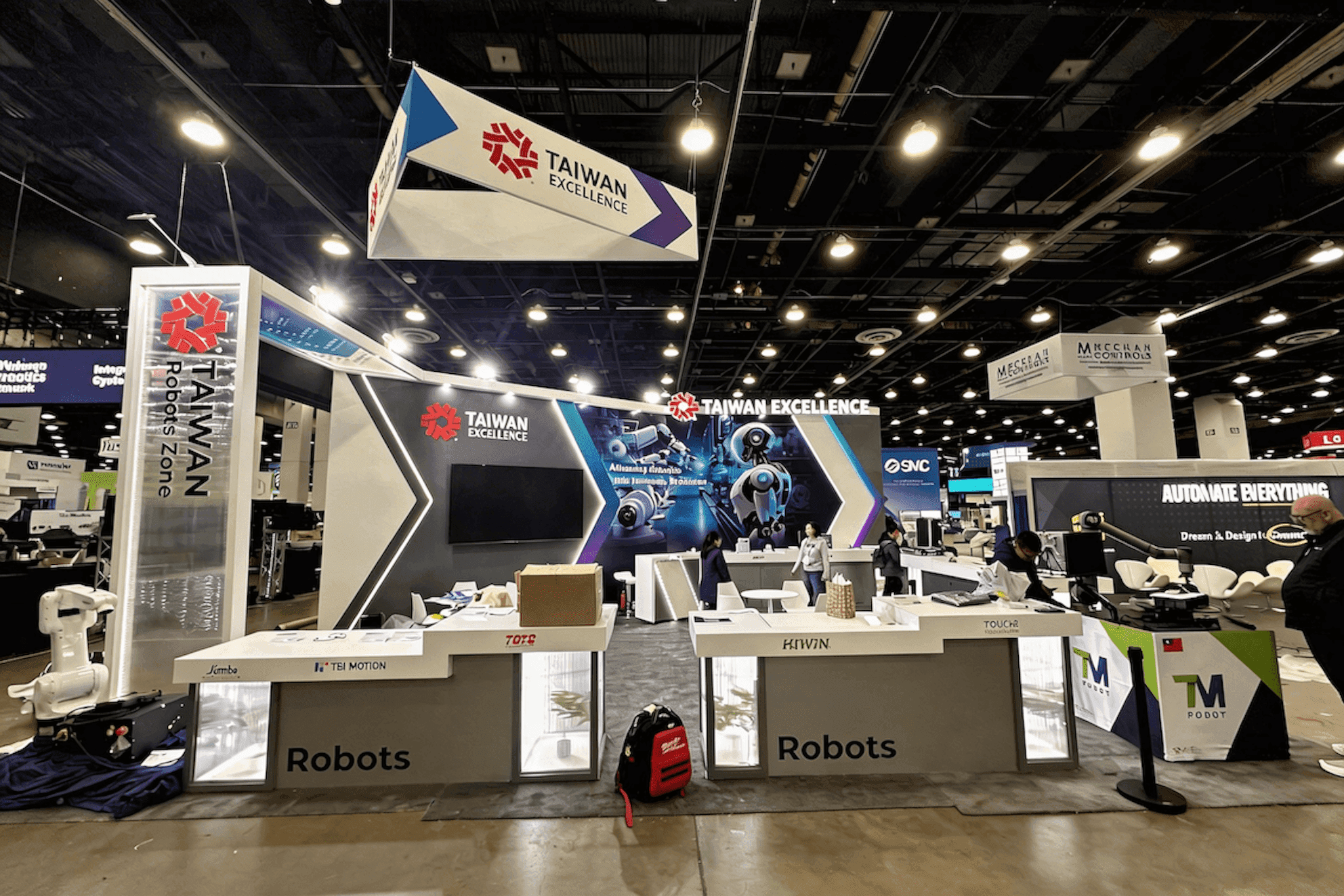
A modular exhibition system is usually built from reusable structural parts instead of one fixed booth shape. These parts may include wall frames, fabric or hard-panel graphics, counters, shelving, lightboxes, product display surfaces, storage elements, and lighting components.
The value of a modular system is not only that the parts can be reused. The system also needs to be planned around booth size, visitor flow, product display needs, graphic visibility, and show-site installation. A wall section, counter, or display panel may work well in one booth layout but need to be reconfigured for another event or floor plan.
When the focus is on graphics, product presentation, counters, shelving, and display surfaces, these reusable components may also function as part of a modular display system.
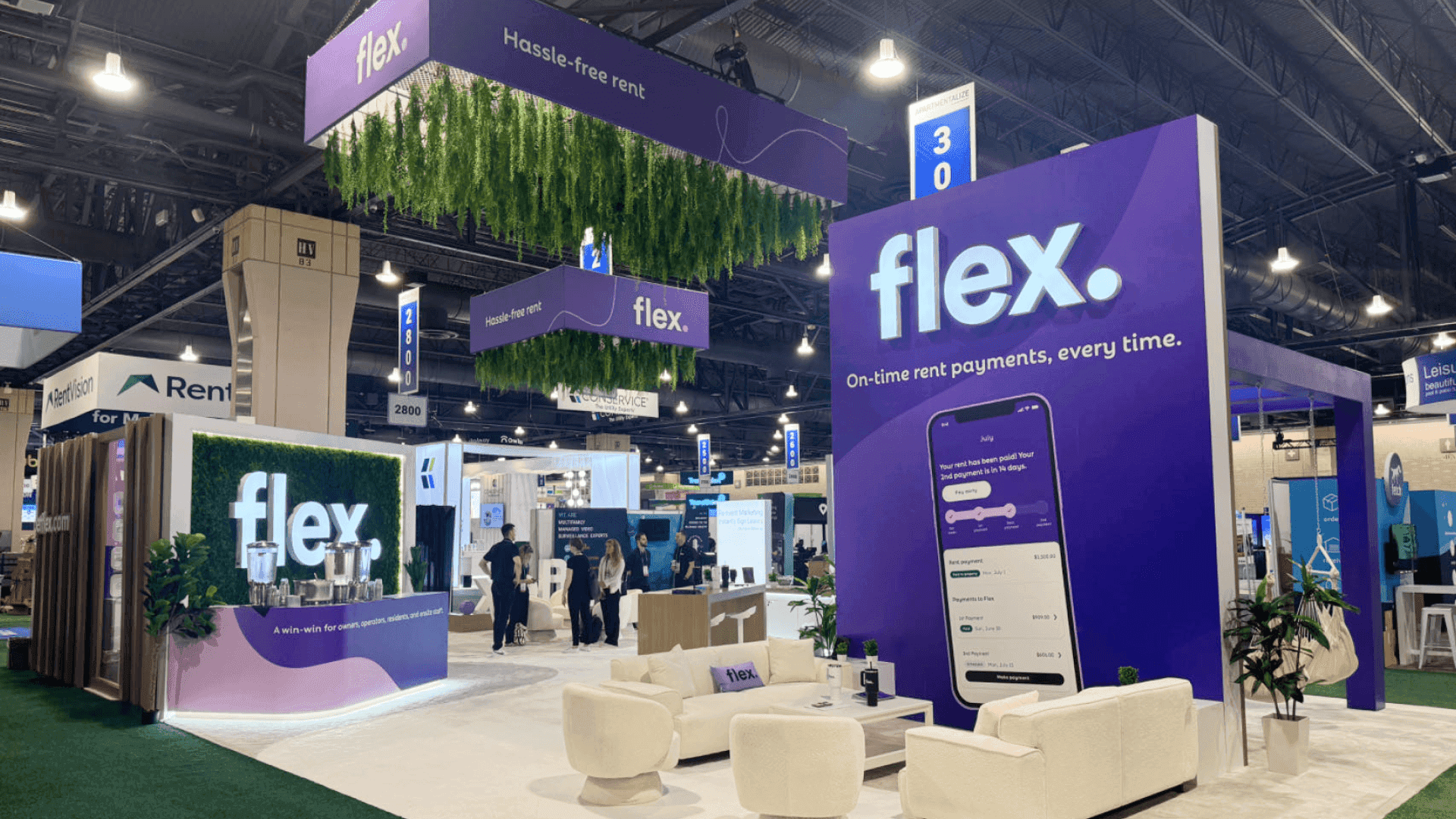
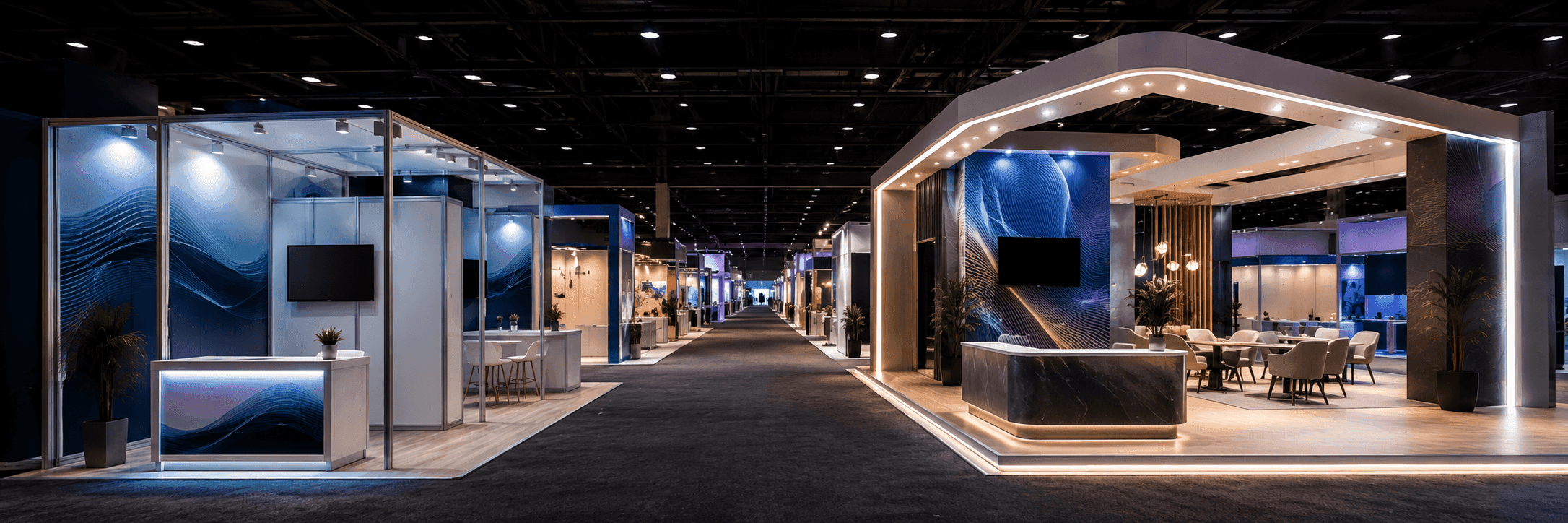
Modular exhibition system components can include reusable booth walls, counters, shelving, graphic panels, lighting, and structural parts that are configured for different trade show layouts.
How Modular Exhibit Components Work Together
Modular exhibit systems combine reusable wall panels, frames, counters, shelving, lighting, graphics, and connection hardware into one adaptable booth structure. These components are planned to work together rather than function as isolated display pieces.
The same core system can support changes in booth size, product presentation, graphics, storage, or meeting functions from one event to another. This allows exhibitors to reconfigure the booth around different show requirements without rebuilding the full exhibit structure.
Modular Trade Show Booths vs Modular Exhibit Systems
A modular trade show booth is the booth configuration exhibitors use on the show floor, while a modular exhibit system is the reusable structure behind that layout.
Modular booth systems can combine frames, panels, counters, graphics, lighting, shelving, and display components into different booth configurations. The same underlying system may support different booth sizes, product displays, rental-friendly layouts, and event schedules without requiring the entire exhibit to be rebuilt.
When that reusable structure is supplied through a rental program, the planning shifts from the system itself to the configuration needed for the event. Our modular trade show booth rental planning in Las Vegas guide explains what can stay consistent, what may change between shows, and what should be confirmed before setup.
Advantages of Modular Exhibit Systems
Flexibility and Reusability
Modular exhibit systems can be reconfigured when booth size, floor plan, product focus, or event requirements change. The same structural components may be reused in different layouts instead of rebuilding the entire exhibit for every show.
Reuse does not mean every booth needs to look the same. Exhibitors can keep the main frames and hardware while changing graphics, counters, shelving, product display areas, or meeting functions around the needs of each event.
For companies exhibiting several times during the year, this flexibility can make it easier to maintain a consistent booth system while adapting the presentation to different shows and floor plans.
Efficient Assembly and Disassembly
Standardized modular components can make booth installation and dismantle more predictable, but efficient setup still depends on preparation before the exhibit reaches the venue.
Components should be checked, labeled, and packed in a clear installation order. Prebuild fit checks can also identify issues with graphics, hardware, lighting, or connections before move-in.
At shows with tight installation windows, this preparation often matters as much as the modular structure itself. A reusable system works best when packing, freight timing, component identification, and the on-site installation sequence are planned together.
Personalized Customization
Modular construction does not require a booth to look generic. The main structural system can remain reusable while visible elements are customized around the brand, product, and event.
Exhibitors can use branded graphics, lightboxes, counters, shelving, monitor integration, product displays, lighting, and meeting areas to change how the booth looks and functions. Graphics and selected display components can also be refreshed between shows without rebuilding the primary structure.
This allows exhibitors to maintain a consistent brand environment while adjusting product messaging, campaigns, or booth layouts across the show calendar.
If you want to see how structure, graphics, product presentation, and visitor flow work together in real projects, explore our exhibition case studies.
Cost-effectiveness
The cost advantage of a modular exhibit system usually becomes clearer when components are reused across multiple shows. Frames, hardware, counters, and selected display elements can remain in service while graphics, surfaces, or individual modules are updated as booth requirements change.
Overall cost also depends on storage, packing, freight volume, installation labor, maintenance, repairs, and how often the system is reused.
For this reason, modular systems provide the most value when reuse and show-site execution are planned together rather than evaluated only by the cost of individual components.
Where Modular Exhibit Systems Fit in Trade Show Booth Planning
Modular exhibit systems are most useful when exhibitors need a repeatable booth structure that can still adapt to different show goals. In practice, they can support branded back walls, reception counters, product display zones, monitor areas, sample shelves, small storage spaces, and semi-private meeting corners.
A modular exhibit system is usually a strong fit for exhibitors who attend multiple shows, change booth footprints, or refresh graphics and product displays more often than the core structure. It allows the main exhibit structure to remain reusable while selected elements change around the next event.
A custom build may be a better fit when the booth depends on one-off architecture, highly specific product integration, or structural elements that are unlikely to be reused across future shows.
For Las Vegas exhibitors, modular structures can also be used as part of customizable booth rental in Las Vegas when exhibitors need branded graphics, product display areas, meeting space, and a professional show-floor presentation without treating every booth element as a one-time build.
Exhibition Systems vs. Modular Exhibition Systems
Exhibition systems are the broader category of booth structures, display hardware, graphics, counters, lighting, and presentation components used for trade shows. Modular exhibition systems are one type of exhibition system designed for reuse, adjustment, and flexible booth layouts.
A standard exhibition system may be built for one event or one fixed display format. A modular exhibition system is more useful when exhibitors need to adapt the booth for different booth sizes, different product groups, or multiple shows during the year.
For exhibitors, the key difference is planning flexibility. Modular systems are not only about reusable parts. They also affect booth size decisions, graphics placement, visitor flow, product display, storage, and installation sequence.
Planning factor | Exhibition systems | Modular exhibition systems |
|---|---|---|
Structure type | Can include custom booths, rental exhibits, portable displays, or modular displays | Built from reusable modular parts |
Flexibility | Depends on the booth type | Usually higher for multi-show planning |
Reuse potential | Varies by structure | Strong reuse potential |
Graphic updates | May require new production depending on the structure | Easier to replace or refresh |
Best fit | One-time booths, custom builds, rental displays, or portable exhibits | Reusable booth layouts, rental-style booths, and multi-show exhibit planning |
This is why modular exhibition systems are often used when exhibitors need a reusable booth structure that can adapt across different booth sizes, show goals, and brand presentation needs.
When modular exhibit systems are reused across several shows, graphics and brand presentation often become one of the easiest ways to refresh the booth message without rebuilding the full structure.
Modular Exhibition System vs. Custom Booth Build
A modular exhibition system and a custom booth build solve different planning needs. A modular system is often useful when an exhibitor wants reusable structures, adjustable layouts, and easier adaptation across multiple shows. A custom booth build is usually shaped more directly around a specific brand environment, product display requirement, booth size, or high-impact show-floor presence.
The right choice depends on how the booth will be used. If the same structure needs to travel to several events with changing booth spaces, a modular system can provide flexibility. If the exhibitor needs a highly specific visual structure, unique product display, or large-format brand presentation, a custom booth build may provide more control.
When an exhibitor is considering a rental-based modular approach, the boundary becomes clearer once reusable components can no longer accommodate the required architecture, product integration, or structural features. At that point, the decision shifts toward modular rental vs custom fabrication.
A hybrid approach can also work when the main booth structure remains reusable but selected elements need more customization. Modular exhibit systems can be combined with custom fabrication, branded graphics, lighting, and prebuild checks when the project needs more control over specific structural or presentation elements.
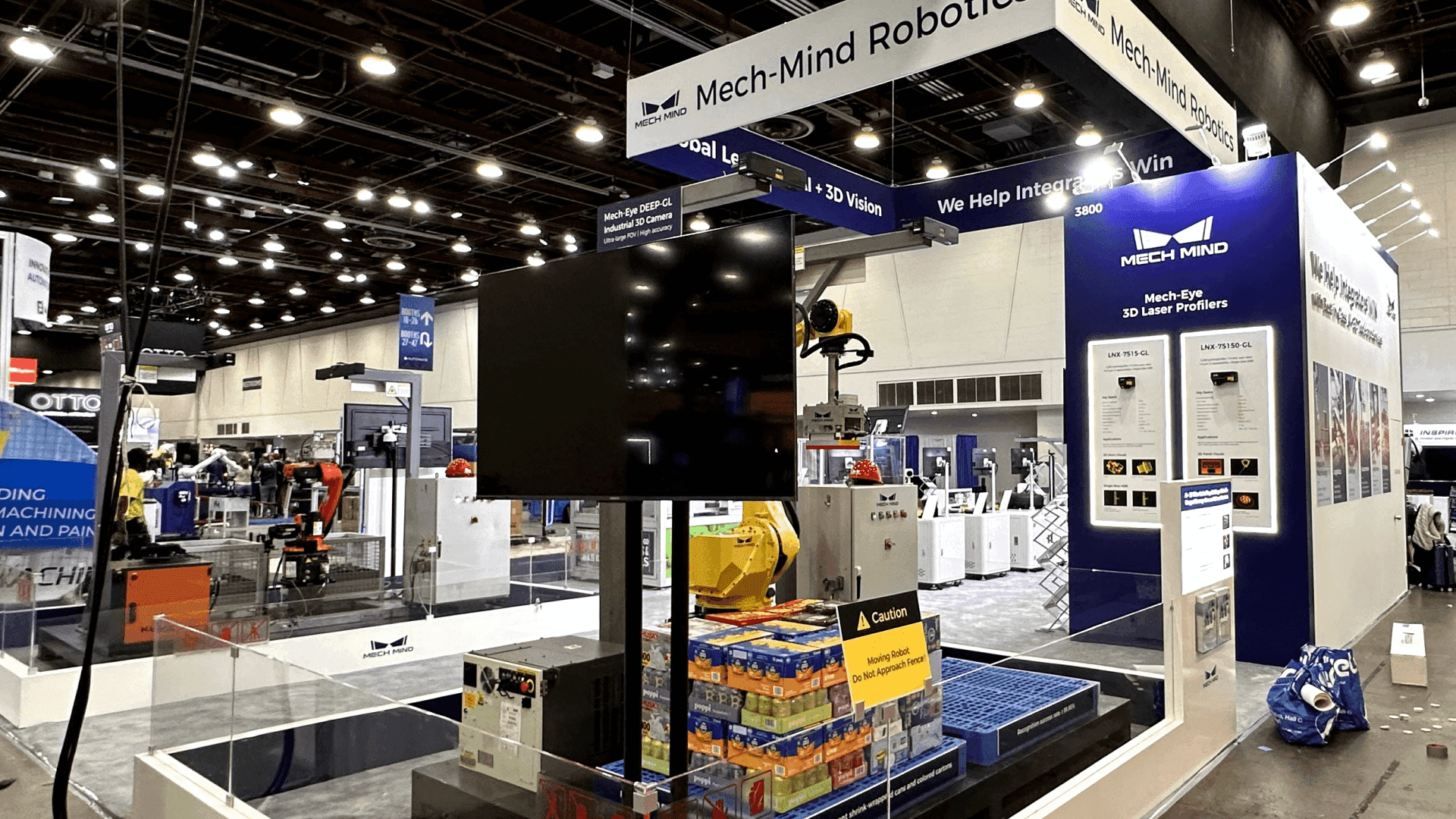
A modular exhibition system is usually planned for reuse and flexible reconfiguration, while a custom booth build is shaped around a specific layout, display goal, and show-floor presence.
How to Choose Suitable Modular Exhibit Systems
Consider Booth Space and Layout
Start with the booth sizes and floor plans the system will actually need to support. A company exhibiting mainly in 10x20 spaces needs a different component strategy from one moving between 20x20 and 20x30 layouts.
Consider where visitors enter, which walls remain visible from the aisle, how much space is required for counters or demonstrations, and whether the same components can be repositioned without making the next layout feel crowded or incomplete.
The goal is not simply to collect more modular components. The system should support the booth footprints the exhibitor actually uses while keeping visitor flow, product presentation, and staff movement practical.
Focus on Material and Quality
Materials should be selected around repeated assembly, transportation, graphic replacement, and the loads the booth needs to support.
Structural framing, fabric or rigid graphic panels, counters, shelving, connection hardware, lighting components, and display surfaces all need to perform reliably across repeated use.
Durability is not only about the main frame. Graphic attachment methods, panel surfaces, hardware connections, wear points, protective packing, and replacement availability also affect how well a modular exhibit system performs across multiple shows.
A system that looks good at the first event but becomes difficult to repair, pack, or reassemble may provide less long-term value than one designed around repeated installation and maintenance.
Adapt to Display Needs
The system should also match what the booth needs to display and how visitors interact with it.
A technology exhibitor may need monitor mounts, power access, demo counters, equipment storage, and lighting, while another exhibitor may rely more heavily on shelving, samples, product surfaces, or meeting space.
The structure should therefore be selected around product weight, display height, AV requirements, visitor interaction, storage, and staff workflow rather than around appearance alone.
A suitable modular exhibit system should therefore be evaluated as a complete exhibit program rather than only as a collection of reusable components. Booth footprints, structural durability, graphics, product displays, AV requirements, storage, packing, and repeated installation all affect whether the same system will remain practical across future shows.
How Booth Size Changes the Modular System
Booth size has a major impact on how a modular exhibit system should be arranged. Modular booth design therefore starts with how the reusable system needs to support visitor flow, product presentation, graphics, storage, and staff interaction within each booth footprint.
A 10x20 booth usually needs a clear back wall, a focused message, and one simple product or reception zone. The modular structure should remain simple enough that counters, displays, and graphics do not make the booth feel crowded.
A 20x20 booth gives exhibitors more flexibility for an open layout, demo counter, light storage, branded walls, and a small meeting area. For exhibitors planning a square island or open-corner configuration, 20x20 trade show booth planning can help determine how much space should be used for demos, counters, storage, graphics, and visitor circulation.
A 20x30 booth can support a stronger combination of product display, meeting space, graphics, storage, and visitor flow. For modular or hybrid booths with both public demo space and controlled conversation areas, 20x30 booth layouts for product demos can help clarify how counters, storage, graphics, and meeting zones should work together.
A 20x20 Modular Booth Layout Example
A modular system can also support practical booth layout planning. In a 20x20 booth, the structure may need to organize several functions at the same time: a branded backwall, product display area, demo counter, meeting space, storage zone, and open visitor flow from multiple aisles.
For this reason, modular booth planning should not stop at the structure itself. The layout needs to consider where visitors enter, which graphics are visible from the aisle, how products are demonstrated, where staff conversations happen, and how storage or AV equipment is hidden without blocking movement.
For exhibitors comparing different layouts, 20x20 booth planning can be a useful starting point before deciding whether a modular system, rental structure, or custom build is the better fit.
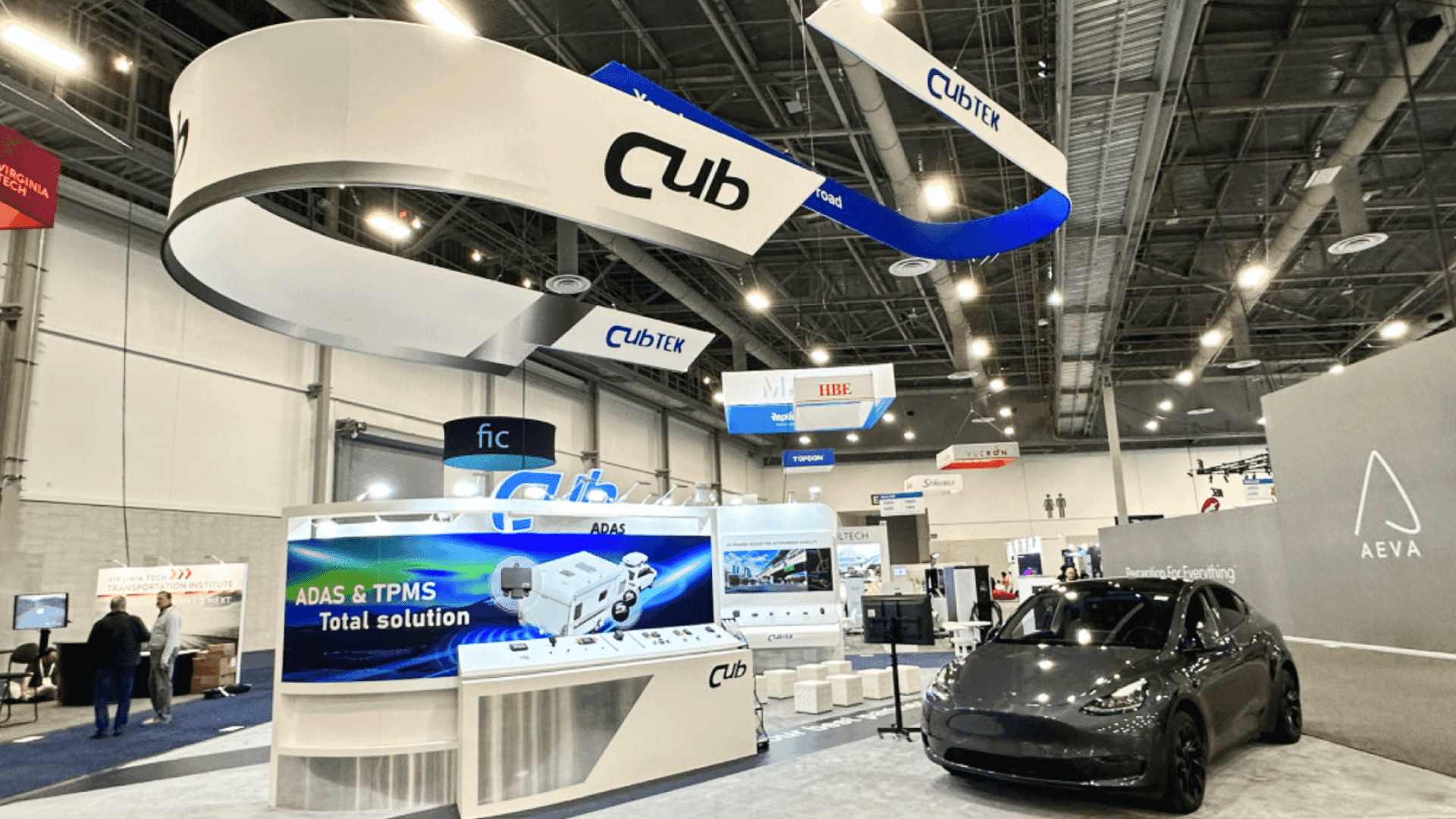
This 20x20 modular exhibit system layout example shows how a booth can combine a demo counter, meeting area, branded wall, storage space, and aisle-facing product display within a flexible structure.
What Exhibitors Should Check Before Reusing a Modular Exhibit System
Before a modular exhibit system is reused for another trade show, the structure should be checked against the next booth size, floor plan, graphics, product display needs, and installation requirements. Reuse is most effective when the system is treated as an adaptable exhibit rather than simply stored and shipped to the next event.
Structural condition: Inspect frames, connectors, shelving, counters, and other load-bearing components for wear, damage, or loose connections before the next installation.
Graphic compatibility: Confirm that graphic sizes, attachment methods, and sightlines still work with the next booth configuration and current brand messaging.
Layout fit: Check whether the existing components can support the next booth footprint without restricting visitor flow, product demos, storage, meetings, or staff movement.
Packing and labeling: Keep reusable components clearly identified and protected so the installation team can locate and rebuild the system efficiently.
AV and lighting: Recheck monitor mounts, power access, lighting positions, cable routes, and equipment requirements against the next floor plan.
A modular system becomes more valuable over time when inspection, replacement, packing, and reconfiguration are planned as part of the exhibit program rather than handled only after problems appear.
Planning Modular Exhibit Systems Across Multiple Shows
Modular exhibit systems create the most value when the same structural components can be inspected, packed, shipped, reconfigured, and refreshed across multiple events. Graphics, product displays, counters, lighting, storage, and meeting functions can change while the main structure remains reusable.
Multi-show planning should also account for component labeling, protective packing, freight timing, hardware checks, graphic replacement, and installation sequence. These practical details often determine how reliably the system performs after repeated setup, dismantle, storage, and transportation.
For major Las Vegas events, modular exhibit planning may also need to account for venue rules, labor coordination, freight timing, and show-site installation. When the exhibit includes screens, lighting, counters, or tight move-in windows, booth build support in Las Vegas can connect the reusable system with fabrication checks, logistics, and on-site execution.
Final Takeaway
Modular exhibit systems are useful because they give exhibitors a booth structure that can adapt across different events, booth sizes, and product presentations. But the system only works well when layout, graphics, product display, storage, lighting, and installation sequence are planned together.
For exhibitors who need a flexible booth without giving up a professional show-floor presentation, modular systems can support a practical path between rental booth planning and custom exhibit execution.
FAQ
1. What are modular exhibit systems?
Modular exhibit systems are reusable trade show booth structures made from frames, panels, graphics, lighting, counters, shelves, and display components. They are used to create flexible booth layouts for different trade shows and booth sizes.
2. Are modular exhibition systems the same as rental booths?
Not always. A rental booth may use modular components, but modular exhibition systems can also be owned, stored, reused, or combined with custom-built booth elements. Rental describes how the booth is supplied, while modular describes how the structure is configured.
3. Are modular exhibit systems good for 20x20 booths?
Yes. A 20x20 modular booth can support product demos, reception counters, meeting areas, storage, and branded backwalls while still leaving enough room for visitor flow.
4. What is the difference between modular exhibit systems and custom booth builds?
Modular exhibit systems use reusable parts that can be adjusted for different shows. Custom booth builds are usually designed around more specific brand, structural, product display, or architectural requirements. Some exhibits combine both approaches.
5. How do exhibitors reuse modular booth systems?
Exhibitors reuse modular booth systems by keeping the main structure and selected components, replacing graphics, adjusting counters or display areas, checking hardware, maintaining the system between shows, and reconfiguring the layout around the next booth space.