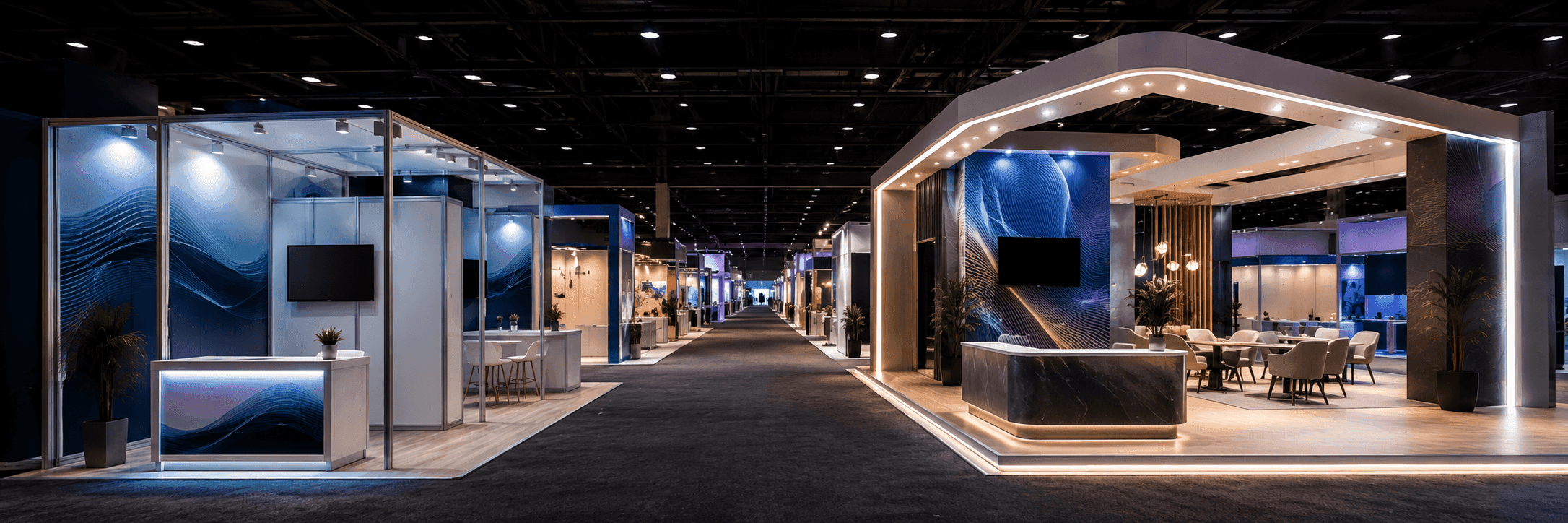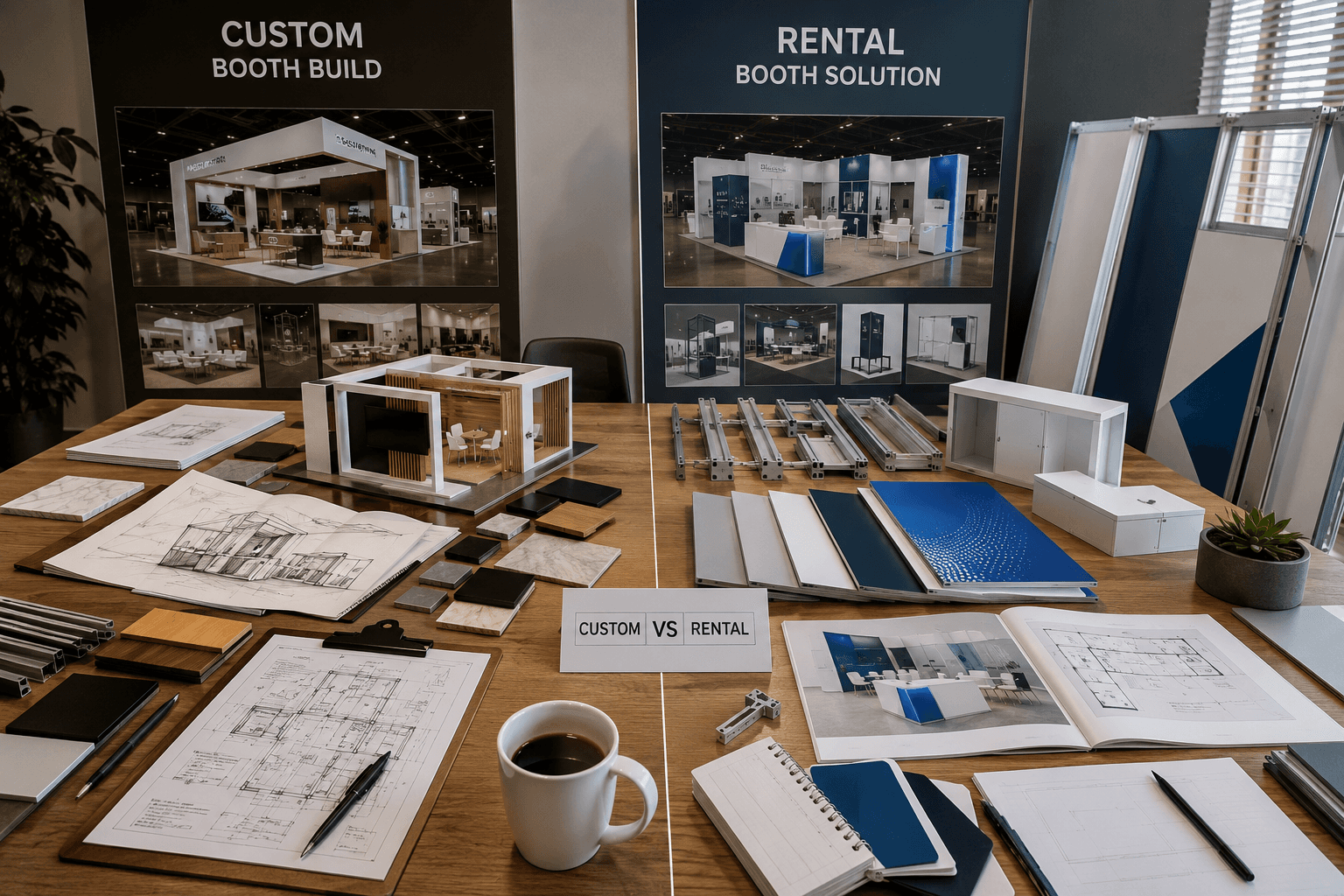
Split-view planning table comparing a custom trade show booth build and a Las Vegas rental booth setup with layout sketches, material samples, modular panels, and fabrication notes

Custom Booth Build vs Booth Rental in Las Vegas: How Exhibitors Should Choose

Custom Booth Build vs Booth Rental in Las Vegas: How Exhibitors Should Choose

Circle Exhibit Team

Industry professionals

Exhibition industry professional dedicated to delivering the latest insights and curated recommendations to you.

Exhibition industry professional dedicated to delivering the latest insights and curated recommendations to you.

The right choice depends on brand depth, booth size, timeline, reuse plans, and show-site requirements. A custom booth build gives exhibitors more control over structure and execution, while booth rental works better when speed, flexibility, and modular efficiency matter most.

The right choice depends on brand depth, booth size, timeline, reuse plans, and show-site requirements. A custom booth build gives exhibitors more control over structure and execution, while booth rental works better when speed, flexibility, and modular efficiency matter most.

The right choice depends on brand depth, booth size, timeline, reuse plans, and show-site requirements. A custom booth build gives exhibitors more control over structure and execution, while booth rental works better when speed, flexibility, and modular efficiency matter most.

A custom booth build and a booth rental solve different trade show problems.

One gives exhibitors more control over structure, brand depth, and show-site execution. The other gives exhibitors a faster, more flexible path to a branded booth without building every element from zero.

For Las Vegas exhibitors, the better choice depends on booth size, timeline, reuse plan, venue pressure, and how much the booth structure needs to carry the brand experience.

Quick Answer

A custom booth build is usually better when the booth needs unique structure, deeper brand expression, integrated product displays, or more complex on-site execution. A booth rental is usually better when the exhibitor needs a polished branded space with faster planning, modular flexibility, and a more predictable install path in Las Vegas.

For larger or more execution-heavy projects, custom exhibit execution in Las Vegas gives exhibitors more control over design, fabrication, installation, and show-site coordination.

What Is the Real Difference Between a Custom Booth Build and a Booth Rental?

The real difference is not simply ownership versus rental.

The difference is how much control the booth needs.

A custom booth build usually starts from the exhibitor’s brand, product, structure, and show-floor goals. The booth can be shaped around a specific product display, hospitality area, demo path, storage need, or visual structure.

A booth rental usually starts from a modular or reusable system. The booth can still look branded, but the structure is often adapted from existing components, panels, counters, frames, and graphic surfaces.

That makes rental faster and more flexible. It also makes custom build stronger when the booth needs a more specific physical identity.

Neither path is automatically better. They support different search intents and different project realities.

When Does a Custom Booth Build Make More Sense?

A custom booth build makes more sense when the booth structure itself needs to do more work.

This often happens when the exhibitor needs a highly specific brand environment, a large product display, a hero object, a layered demo area, or a layout that cannot be solved with standard modular components.

Custom build is also a stronger fit when the booth needs:

  • unique architectural form

  • integrated product fixtures

  • custom counters or display walls

  • special lighting positions

  • hidden storage built into the structure

  • complex AV or screen placement

  • stronger control over install sequencing

In Las Vegas, custom builds also need closer coordination before move-in. More custom pieces usually mean more packing logic, more install steps, and more show-site dependencies.

That is not a problem when planned correctly. It simply means the booth needs stronger execution control from the beginning.

When Does Booth Rental Work Better?

Booth rental works better when the exhibitor needs speed, flexibility, and a polished branded look without a full custom build.

This is common for 20x20, 20x30, and some larger booths where the brand message can be carried through graphics, counters, meeting furniture, monitor walls, and modular display elements.

Good Las Vegas booth rental planning does not mean choosing a low-end option. It means using a rental system in a controlled way: branded walls, demo counters, shelving, meeting areas, storage, and graphics are arranged around the booth’s real show behavior.

Rental is often a strong fit when:

  • the timeline is short

  • the booth size is moderate

  • the company exhibits at multiple shows

  • graphics need to change by campaign

  • the layout needs flexibility

  • the exhibitor wants a clean branded space without custom architecture

A rental booth should still feel planned. The difference is that the structure is more modular and the install path is usually more predictable.

Custom Build vs Booth Rental: Side-by-Side Comparison


Decision Factor

Custom Booth Build

Booth Rental

Brand depth

Stronger fit when structure, materials, and layout must express the brand

Strong fit when graphics, counters, screens, and layout can carry the brand

Booth size

Better for larger or more complex booths with multiple zones

Works well for 20x20, 20x30, and repeat show programs

Timeline

Needs more time for design, engineering, fabrication, and review

Usually faster because the structure is based on modular components

Budget logic

Higher upfront control and more tailored production

More flexible cost structure for short-term or repeat-use needs

Reuse

Strong when the same brand environment will be used repeatedly

Strong when the structure can adapt to different shows and campaigns

Venue execution

Needs tighter coordination for packing, labor, staging, and install sequence

Often easier to stage and install when the system is well defined

Best fit

Brand-heavy, product-heavy, or execution-heavy booth programs

Speed-focused, flexible, branded, modular booth programs

How Does Brand Depth Affect the Choice?

Brand depth is one of the first signals.

If the booth only needs a clean brand wall, a demo counter, a meeting area, and product messaging, rental may be enough. The brand can come through graphics, screen content, counter design, and booth flow.

If the booth needs a more distinctive physical environment, custom build becomes more useful. This could include a shaped overhead element, a custom product wall, integrated display fixtures, or a spatial layout designed around a specific customer journey.

The key question is simple:

Does the brand need the booth structure to feel unique, or can the brand be carried through graphic and modular layers?

When the structure must become part of the brand experience, custom build usually has the advantage.

How Does Booth Size Change the Decision?

Booth size changes the amount of pressure inside the layout.

A 10x20 or 20x20 booth may not need a fully custom build if the goal is clear brand visibility, fast demos, and controlled conversations. A rental booth can often support that well.

A 20x30 booth sits in the middle. It can work as a rental when the layout is simple and the brand can be carried through graphics and modular walls. It can also justify custom build when the exhibitor needs stronger product display, more private meeting space, or a more specific structure.

Larger booths usually create more dependencies. More zones mean more coordination between layout, structure, lighting, graphics, AV, storage, and installation. That is where custom build often becomes more practical, not because rental cannot work, but because the booth needs more control.

What Happens When the Timeline Is Tight?

A tight timeline usually pushes the decision toward rental.

Rental systems reduce the number of decisions that need to be invented from scratch. The booth can use existing structures, modular walls, counters, and display components, while still adding branded graphics and layout planning.

Custom build needs more development time. Design, engineering, material decisions, fabrication, prebuild checks, packing, shipping, and install planning all need enough room to happen properly.

Early design and engineering support for trade show booths helps exhibitors decide which path is realistic. If the structure is simple and the show date is close, rental may protect the schedule. If the booth has custom structural requirements, starting early gives the build team enough time to control the risk.

The wrong decision is forcing a custom build into a rental timeline.

That usually creates pressure later during fabrication or installation.

How Should Budget Be Compared?

Budget should not be judged only by the first quote.

A custom booth build usually has a higher upfront cost because more work is created specifically for the exhibitor. That may include custom structure, fixtures, materials, engineering, fabrication, and more detailed install planning.

A rental booth usually gives exhibitors more flexibility. The base structure is not created from zero, so the project can focus more budget on graphics, counters, screens, meeting space, and show-site finish.

But the better question is not “which one is cheaper?”

The better question is:

What level of booth performance does the show require?

If the booth must carry a major product launch, host high-value meetings, or support a complex brand environment, custom build may be the better use of budget. If the booth needs to look polished, move fast, and adapt across multiple shows, rental may be the smarter allocation.

How Does Reuse Work in Each Option?

Reuse works differently for custom builds and rental booths.

With a custom build, reuse often means bringing the same physical booth elements back into future shows. The exhibitor may reuse custom walls, counters, display fixtures, or brand structures across a planned show program.

With rental, reuse often means repeating the planning logic. The exhibitor may use similar modular components, updated graphics, adjusted counters, and a slightly different layout for each event.

That makes rental useful for companies that need flexibility from show to show. It also makes custom build useful for companies that want a consistent, recognizable booth environment over time.

For teams thinking through repeat structures and modular planning, this article on exhibition system planning gives broader background on how exhibit systems can support flexible show programs.

How Do Las Vegas Venue Requirements Affect the Choice?

Las Vegas show-site requirements can change the decision quickly.

At venues such as the Las Vegas Convention Center, booth execution may involve move-in scheduling, dock-to-booth timing, drayage release, union labor coordination, freight staging, and final install sequencing.

A rental booth often has a more predictable install path because the components are familiar and easier to stage. This can help when the move-in window is tight or when the booth does not require unusual structure.

A custom build may need more coordination because each piece is more specific. That includes how the booth is packed, labeled, unloaded, staged, assembled, wired, finished, and checked before opening.

This does not make custom build risky by itself.

It means custom build needs better control before the booth reaches the show floor.

Why Does Installation Difficulty Matter?

Installation difficulty is one of the clearest decision points.

A booth with standard walls, graphic panels, counters, shelving, and simple lighting can often work well as a rental. The install sequence is easier to understand and easier to repeat.

A booth with heavier structure, complex product display, integrated lighting, custom fixtures, or more technical dependencies often benefits from a custom build process. The team can plan how each part is fabricated, packed, staged, and installed.

This is where booth fabrication and prebuild checks become important. Prebuild checks can confirm whether the structure fits, graphics align, counters are finished, and installation steps are realistic before the booth reaches the hall.

The more difficult the install, the more valuable early execution planning becomes.

How Should Exhibitors Make the Choice?

The choice becomes easier when the exhibitor answers practical questions instead of comparing labels.

Decision Checklist

  • Does the booth need a unique structure or mainly a branded layout?

  • Is the booth supporting a product launch, demo, meeting program, or general brand presence?

  • Is the booth size closer to 20x20, 20x30, or a larger island layout?

  • How much time is available before move-in?

  • Will the booth be reused exactly, or adapted across different shows?

  • Does the booth require custom fixtures, heavy products, AV, lighting, or special storage?

  • How much venue pressure is expected around drayage, labor, staging, and install?

  • Would a modular rental system support the goal without weakening the brand experience?

  • Would custom fabrication reduce risk by giving the team more control?

These questions help keep Builder and Rental intent separate.

Builder is the stronger path when the booth needs deeper structure and tighter execution control. Rental is the stronger path when the booth needs faster planning, flexible reuse, and a polished modular presentation.

What Is the Best Way to Avoid Choosing the Wrong Path?

The best way to avoid the wrong choice is to define the booth’s job before choosing the build type.

A booth is not custom because it is expensive. A booth is not rental because it is simple. The right path depends on what the booth has to support on the show floor.

For Las Vegas exhibitors, the decision should connect brand depth, booth size, timeline, reuse, venue pressure, and installation difficulty.

When those factors are clear, custom build and rental stop competing with each other. They become two different tools for two different booth programs.

Choosing Between a Custom Build and a Rental Booth in Las Vegas?

Circle Exhibit teams help exhibitors plan booth structures based on brand depth, booth size, timeline, fabrication needs, and Las Vegas show-site execution requirements.
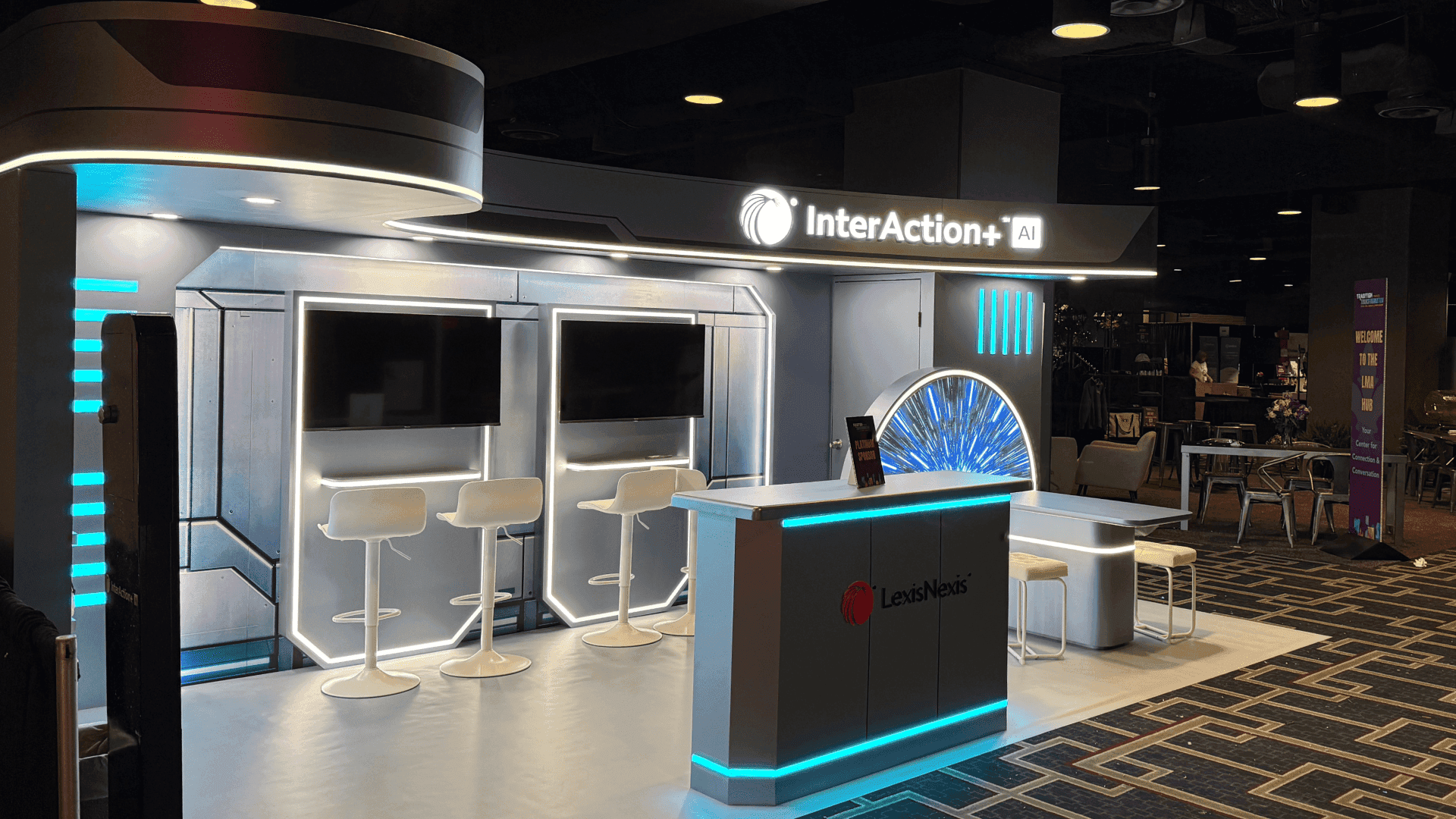
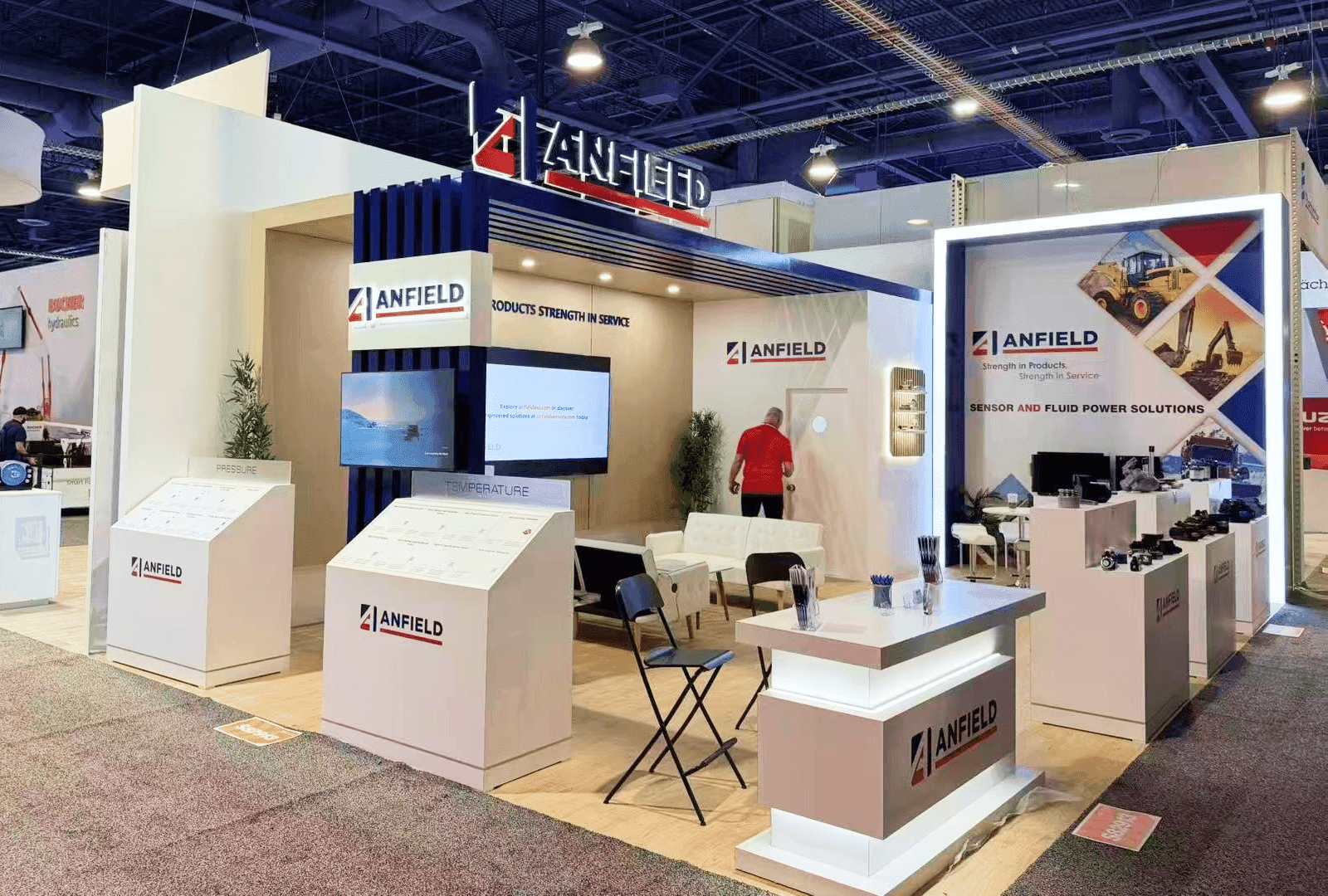
A custom booth build and a booth rental solve different trade show problems.

One gives exhibitors more control over structure, brand depth, and show-site execution. The other gives exhibitors a faster, more flexible path to a branded booth without building every element from zero.

For Las Vegas exhibitors, the better choice depends on booth size, timeline, reuse plan, venue pressure, and how much the booth structure needs to carry the brand experience.

Quick Answer

A custom booth build is usually better when the booth needs unique structure, deeper brand expression, integrated product displays, or more complex on-site execution. A booth rental is usually better when the exhibitor needs a polished branded space with faster planning, modular flexibility, and a more predictable install path in Las Vegas.

For larger or more execution-heavy projects, custom exhibit execution in Las Vegas gives exhibitors more control over design, fabrication, installation, and show-site coordination.

What Is the Real Difference Between a Custom Booth Build and a Booth Rental?

The real difference is not simply ownership versus rental.

The difference is how much control the booth needs.

A custom booth build usually starts from the exhibitor’s brand, product, structure, and show-floor goals. The booth can be shaped around a specific product display, hospitality area, demo path, storage need, or visual structure.

A booth rental usually starts from a modular or reusable system. The booth can still look branded, but the structure is often adapted from existing components, panels, counters, frames, and graphic surfaces.

That makes rental faster and more flexible. It also makes custom build stronger when the booth needs a more specific physical identity.

Neither path is automatically better. They support different search intents and different project realities.

When Does a Custom Booth Build Make More Sense?

A custom booth build makes more sense when the booth structure itself needs to do more work.

This often happens when the exhibitor needs a highly specific brand environment, a large product display, a hero object, a layered demo area, or a layout that cannot be solved with standard modular components.

Custom build is also a stronger fit when the booth needs:

  • unique architectural form

  • integrated product fixtures

  • custom counters or display walls

  • special lighting positions

  • hidden storage built into the structure

  • complex AV or screen placement

  • stronger control over install sequencing

In Las Vegas, custom builds also need closer coordination before move-in. More custom pieces usually mean more packing logic, more install steps, and more show-site dependencies.

That is not a problem when planned correctly. It simply means the booth needs stronger execution control from the beginning.

When Does Booth Rental Work Better?

Booth rental works better when the exhibitor needs speed, flexibility, and a polished branded look without a full custom build.

This is common for 20x20, 20x30, and some larger booths where the brand message can be carried through graphics, counters, meeting furniture, monitor walls, and modular display elements.

Good Las Vegas booth rental planning does not mean choosing a low-end option. It means using a rental system in a controlled way: branded walls, demo counters, shelving, meeting areas, storage, and graphics are arranged around the booth’s real show behavior.

Rental is often a strong fit when:

  • the timeline is short

  • the booth size is moderate

  • the company exhibits at multiple shows

  • graphics need to change by campaign

  • the layout needs flexibility

  • the exhibitor wants a clean branded space without custom architecture

A rental booth should still feel planned. The difference is that the structure is more modular and the install path is usually more predictable.

Custom Build vs Booth Rental: Side-by-Side Comparison


Decision Factor

Custom Booth Build

Booth Rental

Brand depth

Stronger fit when structure, materials, and layout must express the brand

Strong fit when graphics, counters, screens, and layout can carry the brand

Booth size

Better for larger or more complex booths with multiple zones

Works well for 20x20, 20x30, and repeat show programs

Timeline

Needs more time for design, engineering, fabrication, and review

Usually faster because the structure is based on modular components

Budget logic

Higher upfront control and more tailored production

More flexible cost structure for short-term or repeat-use needs

Reuse

Strong when the same brand environment will be used repeatedly

Strong when the structure can adapt to different shows and campaigns

Venue execution

Needs tighter coordination for packing, labor, staging, and install sequence

Often easier to stage and install when the system is well defined

Best fit

Brand-heavy, product-heavy, or execution-heavy booth programs

Speed-focused, flexible, branded, modular booth programs

How Does Brand Depth Affect the Choice?

Brand depth is one of the first signals.

If the booth only needs a clean brand wall, a demo counter, a meeting area, and product messaging, rental may be enough. The brand can come through graphics, screen content, counter design, and booth flow.

If the booth needs a more distinctive physical environment, custom build becomes more useful. This could include a shaped overhead element, a custom product wall, integrated display fixtures, or a spatial layout designed around a specific customer journey.

The key question is simple:

Does the brand need the booth structure to feel unique, or can the brand be carried through graphic and modular layers?

When the structure must become part of the brand experience, custom build usually has the advantage.

How Does Booth Size Change the Decision?

Booth size changes the amount of pressure inside the layout.

A 10x20 or 20x20 booth may not need a fully custom build if the goal is clear brand visibility, fast demos, and controlled conversations. A rental booth can often support that well.

A 20x30 booth sits in the middle. It can work as a rental when the layout is simple and the brand can be carried through graphics and modular walls. It can also justify custom build when the exhibitor needs stronger product display, more private meeting space, or a more specific structure.

Larger booths usually create more dependencies. More zones mean more coordination between layout, structure, lighting, graphics, AV, storage, and installation. That is where custom build often becomes more practical, not because rental cannot work, but because the booth needs more control.

What Happens When the Timeline Is Tight?

A tight timeline usually pushes the decision toward rental.

Rental systems reduce the number of decisions that need to be invented from scratch. The booth can use existing structures, modular walls, counters, and display components, while still adding branded graphics and layout planning.

Custom build needs more development time. Design, engineering, material decisions, fabrication, prebuild checks, packing, shipping, and install planning all need enough room to happen properly.

Early design and engineering support for trade show booths helps exhibitors decide which path is realistic. If the structure is simple and the show date is close, rental may protect the schedule. If the booth has custom structural requirements, starting early gives the build team enough time to control the risk.

The wrong decision is forcing a custom build into a rental timeline.

That usually creates pressure later during fabrication or installation.

How Should Budget Be Compared?

Budget should not be judged only by the first quote.

A custom booth build usually has a higher upfront cost because more work is created specifically for the exhibitor. That may include custom structure, fixtures, materials, engineering, fabrication, and more detailed install planning.

A rental booth usually gives exhibitors more flexibility. The base structure is not created from zero, so the project can focus more budget on graphics, counters, screens, meeting space, and show-site finish.

But the better question is not “which one is cheaper?”

The better question is:

What level of booth performance does the show require?

If the booth must carry a major product launch, host high-value meetings, or support a complex brand environment, custom build may be the better use of budget. If the booth needs to look polished, move fast, and adapt across multiple shows, rental may be the smarter allocation.

How Does Reuse Work in Each Option?

Reuse works differently for custom builds and rental booths.

With a custom build, reuse often means bringing the same physical booth elements back into future shows. The exhibitor may reuse custom walls, counters, display fixtures, or brand structures across a planned show program.

With rental, reuse often means repeating the planning logic. The exhibitor may use similar modular components, updated graphics, adjusted counters, and a slightly different layout for each event.

That makes rental useful for companies that need flexibility from show to show. It also makes custom build useful for companies that want a consistent, recognizable booth environment over time.

For teams thinking through repeat structures and modular planning, this article on exhibition system planning gives broader background on how exhibit systems can support flexible show programs.

How Do Las Vegas Venue Requirements Affect the Choice?

Las Vegas show-site requirements can change the decision quickly.

At venues such as the Las Vegas Convention Center, booth execution may involve move-in scheduling, dock-to-booth timing, drayage release, union labor coordination, freight staging, and final install sequencing.

A rental booth often has a more predictable install path because the components are familiar and easier to stage. This can help when the move-in window is tight or when the booth does not require unusual structure.

A custom build may need more coordination because each piece is more specific. That includes how the booth is packed, labeled, unloaded, staged, assembled, wired, finished, and checked before opening.

This does not make custom build risky by itself.

It means custom build needs better control before the booth reaches the show floor.

Why Does Installation Difficulty Matter?

Installation difficulty is one of the clearest decision points.

A booth with standard walls, graphic panels, counters, shelving, and simple lighting can often work well as a rental. The install sequence is easier to understand and easier to repeat.

A booth with heavier structure, complex product display, integrated lighting, custom fixtures, or more technical dependencies often benefits from a custom build process. The team can plan how each part is fabricated, packed, staged, and installed.

This is where booth fabrication and prebuild checks become important. Prebuild checks can confirm whether the structure fits, graphics align, counters are finished, and installation steps are realistic before the booth reaches the hall.

The more difficult the install, the more valuable early execution planning becomes.

How Should Exhibitors Make the Choice?

The choice becomes easier when the exhibitor answers practical questions instead of comparing labels.

Decision Checklist

  • Does the booth need a unique structure or mainly a branded layout?

  • Is the booth supporting a product launch, demo, meeting program, or general brand presence?

  • Is the booth size closer to 20x20, 20x30, or a larger island layout?

  • How much time is available before move-in?

  • Will the booth be reused exactly, or adapted across different shows?

  • Does the booth require custom fixtures, heavy products, AV, lighting, or special storage?

  • How much venue pressure is expected around drayage, labor, staging, and install?

  • Would a modular rental system support the goal without weakening the brand experience?

  • Would custom fabrication reduce risk by giving the team more control?

These questions help keep Builder and Rental intent separate.

Builder is the stronger path when the booth needs deeper structure and tighter execution control. Rental is the stronger path when the booth needs faster planning, flexible reuse, and a polished modular presentation.

What Is the Best Way to Avoid Choosing the Wrong Path?

The best way to avoid the wrong choice is to define the booth’s job before choosing the build type.

A booth is not custom because it is expensive. A booth is not rental because it is simple. The right path depends on what the booth has to support on the show floor.

For Las Vegas exhibitors, the decision should connect brand depth, booth size, timeline, reuse, venue pressure, and installation difficulty.

When those factors are clear, custom build and rental stop competing with each other. They become two different tools for two different booth programs.

Choosing Between a Custom Build and a Rental Booth in Las Vegas?

Circle Exhibit teams help exhibitors plan booth structures based on brand depth, booth size, timeline, fabrication needs, and Las Vegas show-site execution requirements.
Message

Leave your message and we will get back to you ASAP

Send a Message

We’ll Be in Touch!

Message

Leave your message and we will get back to you ASAP

Address:

4915 Steptoe Street #300

Las Vegas, NV 89122