What Should a Complete Trade Show Budget Include?
A trade show budget is built from several separate scopes. The exhibit partner controls some of them. Others belong to the organizer, freight carrier, general service contractor, venue, official show vendors, or the exhibitor’s own operating budget.
For planning purposes, the useful question is not only what each line item costs, but also what requirement caused that cost to exist.
Cost Category | What It Covers | Typical Provider / Cost Owner | Triggered By |
|---|---|---|---|
Exhibit Space | Contracted show-floor footprint | Show organizer | Footprint, event rate, placement and space package |
Exhibit / Booth | Structure, graphics, flooring, counters, storage and other exhibit elements | Exhibit house / rental or exhibit partner | Layout, branding and functional scope |
Freight | Transportation of booth materials, products and equipment to and from the event | Freight carrier / logistics provider | Distance, shipment volume, weight and delivery schedule |
Drayage / Material Handling | Receiving, dock-to-booth movement, empty-container handling and outbound return | Official material-handling provider, often the GSC | Shipment weight, handling method and receiving route |
Installation & Dismantle | On-site assembly, setup, dismantle and repacking | Exhibit partner / EAC / official labor provider | Build complexity, products, AV and installation sequence |
Electrical | Power distribution, outlets and related electrical labor | Official electrical provider / GSC | Lighting, screens, demos and powered equipment |
Internet / Telecom | Wired or wireless connectivity and related services | Venue / official telecom or internet provider | Live software, cloud applications and connected devices |
Rigging | Hanging signs, suspended lighting and overhead elements | Official rigging provider / GSC / venue-approved contractor | Overhead branding, suspended structures and lighting |
AV / Technology | Screens, media hardware, audio and demo equipment | AV provider / exhibit partner / official show vendor | Presentation, media and demo requirements |
Staff / Travel | Flights, hotels, meals, local transportation and team expenses | Exhibitor / travel vendors | Team size, show duration, travel origin and booking timing |
Marketing | Sponsorships, promotion, collateral and campaign activity | Exhibitor / organizer / marketing vendors | Sponsorship plan, promotion and campaign scope |
Contingency Reserve | Budget allowance for rework, rush charges, quantity changes or unexpected scope | Exhibitor budget reserve — not a vendor charge | Project uncertainty, late changes and scope risk |
The final budget rarely arrives as one proposal or one invoice. Booth space, exhibit production, transportation, material handling, power, connectivity, and rigging may all sit with different providers or scopes.
The more useful connection is between requirement and cost. A live demo creates technical needs. Heavy equipment creates handling needs. Overhead branding creates rigging needs. Those decisions are what turn a list of budget categories into a project budget.

A complete trade show budget combines the exhibit itself with logistics, show-controlled services, staffing, travel and other event costs.
Why Booth Space Is Only the Starting Point
Booth space is exactly what the name suggests: floor space.
A 10x20 contract gives an exhibitor 200 square feet. A 20x20 gives 400 square feet. Neither tells you what will occupy that space or what it will take to operate there for several show days.
A show-ready exhibit still needs a physical and operational scope. That might include structure, flooring, graphics, reception, storage, product displays, meeting areas, lighting, or other functional elements.
A simple way to frame the difference is:
Exhibit Space + Exhibit + Logistics + Show Services + People + Marketing = Total Exhibiting Budget
The footprint matters, but it does not define the project by itself. If the space is still being evaluated, the trade show booth size guide explains what common footprints such as 10x20, 20x20, 20x30, and larger spaces can realistically support before the exhibit scope is priced.
Some events also offer turnkey packages alongside space-only contracts. Those options are easier to compare at the finished, show-ready level rather than by looking only at the initial space fee. The turnkey booth vs. space-only comparison explains that distinction in more detail.
Once the footprint and procurement model are clear, the real cost question becomes more specific:
What does the booth actually need to support?
Why Can Two Same-Size Booths Have Very Different Total Costs?
Footprint is only one cost driver.
Two exhibitors can both occupy a 20x20 space and still end up with very different budgets because the structures, products, demos, technology, and installation requirements inside those 400 square feet are different.
Scenario A — Different Build Scope Within the Same Footprint
Consider two 20x20 booths.
The first uses an open layout with a reception counter, product display, basic storage, and brand graphics.
The second uses the same footprint but adds a taller branded structure, enclosed storage, several monitors, a meeting area, and an overhead sign.
That change in scope can trigger:
More built structure
→ More graphics and materials
→ Higher shipment volume
→ More material handling
→ Longer installation
→ Additional electrical work
→ Potential rigging
The footprint has not changed. The operating scope has.
Scenario B — A Live Software or Technology Demo
A screen is rarely just a screen once the demo has to work live on the show floor.
A live software presentation can require mounting hardware, furniture, dedicated power, wired internet, demo devices, cable management, testing, and backup content. Run several demos at once and the requirement may begin to influence layout and staffing as well.
The finished booth might still look visually simple. Behind the scenes, it has become a more technical exhibit.
Scenario C — Heavy Products or Equipment
Machinery, vehicles, battery systems, and other substantial products create a different cost chain.
Heavy equipment
→ Freight planning
→ Higher shipment weight
→ Material handling
→ Forklift or positioning requirements
→ Utility connections
→ Clearance planning
→ Installation sequencing
A lightweight brand exhibit and an equipment-driven exhibit can therefore occupy the same dimensions while carrying very different logistics and labor requirements.
A square-foot price alone cannot describe the real cost of either project.
Which Logistics and Show-Site Costs May Sit Outside the Booth Quote?
A carrier can deliver a shipment to the convention center and the booth still may not have received it. A structure can be fabricated and packed while power, internet, rigging, or material handling still need to be ordered.
This is where an exhibit quote and an all-in event budget often begin to separate.
Freight and Drayage Cover Different Parts of the Move
Freight covers transportation from the shipment origin to the event facility or advance warehouse.
Drayage starts when that shipment enters the show’s material-handling system. It typically covers movement from receiving to the booth, management of empty containers during the event, and return of packed materials for outbound loading.
If that process is unfamiliar, the trade show drayage guide explains what happens after freight reaches the show’s receiving system.
Installation Depends on What Has to Happen On Site
Installation and dismantle are not determined by floor area alone.
A straightforward modular booth with graphics may have a relatively simple setup. Add product equipment, multiple monitors, specialty graphics, lighting, or a more complex structure and the labor scope changes.
Sequence matters too. Equipment may need to be positioned before walls close. Utilities may need access below flooring. AV often needs to be powered and tested before the show opens.
Those dependencies can change both labor hours and coordination requirements.
Some Services Are Controlled by the Show or Venue
Take a booth with four monitors, a live cloud demo, and a hanging sign.
That one exhibit concept creates at least three separate operational needs:
power, connectivity, and rigging.
Those services are often ordered through venue-controlled or show-appointed providers rather than directly through the exhibit partner.
The same can apply to cleaning, plumbing, compressed air, specialized equipment handling, or other show-specific services.
Before approving an exhibit proposal, the booth rental scope checklist can help identify which items are included, coordinated, or expected to be billed separately.
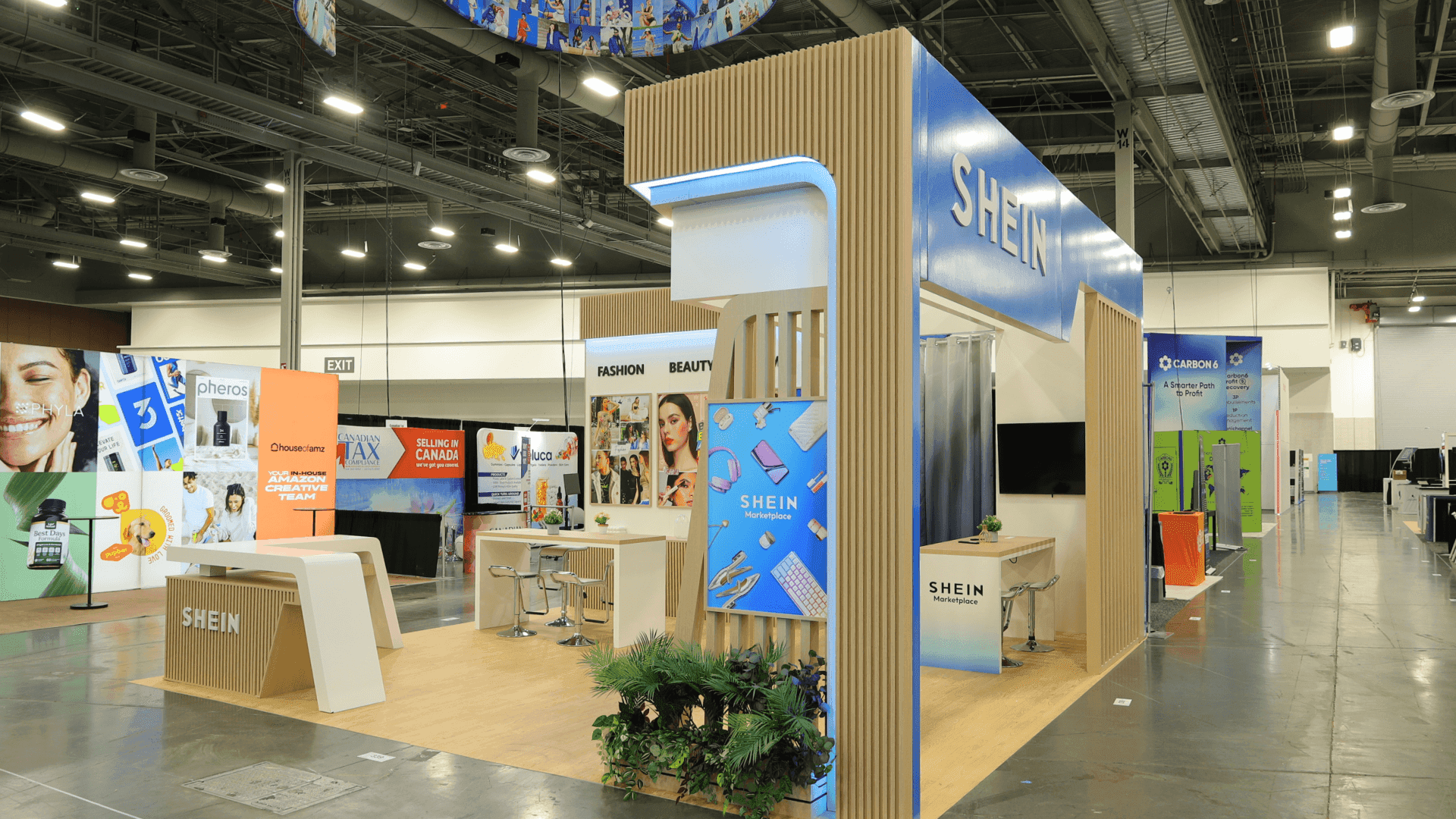
The same booth footprint can produce very different total costs when product displays, demo technology, logistics and installation requirements change.
Which Trade Show Costs Can Exhibitors Control — and Which Rise Late?
Exhibitors do not control every rate on the show floor. They often have more control over how much of a service the booth requires.
An organizer sets the exhibit-space rate. An official material-handling provider sets drayage rates. An electrical provider establishes service pricing. Those rates may be largely fixed.
The requirements behind them are not always fixed.
A booth with eight screens creates a different electrical scope from one with two. Three separate shipments create a different handling profile from one consolidated shipment. A suspended sign creates a rigging requirement that does not exist in an exhibit using ground-supported branding.
Exhibitors therefore have meaningful influence over:
Booth footprint and configuration
Structural complexity
Graphics scope
AV and demo requirements
Shipment planning
Staffing
Rental, custom, or hybrid execution approach
Approval and production timing
Other costs are less directly controllable, including organizer space rates, official electrical pricing, rigging rules, union structures, venue access rules, and contractor rate schedules.
Timing introduces another layer of risk.
A graphic approved late may need rush production. A product added after the freight plan is set can change shipment weight and handling. Moving a monitor can affect mounting, electrical placement, cabling, and installation time. A late rigging revision can affect scheduling and labor.
These are not random “hidden fees.” They are downstream effects of decisions made after the scope has already started to lock.
Timeline itself is a cost variable.
Many of these late costs begin as coordination problems before move-in. Resolving pre-show coordination gaps early helps keep drawing revisions, technical requirements, product details, material priorities, and show-site responsibilities aligned before they create extra labor or corrective work on the floor.
How Should Exhibitors Build a Realistic Trade Show Budget?
A useful trade show budget starts with the booth’s job on the show floor—not with a generic price per square foot.
A scope-first process can be organized into five stages.
Stage 1 — Define the Visitor Task
Start with what a qualified visitor needs to do.
Do they need to:
See a new product?
Compare several products?
Watch a workflow?
Test software?
Evaluate equipment?
Sit down for a meeting?
Move through several product or information zones?
This establishes the operating requirement before anyone starts pricing structures.
Stage 2 — Translate the Visitor Task Into Exhibit Scope
Convert those needs into physical and technical requirements.
A product-comparison booth may need display surfaces and clear labeling. A live demo may need monitors, counters, power, and connectivity. Scheduled conversations may require seating, acoustic separation, or storage.
At this point, the project begins to take shape as an exhibit rather than simply a floor plan.
Stage 3 — Separate Exhibit Scope From Show-Controlled Services
Next, divide the project into two working scopes.
The exhibit side may include structure, graphics, flooring, counters, storage, and many installation tasks.
The show-controlled side may involve drayage, electrical, internet, rigging, or other venue-specific services.
Separating the two prevents the exhibit proposal from being mistaken for the complete event budget.
Stage 4 — Map Logistics, People, and Promotion
Now follow the exhibit from origin to show floor—and account for what it takes to operate and support it once the event begins.
How many shipments are moving? Are machines or products traveling separately? Does equipment need special positioning? What needs to be installed first? How many people are needed to run demos, meetings, or visitor qualification?
Then add the exhibitor-side costs that sit outside the physical booth: staff travel, hotels, local transportation, sponsorships, pre-show promotion, collateral, samples, or other campaign activity tied to the event.
Freight, material handling, installation, staffing, travel, and promotion become easier to estimate once the exhibit scope and show objectives are already defined.
Stage 5 — Lock Timing and Contingency
Finally, map the project against design approvals, graphics production, freight cutoffs, show-service deadlines, rigging submissions, and installation dates.
Contingency should cover genuine project risk—not compensate for an undefined booth scope.
The planning sequence becomes:
Visitor Task → Product / Demo Requirements → Exhibit Scope → Show Services → Logistics, People & Promotion → Total Budget
That sequence produces a budget tied to what the booth actually has to accomplish, rather than to an arbitrary booth-size average.
How These Cost Layers Apply at a Real Trade Show
FPSS offers a practical example of this model.
A processing-equipment exhibitor can move beyond the published space rate quickly once machinery freight, material handling, positioning, utilities, operating clearance, and installation are added.
A software or automation exhibitor may move in another direction, with screens, devices, power, wired internet, AV, and technical setup driving more of the scope.
The booth dimensions alone do not explain either budget.
The FPSS booth cost planning guide shows how machinery, utilities, technology, and material handling reshape the budget within a specific show environment.
FAQ
Does booth space include the trade show booth?
Usually, no. Booth space is the floor area reserved through the organizer. Structure, graphics, flooring, furniture, installation, freight, and show services are generally separate unless the event sells a specific turnkey package.
What costs are usually separate from a trade show booth rental?
Drayage, electrical, internet, rigging, freight, and venue-controlled services are often separate or coordinated outside the core rental scope. The exact boundary depends on the proposal and the event.
Which trade show costs are easiest to underestimate?
Material handling, electrical, internet, overtime labor, rush freight, and late project changes are common pressure points. Product or demo requirements introduced late can affect several cost lines at once.
How does booth size affect the total exhibiting budget?
A larger footprint can increase structure, graphics, flooring, shipment volume, material handling, and labor, but size alone does not determine the final cost. What the booth must support is equally important.
Why can two same-size booths have very different total budgets?
Because their operating scopes are different. Two 20x20 booths can require different products, demos, screens, storage, utilities, freight, rigging, and installation sequences even though they occupy the same amount of floor space.