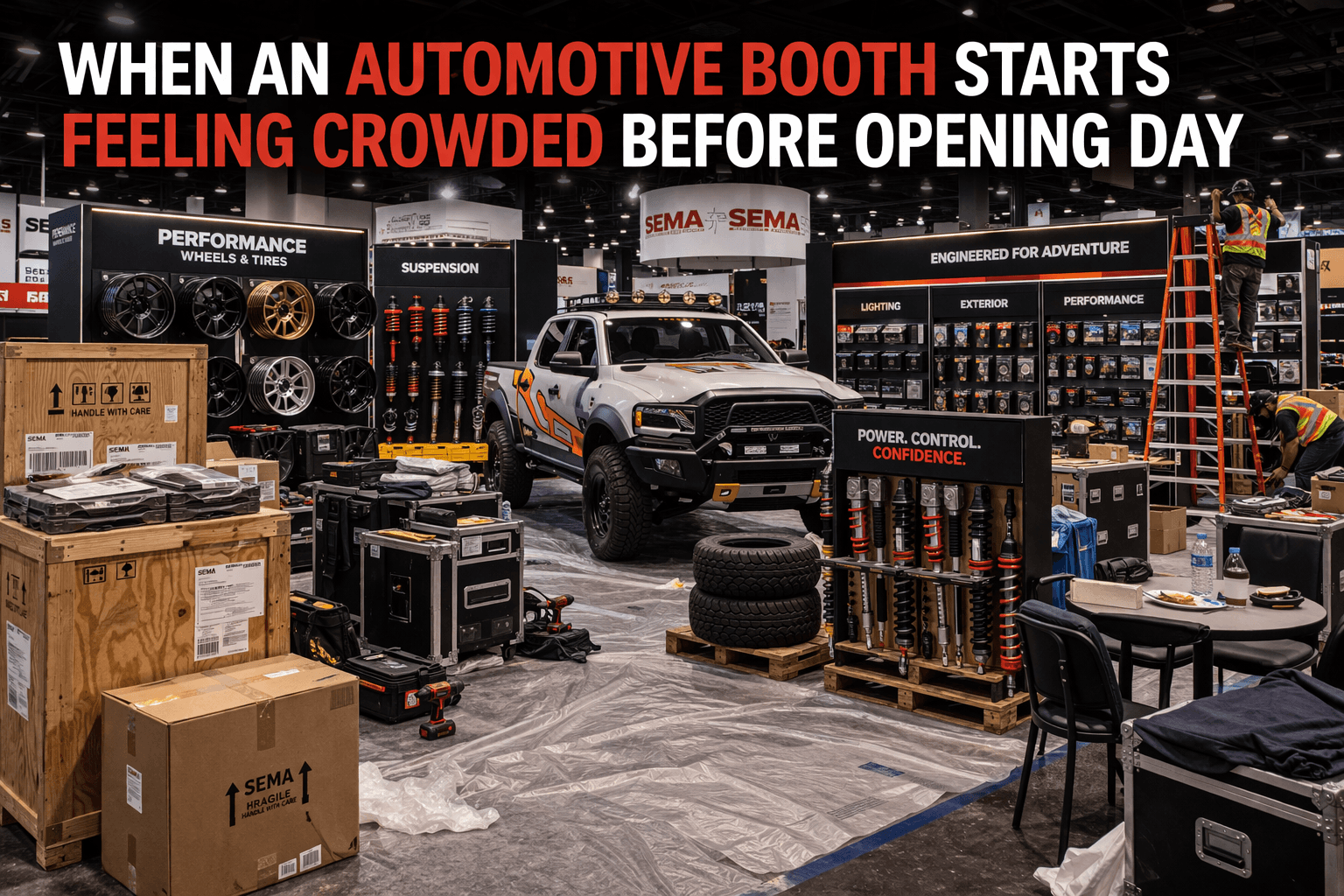
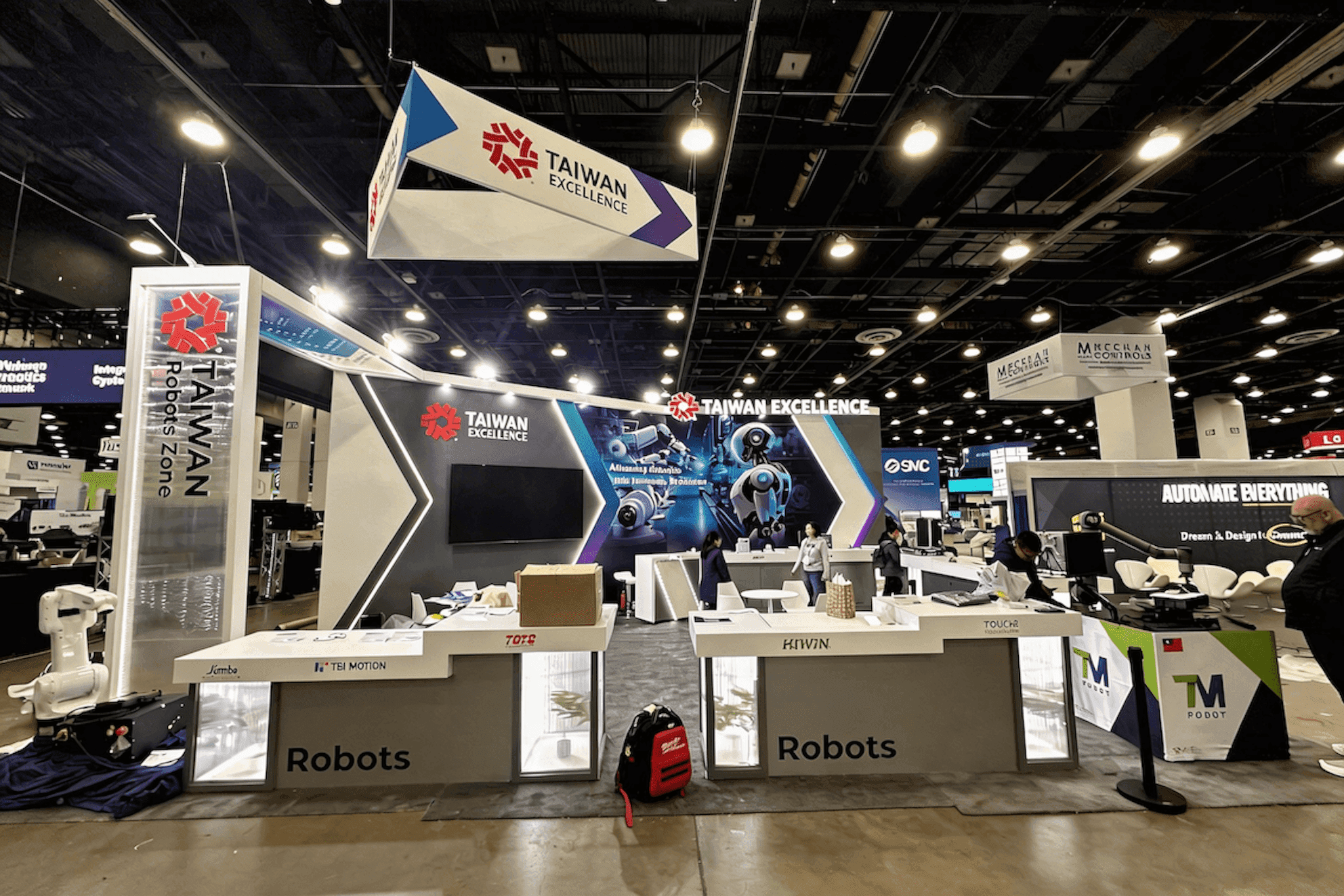
SEMA automotive booth in Las Vegas during setup with a display vehicle, product crates, tools, and crowded install staging before opening day

When an Automotive Booth Starts Feeling Crowded Before Opening Day

When an Automotive Booth Starts Feeling Crowded Before Opening Day

Circle Exhibit Team

Industry professionals

Exhibition industry professional dedicated to delivering the latest insights and curated recommendations to you.

Exhibition industry professional dedicated to delivering the latest insights and curated recommendations to you.

At SEMA, crowding is usually created during planning, not during show hours. When the booth feels compressed before the show even opens, the problem usually started with layout, staging, and install order.

At SEMA, crowding is usually created during planning, not during show hours. When the booth feels compressed before the show even opens, the problem usually started with layout, staging, and install order.

At SEMA, crowding is usually created during planning, not during show hours. When the booth feels compressed before the show even opens, the problem usually started with layout, staging, and install order.

A crowded booth usually starts before the crowd arrives

A lot of exhibitors blame crowding on traffic.

Sometimes that is true.

But in automotive booths, the first signs of crowding often show up before opening day. The vehicle is in. Product crates are still active. Flooring feels tight. The center looks busy too early. People are already working around each other before a single attendee has stepped in.

That is not a traffic problem.

That is usually a planning problem.

The booth starts feeling crowded when too many jobs share the same space

This is the most common cause.

In a SEMA booth, the same area often tries to do too much at once:

  • vehicle display

  • product shelving

  • storage overflow

  • crew access

  • installation staging

  • future conversation space

When those roles are not separated clearly enough, the booth compresses early.

It may still fit on paper.
It just stops working in real space.

The center gets crowded first

That is where most automotive booths begin to lose control.

The vehicle is usually the visual anchor, so the rest of the booth naturally starts building around it. But if the center is not protected properly, that “building around it” turns into “stacking into it.”

Now the center display is surrounded by:

  • product walls pushed too close

  • display items waiting to be placed

  • tools or cases that still need a home

  • people walking through the same zone from multiple directions

At that point, the booth may still look impressive, but it no longer feels calm.

That is usually the first warning sign.

A vehicle booth needs more empty space than many teams want to allow

This is where the planning often goes wrong.

Teams see open floor and think it is underused.

So they add:

  • one more shelving unit

  • one more product cluster

  • one more conversation table

  • one more category zone

  • one more branded surface

Each addition may look reasonable by itself. Together, they take away the breathing room the center vehicle needed in order to read cleanly.

That is why crowding often starts as a series of small “yes” decisions.

The install floor tells the truth faster than the rendering does

This is why crowded booths often surprise people.

On a rendering, the booth may look balanced.

But once the real booth hits the floor, the space has to absorb:

  • actual walking clearance

  • vehicle entry path

  • crate staging

  • floor protection

  • crew movement

  • real object depth

  • human behavior around the display

That is when the hidden compression shows up.

The booth did not suddenly become crowded.
It was already crowded in the plan.
The install just revealed it.

Bad staging creates the feeling of permanent crowding

This is another big one.

Sometimes the booth is not actually too full.
It just feels too full because staging has not been planned well enough.

If install tools, unopened cases, spare parts, and product packs are all using the same floor that the final booth needs, the space starts feeling blocked before the booth even reaches finish stage.

That pressure changes how the team builds.

Instead of moving forward cleanly, the crew starts shifting objects around, reopening space, and working around temporary obstacles that should have been controlled earlier.

That is when the booth begins to feel crowded before it is even complete.

A 30x40 booth helps, but only if the extra space is given a job

This is one reason a 30x40 trade show booth works so well for SEMA vehicle displays.

That footprint often gives enough room to separate:

  • the vehicle zone

  • the product zone

  • the staging zone

  • the circulation line

  • the conversation space

But extra square footage does not fix bad planning by itself.

If the larger booth is treated like permission to add more things instead of organize the right things, it can still feel crowded very quickly.

A better 30x40 booth uses its size to create order, not density.

Product placement is often the hidden cause

A lot of crowding comes from product placement that is technically possible but spatially wrong.

This usually happens when:

  • shelving moves too close to the vehicle

  • category displays are duplicated at the edge and in the center

  • lower displays interrupt the circulation line

  • product clusters land where people naturally want to stand

The result is not always obvious at first glance.

But people feel it almost immediately.

The booth becomes harder to enter, harder to photograph, and harder to read.

That is when the display starts losing clarity.

Logistics planning usually decides how early the booth tightens up

This is where logistics and pre-show coordination matter more than many exhibitors expect.

A booth that receives freight in the wrong order often feels crowded much earlier than it should.

That is because the floor starts carrying materials it is not ready to use yet.

If the timing is cleaner, the booth can stay open longer while the important layers go in. If the timing is messy, the floor gets filled too early and the whole install begins reacting to pressure instead of following sequence.

That is usually what makes a booth feel compressed before it is actually finished.

Builder thinking matters because crowding is a layout behavior issue

This is one reason exhibitors benefit from working with a Las Vegas trade show booth builder that understands crowding as a booth behavior problem, not just a floor plan problem.

Because booth crowding is rarely caused by one dramatic mistake.

It usually comes from a combination of:

  • weak sightline protection

  • unclear staging logic

  • overbuilt edges

  • too many display roles in one zone

  • not enough protected circulation

A booth can look premium in concept and still feel crowded in real life if those conditions are not resolved together.

The cleanest automotive booths usually protect these things first

Before the show opens, the strongest booths usually make sure these priorities are still intact:

1. The vehicle still has visual breathing room

The center display is not trapped by nearby elements.

2. The circulation path is still readable

People can move naturally without crossing through too many functions.

3. Staging is shrinking, not spreading

Temporary pressure is leaving the floor instead of taking it over.

4. Product zones are supporting the center, not crowding it

The booth still has hierarchy.

5. Conversation space is not stealing from display space

Meetings have a place, but not at the cost of the booth’s main logic.

When those five things hold, the booth usually feels much calmer.

Final thought

At SEMA, booths usually do not become crowded because people showed up.

They become crowded because the layout, staging, and install order left too little room for the booth to behave the way it needed to behave.

That is why crowding often starts before opening day.

The good news is that it usually starts there for a reason.

And once you understand where it really begins, it becomes much easier to prevent.


Planning a vehicle booth for SEMA Show?
Start with SEMA booth planning, then shape the layout with a Las Vegas trade show booth builder approach that keeps the booth open, workable, and easier to manage before the show even starts.
A crowded booth usually starts before the crowd arrives

A lot of exhibitors blame crowding on traffic.

Sometimes that is true.

But in automotive booths, the first signs of crowding often show up before opening day. The vehicle is in. Product crates are still active. Flooring feels tight. The center looks busy too early. People are already working around each other before a single attendee has stepped in.

That is not a traffic problem.

That is usually a planning problem.

The booth starts feeling crowded when too many jobs share the same space

This is the most common cause.

In a SEMA booth, the same area often tries to do too much at once:

  • vehicle display

  • product shelving

  • storage overflow

  • crew access

  • installation staging

  • future conversation space

When those roles are not separated clearly enough, the booth compresses early.

It may still fit on paper.
It just stops working in real space.

The center gets crowded first

That is where most automotive booths begin to lose control.

The vehicle is usually the visual anchor, so the rest of the booth naturally starts building around it. But if the center is not protected properly, that “building around it” turns into “stacking into it.”

Now the center display is surrounded by:

  • product walls pushed too close

  • display items waiting to be placed

  • tools or cases that still need a home

  • people walking through the same zone from multiple directions

At that point, the booth may still look impressive, but it no longer feels calm.

That is usually the first warning sign.

A vehicle booth needs more empty space than many teams want to allow

This is where the planning often goes wrong.

Teams see open floor and think it is underused.

So they add:

  • one more shelving unit

  • one more product cluster

  • one more conversation table

  • one more category zone

  • one more branded surface

Each addition may look reasonable by itself. Together, they take away the breathing room the center vehicle needed in order to read cleanly.

That is why crowding often starts as a series of small “yes” decisions.

The install floor tells the truth faster than the rendering does

This is why crowded booths often surprise people.

On a rendering, the booth may look balanced.

But once the real booth hits the floor, the space has to absorb:

  • actual walking clearance

  • vehicle entry path

  • crate staging

  • floor protection

  • crew movement

  • real object depth

  • human behavior around the display

That is when the hidden compression shows up.

The booth did not suddenly become crowded.
It was already crowded in the plan.
The install just revealed it.

Bad staging creates the feeling of permanent crowding

This is another big one.

Sometimes the booth is not actually too full.
It just feels too full because staging has not been planned well enough.

If install tools, unopened cases, spare parts, and product packs are all using the same floor that the final booth needs, the space starts feeling blocked before the booth even reaches finish stage.

That pressure changes how the team builds.

Instead of moving forward cleanly, the crew starts shifting objects around, reopening space, and working around temporary obstacles that should have been controlled earlier.

That is when the booth begins to feel crowded before it is even complete.

A 30x40 booth helps, but only if the extra space is given a job

This is one reason a 30x40 trade show booth works so well for SEMA vehicle displays.

That footprint often gives enough room to separate:

  • the vehicle zone

  • the product zone

  • the staging zone

  • the circulation line

  • the conversation space

But extra square footage does not fix bad planning by itself.

If the larger booth is treated like permission to add more things instead of organize the right things, it can still feel crowded very quickly.

A better 30x40 booth uses its size to create order, not density.

Product placement is often the hidden cause

A lot of crowding comes from product placement that is technically possible but spatially wrong.

This usually happens when:

  • shelving moves too close to the vehicle

  • category displays are duplicated at the edge and in the center

  • lower displays interrupt the circulation line

  • product clusters land where people naturally want to stand

The result is not always obvious at first glance.

But people feel it almost immediately.

The booth becomes harder to enter, harder to photograph, and harder to read.

That is when the display starts losing clarity.

Logistics planning usually decides how early the booth tightens up

This is where logistics and pre-show coordination matter more than many exhibitors expect.

A booth that receives freight in the wrong order often feels crowded much earlier than it should.

That is because the floor starts carrying materials it is not ready to use yet.

If the timing is cleaner, the booth can stay open longer while the important layers go in. If the timing is messy, the floor gets filled too early and the whole install begins reacting to pressure instead of following sequence.

That is usually what makes a booth feel compressed before it is actually finished.

Builder thinking matters because crowding is a layout behavior issue

This is one reason exhibitors benefit from working with a Las Vegas trade show booth builder that understands crowding as a booth behavior problem, not just a floor plan problem.

Because booth crowding is rarely caused by one dramatic mistake.

It usually comes from a combination of:

  • weak sightline protection

  • unclear staging logic

  • overbuilt edges

  • too many display roles in one zone

  • not enough protected circulation

A booth can look premium in concept and still feel crowded in real life if those conditions are not resolved together.

The cleanest automotive booths usually protect these things first

Before the show opens, the strongest booths usually make sure these priorities are still intact:

1. The vehicle still has visual breathing room

The center display is not trapped by nearby elements.

2. The circulation path is still readable

People can move naturally without crossing through too many functions.

3. Staging is shrinking, not spreading

Temporary pressure is leaving the floor instead of taking it over.

4. Product zones are supporting the center, not crowding it

The booth still has hierarchy.

5. Conversation space is not stealing from display space

Meetings have a place, but not at the cost of the booth’s main logic.

When those five things hold, the booth usually feels much calmer.

Final thought

At SEMA, booths usually do not become crowded because people showed up.

They become crowded because the layout, staging, and install order left too little room for the booth to behave the way it needed to behave.

That is why crowding often starts before opening day.

The good news is that it usually starts there for a reason.

And once you understand where it really begins, it becomes much easier to prevent.


Planning a vehicle booth for SEMA Show?
Start with SEMA booth planning, then shape the layout with a Las Vegas trade show booth builder approach that keeps the booth open, workable, and easier to manage before the show even starts.
Message

Leave your message and we will get back to you ASAP

Send a Message

We’ll Be in Touch!

Message

Leave your message and we will get back to you ASAP

Address:

4915 Steptoe Street #300

Las Vegas, NV 89122