Which RVDA Exhibit Format Fits Which Dealer Task?
Start with the dealer activity. Appointments, literature, and low-tech conversations may need nothing more than a tabletop. If the dealer needs to see a live product or software demo, use powered equipment, or step into a more defined branded environment, an inline booth becomes the more practical starting point.
An island makes more sense when the exhibit needs several active zones, a larger staff, and useful access from more than one aisle. A full RV changes the category altogether because the vehicle itself begins to control the footprint. These formats are not a progression from basic to premium; each supports a different kind of dealer interaction.

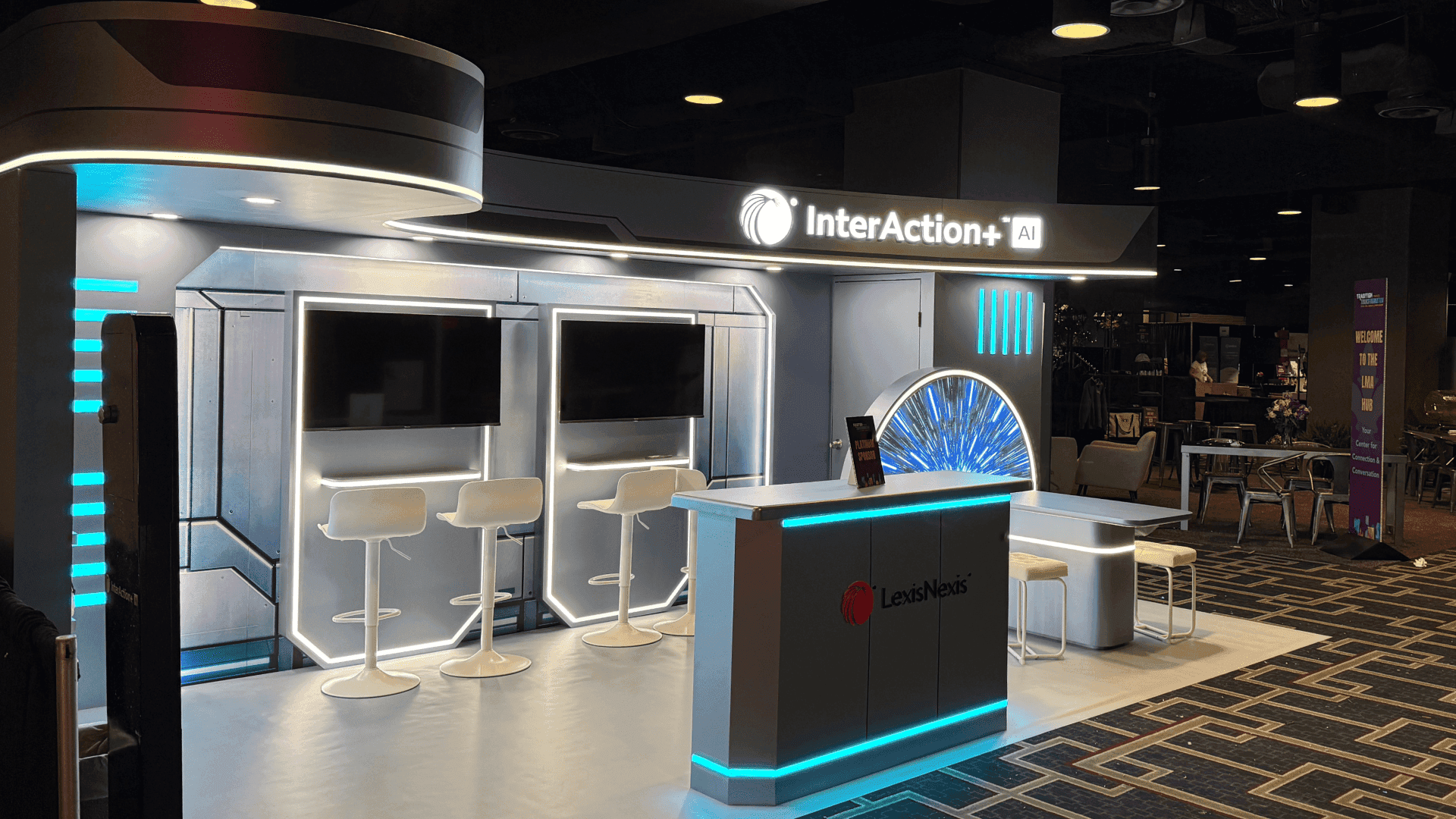
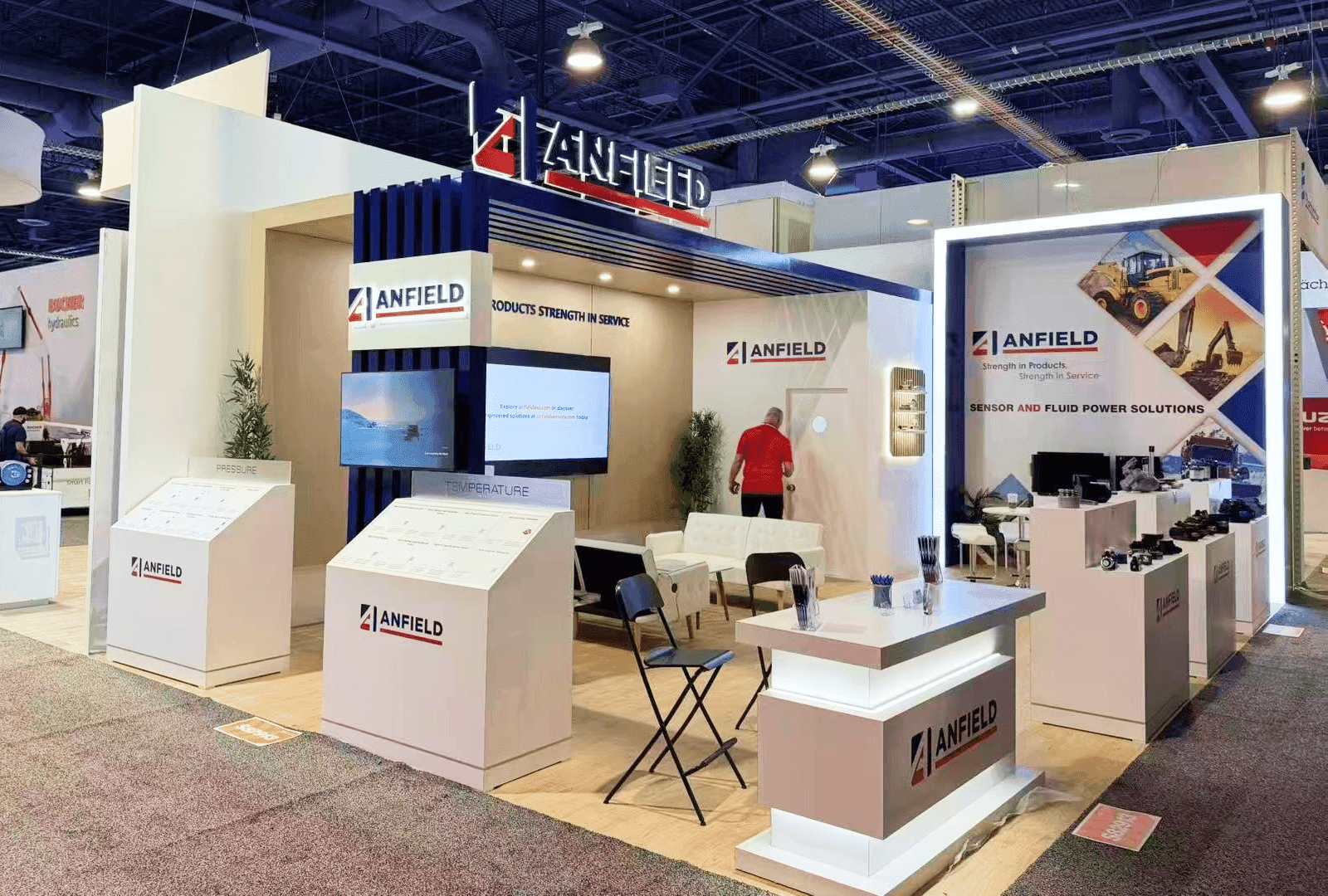
A tabletop can support simple dealer conversations, while an inline booth provides more room for powered demos, storage, branding, and a defined visitor interaction.
When Is a Tabletop Enough—and When Does an Inline Booth Become Necessary?
A tabletop is a conversation-centered exhibit option built around a table rather than a conventional booth environment. It works when the interaction can stay simple: meet the dealer, explain the offer, share information, and agree on a next step.
RVDA’s 2026 exhibitor terms set a practical boundary. Tabletop space is limited, is not treated as a conventional booth, and may not have electric service. That makes the format less suitable when the sales process depends on powered equipment or on functions that need a more complete booth environment.
A tabletop is probably too limited if the program needs:
a powered screen or live demo;
concealed storage or a stronger branded backdrop;
a demo and dealer conversation happening at the same time;
equipment that needs to remain powered throughout exhibit hours.
Those needs do not automatically call for a large booth. For many non-vehicle exhibitors, a 10x10 inline booth can still handle one message, one demo point, and one active dealer conversation. More room becomes useful when those functions start competing—when a demo has to pause for another discussion, or when equipment and storage begin to crowd the visitor area.
For software and service exhibitors, that shift also brings dealer solutions booth planning into the picture because the space now has to carry a visitor from explanation to proof and discussion. If the demo and conversation need separate working areas, 10x20 booth planning becomes a more relevant footprint to evaluate.
The real question is not whether an exhibitor should “get a bigger booth.” It is whether the dealer task still works within a tabletop or compact inline environment.
When Is an Island Worth the Extra Space?
An island becomes worth considering when one operating zone can no longer handle what the team needs to do. If one staff member is running a demo while another discusses implementation and a third dealer arrives at the aisle, sharing the same screen, counter, or entry point can quickly create conflicts.
A larger inline booth may still be enough. An island becomes more useful when several active zones need to operate at the same time and access from multiple sides improves how people enter, move through, and use the exhibit—for example, when demos and consultations need separate areas or a larger staff is working with dealers in parallel.
More floor space does not automatically create more useful capacity. If the exhibit still revolves around one main demo and a small team, an island can add cost and build complexity without improving how the booth works. It becomes worthwhile when the open footprint and multi-side access solve a real operating problem, not simply because the exhibitor wants a larger presence.
When Does a Full RV Require Vehicle Space Instead of a Larger Booth?
A full RV changes the planning model because the product becomes the space-defining object. At RVDA, vehicle space is listed separately from conventional inline and island booths, with dedicated vehicle-space dimensions in the 2026 exhibitor prospectus.
Once dealers need to inspect the actual unit, ordinary booth-size comparisons become less useful. The RV’s overall dimensions, doors, entry points, and viewing clearance determine how much usable area remains for staff, graphics, conversations, and supporting information.
Simply increasing the square footage of a conventional booth does not solve that problem if the vehicle still controls how people approach and move around the exhibit. The planning question changes from “How large should the booth be?” to “How should the exhibit work around the vehicle?”
Door access, dealer viewing, and usable support space then become the focus of RVDA vehicle display planning. This is a change in exhibit type, not simply another step up in booth size.

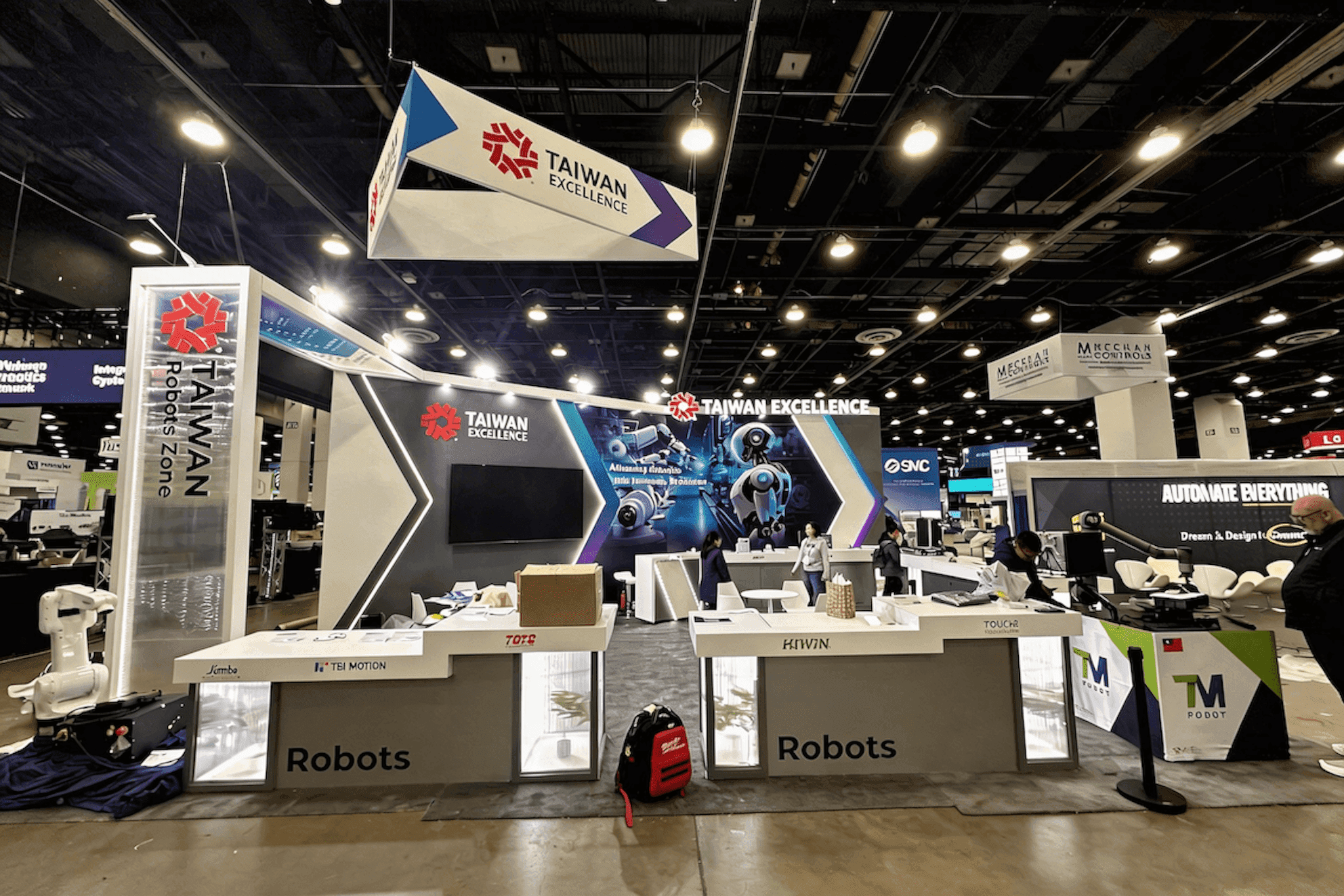
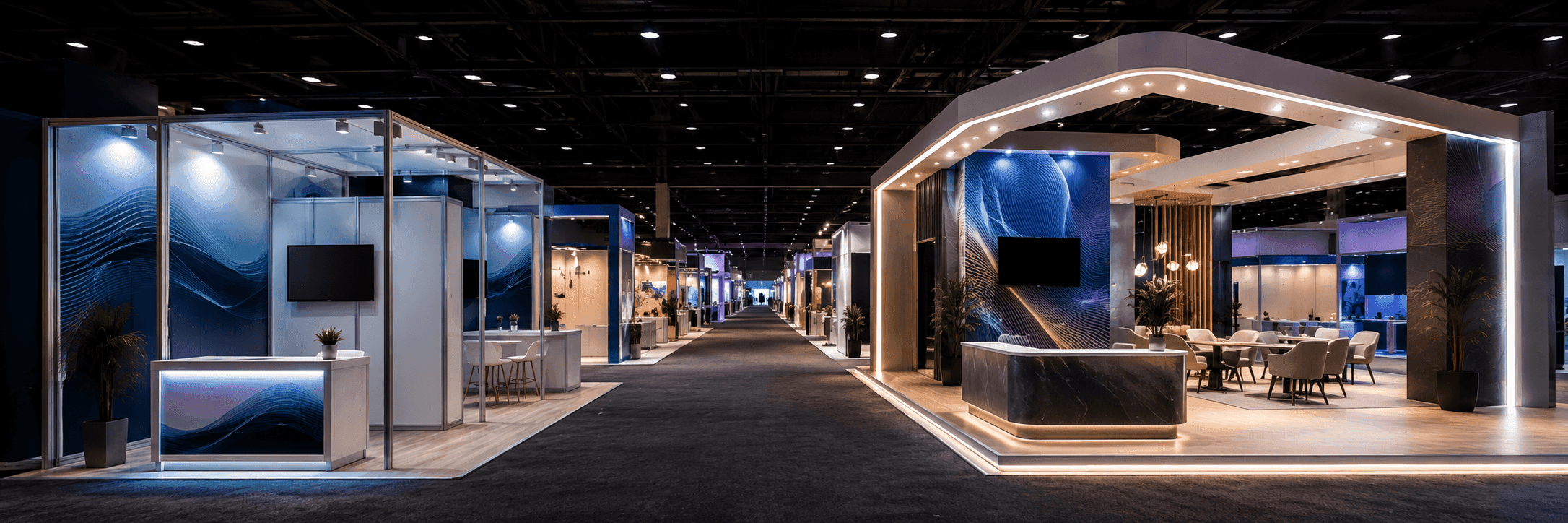
An island works best when several dealer interactions need to run at once, while a full RV requires a vehicle-centered exhibit plan built around access, viewing, and usable support space.
Make the Decision: Which RVDA Exhibit Format Fits the Program?
Stay with the simpler format until a real requirement makes it stop working. Power can rule out a tabletop. Competing functions can push a compact inline booth into a larger footprint. Multiple active zones and multi-side access can justify an island. A full RV moves the program out of the conventional booth-size comparison altogether.
Dealer-facing program | Best starting format | Works best when | Reconsider when | Poor fit when... |
|---|---|---|---|---|
Appointments, literature, and simple conversations | Tabletop | The program is conversation-led and does not depend on a full booth environment. | Power, storage, stronger branding, or a separate demo/conversation area becomes necessary. | The sales process depends on powered demos or booth-level functions a tabletop cannot support. |
One main demo or product explanation with dealer discussion | Inline booth | One primary interaction drives the program, with moderate branding, equipment, and storage needs. | Demos, conversations, or staff roles begin competing for the same working area. | The program already depends on several independent activity zones or meaningful access from multiple sides. |
Multiple active zones with broader visitor access | Island booth | Demos, meetings, and staff-led conversations need to run in parallel and multi-side access improves circulation. | The extra open space is not creating useful capacity, or the exhibit could operate just as well in a larger inline footprint. | The program still revolves around one main interaction and does not benefit from access on several sides. |
Full RV as the main object dealers need to inspect | Vehicle space | Vehicle dimensions, viewing, and access determine how the exhibit must work. | The RV is no longer the primary object dealers need to inspect, or the full unit no longer needs to be part of the exhibit. | The exhibitor is not displaying a full RV that requires physical dealer inspection. |
The best RVDA exhibit format is not the largest or most prominent option available. It is the one that supports the required dealer interaction without adding space or complexity the program will not use.
How Circle Exhibit Can Support
A standard inline or island program does not need custom fabrication everywhere. A Las Vegas booth rental can often provide the reusable structure, screens, counters, storage, and meeting functions needed around the core exhibit task.
If unusual product dimensions, specialized integration, or a vehicle-centered display begin to shape the structure itself, the project may need more specialized Las Vegas booth build support. The build approach should follow the exhibit format and operating needs rather than drive the decision from the start.
FAQ
Can an RVDA tabletop support a live powered demo?
RVDA’s 2026 exhibitor terms state that tabletop space may not have electric service. If the demo depends on venue-supplied power, monitors, charging, or equipment that must remain powered during exhibit hours, a conventional booth is the more workable choice.
When should an RVDA exhibitor move from an inline booth to an island?
Consider an island when several demo, meeting, or staff interaction zones need to operate independently and access from multiple aisles materially improves how the exhibit works. Multiple conversations alone do not automatically require an island; a larger inline booth may still be enough.
Does a full RV belong in a standard booth or a vehicle space?
When the full RV is the product dealers need to inspect, treat it as a vehicle-space program rather than simply choosing a larger conventional booth. Vehicle access, viewing clearance, and the usable area around the unit then become the primary planning questions.