A Small Revision Can Affect More Than the Drawing
Consider a common request:
Move the monitor to the other side of the booth.
Early in layout development, that may require little more than updating the drawing.
Later, the monitor may already have a confirmed mount, graphic position, electrical location, cable path, and AV connection. The installation plan may also assume that original position.
The monitor itself has not become harder to move. More of the project has been built around it.
Three short definitions help separate these situations:
Configuration change — an adjustment that stays mainly within existing components or available layout options.
Production-sensitive change — an adjustment that affects something already being fabricated, printed, engineered, or prepared.
Show-site dependency — a connection between the revised booth element and venue-facing work such as electrical, AV, rigging, freight, or installation.
Moving loose furniture may remain a configuration change. Moving an integrated screen can reach production and show-site work because other decisions already rely on its position.
The important issue is not how large the change looks on the drawing. It is how much work has already been connected to it.
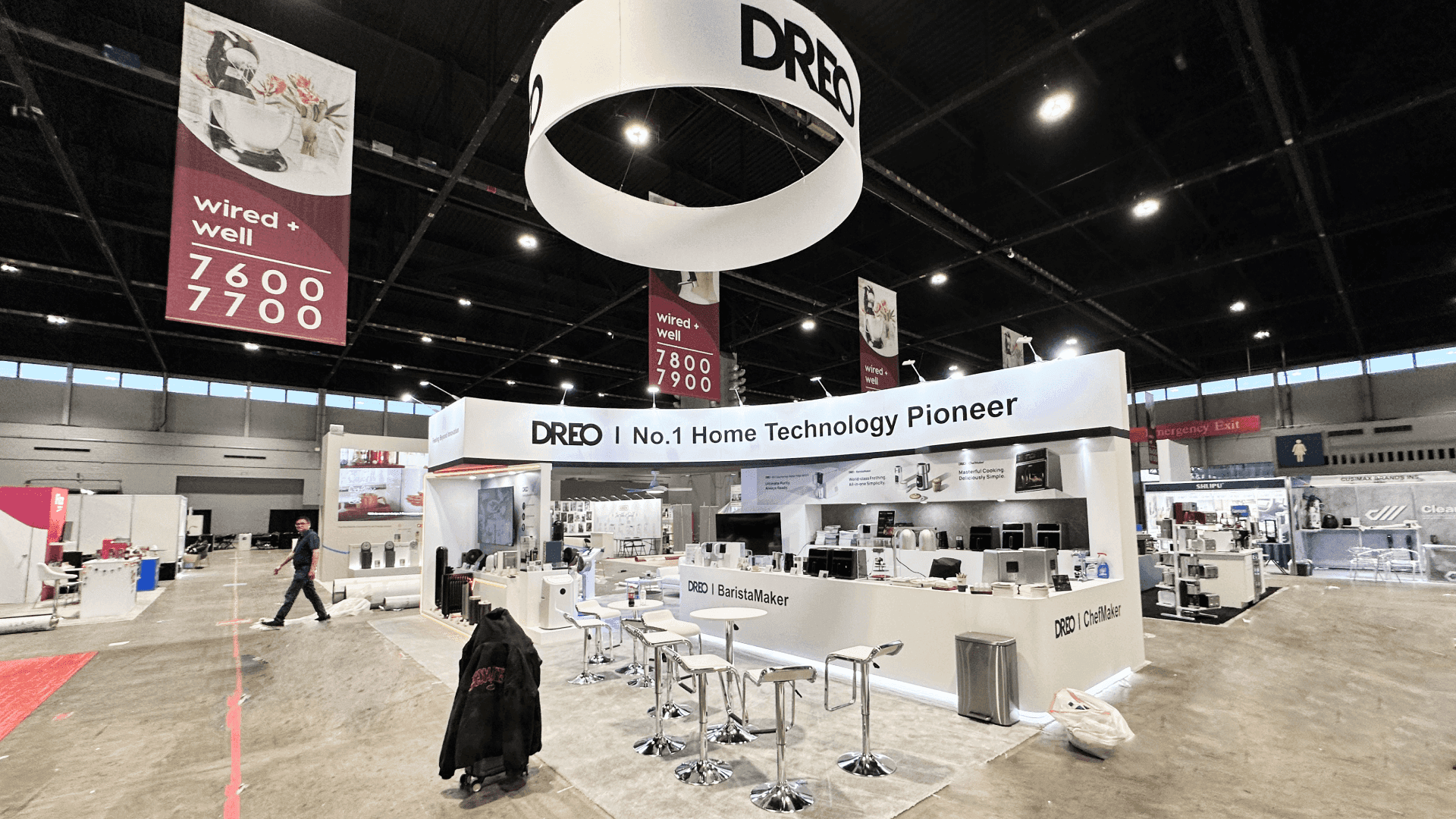
A late screen move can reach beyond the layout when mounting, power, graphics, and AV have already been planned around the original position.
How the Same Revision Plays Out in Rental, Hybrid, and Custom Booths
Moving a Screen
In a rental booth, a monitor may use a standard mount on a reusable wall. If another compatible position is available and the electrical plan can follow it, the adjustment may require only limited coordination.
In a hybrid booth, the screen may sit inside a fabricated product wall or custom counter connected to the rental structure. Repositioning it now affects both the reusable system and a component produced to specific dimensions.
In a custom booth, the screen may already be integrated with a wall opening, millwork, lighting, graphics, cable routing, or structural support.
The request sounds the same:
Move the screen.
The work behind it is not.
Changing a Product or Fixture
Suppose a booth was developed around one product size, but the final unit arrives larger.
A rental layout may still allow furniture or standard components to shift around it. The adjustment becomes more involved if the new product also requires additional clearance, power, data, support, or a different handling path.
In a hybrid exhibit, a fabricated display may already have been built around the earlier dimensions.
In a custom exhibit, nearby walls, access, lighting, storage, or technical connections may also depend on the product.
The impact can then move through:
product → fixture → clearance → utilities → packing → installation
For example, a display fixture may be approved around a 36-inch-wide product. If the final unit arrives several inches wider, the difference looks small on the floor plan. But if the fixture opening, adjacent graphic, power access, and packing layout were all based on 36 inches, each needs to be checked before production continues.
Whether a reusable system can physically support another arrangement is a separate question. The boundary between modular configuration and custom fabrication addresses that structural decision; here, the concern is what downstream work already relies on the approved product dimensions.
Changing a Graphic Surface
A graphic on a predefined rental panel can sometimes be revised or reprinted without changing the structure.
That becomes less straightforward when the artwork fits around a screen opening, product fixture, lightbox, or fabricated surface. When graphics and layout share the same physical dimensions, a late artwork change may require those connected elements to be checked as well.
The question here is simple:
What physical element already relies on this graphic's size or position?
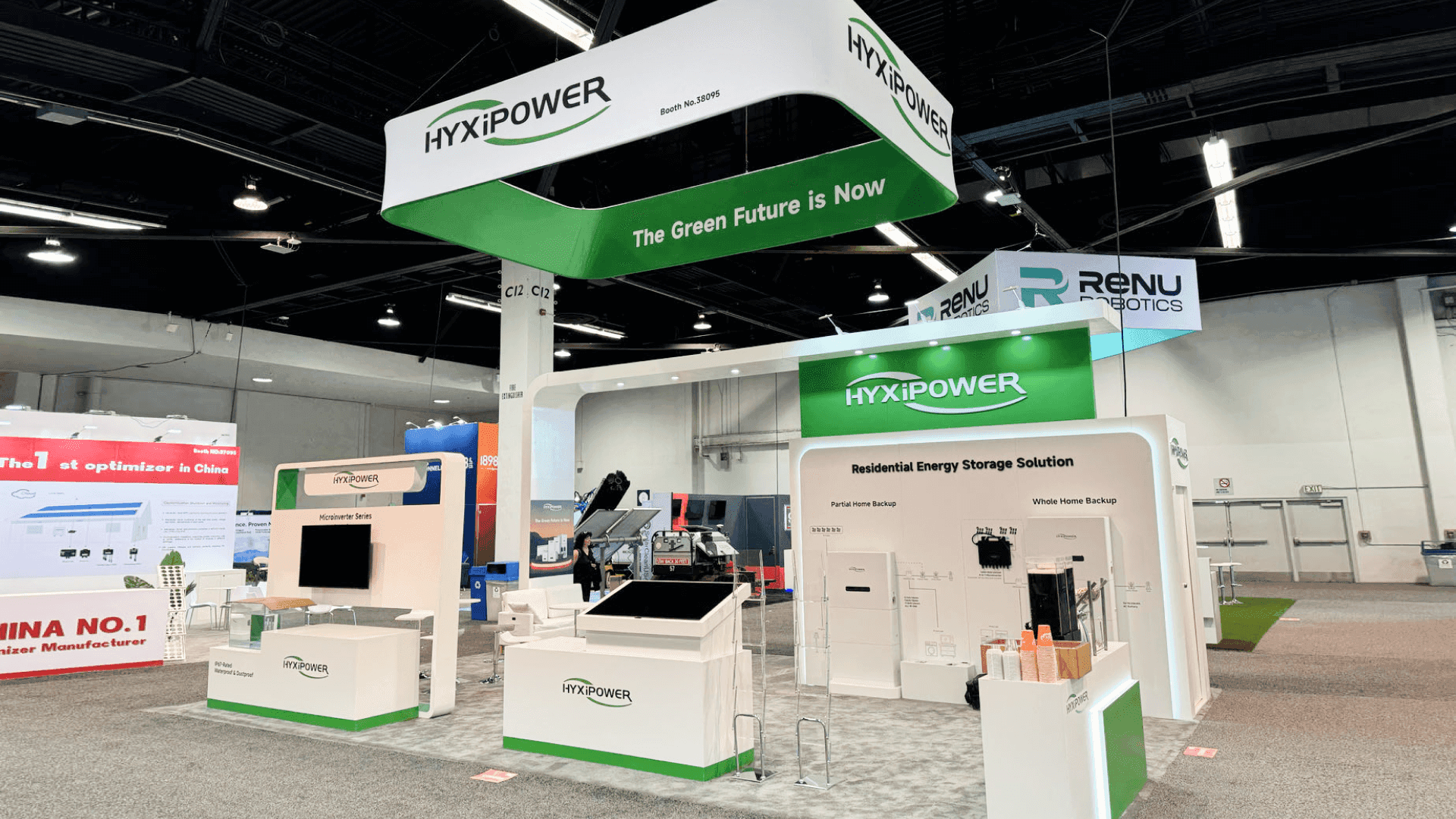
A small product dimension change can trigger wider production checks when the fixture, clearance, power access, and packing plan were based on the approved size.
LVCC Booth Change Review Matrix
Requested Change | Rental | Hybrid | Custom | What Needs Rechecking |
|---|---|---|---|---|
Move loose furniture | Usually contained | Usually contained | Usually contained | Floor plan |
Change graphic message | Usually contained | Check custom surfaces | Check integrated surfaces | Artwork and print |
Move a monitor | Check mount and electrical | Check fixture and electrical | Check fabrication and AV | Mounting, graphics, electrical |
Resize a custom fixture | May require another component | Production review | Production review | Fabrication, graphics, packing |
Change product dimensions | Layout and utility review | Fixture review | Integrated build review | Clearance, utilities, freight |
Move an integrated demo | Wider coordination | Production and AV review | Full coordination review | Structure, AV, electrical, installation |
Move or resize a wall section | Recheck attached elements | Fabrication review | Fabrication review | Graphics, fixtures, services, packing |
These are not fixed rules. A customized rental booth can carry more dependencies than a relatively simple custom component.
The purpose of the matrix is to identify what needs to be rechecked before the revised booth moves forward.
When the Revision Reaches LVCC Execution
The key boundary comes when an adjustment starts changing how the booth reaches, installs, or operates on the LVCC floor.
Moving an integrated screen may extend into:
electrical → AV → cable routing → installation
Changing a large product may affect:
fixture → freight contents → positioning → assembly order
Changing an overhead feature may reach:
structure → engineering → rigging
At that point, the updated booth needs to stay aligned with the broader LVCC booth planning and show-site execution, including venue-facing work already based on the previous version.
Electrical, rigging, freight, and installation each have their own planning requirements. For this decision, the important point is recognizing when the booth revision has crossed into one or more of them.

Once a booth revision affects fabrication, freight, technical services, or installation order, it has moved beyond a simple drawing change and into LVCC execution.
Four Checks Before Approving the Revision
Before approving a late change, check four things.
Has production already started?
If fabrication, graphic production, engineering, or component preparation is underway, the previous version may already exist outside the drawing.
Does another booth element depend on the current size or position?
Check adjacent walls, graphics, fixtures, lighting, screens, product clearance, storage, and access.
Has technical or venue work been planned around it?
Electrical, AV, data, rigging, freight handling, or equipment positioning can turn a drawing adjustment into an execution issue.
Does packing or installation depend on it?
A component may determine crate contents, assembly order, or what needs to install before another element can proceed.
If those connections are limited, the adjustment may remain relatively straightforward.
If several are already fixed, it needs a wider production and execution review rather than approval as an isolated drawing update.
For fabricated elements, revised dimensions and interfaces should also be confirmed during prebuild before updated components are released.
A late LVCC booth revision should ultimately be judged by what has already been built around it.
Before approving the change, ask: What else now has to move with it?
FAQ
Can an LVCC rental booth still be changed after design approval?
Often, yes. If the adjustment stays within reusable components, furniture, removable graphics, or other elements that have not created production or show-site dependencies, the impact may remain limited.
Does moving a screen always require a booth redesign?
No. A screen on a standard rental mounting system may be relatively easy to reposition. An integrated screen needs a wider review when graphics, electrical, AV, cable routing, or fabricated components already depend on its location.
What happens if product dimensions change after fabrication has started?
The change may affect the fixture, clearance, power or data access, packing, freight, and installation if those decisions were based on the original dimensions.
Can a graphic still be changed after booth production begins?
Sometimes. If the graphic uses an independent rental surface, the update may only require new artwork or printing. If its dimensions depend on a custom fixture, screen opening, lightbox, or fabricated surface, those connected elements need to be checked first.
When does an LVCC booth revision become a show-site issue?
When it begins affecting venue-facing work such as electrical, AV, rigging, freight handling, equipment positioning, or installation order.