Choose the Primary Job of the Booth
Sports rights holders representing leagues, teams, athletes, or other sports properties may bring similar assets to Licensing Expo, yet their buyers may need to complete very different tasks. The booth therefore has to lead with the activity most important to the licensing decision, not necessarily the one that attracts the largest crowd.
Merchandise-Led
Merchandise leads when retailers, licensees, or distributors need to compare licensed products, packaging, category applications, or retail presentation before discussing an opportunity. In this model, products are decision evidence rather than decoration. Category groupings must remain visible and accessible, while any public activity supports product discovery instead of pulling attention away from it.
A deeper licensing discussion becomes useful once the buyer identifies a relevant category, application, or commercial fit. If an activation queue turns the display into a waiting zone or prevents close product review, the operating priority is no longer working.
Engagement-Led
An activation deserves the primary position only when participation helps communicate the sports property and opens a useful path to buyer qualification. A photo moment, digital interaction, or merchandise-customization activity can start that process, but it needs a defined entrance, waiting position, exit, staff owner, and handoff point.
Without those elements, a popular activity may block merchandise while producing few relevant licensing discussions. Engagement-led also does not mean that public participation outranks every appointment; scheduled buyers still need a separate route to the appropriate representative.
Meeting-Led
Meetings lead when the strongest opportunities come from scheduled discussions with retailers, merchandise licensees, distributors, manufacturers, or brand partners. Buyers need a recognizable arrival point and a direct route to the meeting host, especially when conversations involve category availability, unreleased assets, partnership scope, or commercial terms.
Selected graphics and merchandise can support those appointments without creating a competing attraction. When two modes appear equally important, use the busiest period as the tie-breaker and prioritize the activity whose failure would most disrupt the buyer’s intended task.

Merchandise discovery, public engagement, and buyer arrival can connect, but they should not rely on the same entrance or waiting position.
Separate Merchandise Review, Activation Flow, and Buyer Access
Once the primary mode is selected, establish three connected routes. They may share branding and transition space, but they cannot depend on the same waiting position.
Merchandise discovery: Buyers should be able to recognize the relevant sports property or product category, examine the merchandise, and reach a knowledgeable representative without entering the activation first.
Engagement flow: The activity needs a clear entrance, controlled waiting position, participation point, and exit. Participants should neither return through the queue nor leave through buyer check-in.
Buyer arrival: Scheduled buyers need to recognize reception or the meeting host immediately. Their route may pass the merchandise, but it cannot depend on browsers or activity participants moving out of the way.
These routes can connect after the visitor’s purpose becomes clear; they simply cannot share the same bottleneck. Activity registration, buyer check-in, merchandise questions, and meeting handoffs will not function reliably from one counter during the busiest period.
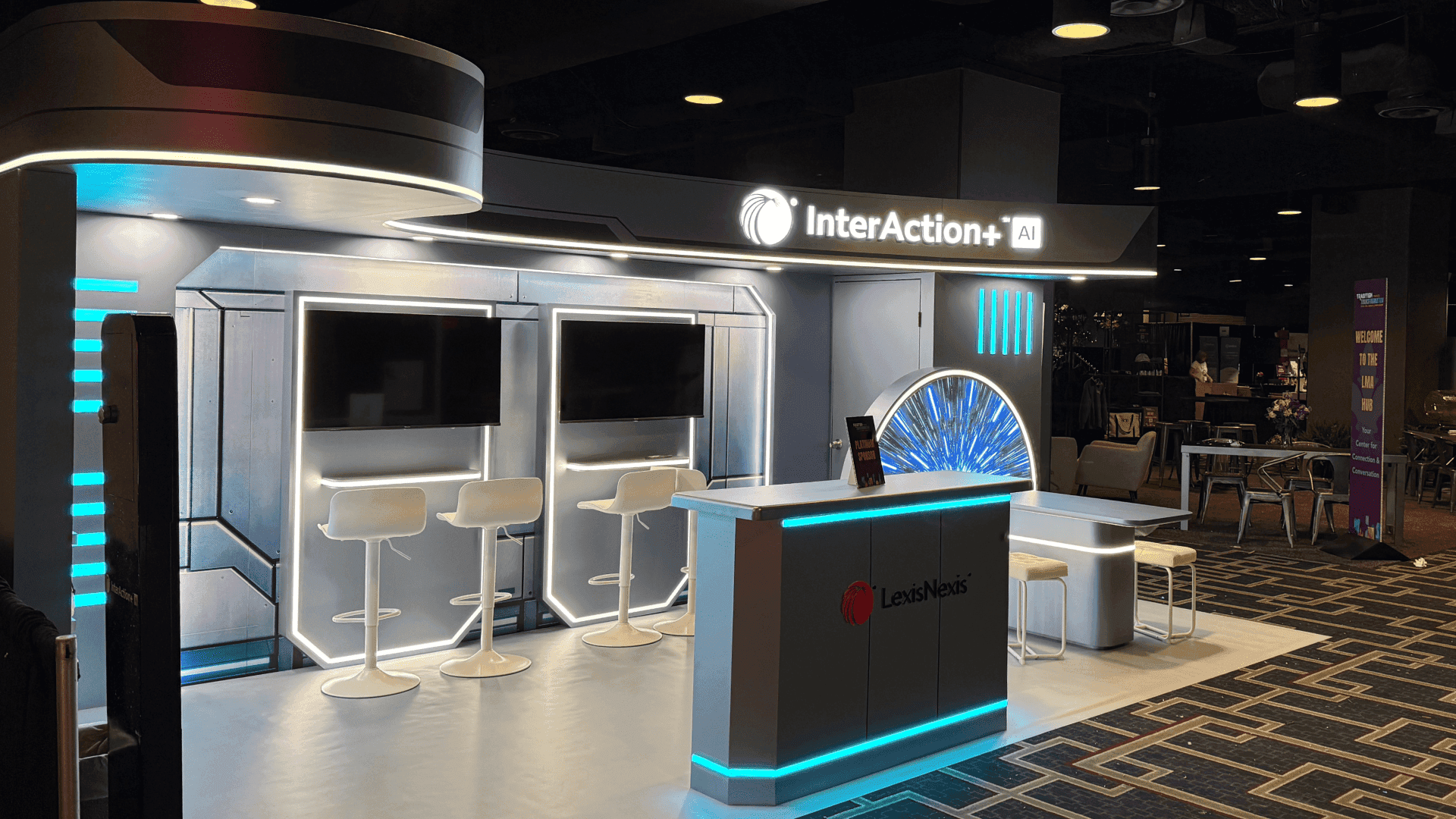
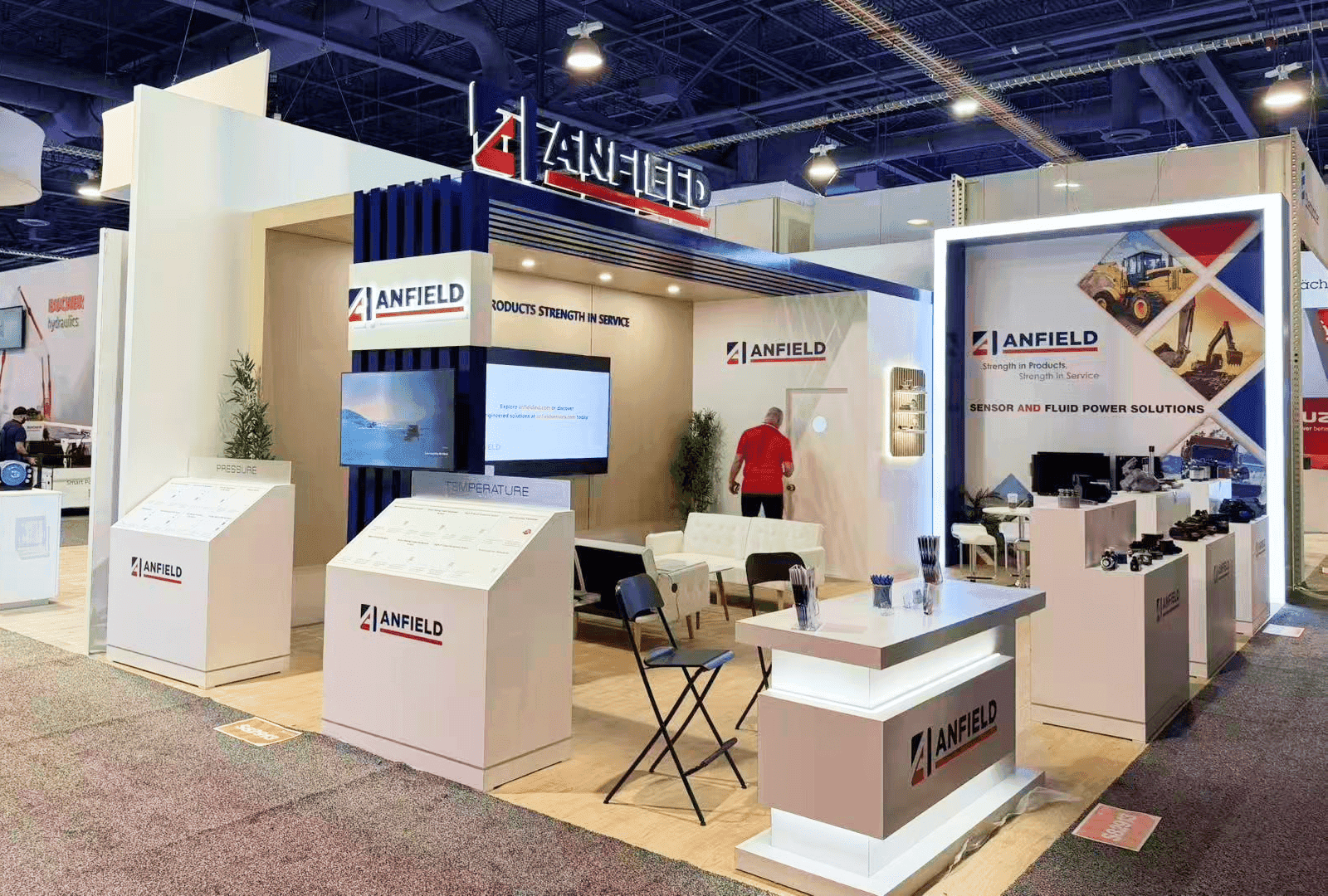
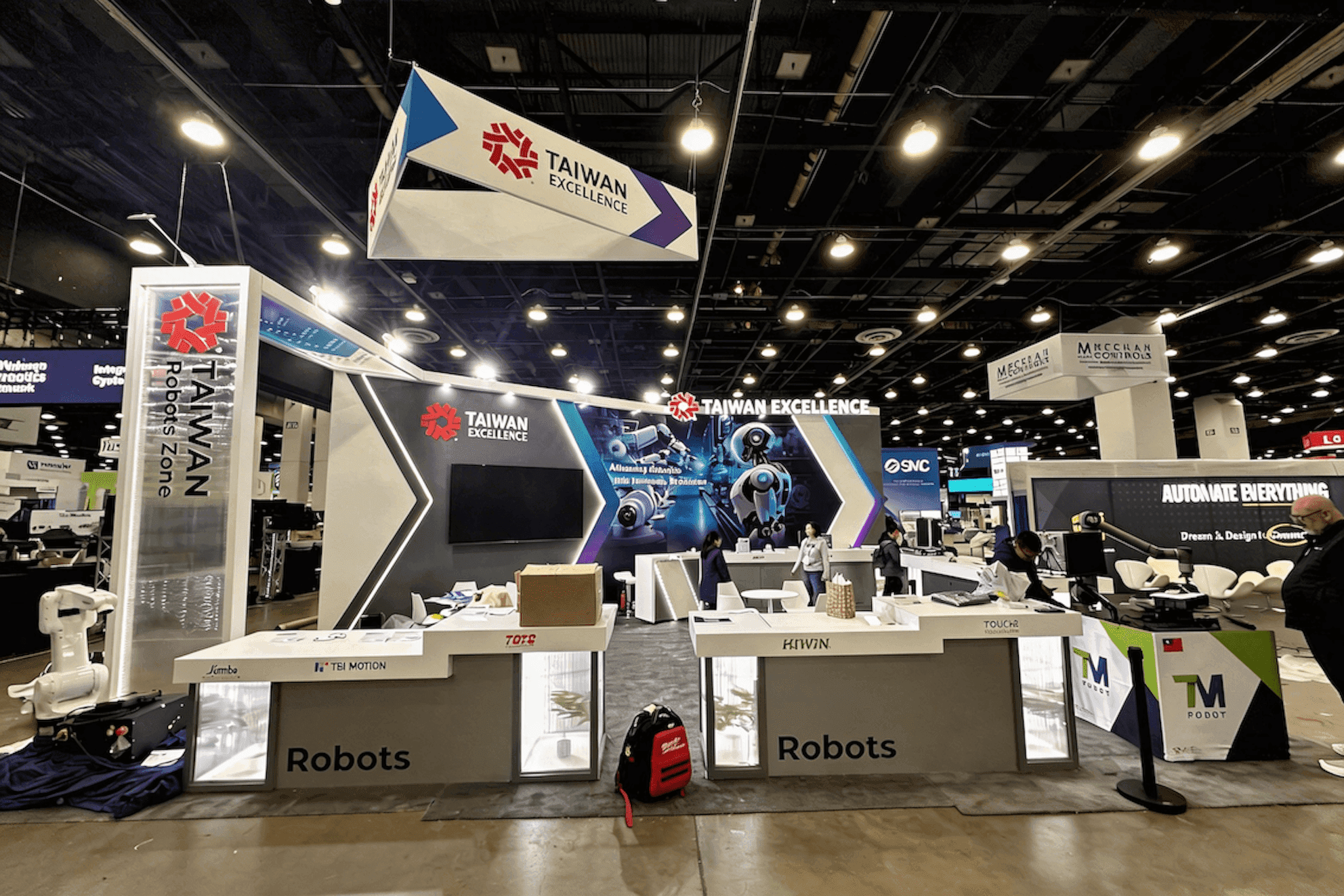
The VIBE 20x20 booth project offers a useful comparison for this flow problem: media content, an open photo area, visitor discussion, and aisle access share a compact exhibit. It is a retail example rather than a Licensing Expo or sports licensing precedent.
Define the Handoff From Participation to Buyer Conversation
Job titles matter less than the point at which responsibility changes. Each transition needs a clear trigger so that staff can protect useful conversations without treating every participant or product browser as a qualified buyer.
From Engagement to Qualification
Finishing a photo moment or interaction does not automatically justify a licensing conversation. The staff member completing the activity can first identify the visitor’s organization, market, product category, and reason for attending; a handoff becomes useful only when those details match an available property or licensing opportunity. Everyone else can exit normally without being pushed into a sales conversation.
From Merchandise Interest to Licensing Discussion
Browsing licensed products is different from evaluating a licensing opportunity. Staff can allow general discovery to continue until the visitor asks about category availability, market coverage, distribution, manufacturing, retail placement, or partnership scope. Those questions provide a stronger trigger for introducing a licensing representative than time spent near the display.
From Scheduled Arrival to Meeting Host
A scheduled buyer should bypass the normal engagement and qualification route. Once recognized, the buyer moves directly to the meeting host or designated representative; if that person is still occupied, another team member acknowledges the arrival, protects the appointment, and explains what happens next instead of leaving the buyer in the activity queue.
One person may cover several stages during quiet periods. At peak times, however, the owner and trigger for each handoff must remain unambiguous.

A clear handoff trigger helps staff distinguish general participation from a relevant licensing conversation while protecting scheduled appointments.
Stress-Test the Operating Model Before the Show Opens
Test the plan against a realistic overlap: visitors are participating in the activity, another group is reviewing merchandise, two appointment buyers arrive within several minutes, one representative remains in a meeting, and the waiting group begins to approach the entrance.
Ask four questions:
Can scheduled buyers still reach the correct person?
Does the merchandise remain visible and accessible?
Can participants enter and exit without crossing buyer check-in?
Does each visitor have an obvious next step?
A failed test does not automatically call for more floor space. The real constraint may be the waiting position, activity timing, staff handoff, or audience being attracted.
After opening, record participation, staff contact, qualified conversations, and completed meetings separately. If congestion or weak handoffs continue, booth traffic and dwell-time analysis can distinguish useful engagement from waiting, blocked movement, missed staff contact, and incomplete buyer conversations.
Build the Merchandise–Engagement–Buyer Handoff Plan
The finished handoff plan should explain how the booth operates during its busiest period without prescribing the final floor plan. Include:
the selected primary operating mode;
the main task a qualified buyer needs to complete;
the merchandise review point and required product visibility;
the engagement entrance, waiting position, capacity, and exit;
the protected arrival route for scheduled buyers;
the trigger and responsible role for each handoff;
storage, replenishment, and activity-reset requirements;
the first failure signal the team should watch for.
The completed handoff plan gives the broader Licensing Expo sports booth planning process the operating inputs needed to address footprint, sports asset presentation, display requirements, meeting capacity, rental direction, and Mandalay Bay execution. Only after these operating requirements are clear should the team decide whether adaptable rental components can support them or whether a specialized fixture, activation, or meeting environment requires a more custom scope.
Frequently Asked Questions
Should a sports licensing photo activation sit at the front of the booth?
A photo activation belongs at the front only when engagement is the primary operating mode and the activity has a defined entrance, waiting position, exit, and staff owner. Placing it at the center of the entrance simply because it attracts attention can block merchandise visibility and scheduled-buyer access.
Can merchandise browsing and scheduled meetings use the same visitor path?
They can share part of a transition area, but appointment buyers should not depend on a crowded merchandise or activation route to reach the meeting host. Their arrival point needs to remain recognizable during busy periods.
How should staff move an engaged visitor into a licensing conversation?
Complete the interaction first, then identify the visitor’s organization, category interest, market, and purpose. When those details match a licensing opportunity, the visitor can be introduced to the appropriate representative or moved into a scheduled follow-up.