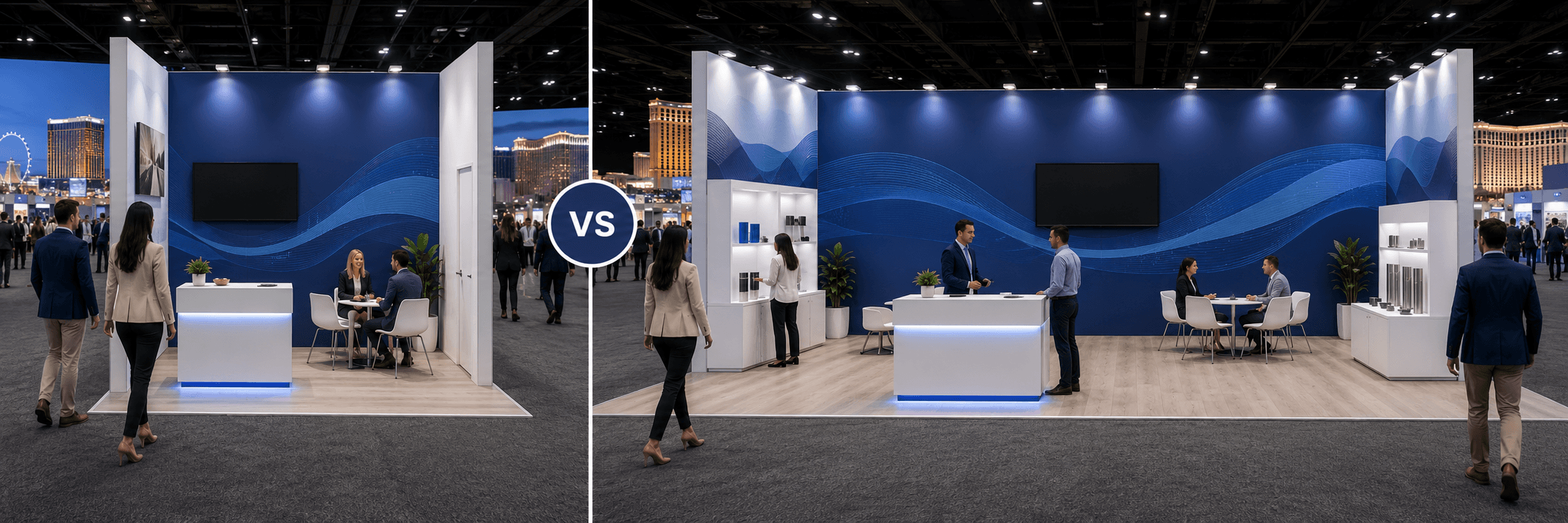
When a 20x20 Booth Works Best
A 20x20 booth planning layout works well when the booth has one main demo point, a single branded wall, and a compact meeting corner. It can also include:
Front demo counter
Simple product display
Small meeting table
Hidden storage
Controlled visitor flow
This layout is usually enough for exhibitors who need a professional rental booth without multiple demo stations, large storage requirements, or a complex visitor path.
A 20x20 booth is often a good fit when the team wants the booth to stay focused. Visitors can quickly understand where to enter, where to stop, and who to speak with. For many Las Vegas trade shows, this size can support a clean branded presentation while keeping setup and dismantle more manageable.

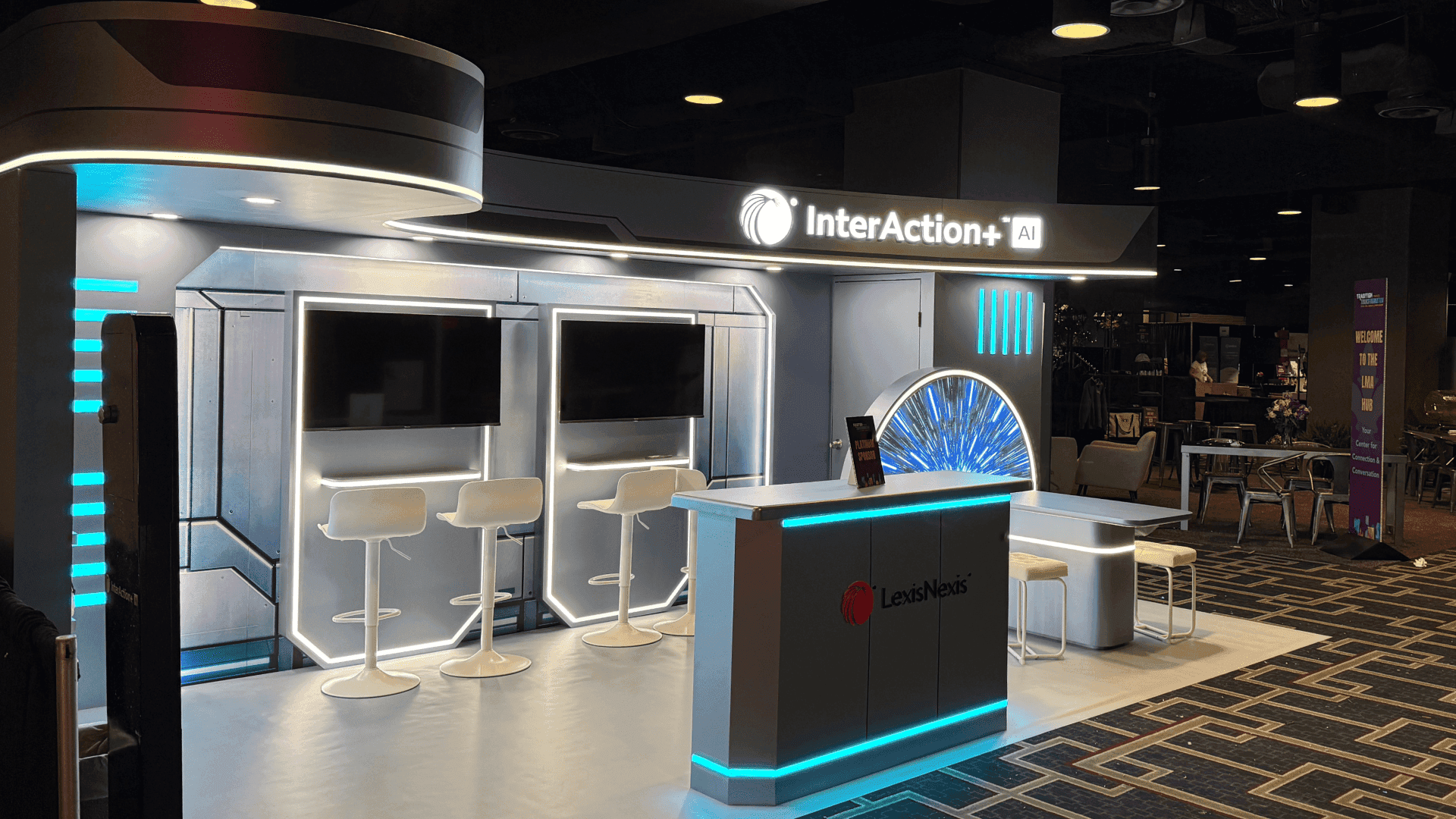
A 20x20 booth works well when the layout needs one main branded wall, focused product displays, compact meeting space, and a clear visitor path.
When a 20x30 Booth Makes Sense
A 20x30 booth planning rental is better when the booth needs more separation between visitor activities. The additional space can support:
Larger demo zones
Multiple product display areas
Meeting counter or table area
Hidden storage for staff materials
Expanded branded graphics
Better staff and visitor circulation
This configuration is useful when visitors need to compare products, watch demos, and engage with staff without blocking traffic. A 20x30 layout gives exhibitors more flexibility to separate product display, conversation, storage, and brand messaging into clearer zones.
For exhibitors planning a customizable booth rental in Las Vegas, the 20x30 footprint can also make the booth feel less crowded when graphics, counters, samples, screens, and staff movement all need to work together.
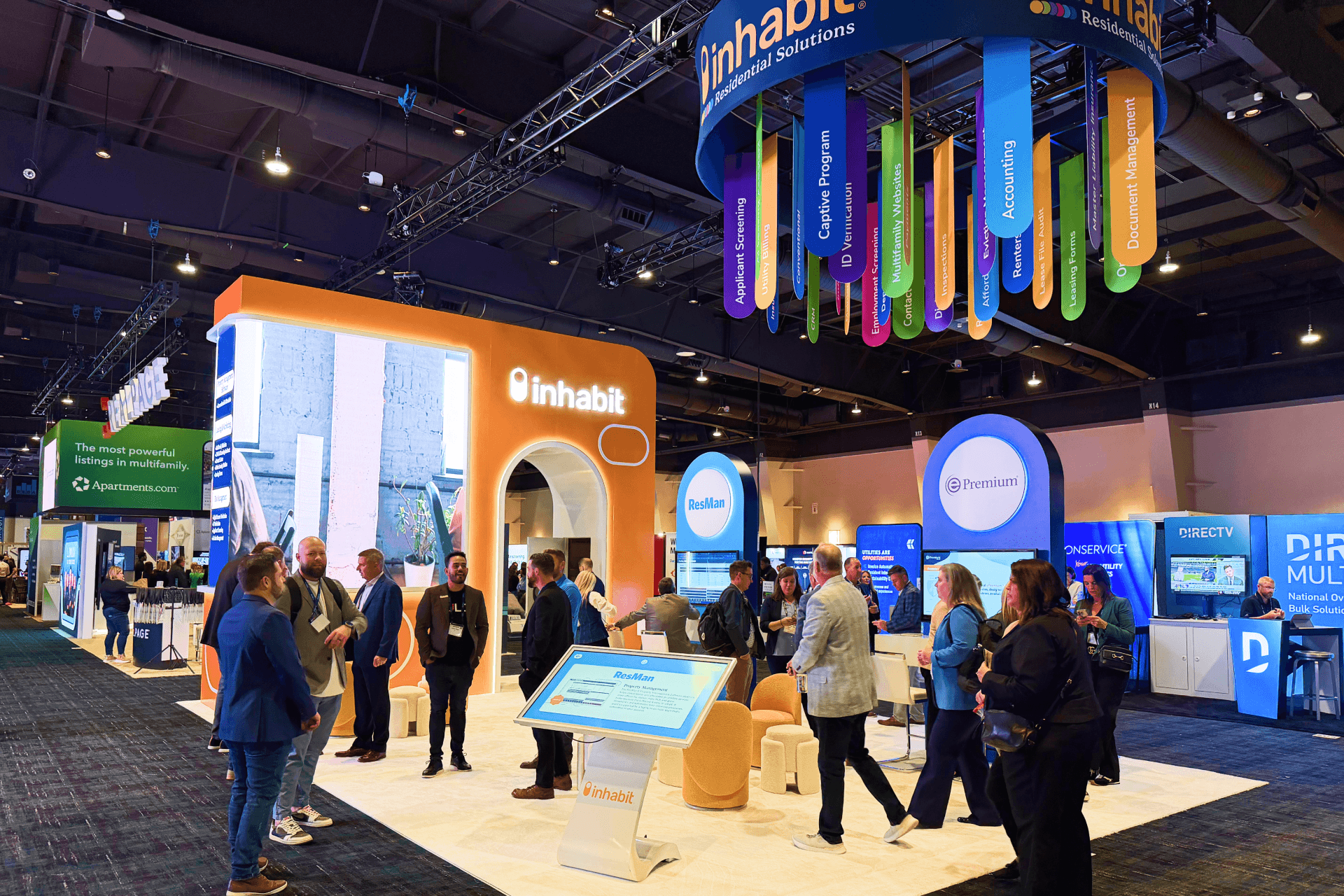
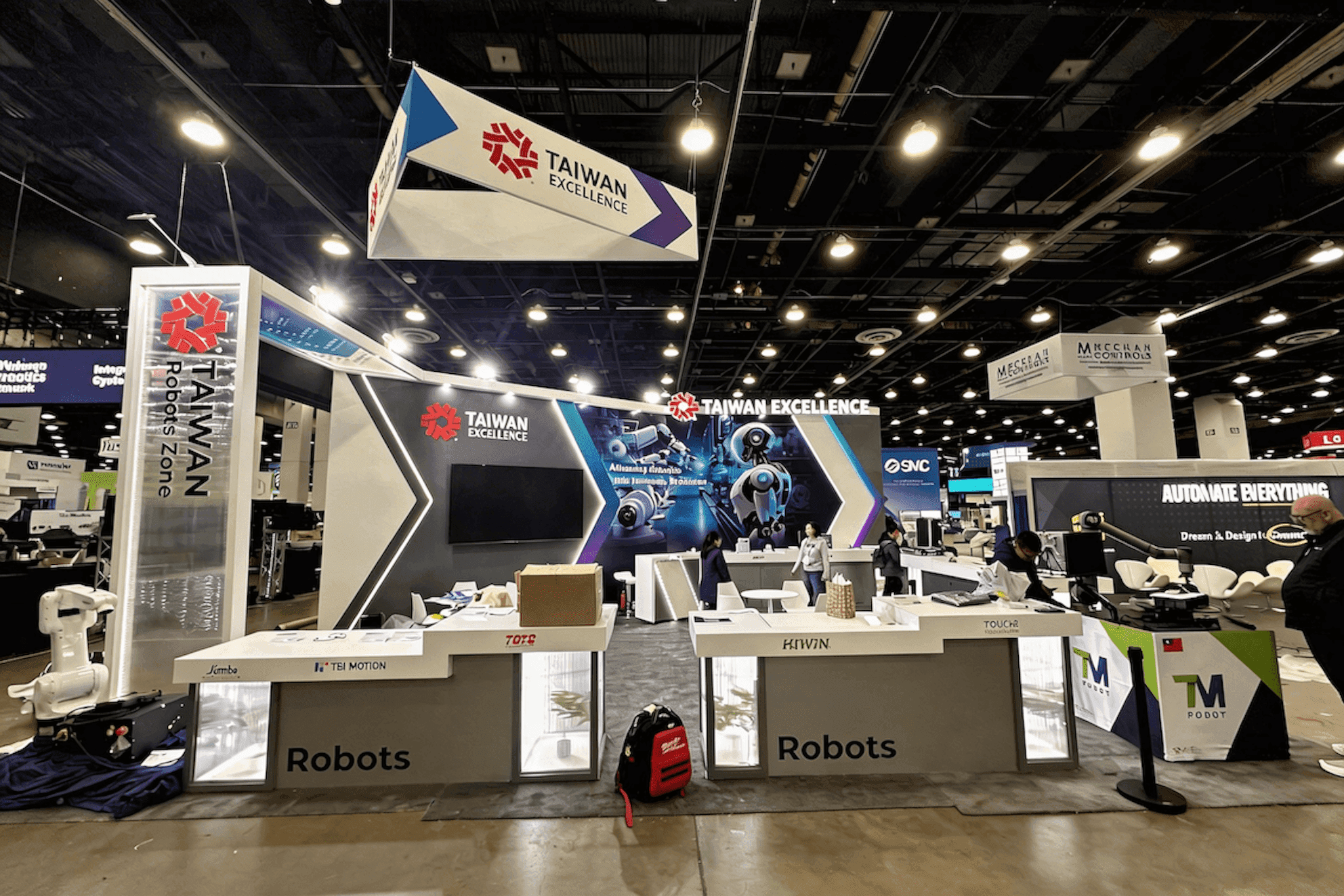
Inhabit’s 20x30 OPTECH booth shows how a larger rental-style footprint can support software demos, meeting conversations, overhead branding, and clear visitor flow.
20x20 vs 20x30 Booth Rental Comparison
Planning Factor | 20x20 Booth Rental | 20x30 Booth Rental |
|---|---|---|
Best fit | Works well for one main product demo, a compact meeting area, branded graphics, and a simple visitor path. | Works better when the booth needs multiple demo points, a larger product display area, meeting space, storage, and wider aisle visibility. |
Visitor flow | Easier to keep focused because visitors usually move around one main counter, display wall, or demo zone. | Allows more separation between demo areas, meeting zones, product displays, and staff circulation. |
Demo setup | Better for one primary demo, sample display, or focused sales conversation. | Better for exhibitors showing multiple products, screens, equipment, or side-by-side demo stations. |
Graphics and branding | Usually relies on one main branded wall, counters, and clear aisle-facing messaging. | Gives more room for wider graphics, overhead branding, product messaging, and multiple visual zones. |
Meeting area | Can support a small meeting table or compact seating area if the layout stays simple. | Can support a more defined meeting zone without crowding the demo or product display area. |
Storage | Best for limited hidden storage, literature, staff bags, and small product samples. | Offers more flexibility for storage, samples, staff materials, packaging, or extra sales items. |
Installation planning | Usually has a simpler setup sequence with fewer structures, graphics, counters, and electrical points. | Requires more coordination for counters, graphics, lighting, storage, meeting areas, and final show-site checks. |
Best choice when | The goal is a focused rental booth with clear branding, one demo point, and efficient setup. | The goal is a larger rental booth with multiple functions, stronger visual presence, and more visitor handling capacity. |
For exhibitors still comparing booth size options, review 20x20 booth planning and 20x30 booth planning before finalizing the rental layout.
Visitor Flow and Demo Layout
The main difference between 20x20 and 20x30 booths is visitor flow.
A 20x20 booth usually works best with one clear stopping point. Visitors should be able to enter from the aisle, see the main product or message, watch a short demo, and speak with staff without confusion.
A 20x30 booth allows a more staged path. Visitors can move from the aisle to a demo counter, then to a product display or meeting area. This helps separate active demos from private conversations and keeps traffic from gathering in one crowded corner.
In Las Vegas shows with heavy aisle traffic, this difference matters. A rental booth should not only look good in a rendering. It should support real visitor movement during busy show hours.
Graphics and Storage Considerations
Graphics and storage often determine whether a rental booth feels open or crowded.
For a 20x20 booth, one strong branded wall, clear counter graphics, and simple aisle-facing messaging may be enough. The booth should communicate the product quickly without overloading a smaller footprint.
For a 20x30 booth, exhibitors usually have more room for wider graphics, product messaging, lightboxes, secondary visuals, or multiple branded surfaces. This can help when the booth needs to explain more than one product, service, or use case.
Storage also changes by size. A 20x20 booth usually needs only limited hidden storage for literature, staff bags, and small product samples. A 20x30 booth can better support extra samples, demo materials, packaging, sales items, and staff supplies without affecting visitor flow.
When graphics, counters, and storage are planned together, the booth feels more organized and professional. Exhibitors can also use graphics and brand presentation support to keep the visual layout aligned with the booth structure.
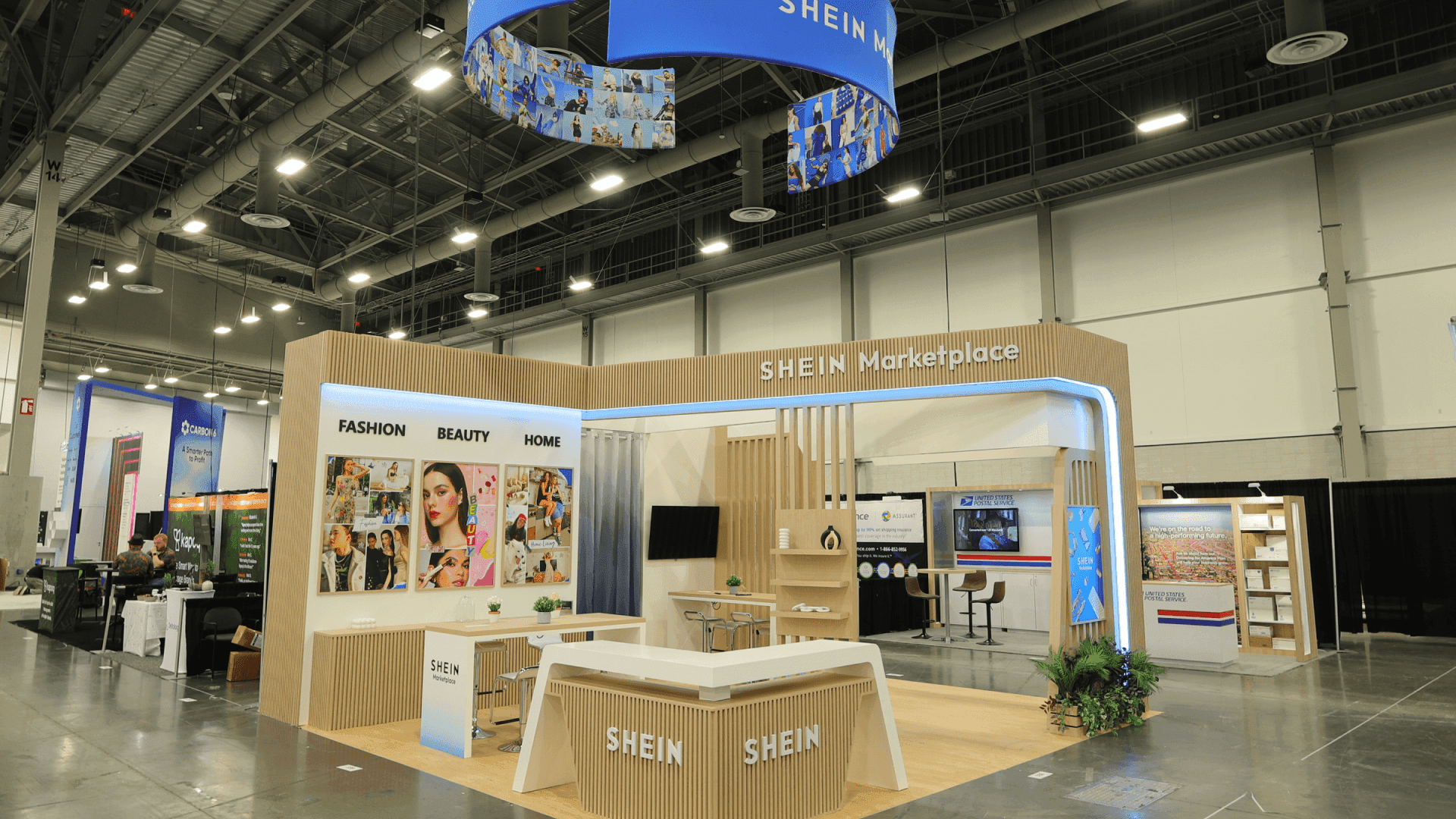
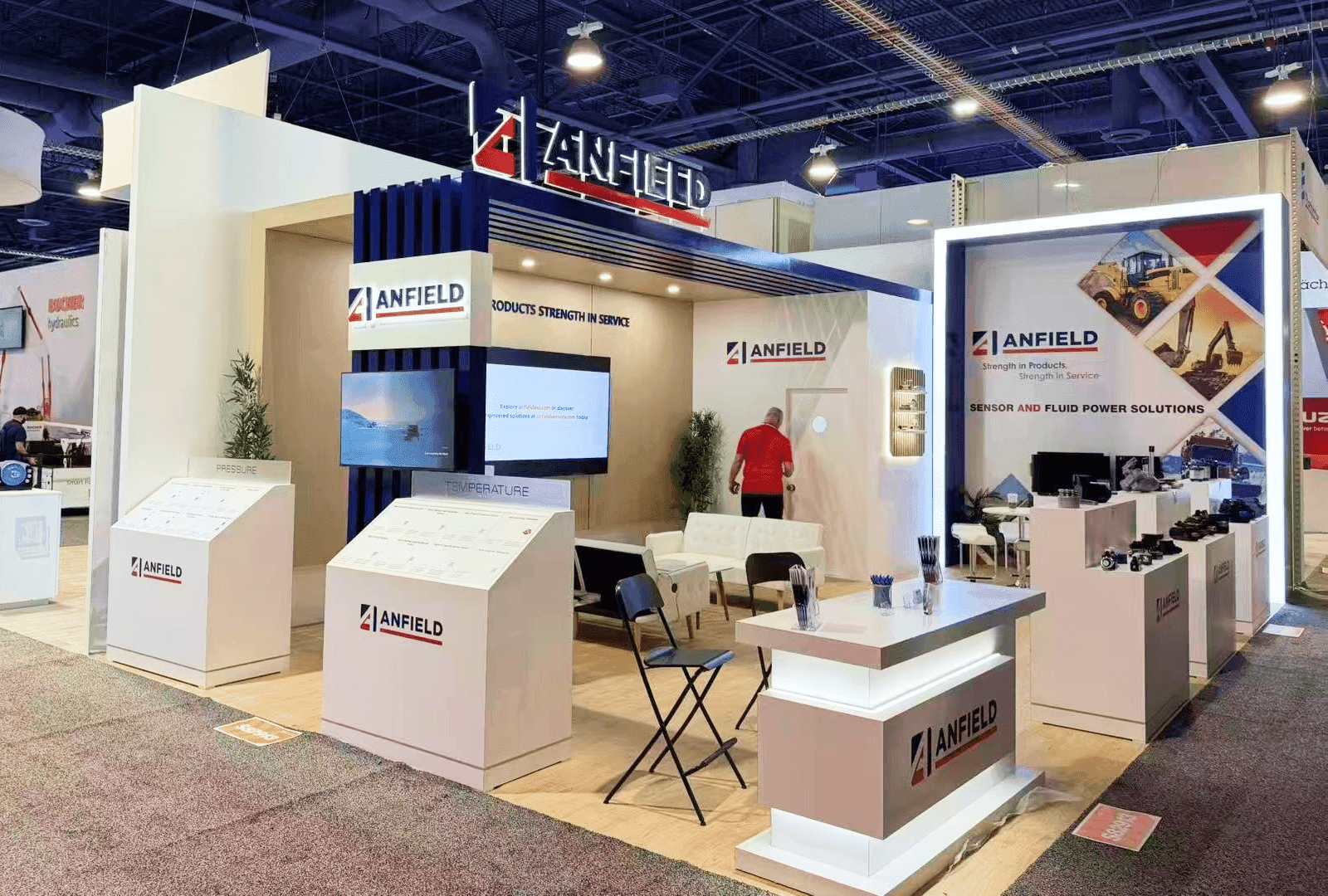
A 20x20 booth can still support strong brand presentation when graphics, product displays, counter space, and visitor access are planned together.
Installation Sequence and Show-Site Readiness
Booth size affects installation planning.
A 20x20 booth usually has a simpler setup sequence. There are fewer counters, graphics, lighting points, storage areas, and zones to coordinate. This can make the booth easier to install, inspect, and prepare before the show opens.
A 20x30 booth usually needs more sequencing. Demo counters, meeting areas, storage, graphics, lighting, electrical access, and final show-site checks should be planned in the right order. If the installation sequence is not clear, the booth may look finished in the design file but still need last-minute corrections on the show floor.
This is why exhibitors should consider on-site installation and dismantle support before finalizing the booth size. The larger the layout, the more important it becomes to coordinate freight arrival, crate staging, graphic installation, counter placement, lighting, storage, and final walk-through.
Las Vegas Show-Site Reality: Size, Move-In Timing, and Installation Sequence
Las Vegas booth rentals still need practical show-site planning. Even when the structure is rental-based, the booth must arrive on time, install correctly, support graphics and counters, pass final checks, and be ready before visitors enter the show floor.
A 20x20 booth may require fewer installation steps, but it still needs clean graphic placement, counter alignment, storage planning, electrical access, and a final walk-through.
A 20x30 booth usually requires more coordination because more zones are involved. Meeting areas, demo counters, wider graphics, lighting, storage, and visitor flow all need to work together. If one area is delayed, it can affect the final booth presentation.
Before choosing between 20x20 and 20x30, exhibitors should ask:
How many demos need to happen at the same time?
How many visitors should the booth handle during busy hours?
How much meeting space is needed?
How much product, literature, or sample storage is required?
Will the booth need wider graphics, screens, lighting, or multiple visual zones?
How complex will the installation sequence be?
The best booth size is not always the larger one. It is the size that supports the booth goal, visitor path, brand message, and show-site setup without unnecessary crowding or wasted space.
FAQ
Is a 20x20 booth rental enough for Las Vegas trade shows?
A 20x20 booth rental can be enough when the exhibitor needs one main demo point, a compact meeting area, clear branded graphics, and limited storage. It works best when visitor flow is simple and the booth does not require multiple product display zones.
When should exhibitors choose a 20x30 booth rental?
Exhibitors should choose a 20x30 booth rental when they need more room for multiple demos, larger graphics, meeting space, product displays, storage, and staff circulation. The larger footprint also requires more planning for installation sequence and show-site readiness.
Does booth size affect installation planning?
Yes. A 20x20 booth usually has a simpler installation sequence, while a 20x30 booth may require more coordination for counters, graphics, lighting, storage, meeting areas, and final walk-through before the show opens.
Final Takeaway
Choose a 20x20 booth if the goal is a focused rental booth with one main demo, compact meetings, clear branding, and controlled visitor flow.
Choose a 20x30 booth if the booth needs multiple demos, meeting areas, expanded graphics, more storage, and stronger visitor handling capacity.
The right choice balances visitor flow, demo experience, booth function, storage, graphics, and installation requirements. For Las Vegas exhibitors, the best rental booth size is the one that helps the team explain the product clearly, support real conversations, and stay ready for opening day.