Start With the Application the Buyer Brings to the Booth
A specification only becomes useful when it is connected to a material, an operating task, and the conditions that could change the answer.
Start by establishing:
What powder, granule, pellet, or other bulk solid is involved?
Is the equipment feeding, transferring, isolating, weighing, storing, or discharging it?
Is the operation continuous, batch-based, or intermittent?
Do dust, moisture, abrasion, temperature, sanitation, or containment affect the application?
What process problem or planned change brought the buyer to the booth?
The relevant variables differ by equipment. A feeder discussion may depend on flow behavior and discharge consistency, while a valve conversation may turn on containment, pressure conditions, or wear, so staff should follow the application rather than run every visitor through the same technical checklist.
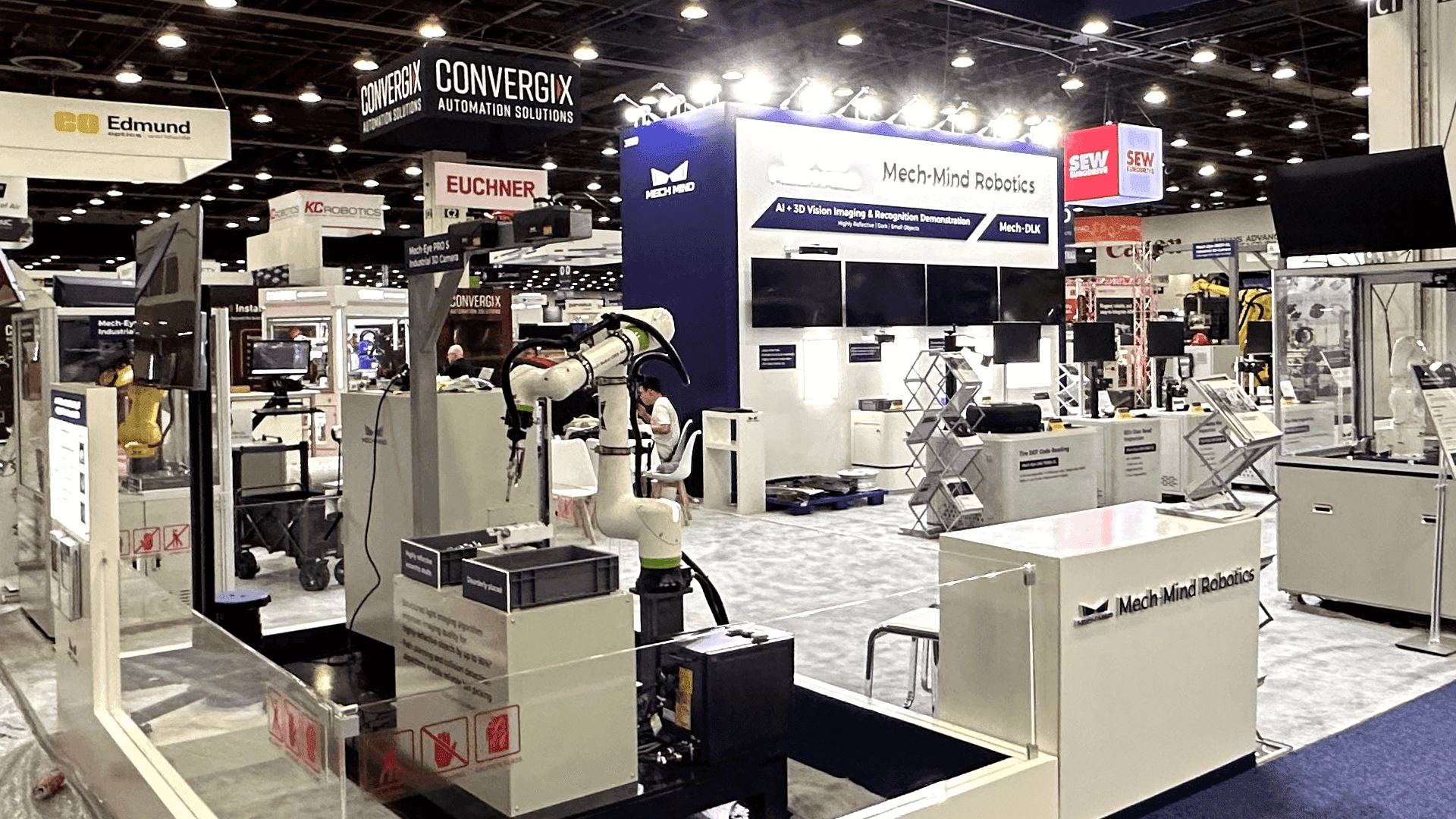
A system-focused display should establish where the physical component sits in the material path before the conversation moves to connections, controls, and application fit.
What Has to Match Upstream and Downstream
Once visitors can place the equipment in the material path, the integration discussion moves to the interfaces: what enters, what leaves, and what has to match at either end.
Staff should be ready to identify:
How material enters and leaves the equipment
Standard inlet, outlet, or transfer-point options
The functions immediately before and after the component
Orientation, elevation, pressure, or containment conditions where relevant
Supporting equipment that may affect connection or placement
Details that remain dependent on the final configuration
For a feeder, the critical relationship may be the hopper discharge above it and the process receiving material below it; for a rotary valve, pressure and containment may matter on both sides. A conveyor section can introduce different dependencies, including routing, transfer points, structural support, and drive or discharge location.
When the full line cannot be shown, a compact flow graphic can identify adjacent functions without turning the wall into an engineering drawing. Clear trade show booth graphics should let visitors grasp that relationship from the aisle, with dimensions and configuration details kept closer to the equipment.
If the final position of a feeder, conveyor section, or control cabinet starts dictating utility access, service clearance, screen placement, or the installation route, the exhibit has crossed into equipment-first booth planning. In that case, lock the equipment position before fixing the surrounding walls and counters.
Controls Need the Same Application Context
Mechanical fit is only part of integration; buyers may also need to know how the equipment starts, stops, responds, and exchanges information with the rest of the line.
Staff should be ready to clarify:
Which commands the equipment can receive
Which status, alarm, or process feedback it can provide
Whether it normally operates independently or within a sequence
Which control decisions remain specific to the final application
A screen can support this conversation even when the complete line is not operating, provided visitors can tell whether the interface is live, recorded, or simulated.
Staff can explain available signals, monitoring options, and the expected control relationship, while project-specific logic, interlocks, programming, network design, and validation remain part of technical review.
Prepare the Access and Maintenance Details
Even when equipment fits the process, it may be impractical if cleaning, inspection, or service access has been overlooked.
Be ready to show:
The normal service side
Inspection or cleanout points
Doors, panels, drives, or parts that need to open or move
Components expected to wear or require replacement
Access affected by cleaning or product changeover
With a full-size unit, staff can point to the actual hatch, drive, panel, wear part, or removal path. If an area cannot remain accessible in the booth, a close-up image or cutaway can show what the buyer needs to examine.
If a full-size bin, conveyor section, feeder, or control cabinet is coming to the show, booth logistics and pre-show coordination should confirm its packed dimensions, handling points, arrival order, and route to the final display position before surrounding structures close off that route.
Where the Booth Answer Should Stop
A useful booth conversation can qualify the application without turning an early discussion into an unsupported compatibility or performance promise.
Buyer Decision | Appropriate Booth Response | Reserve for Technical Review |
|---|---|---|
Is this equipment worth evaluating for our material? | Explain the operating task and relevant material characteristics; cite only documented applications with comparable conditions | Material testing, final suitability, performance commitments, and application approval |
Could it connect to our line? | Explain standard interface options, flow direction, connection types, adjacent functions, and known constraints | Final dimensions, supports, fabricated transitions, structural details, and installation drawings |
Could it work with our controls? | Identify available commands, signals, feedback, monitoring, and communication options | Project-specific logic, interlocks, programming, network design, and validation |
Could we inspect, clean, and maintain it? | Show access points, the service side, removable parts, wear items, and typical maintenance tasks | Site-specific clearances, safety review, and the final maintenance plan |
What is needed to select a configuration? | Identify the material, process, interface, control, and operating information required for selection | Final model, size, configuration, commercial scope, and proposal |
A productive conversation should end with a clear information gap: a sample, process drawing, operating condition, control requirement, or facility measurement that one side has agreed to provide.

Control feedback, inspection access, and maintenance requirements should be visible enough to qualify the application without presenting a final engineered solution.
Turn the Conversation Into a Technical Handoff
A promising discussion can lose value when the technical details are reduced to a badge scan and a general sales note. Use a short handoff form that sales and application teams can both read.
Record:
The buyer, company, role, and technical contact
The material and operating task
The equipment being considered and its role in the process
Known interface, control, and access conditions
The main unresolved technical question
Data, drawings, or samples the buyer has agreed to provide
The next action, responsible person, and expected timing
The visitor does not need a finished answer on the show floor, but both sides should leave with enough context to continue the same technical conversation after the event.
Frequently Asked Questions
Can equipment be evaluated without the buyer’s complete system drawing?
An initial discussion can begin with the material, operating task, and known upstream and downstream functions even when a complete drawing is unavailable. Final sizing, connection details, and installation decisions still require more complete application information.
Should exact capacity figures be displayed in the booth?
Only when the operating conditions behind an approved figure can be explained. Capacity can change with the material, equipment configuration, feed conditions, and surrounding process, so exhibitors should otherwise explain what information is required for sizing rather than present one figure as universal.
What if every installation is engineered to order?
Focus on the inputs that shape the final configuration, including material conditions, process interfaces, controls, and access requirements. The booth can explain how those inputs guide the decision without presenting one configuration as the answer for every application.