A Large Energy Product Does Not Always Need to Lead the Layout
Large equipment can still fit into a layout-first process when its position remains flexible.
A floor-standing product may have several workable locations, straightforward utility access, and no particular side that has to remain open. It may not affect the surrounding structure, and the product may still be able to reach its final position after most of the booth has been assembled.
In that situation, it is a large product, but it is still content inside the booth.
A heavy unit with several practical positions can be less restrictive than a smaller cabinet with one connection side, one usable access route, and a technical screen that needs to stay visually tied to it.
Size becomes important when it starts removing options, not simply because the product occupies more floor space.
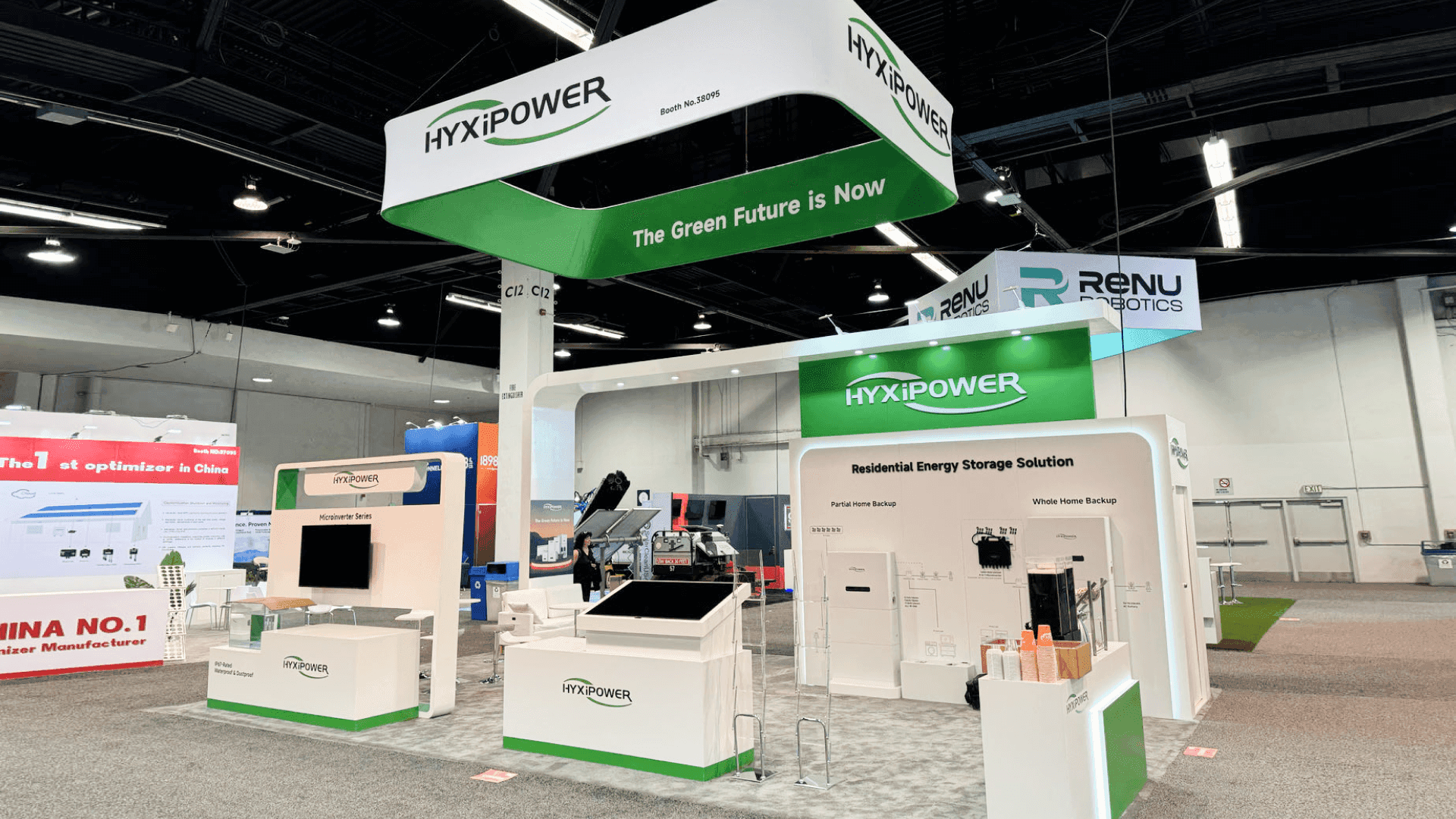
The space around full-size energy equipment can become part of the planning requirement once connections and service access begin limiting nearby booth functions.
The Turning Point Is Loss of Position Flexibility
The first meaningful threshold appears when the equipment can no longer move freely within the layout.
An inverter cabinet may initially look suitable for several locations. Once its connection side, support conditions, service requirements, and monitoring relationship are confirmed, the realistic choices can narrow quickly.
Walls, counters, screens, storage, and conversation areas can no longer be positioned as if the product location were still open.
The equipment has moved from:
one item to place within the layout
to:
a position that other layout decisions depend on
That is the first sign that the design sequence may need to change.
Connections and Access Begin to Reserve Nearby Space
The physical outline of a cabinet or charging unit does not show every requirement around it.
One side may contain power or cable connections. Another may require service access—the space needed to reach doors, panels, connectors, or other working points.
The decision-level issue is not the exact clearance measurement. It is whether the space beside the equipment is actually available for another booth function.
If a wall, counter, storage element, or meeting area cannot realistically occupy that side of the product, the equipment is already reserving more space than its visible footprint suggests.
That is when the product starts controlling adjacent space.
The booth is no longer deciding only where the equipment goes. The equipment is beginning to decide what can be built around it.
Screens and System References Can Depend on Product Position
Energy equipment often brings another dependency into the booth: the hardware may need a digital or system-level explanation beside it.
An inverter cabinet may need monitoring information close enough that buyers immediately understand which equipment the data refers to. Charging or grid hardware may rely on an interface or system diagram to show how the physical product fits into a larger energy system.
That makes product position part of the technical presentation.
A screen tied to one cabinet cannot always be positioned independently. A system graphic referring to several physical components also needs those relationships to remain understandable from the visitor side.
When the hardware location, structural support, screen direction, and system reference depend on one another, they need to be resolved during the booth design and engineering stage, before the surrounding layout fixes those relationships in place.
This does not mean every energy product needs a complex digital demo. It means that once the explanation depends on the final hardware position, product placement is no longer an isolated decision.
Installation Sequence Can Make Product Position a Design Input
Installation stops being only a show-site concern when the equipment has to reach its final location before nearby booth elements can be completed.
A full-size unit may need a clear path through the booth. Walls, counters, screens, or finished surfaces may therefore have to wait until the hardware is in place.
At that point, the product position is already affecting the build sequence.
A similar relationship appears in HyxiPower’s 20x30 RE+ exhibit, where inverter and residential energy-storage products were part of a booth plan that also had to account for how the exhibit would be packed, brought in, and assembled.
The broader planning principle is simple: if the equipment has to reach its position before the surrounding build can be completed, that position needs to be known early enough for the structure to accommodate the sequence.
This also brings freight and pre-show coordination into the planning process earlier. The important issue is not only when the equipment arrives, but whether the booth remains physically open for it to reach the location the layout depends on.
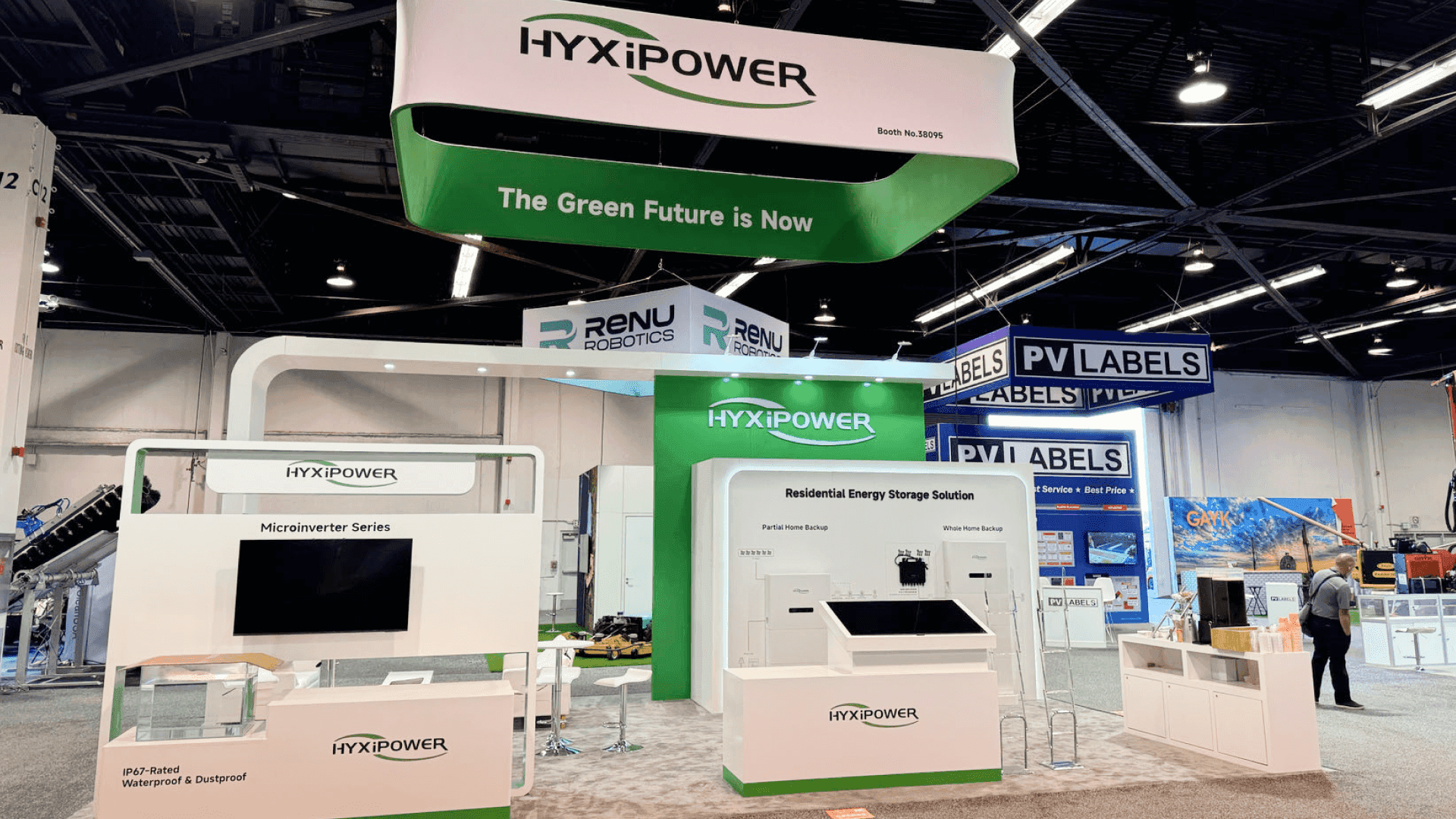
When monitoring data and system graphics need to stay visually connected to the hardware, equipment position becomes part of the technical presentation.
Fix the Equipment First When Multiple Decisions Depend on It
One requirement rarely changes the entire planning method.
A product may need power and still remain flexible. It may need staff access without affecting nearby structure. It may be heavy while still having several workable positions.
The threshold becomes clearer when several otherwise separate decisions all depend on the same final product location.
SCANTECH’s 20x40 Battery Show exhibit provides a useful equipment-oriented example: physical products, power requirements, technical presentation, and show-site execution all had to coexist within the same exhibit environment.
The lesson is not that every large battery or energy booth should automatically be equipment-first.
It is that several dependencies can begin converging around the physical product.
When surrounding structure, utilities, installation sequence, and technical presentation can no longer be finalized independently, equipment-first planning becomes appropriate—fixing the product position and its non-negotiable requirements before the surrounding booth layout is finalized.
Fix the equipment first when too many surrounding decisions depend on knowing exactly where it will be.
For inverter cabinets, charging units, grid hardware, and other full-size energy equipment displays at RE+, the next step is then to work through the actual connections, usable space, viewing needs, and final placement around that known equipment position.
What Changes After the Equipment Position Is Locked
Fixing the equipment first does not necessarily make the booth more complex. It moves several decisions earlier.
Structural relationships and technical displays can be developed from a known product position, while freight and placement planning preserve the route needed to reach it. By the time show-site installation begins, the equipment, surrounding structure, utilities, and presentation should already follow an agreed sequence rather than competing for the same space on the floor.
The surrounding booth can still remain simple.
The difference is that the layout now begins with what the equipment requires rather than asking where the equipment can fit afterward.
Final Note
The strongest signal is not equipment size.
It is dependency.
When several parts of the booth cannot be resolved until the final equipment position is known, that position needs to become an early design decision.