Architectural Lighting, Connected Controls, Building Automation, Smart Building Technology, Lighting Controls, Building Systems Integration, Sensors, Software Platforms, Electrical Accessories, Intelligent Infrastructure
Light + Intelligent Building NA 2027
📍
Las Vegas
·
NV
·
US
🌆
Las Vegas Convention Center
📅
-


Light + Intelligent Building NA 20x30 Lighting & Controls Booth — Built for Integrated System Demos


Light + Intelligent Building NA 20x30 Lighting & Controls Booth — Built for Integrated System Demos


Light + Intelligent Building NA 20x30 Lighting & Controls Booth — Built for Integrated System Demos
OVERVIEW
OVERVIEW
Light + Intelligent Building North America brings architectural lighting brands, controls companies, software platforms, building automation vendors, sensor suppliers, and integrated building technology exhibitors to the Las Vegas Convention Center for a show built around system interoperability, specification value, and real-world building performance. Buyers here are not just looking at fixtures in isolation. They are comparing how luminaires, controls, software, sensors, and building systems work together across commercial, institutional, and intelligent building environments, and the booth has to make that connection clear from the start. That is where an experienced Las Vegas trade show booth builder becomes important.
What makes this show different is the way lighting and building technology have to be presented as one integrated story. Visitors are moving quickly between architectural lighting, networked controls, whole-building automation, adaptive system management, and supporting accessories, so the booth has to stay open, technically credible, and easy to read in one pass. For many exhibitors, a 20x30 trade show booth is the right footprint because it gives enough room for product display, controls demos, branded system graphics, and a specifier conversation area without making the layout feel blocked or overbuilt.
Execution here is about integration, not just display. Lighting elements, control interfaces, software demonstrations, mounted hardware, and supporting accessories all need to be staged in a way that feels coordinated instead of fragmented. Strong design and engineering helps shape the booth around system logic, product hierarchy, and buyer flow so the space supports real lighting and smart building conversations instead of reading like unrelated components placed side by side.
Light + Intelligent Building North America brings architectural lighting brands, controls companies, software platforms, building automation vendors, sensor suppliers, and integrated building technology exhibitors to the Las Vegas Convention Center for a show built around system interoperability, specification value, and real-world building performance. Buyers here are not just looking at fixtures in isolation. They are comparing how luminaires, controls, software, sensors, and building systems work together across commercial, institutional, and intelligent building environments, and the booth has to make that connection clear from the start. That is where an experienced Las Vegas trade show booth builder becomes important.
What makes this show different is the way lighting and building technology have to be presented as one integrated story. Visitors are moving quickly between architectural lighting, networked controls, whole-building automation, adaptive system management, and supporting accessories, so the booth has to stay open, technically credible, and easy to read in one pass. For many exhibitors, a 20x30 trade show booth is the right footprint because it gives enough room for product display, controls demos, branded system graphics, and a specifier conversation area without making the layout feel blocked or overbuilt.
Execution here is about integration, not just display. Lighting elements, control interfaces, software demonstrations, mounted hardware, and supporting accessories all need to be staged in a way that feels coordinated instead of fragmented. Strong design and engineering helps shape the booth around system logic, product hierarchy, and buyer flow so the space supports real lighting and smart building conversations instead of reading like unrelated components placed side by side.
Event Facts
Event Facts
A new North American platform for lighting and intelligent building technology
Light + Intelligent Building North America is a launch event designed to unite architectural lighting, controls, software, and building systems integration under one roof.
Debuting in Las Vegas at the Las Vegas Convention Center
The first edition is scheduled for March 15 to March 18, 2027 at the Las Vegas Convention Center, giving the event a large-scale launch venue for lighting and building technology audiences.
Built around integrated lighting and building performance
The show is organized around lighting, building technology, and accessories, with a focus on how products connect across design, controls, interoperability, and intelligent building outcomes.
Exhibiting Challenges
Challenges 1
Showing integrated systems without making the booth feel fragmented
Many exhibitors need to present luminaires, controls, sensors, software, and accessories together, so the booth can feel disconnected fast unless the system story is organized clearly.
Challenges 2
Balancing design presentation with technical explanation
Specifiers and building technology buyers want visual clarity, but they also need to understand controls logic, system interaction, and operational value without reading through dense technical walls.
Challenges 3
Making controls and software feel tangible on the show floor
Digital systems can be harder to communicate than physical products, so the booth has to turn interfaces, dashboards, and connected logic into something buyers can evaluate quickly.
Challenges 4
Supporting lighting display without visual overload
Fixtures, controls, accessories, and branded graphics can compete for attention unless display hierarchy, sightlines, and product zoning are planned early.
Challenges 5
Keeping cables, interfaces, and mounted hardware clean
Screens, control devices, sensors, mounted accessories, and powered demos can make the booth feel improvised if routing and support hardware are not resolved before install.
Challenges 6
Differentiating one building technology offer from adjacent categories
Lighting, controls, automation, software, and accessories overlap heavily, so the booth needs a clear category position to avoid blending into surrounding exhibitors.
Preparation Steps
Preparation Steps
1
Plan the booth around the integrated system story
Define whether the booth is centered on lighting, controls, building automation, software, or accessories so visitors can understand the system role quickly.
2
Decide which elements are for live demo and which are for visual display
Identify early which interfaces, controls, sensors, and fixtures should be demonstrated and which should anchor the visual category story.
3
Use graphics to explain system connection, not just branding
Help buyers understand how lighting, controls, software, and accessories work together with concise messaging that supports the products instead of competing with them.
4
Sequence install around structure, mounted hardware, and final demo setup
Set walls, mounts, graphics, control points, and demo surfaces first, then place product, interfaces, and finishing details in final order so the booth opens cleanly.
Local Execution Notes
LVCC layouts reward clear system zoning
At a launch event like this, exhibitors benefit from separating lighting, controls, software, and accessory displays clearly so buyers can read the booth quickly.
Mounted interfaces and powered demos need early planning
Controls, sensors, and software-driven demos depend on clean mounting and cable routing, so technical staging should be resolved before move-in.
Integrated presentation affects buyer trust
When fixtures, controls, and software feel coordinated, the booth reads as a real building solution rather than a collection of separate products.
For exhibitors that want a faster production path without giving up integrated system presentation, a Light + Intelligent Building North America booth rental can be a practical fit. It works especially well for 20x20 and 20x30 layouts that need lighting display, controls demos, branded graphics, and a specifier meeting area while keeping the booth polished for smart building conversations at LVCC.
Frequently Asked Questions
What booth size works best for Light + Intelligent Building North America exhibitors?

For many exhibitors at Light + Intelligent Building North America, 20x30 booths are a practical starting point because they give enough room for lighting display, controls demos, branded system graphics, and a specifier meeting area without making the layout feel cramped. If the booth only needs a tighter product story with one primary demo zone, a 20x20 footprint can also work well.
How should exhibitors plan booth layout for Light + Intelligent Building North America?

The layout should be planned around system clarity, not just product count. Lighting, controls, software, sensors, and accessories should each have a clear place so buyers can understand how the solution works together. Demo interfaces, mounted hardware, graphics, and conversation space all need to be planned early because this show is about integration as much as product display.
What makes booth execution at Light + Intelligent Building North America different from other trade shows?

This event is less about showing isolated products and more about presenting connected building systems in a way that feels clear and credible. Buyers want to compare objects like luminaires, controls, software interfaces, sensors, and accessories in a real building-performance context. That means the booth has to stay organized, easy to read, and ready for serious specification and integration conversations from setup through teardown.
What booth size works best for Light + Intelligent Building North America exhibitors?

For many exhibitors at Light + Intelligent Building North America, 20x30 booths are a practical starting point because they give enough room for lighting display, controls demos, branded system graphics, and a specifier meeting area without making the layout feel cramped. If the booth only needs a tighter product story with one primary demo zone, a 20x20 footprint can also work well.
How should exhibitors plan booth layout for Light + Intelligent Building North America?

The layout should be planned around system clarity, not just product count. Lighting, controls, software, sensors, and accessories should each have a clear place so buyers can understand how the solution works together. Demo interfaces, mounted hardware, graphics, and conversation space all need to be planned early because this show is about integration as much as product display.
What makes booth execution at Light + Intelligent Building North America different from other trade shows?

This event is less about showing isolated products and more about presenting connected building systems in a way that feels clear and credible. Buyers want to compare objects like luminaires, controls, software interfaces, sensors, and accessories in a real building-performance context. That means the booth has to stay organized, easy to read, and ready for serious specification and integration conversations from setup through teardown.

Light + Intelligent Building NA
Light + Intelligent Building North America 2027
Event Time
-
Venue
Las Vegas Convention Center
Organizer
Messe Frankfurt Inc., IES, and IALD
Exhibitor Scale
Launch-year North American event uniting lighting manufacturers, controls vendors, software platforms, building technology companies, and accessory suppliers across lighting, building technology, and accessories sectors
Audience Type
Architects, engineers, lighting designers, specifiers, system integrators, facility operators, IT and OT teams, owners, developers, utilities, and building technology decision-makers
Typical Booth Size
20x20, 20x30, and 30x30 booths for lighting displays, controls demos, software presentations, integrated system walls, and specifier meeting areas
Related Case Studies

For 20' x 30' (600 sq. ft.)
DevLearn 2023
Blinkist
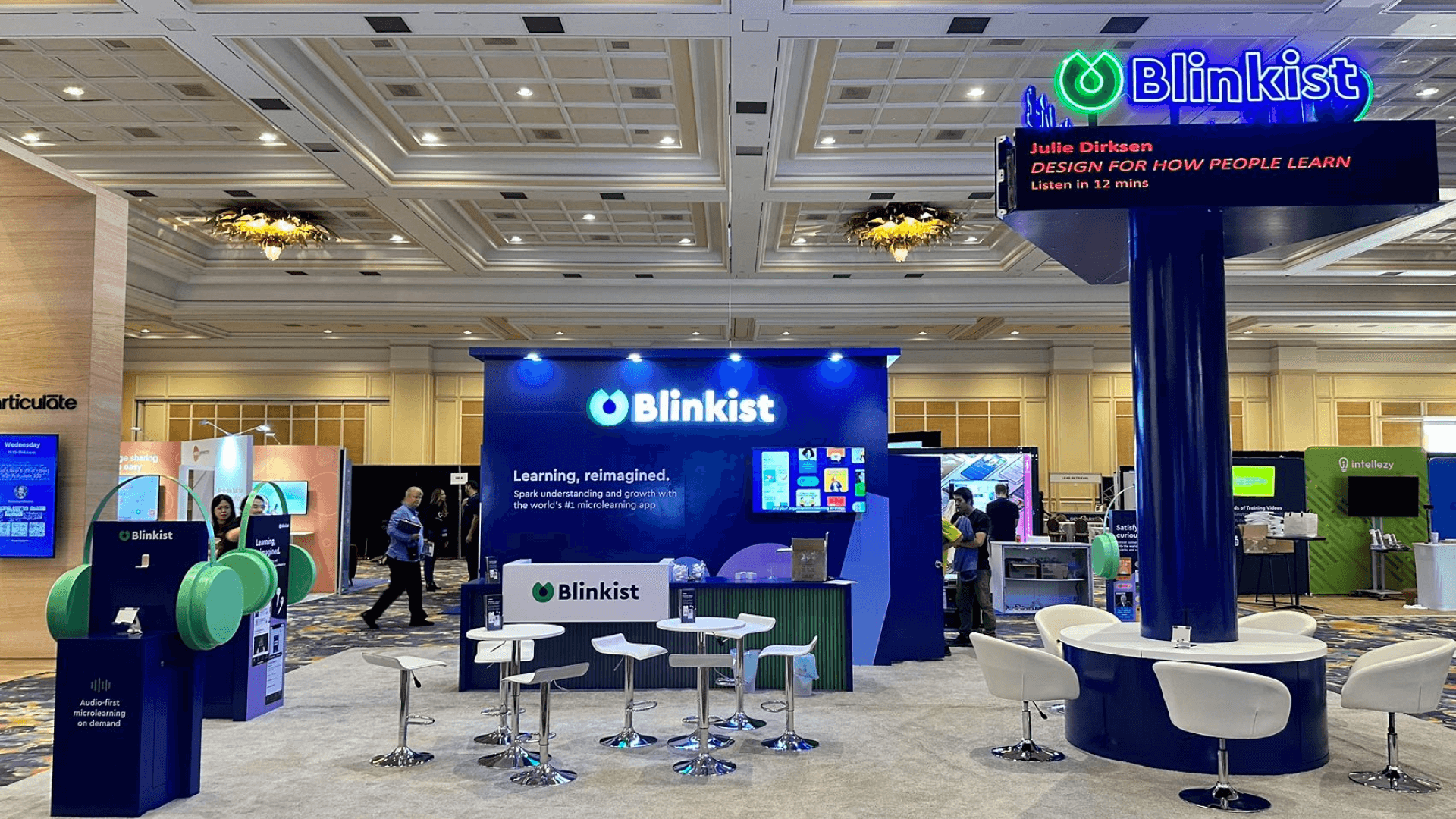
20×30 booth for Blinkist at DevLearn 2023, designed for clear brand visibility, controlled circulation, and fast, repeatable product demos.
MGM Grand, Las Vegas, NV

For 30' x 30' Island Booth (900 sq. ft.)
SSW 2024 (SupplySide West)
EF (Effepharm)
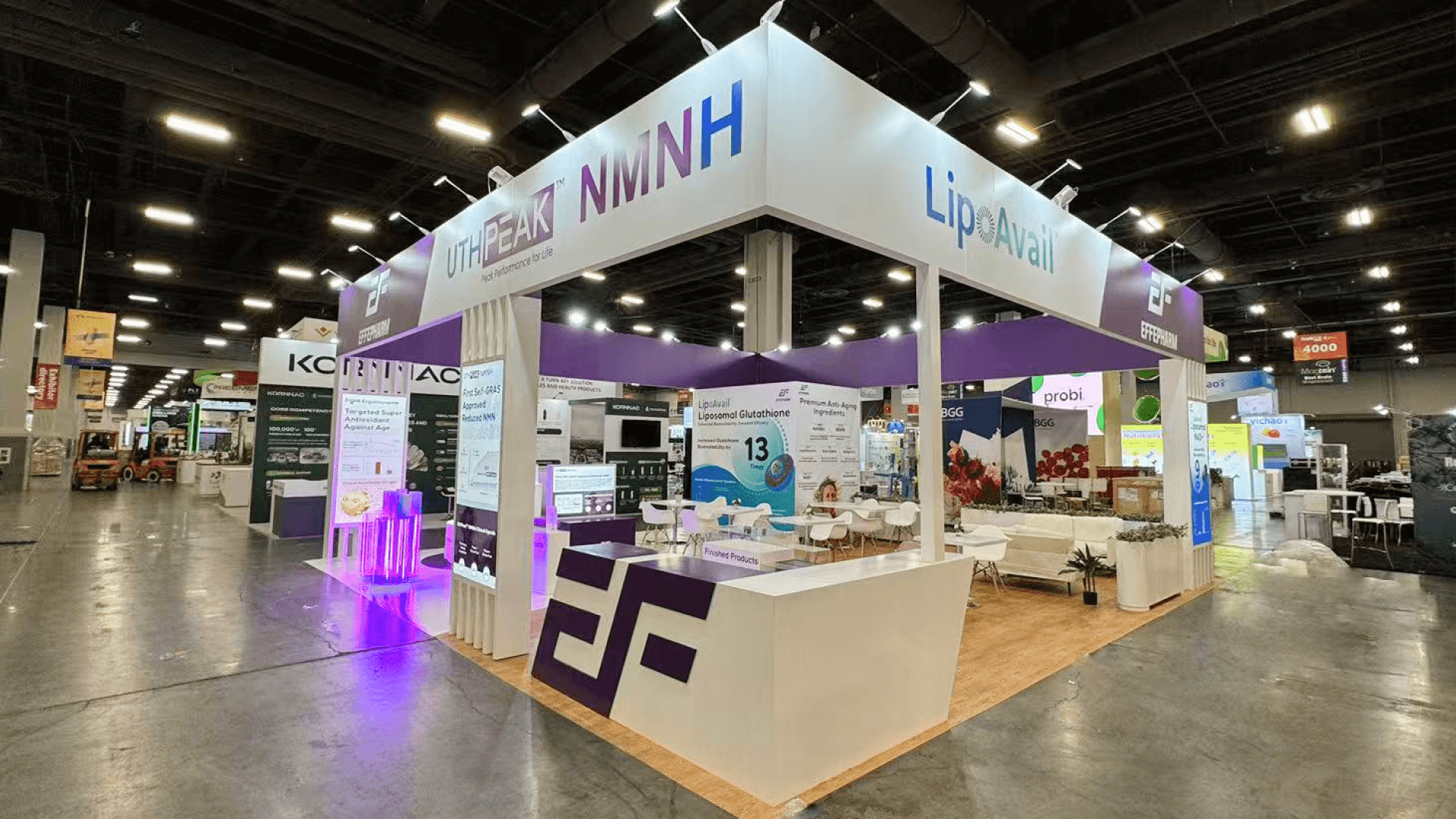
A 30x30 SSW case study for Effepharm, showing how nutraceutical product education, acrylic fabrication, open-layout planning, and Mandalay Bay show-floor execution came together in one clear ingredient-focused booth system.
Mandalay Bay, Las Vegas, NV

For 20' x 40' (800 sq. ft.)
SSW 2024 (SupplySide West)
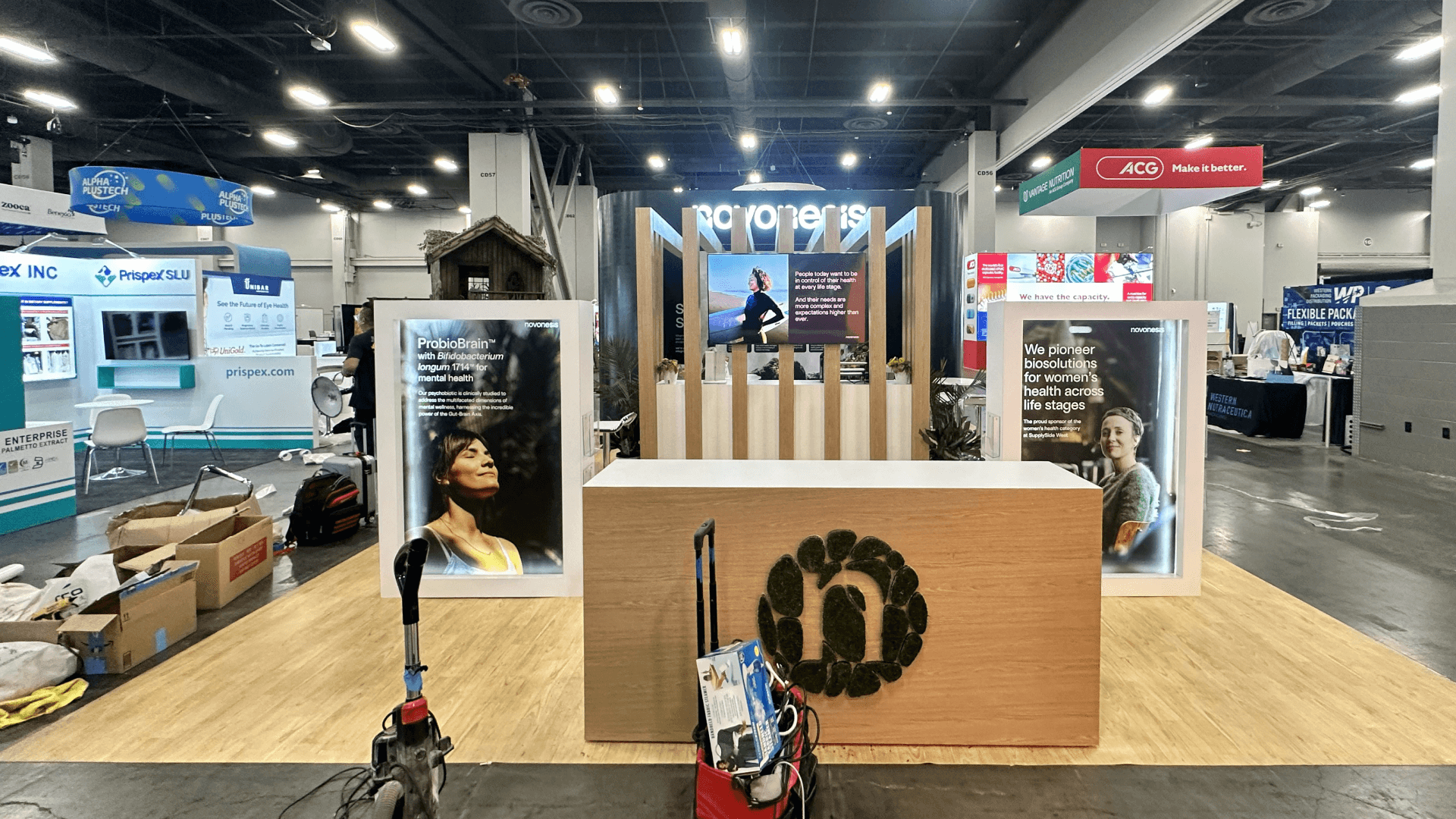
Novonesis
Custom 20×40 exhibit booth for a biosolutions and probiotics brand at SSW 2024, demonstrating sustainable materials, modular structure, and show-floor execution for bioscience-focused presentations.
Mandalay Bay, Las Vegas, NV

For 20' x 30' (600 sq. ft.)
DevLearn 2023
Blinkist
20×30 booth for Blinkist at DevLearn 2023, designed for clear brand visibility, controlled circulation, and fast, repeatable product demos.
MGM Grand, Las Vegas, NV

For 20' x 40' (800 sq. ft.)
SSW 2024 (SupplySide West)
Novonesis
Custom 20×40 exhibit booth for a biosolutions and probiotics brand at SSW 2024, demonstrating sustainable materials, modular structure, and show-floor execution for bioscience-focused presentations.
Mandalay Bay, Las Vegas, NV

For 30' x 30' Island Booth (900 sq. ft.)
SSW 2024 (SupplySide West)
EF (Effepharm)
A 30x30 SSW case study for Effepharm, showing how nutraceutical product education, acrylic fabrication, open-layout planning, and Mandalay Bay show-floor execution came together in one clear ingredient-focused booth system.
Mandalay Bay, Las Vegas, NV

For 20×20 island booth
VRMA International Conference 2024
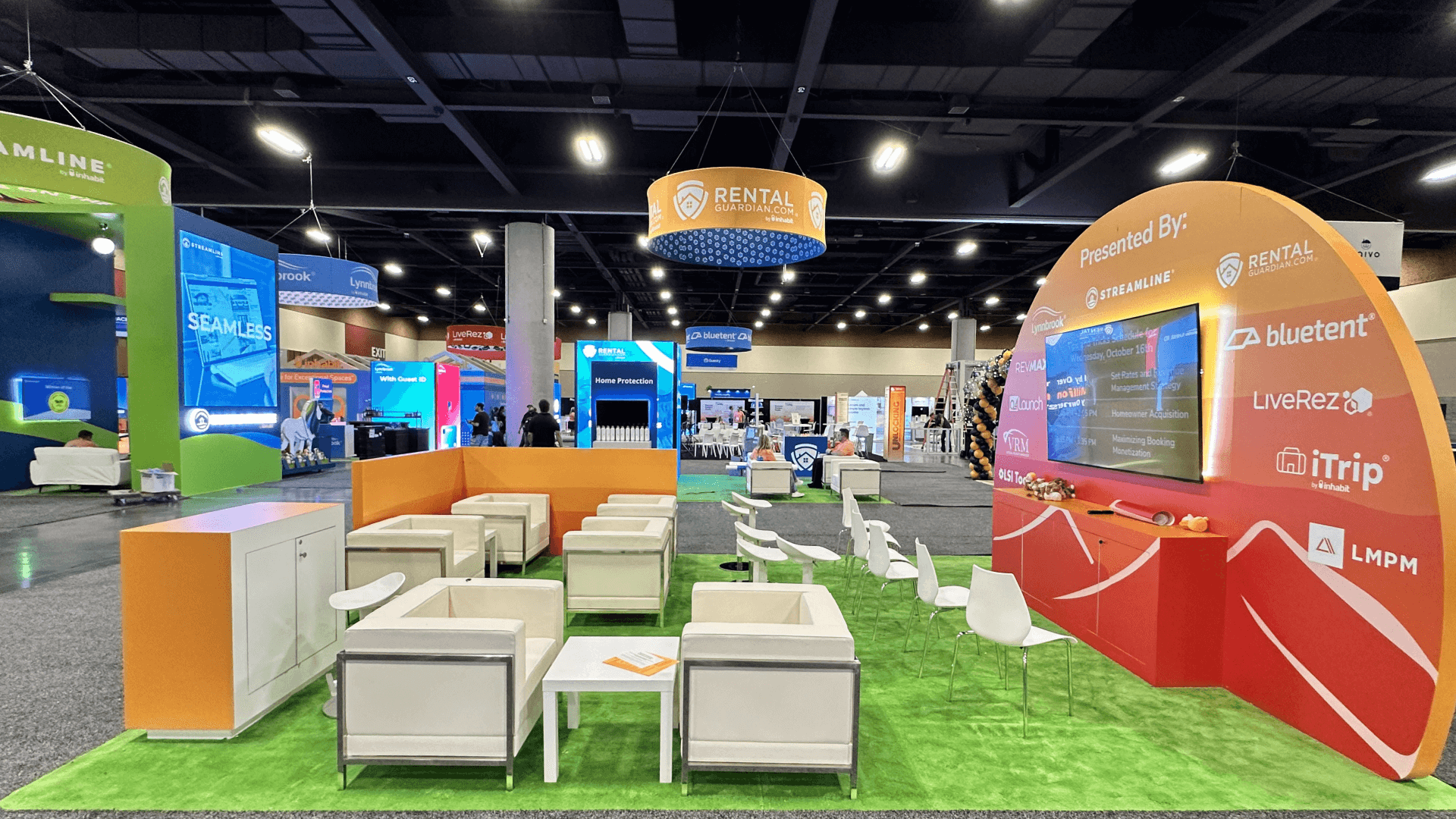
Rise & Shine by Inhabitat
A 20x20 VRMA case study for Rise & Shine by Inhabitat, showing how an educational hub concept, experiential lounge-stage layout, and clean Phoenix show-floor execution came together in one memorable booth system.
Phoenix Convention Center, AZ, US
Explore More Trade Shows

Automotive Aftermarket, Auto Parts, Performance Components, Repair Equipment
AAPEX – Automotive Aftermarket Products Expo 2026
Read More
Read More

Juvenile Products, Baby Gear, Nursery Furniture, Strollers, Car Seats, Feeding Products, Baby Carriers, Diaper Bags, Playroom Products, Parenting Essentials
ABC Kids Expo
ABC Kids Expo
Read More
Read More

HVACR, Heating Equipment, Cooling Systems, Refrigeration Technology, Ventilation, Indoor Air Quality, Building Automation, Controls, Sustainable HVAC Solutions, Mechanical Systems
AHR Expo
AHR Expo
Read More
Read More