Transcarent brought a 20x30 booth to HLTH 2024, built to turn a complex health-and-care platform into a space employers, benefits leaders, and healthcare decision-makers could understand quickly from the aisle. Instead of treating the booth like a generic digital-health stand full of disconnected screens, the layout needed to make Transcarent feel like a serious care platform—clear, trustworthy, and easy to step into for a real business conversation. That direction matches the company’s official positioning as One Place for Health and Care, bringing together medical, pharmacy, and point solutions into a single experience people can actually use.
Because HLTH traffic is meeting-heavy and platform-led, the booth had to support fast first-read clarity and longer discussion once visitors stepped inside. That is why the visual system could not rely on content alone. It needed stronger architecture, better flow, and a cleaner logic for how visitors would move from brand recognition into platform understanding, which is exactly where design & engineering matters in a booth like this. HLTH’s own event materials emphasize healthcare innovation, curated connections, and meaningful networking, which makes structure and readability more important than visual noise.
The booth also needed enough scale to separate entry, platform explanation, and meeting space without making the footprint feel crowded. For this kind of healthcare-tech environment, a 20x30 booth size guide is the right structural reference because it gives enough room to support a true conversation floor while still keeping the care-navigation story readable from multiple aisles.

💼
Client:
📅
Year/Exhibition:
📍
Location:
📐
Size:
🏢
Industry:
🏢
Venue Context:
Challenge
The main challenge was abstraction. Transcarent is not selling a physical device that explains itself at a glance. It is selling a better way to access care, understand benefits, and move to the next right step with less friction. That type of value is easy to bury under too much language, too many screens, or too many feature lists. The booth had to make the company feel credible before the explanation started. Visitors needed to understand quickly that this was about easier access to health and care, not just another app layer. Transcarent’s official messaging around WayFinding, benefits navigation, clinical guidance, and care delivery supports exactly that challenge.
The second challenge came from execution. Once a 20x30 health-tech booth depends on architecture, integrated content, screens, and a meeting-led layout, the result depends on how cleanly the message is staged. If the surfaces, copy hierarchy, and visual rhythm are not resolved early, the booth quickly starts to feel like a software kiosk instead of a dependable care platform. That is why this case also supports graphics and brand presentation—because in a category built on trust, clarity is part of the product experience.
Design vs. On-site Execution
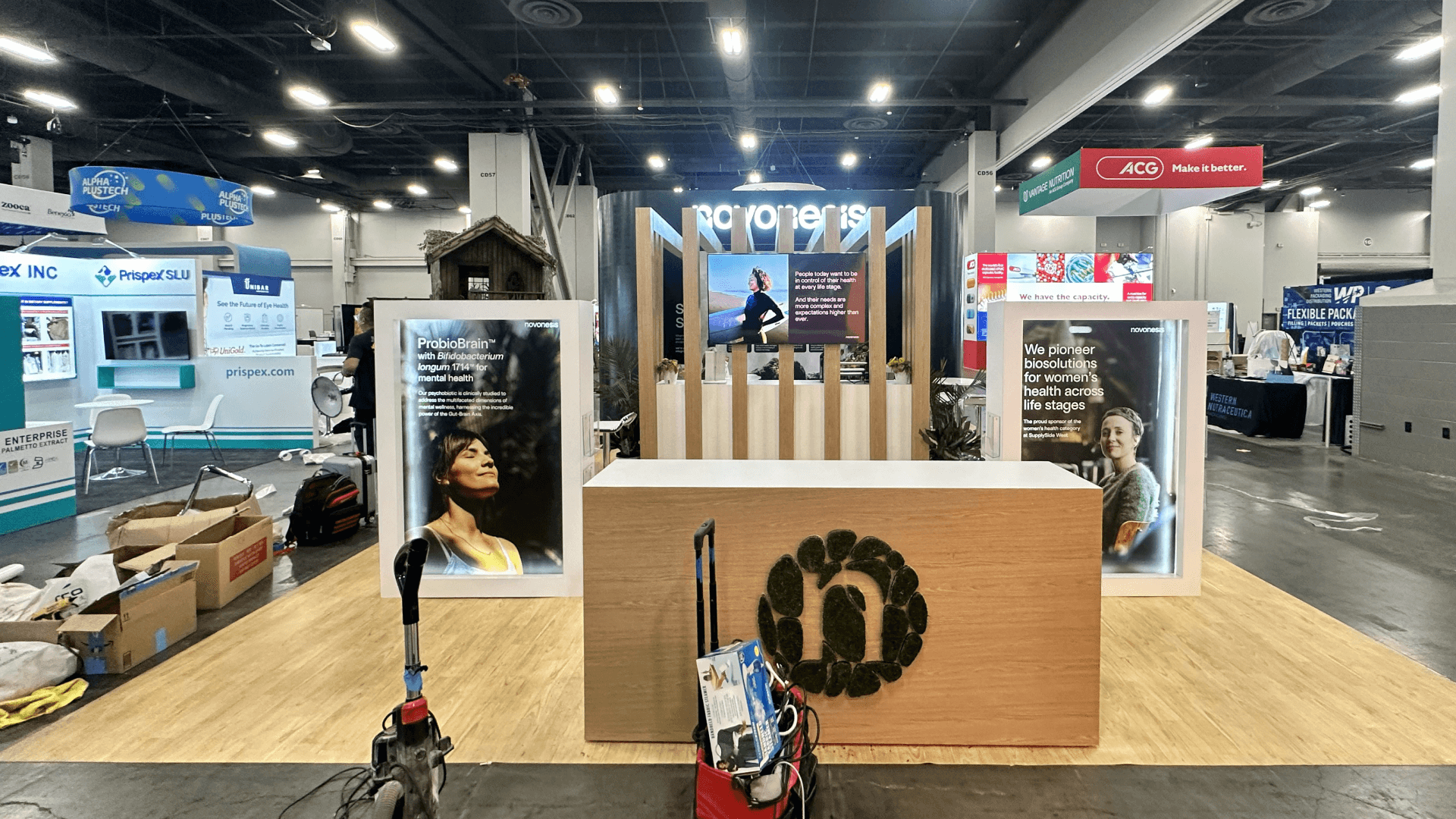
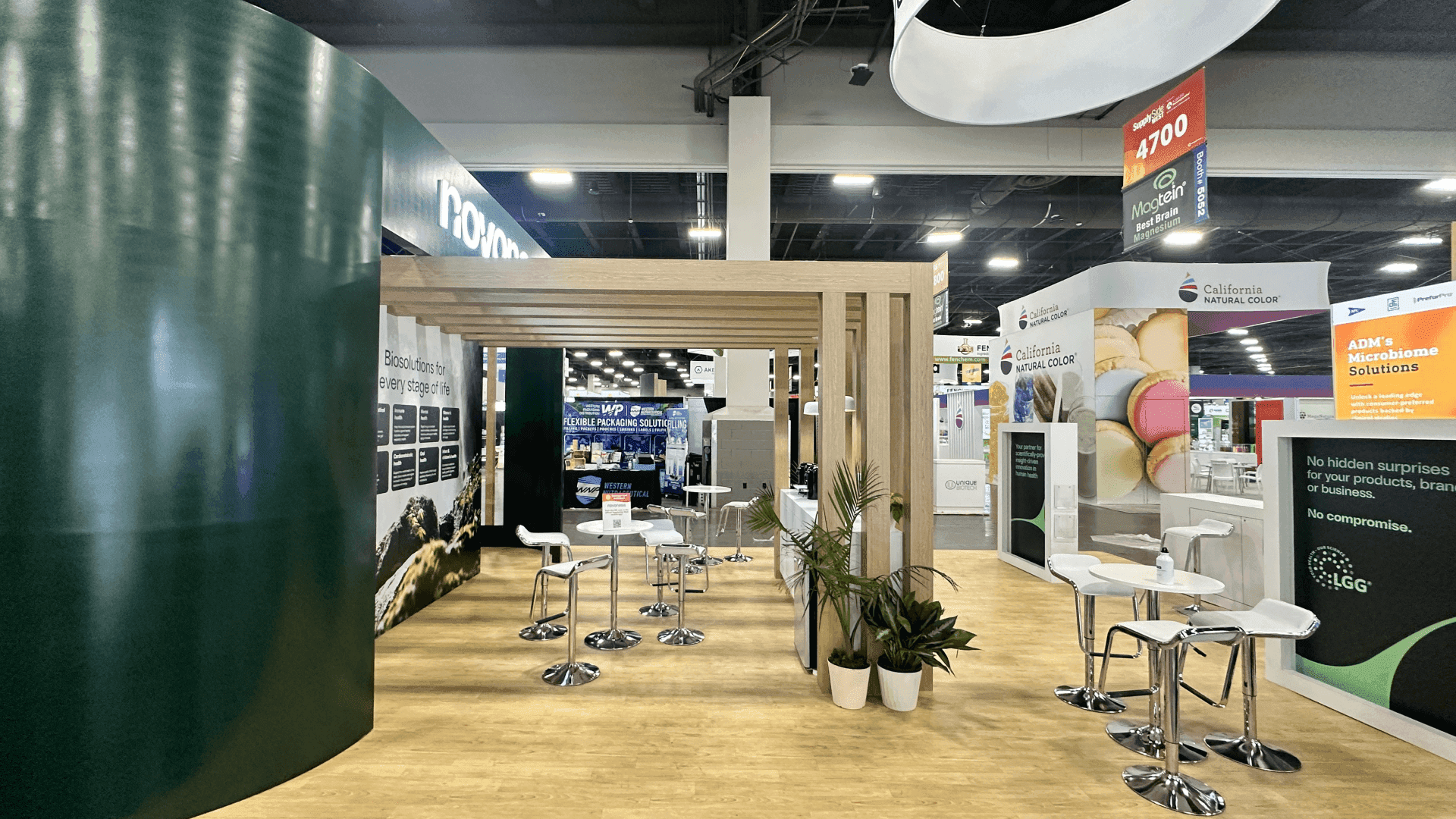
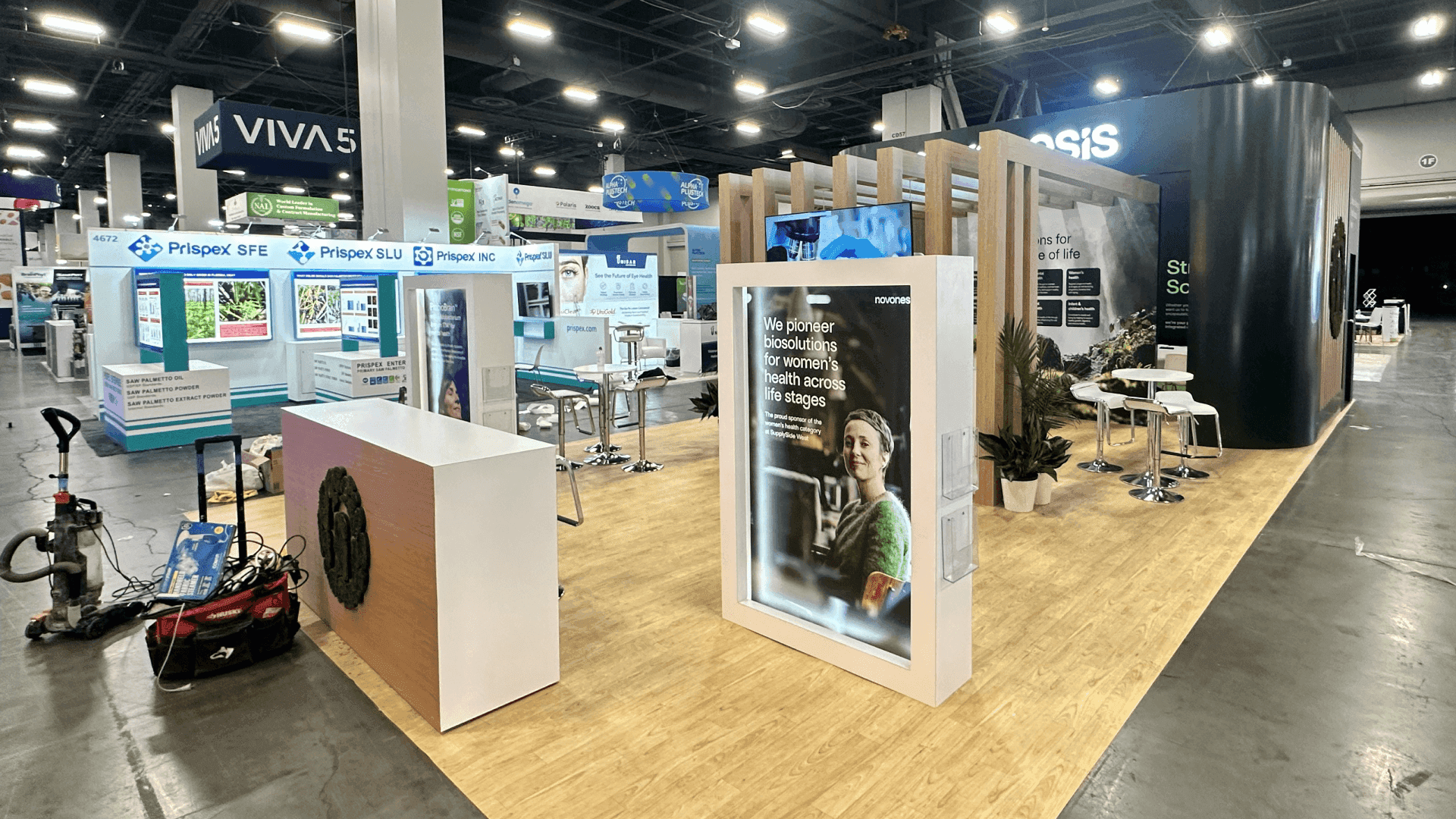
The concept was built around one clear priority: the booth had to feel like a dependable health-and-care platform before anyone started reading details. That meant the layout could not rely only on monitors or platform claims. It needed a confident architectural frame, a cleaner content path, and an open interior that made business conversations feel natural. The booth therefore worked best as a structured 20x30 island—large enough to separate first-read branding, content surfaces, and meeting space, but still compact enough to stay legible from multiple aisles. For this type of show-floor behavior, a 20x30 booth size guide is the right structural reference: it gives enough room for a true entry moment, a defined conversation zone, and a cleaner sequence from awareness to discussion.
On site, that concept only works if the hierarchy is protected all the way through installation. The large brand surfaces have to land first, the content walls have to read clearly, and the open floor plan has to stay open instead of getting crowded with extra hardware or furniture. The goal was not to make the booth feel bigger than it was. It was to make it feel more credible, more stable, and easier to trust from the first aisle view.
Primary Brand Entry Zone
A clear front-facing entry moment helped visitors identify Transcarent immediately and made the booth feel intentional rather than temporary.
Platform Story Wall
A structured information wall gave the booth a place to translate benefits navigation, guidance, and care access into a cleaner, more business-readable story.
Open Meeting Core
An open interior meeting zone supported quick conversations and longer employer or partner discussions without turning the booth into a closed consultation room.
Screen-Led Discussion Point
A controlled screen position helped the booth explain platform logic and use cases without letting the digital layer overpower the brand structure.
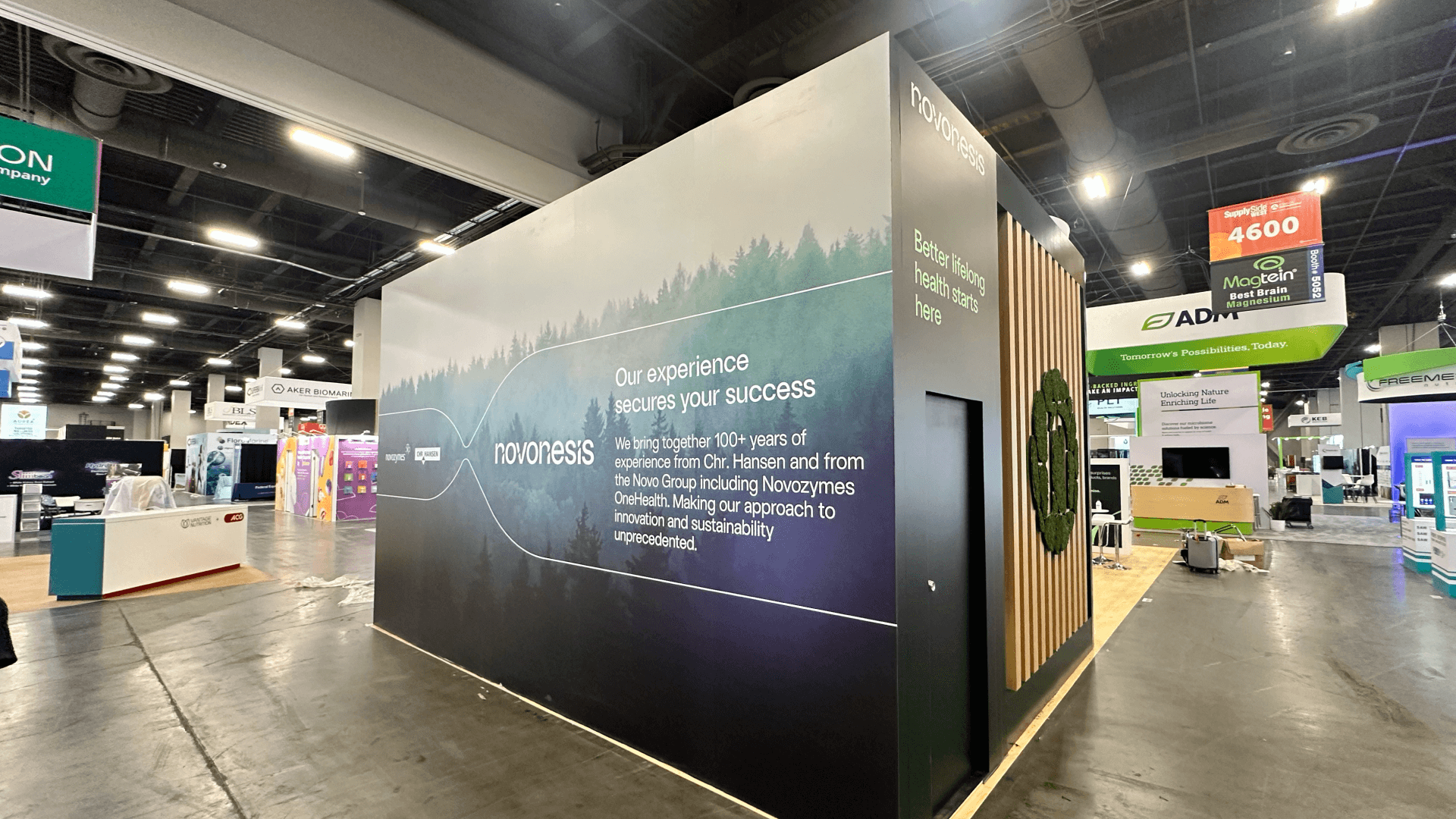
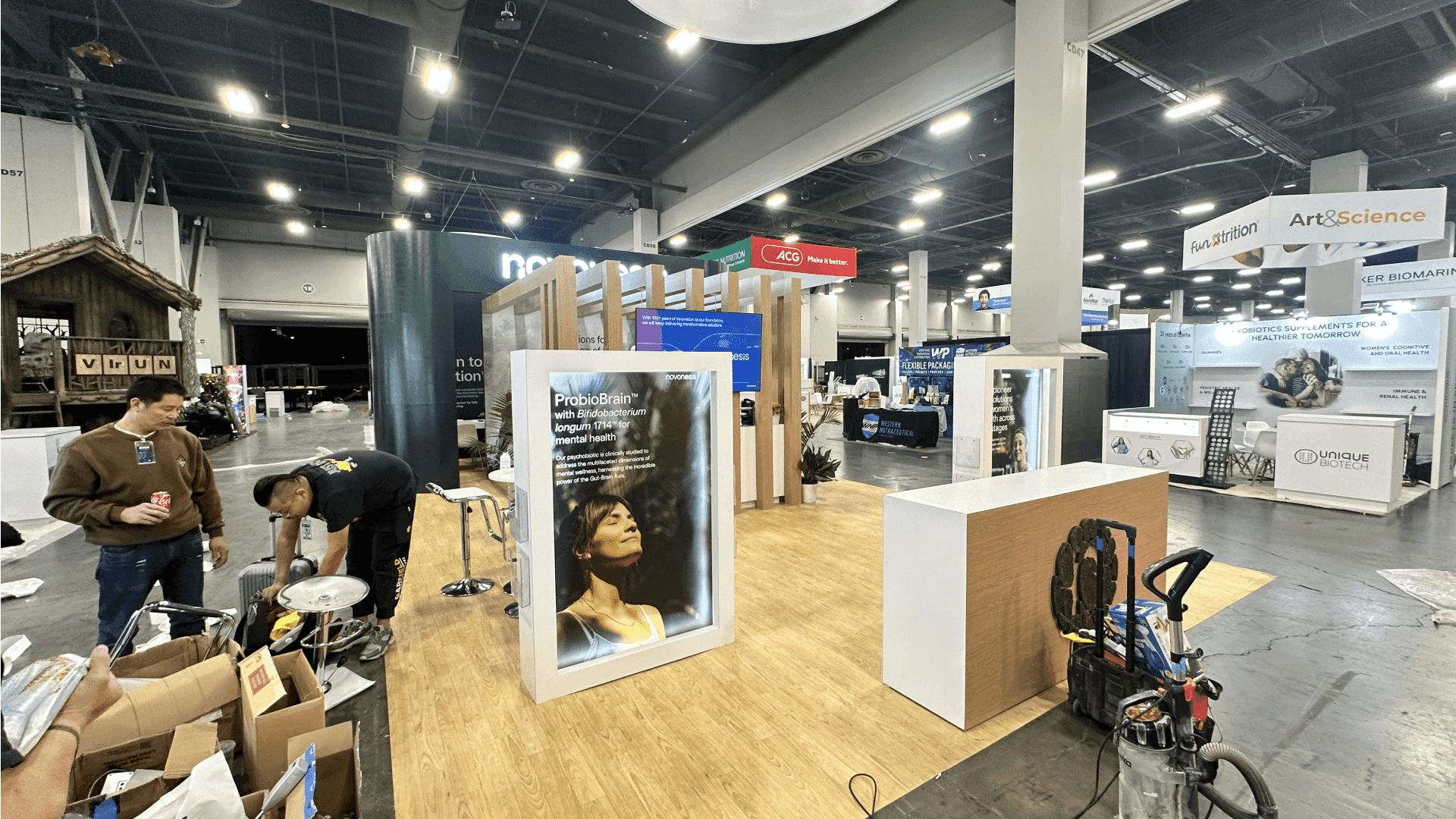
On-site Highlights
This booth worked because the execution system protected the same qualities that made the concept effective: first-read clarity, clean content hierarchy, and an open business-ready floor plan. In an HLTH environment, even a well-designed 20x30 booth can lose its effect quickly if the walls, counters, screens, and seating do not land in the right sequence. HLTH itself is built around innovation discovery, purposeful connections, and meetings, so the booth has to open in a state that feels organized, credible, and ready for serious conversations from the first hour.
On-Site Execution Highlights
Structure-First Brand Set
Message Hierarchy Protection
Freight + Delivery Sequence Control
Install Sequencing + Finish Discipline
Show-Ready Meeting Condition
Outcome
The booth made Transcarent’s role in health and care easier to understand at a glance, helping visitors move from awareness into more focused business discussion.
By leaning on calm architecture and a controlled message path, the booth felt more like a serious healthcare infrastructure partner and less like a temporary digital-health stand.
The open plan supported both quick aisle-side conversations and longer employer meetings without blocking access or collapsing into clutter.
Because the booth was planned around hierarchy, spacing, and installation order, it could open in a cleaner and more operational condition for HLTH traffic.
What made this booth effective was not just the screens or the platform story. It was the fact that the booth behaved like a dependable business environment first and a product demo second. At HLTH, that matters more than trying to out-shout the next healthcare-tech brand. Visitors do not want to stand in front of a booth and decode too much at once. They want to see the category, see the credibility, and understand whether the company is worth stepping into. By giving Transcarent a cleaner architectural frame, a readable content path, and an open central meeting layer, the booth turned a complex health-and-care platform into something easier to trust. Transcarent’s official positioning around WayFinding, benefits navigation, clinical guidance, and care delivery supports exactly that kind of booth logic.
Practical takeaway: if a healthcare technology brand needs to support trust, product explanation, and partnership conversations at the same time, do not solve it by adding more screens. Solve it with hierarchy. The strongest booths are the ones where the main structure, the message path, the meeting zone, and the install order already work together before the hall opens. That is also where an experienced Las Vegas trade show booth builder adds real value—by making sure the booth feels clear, stable, and ready for real business conversations under show-floor pressure.
Quick Q&A
Q: Why does a healthcare platform booth need so much emphasis on first-read clarity?
A: Because the product is not self-evident physically. Buyers need to understand quickly whether the booth is about navigation, care delivery, benefits, or a broader health platform before they decide to stop.
Q: What makes Transcarent different from a generic digital-health software brand?
A: Transcarent officially positions itself as One Place for Health and Care, combining benefits navigation, clinical guidance, pharmacy, point solutions, and care delivery into one experience.
Q: Why is an open meeting zone important in a booth like this?
A: HLTH is built around innovation discovery and purposeful networking, so the booth has to support real business conversations once visitors step inside.
Q: What execution factor matters most for a booth like this?
A: Sequence control. When the architectural frame, content walls, counters, and seating do not install in the right order, a clean business booth loses credibility very quickly.
Q: What is the most overlooked detail in a healthcare-tech booth?
A: Trust pacing. If everything tries to explain at once, the booth feels noisy. This kind of platform sells better when the structure does the first job and the content starts second.