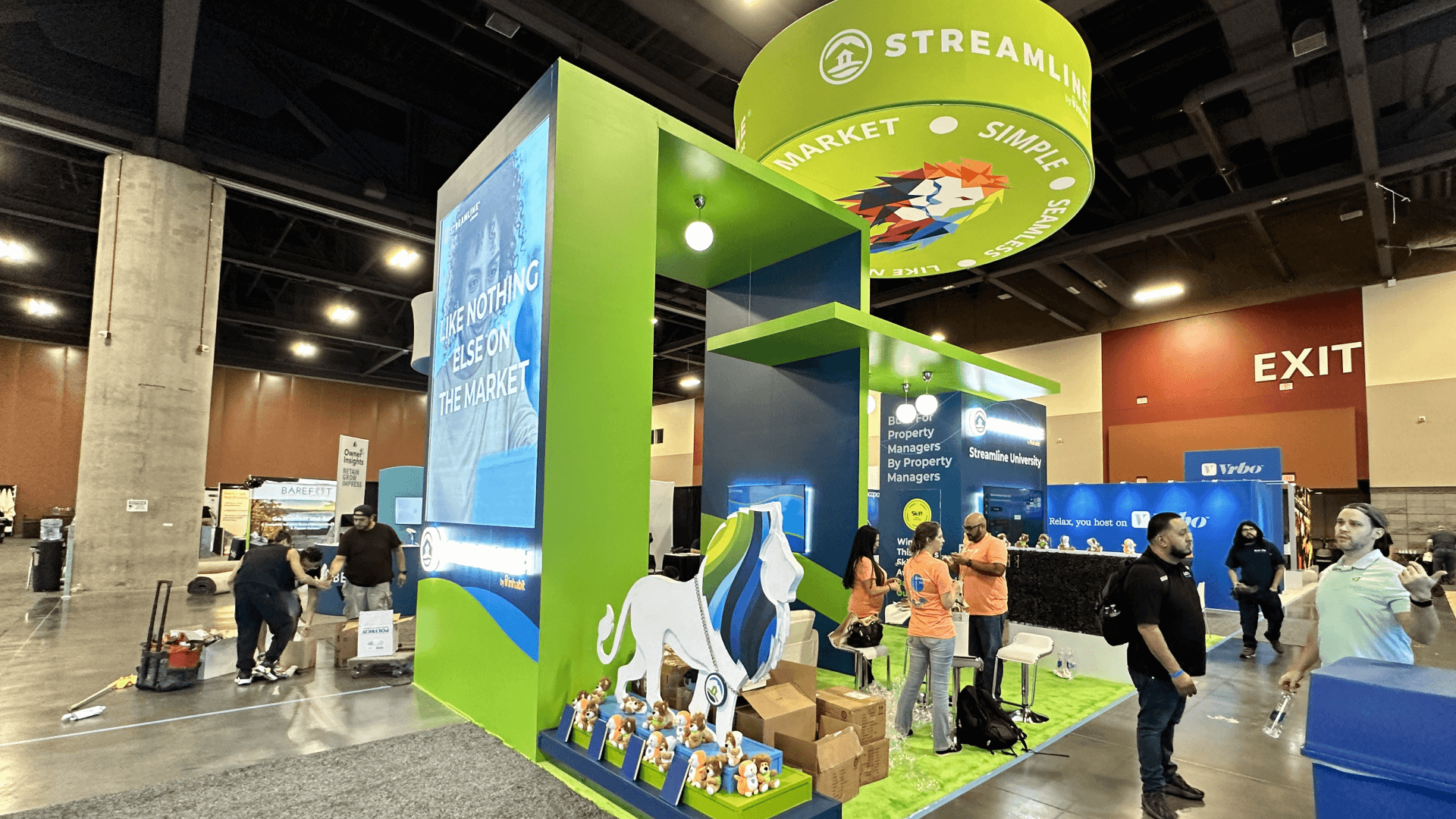
Streamline brought a 20x30 booth to VRMA 2024, built as a vacation rental software environment for platform demos, property-management workflow conversations, and buyer-ready meetings. Instead of treating the footprint like a generic software island, the booth needed to help visitors understand reservation flow, owner communication, operational automation, and enterprise platform capabilities quickly while still leaving room for deeper discussions. In a vacation rental show where attendees compare multiple tools in one pass, the layout had to make the booth readable from distance, approachable at the edge, and structured enough to support longer product conversations.
Because VRMA traffic is meeting-heavy and platform-driven, we treated monitor visibility, product-demo flow, cable concealment, and conversation zoning as part of the booth system from day one. That allowed the space to support quick walk-up demos at the perimeter while still giving the team room for longer discussions around vacation rental operations, software integrations, and property manager workflows. For a footprint like this, the value of a 20x30 trade show booth size guide is not just more space, but more control over demo rhythm, buyer flow, and meeting visibility.
To keep the installation predictable in Phoenix, we planned the booth around monitor mounting, powered demo positions, staged freight timing, and the sequence needed to get demo hardware working before traffic built. That same planning logic is why this case also connects naturally to logistics and pre-show coordination, because software-led booths still depend on what gets solved before the first screen turns on.


💼
Client:
📅
Year/Exhibition:
📍
Location:
📐
Size:
🏢
Industry:
🏢
Venue Context:
Challenge
The main challenge was density with clarity. A 20x30 vacation rental software booth gives enough room for stronger demo flow, but once monitors, counters, seating, and product conversations happen at the same time, the footprint can feel crowded very quickly. Streamline needed the space to feel like a working property-management technology environment rather than a generic SaaS display. Visitors had to be able to identify where demos were happening, understand what the platform covered, and move naturally between quick touchpoints and more serious conversations.
The second challenge came from execution. A software booth still depends on physical order: monitor placement, cable discipline, clean counter spacing, hardware concealment, and setup timing all shape whether the space feels trustworthy on opening day. That is why this case also supports booth fabrication and pre-build checks in Las Vegas. Even when the product is digital, the booth only feels premium when the built environment is solved before show traffic starts.
Design vs. On-site Execution
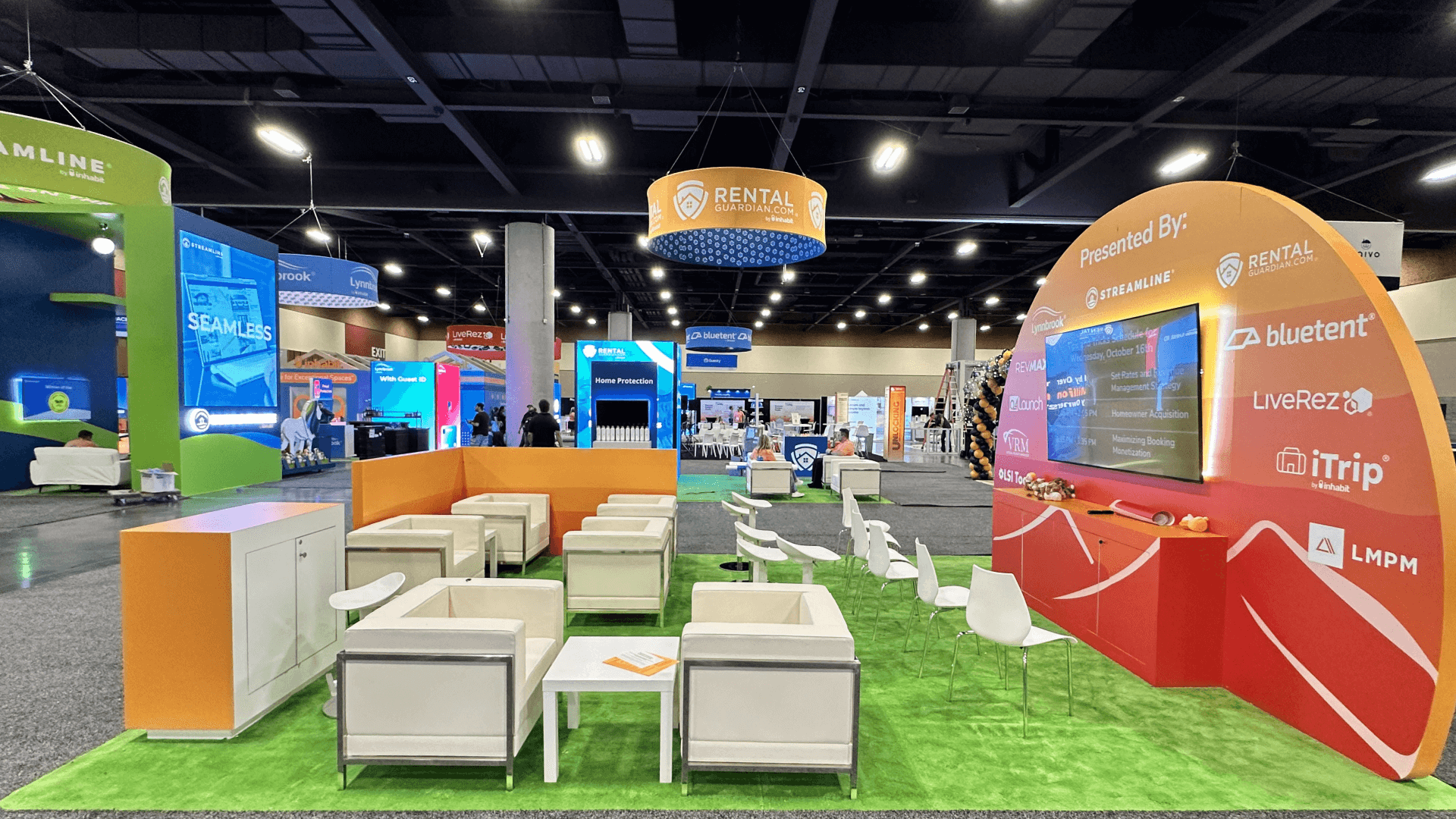
The concept was built around controlled openness. Instead of filling the booth with too many screens or turning every wall into a message wall, the layout used a clearer demo-facing edge, a visible presentation logic, and a structured meeting zone to help visitors understand the platform quickly. The goal was to make the booth feel like a credible property-management software environment rather than a busy software island. For a brand like Streamline, that meant creating a footprint where platform demos, dashboard-led conversations, and buyer discussions could happen in the same open system.
On site, that concept only worked because the install sequence protected the same priorities as the layout. Demo monitors had to stay visible, branded structures had to frame the booth without closing it off, and the meeting area needed enough openness to stay inviting while still feeling intentional. In a booth like this, layout logic and installation order are tightly connected. The goal was not simply to make the booth look bigger, but to make it feel organized, operational, and easy to navigate throughout the day.
This project was also featured in our portfolio gallery, showcasing real show-floor visuals and exhibit highlights from the event.
View the Streamline booth at VRMA 2024 project gallery for on-site photos and visual references.

Open Demo Edge
A front-facing demo edge helped visitors understand the booth immediately and supported quick software walkthroughs without forcing them too deep into the footprint on first contact.
Central Platform Presentation Zone
A monitor-led presentation zone helped turn platform features into a visible workflow story, making it easier for visitors to connect reservation, operations, and reporting functions with live interface demonstrations.


Structured Meeting Lounge
A defined meeting zone gave the booth room for longer buyer and operator conversations without disconnecting from the active front-facing demo rhythm.
Support and Concealed Hardware Logic
A concealed support strategy helped keep laptops, tablets, onboarding materials, and demo accessories out of sight so the visible footprint stayed cleaner and more credible during traffic peaks.


On-site Highlights
This booth worked because the execution system protected the same qualities that made the concept effective: monitor readability, demo reliability, and controlled buyer flow. In a VRMA environment, power/data readiness, monitor mounting, cable discipline, staged freight, and clean setup all influence whether a 20×30 software booth can open as a real working demo space. The following highlights show how show-floor execution helped keep the Streamline booth launch-ready, readable, and operational through a meeting-heavy event.
On-Site Execution Highlights
Monitor Mounting + Screen Hierarchy Coordination
Power + Data Routing for Platform Demos
Drayage + Staging Control for AV-First Setup
Install Sequencing + Demo Equipment Protection
Install Closeout + Demo Go-Live Readiness
Outcome
The booth made Streamline’s software environment easier to understand in a short amount of time, helping visitors move from quick recognition into more practical platform conversations.
By combining screen-led proof with organized consultation flow, the booth felt more like a working property-management technology environment than a generic software display.
The 20x30 booth stayed open enough for walk-up interaction while still holding enough structure for guided demos, buyer meetings, and longer workflow discussions.
Because the booth was planned around demo function, monitor readiness, and installation order, it could open in a cleaner and more operational condition for show traffic.
What made this booth effective was not just the screen presence. It was the fact that the layout behaved like a real vacation rental technology environment. At VRMA, that matters more than visual scale alone. Visitors do not just want to see branding. They want to understand how the platform works, how workflows connect, and whether the booth supports a credible business conversation. By giving the booth an open demo edge, visible platform hierarchy, and structured meeting zones, the space turned software comparison into something easier to approach.
Practical takeaway: if a vacation rental software booth needs to support live platform demos and buyer-level conversations, do not solve it by adding more messaging. Solve it with sequence and usability. The strongest booths are the ones where monitor hierarchy, cable discipline, demo hardware, and buyer flow already work together before the hall opens.
Quick Q&A
Q: What made this Streamline booth different from a typical software display?
A: It was built around vacation rental workflow demos and buyer conversations, so the layout prioritized readable screens, organized interaction, and structured meeting flow instead of relying only on branded walls.
Q: Why was a 20×30 footprint suitable for this booth?
A: The 20×30 size shown on Circle Exhibit’s project entry supports a stronger demo-plus-meeting rhythm than a smaller booth, giving enough room for walk-up interaction and deeper platform conversations.
Q: What execution factor matters most for a software booth like this?
A: Demo reliability. When screens, hardware, and cable paths are not ready early, the booth loses trust quickly, even if the brand presentation looks polished. This is an inference grounded in the confirmed software-led booth type and VRMA’s comparison-driven environment.
Q: Why is concealed support storage important in a booth like this?
A: Software booths still depend on laptops, tablets, accessories, and onboarding materials, and keeping those out of sight helps the visible footprint feel cleaner and more credible. This is an inference based on the platform-demo format.
Q: What is the most overlooked detail in a 20×30 software-led booth?
A: Sequence control. When branding, demo stations, and monitor infrastructure do not become operational in the right order, the booth can lose clarity and launch readiness before traffic starts. This is an inference supported by the booth’s AV-led format.