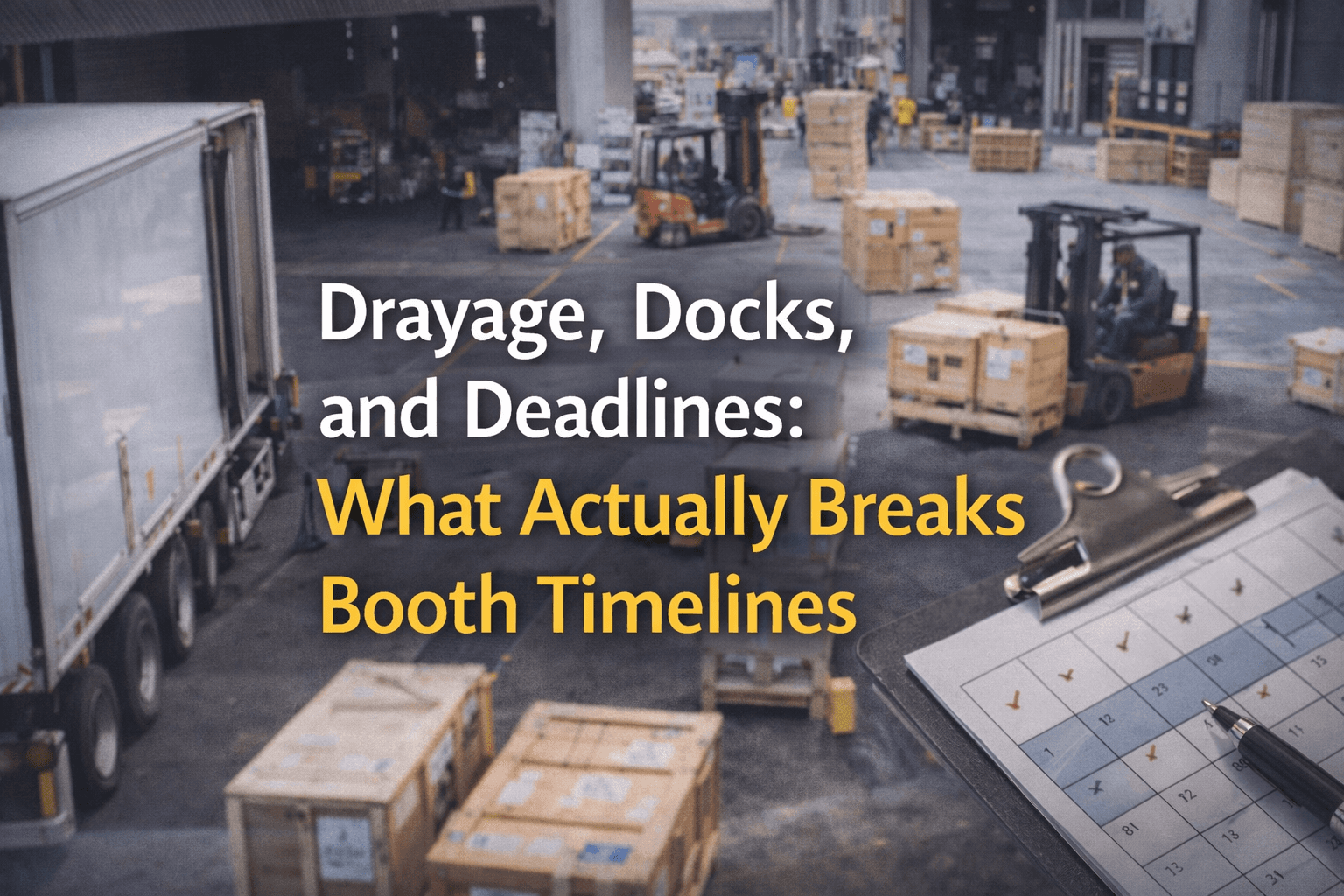


Drayage, Docks, and Deadlines: What Actually Breaks Booth Timelines
Feb 10, 2026
Feb 10, 2026


Circle Exhibit Team
Industry professionals
Exhibition industry professional dedicated to delivering the latest insights and curated recommendations to you.
Drayage, Docks, and Deadlines: What Actually Breaks Booth Timelines
Most trade show delays don’t come from design quality. They come from workflow gaps—small assumptions that collapse once freight hits the dock and the move-in clock starts.
Exhibitors often plan booth timelines around what they can control: creative approvals, production schedules, shipping dates. But on-site execution is governed by systems they don’t fully see—material handling procedures, dock scheduling, labor call times, and the realities of high-volume move-ins.
This article outlines what most commonly breaks booth timelines and how to plan around those failure points.
1) Drayage Isn’t Just a Line Item — It’s a Workflow
Many teams treat drayage as a cost category. In reality, it’s a sequence.
What matters is not only what drayage costs, but how freight moves:
Advance warehouse vs. direct-to-show-site delivery
Check-in rules and delivery windows
Where freight is staged and when it becomes accessible
How long it takes for freight to reach your booth space
A timeline can look perfect on paper and still fail if crates arrive outside the window where labor is scheduled to work.
2) Dock Scheduling Creates Invisible Bottlenecks
At major venues, docks function like airports. Slots are assigned, queues form, and delays cascade.
Timeline failures often start with:
Underestimating wait times for unloading
Shipping too close to the deadline
Not accounting for peak move-in congestion
Assuming freight will be available immediately after arrival
If your installation plan depends on “crates at 8 AM,” but they don’t reach the booth until 11 AM, every downstream step gets compressed.
3) Labor Timing Is Often the Real Constraint
Even when freight arrives on time, labor availability can be the limiting factor.
Common issues include:
Labor call times that don’t match when freight becomes accessible
Scope changes that trigger a different labor requirement
Underestimating time for electrical, rigging, or specialized tasks
Overtime pressure when delays push work into late hours
When the labor plan and the freight plan aren’t aligned, the booth is forced into reactive execution.
4) The Most Expensive Delays Are “Sequence” Delays
Not all delays are equal.
The delays that cause the most disruption are those that break installation sequence:
Lighting requires structure completion
Graphics require walls to be plumbed
Demos require power, network, and final product placement
Storage needs a cleared floor before inventory arrives
When one early step slips, later tasks can’t simply “start anyway.” They pile up.
A good plan is not just a list of tasks—it’s a dependency map.
5) The Fix: Plan Backward From the Dock, Not From the Renderings
Most timeline resilience comes from a simple mindset shift:
Start planning from the dock reality
Work backward to staging and assembly
Then finalize design decisions that fit that execution logic
Practical habits that reduce risk:
Label crates by install sequence (not by department)
Separate “day-one essentials” from non-critical items
Build a timeline with buffer for material handling variability
Confirm dependencies (power, rigging, network) before move-in day
Conclusion: Booth Timelines Break Where Coordination Is Weak
Trade show performance depends on opening cleanly and operating smoothly—not solving preventable problems during move-in.
When drayage workflows, dock timing, and labor schedules are planned as one system, timelines become more predictable and execution becomes calmer.
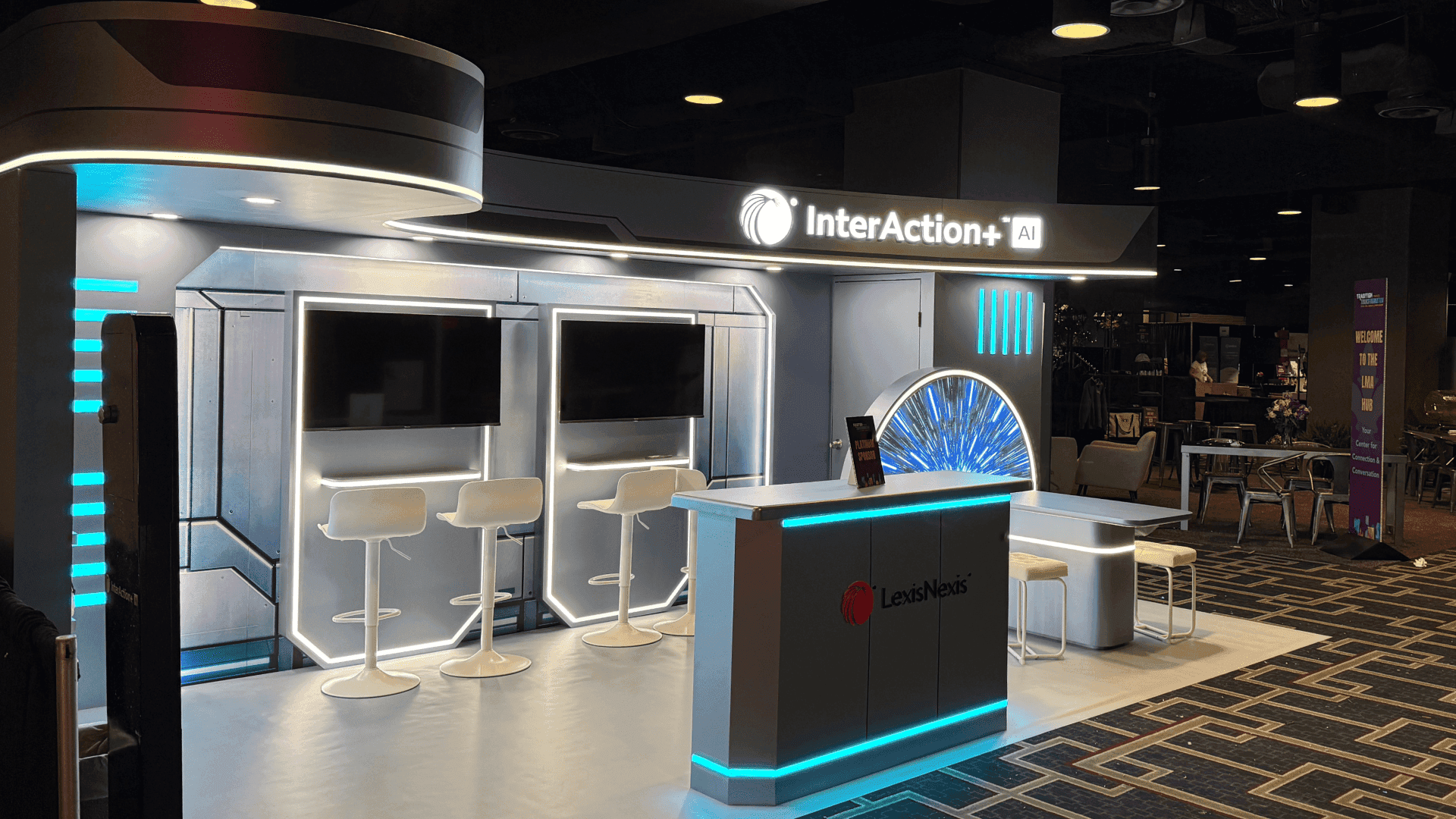
Drayage, Docks, and Deadlines: What Actually Breaks Booth Timelines
Most trade show delays don’t come from design quality. They come from workflow gaps—small assumptions that collapse once freight hits the dock and the move-in clock starts.
Exhibitors often plan booth timelines around what they can control: creative approvals, production schedules, shipping dates. But on-site execution is governed by systems they don’t fully see—material handling procedures, dock scheduling, labor call times, and the realities of high-volume move-ins.
This article outlines what most commonly breaks booth timelines and how to plan around those failure points.
1) Drayage Isn’t Just a Line Item — It’s a Workflow
Many teams treat drayage as a cost category. In reality, it’s a sequence.
What matters is not only what drayage costs, but how freight moves:
Advance warehouse vs. direct-to-show-site delivery
Check-in rules and delivery windows
Where freight is staged and when it becomes accessible
How long it takes for freight to reach your booth space
A timeline can look perfect on paper and still fail if crates arrive outside the window where labor is scheduled to work.
2) Dock Scheduling Creates Invisible Bottlenecks
At major venues, docks function like airports. Slots are assigned, queues form, and delays cascade.
Timeline failures often start with:
Underestimating wait times for unloading
Shipping too close to the deadline
Not accounting for peak move-in congestion
Assuming freight will be available immediately after arrival
If your installation plan depends on “crates at 8 AM,” but they don’t reach the booth until 11 AM, every downstream step gets compressed.
3) Labor Timing Is Often the Real Constraint
Even when freight arrives on time, labor availability can be the limiting factor.
Common issues include:
Labor call times that don’t match when freight becomes accessible
Scope changes that trigger a different labor requirement
Underestimating time for electrical, rigging, or specialized tasks
Overtime pressure when delays push work into late hours
When the labor plan and the freight plan aren’t aligned, the booth is forced into reactive execution.
4) The Most Expensive Delays Are “Sequence” Delays
Not all delays are equal.
The delays that cause the most disruption are those that break installation sequence:
Lighting requires structure completion
Graphics require walls to be plumbed
Demos require power, network, and final product placement
Storage needs a cleared floor before inventory arrives
When one early step slips, later tasks can’t simply “start anyway.” They pile up.
A good plan is not just a list of tasks—it’s a dependency map.
5) The Fix: Plan Backward From the Dock, Not From the Renderings
Most timeline resilience comes from a simple mindset shift:
Start planning from the dock reality
Work backward to staging and assembly
Then finalize design decisions that fit that execution logic
Practical habits that reduce risk:
Label crates by install sequence (not by department)
Separate “day-one essentials” from non-critical items
Build a timeline with buffer for material handling variability
Confirm dependencies (power, rigging, network) before move-in day
Conclusion: Booth Timelines Break Where Coordination Is Weak
Trade show performance depends on opening cleanly and operating smoothly—not solving preventable problems during move-in.
When drayage workflows, dock timing, and labor schedules are planned as one system, timelines become more predictable and execution becomes calmer.
Message
Leave your message and we will get back to you ASAP
Send a Message
We’ll Be in Touch!
Message
Leave your message and we will get back to you ASAP
Address:
4935 Steptoe Street #300
Las Vegas, NV 89122