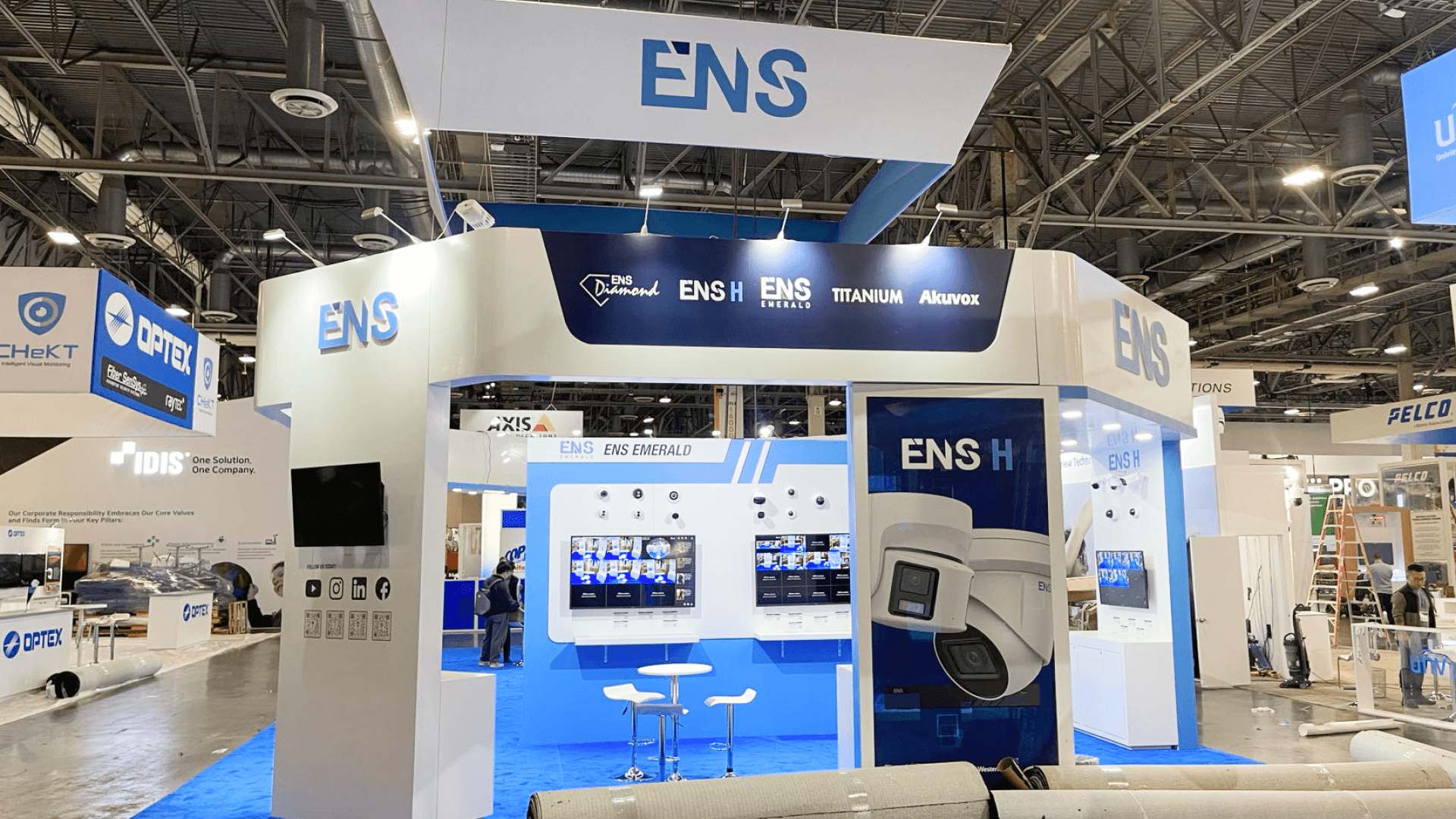
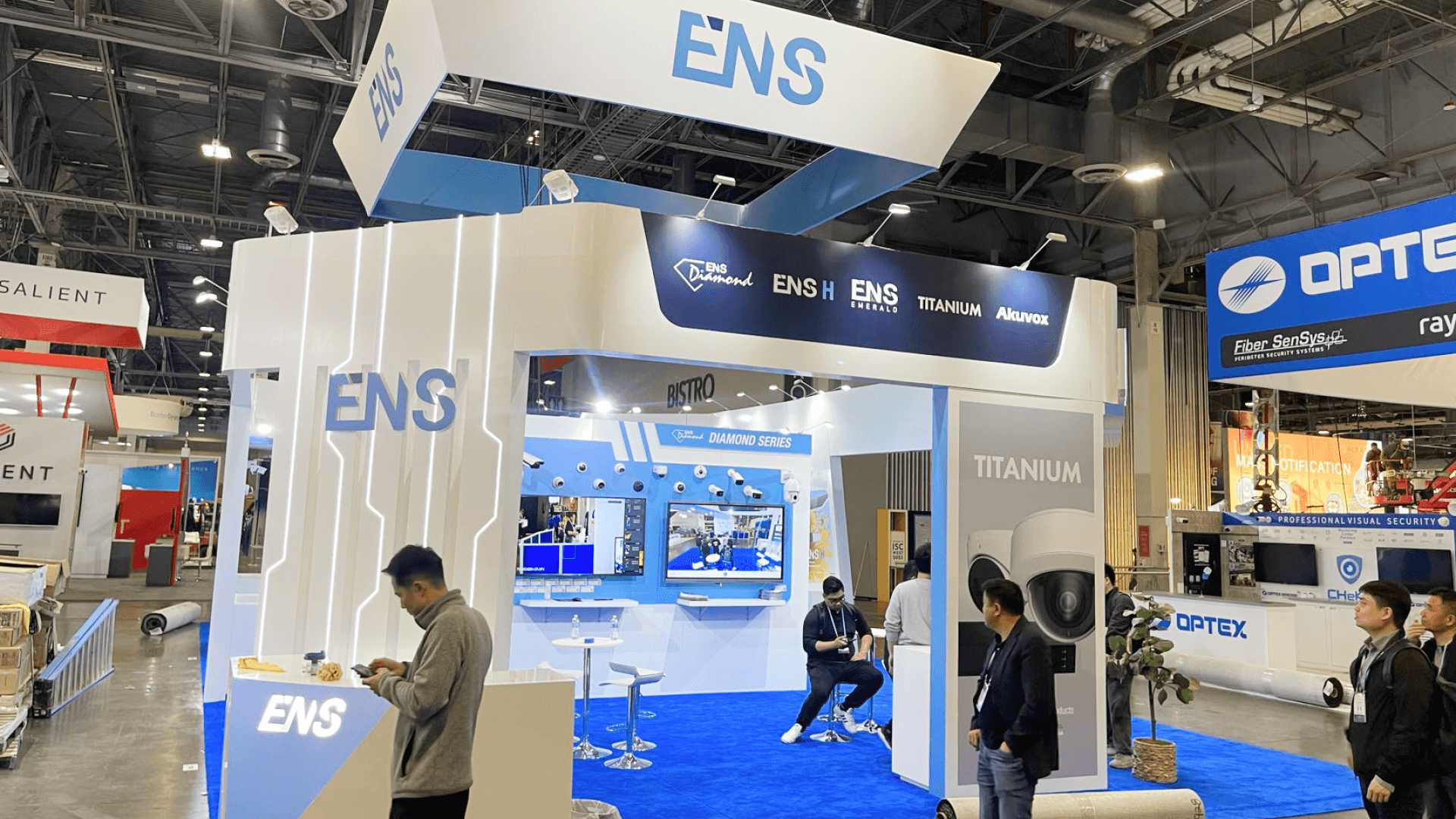
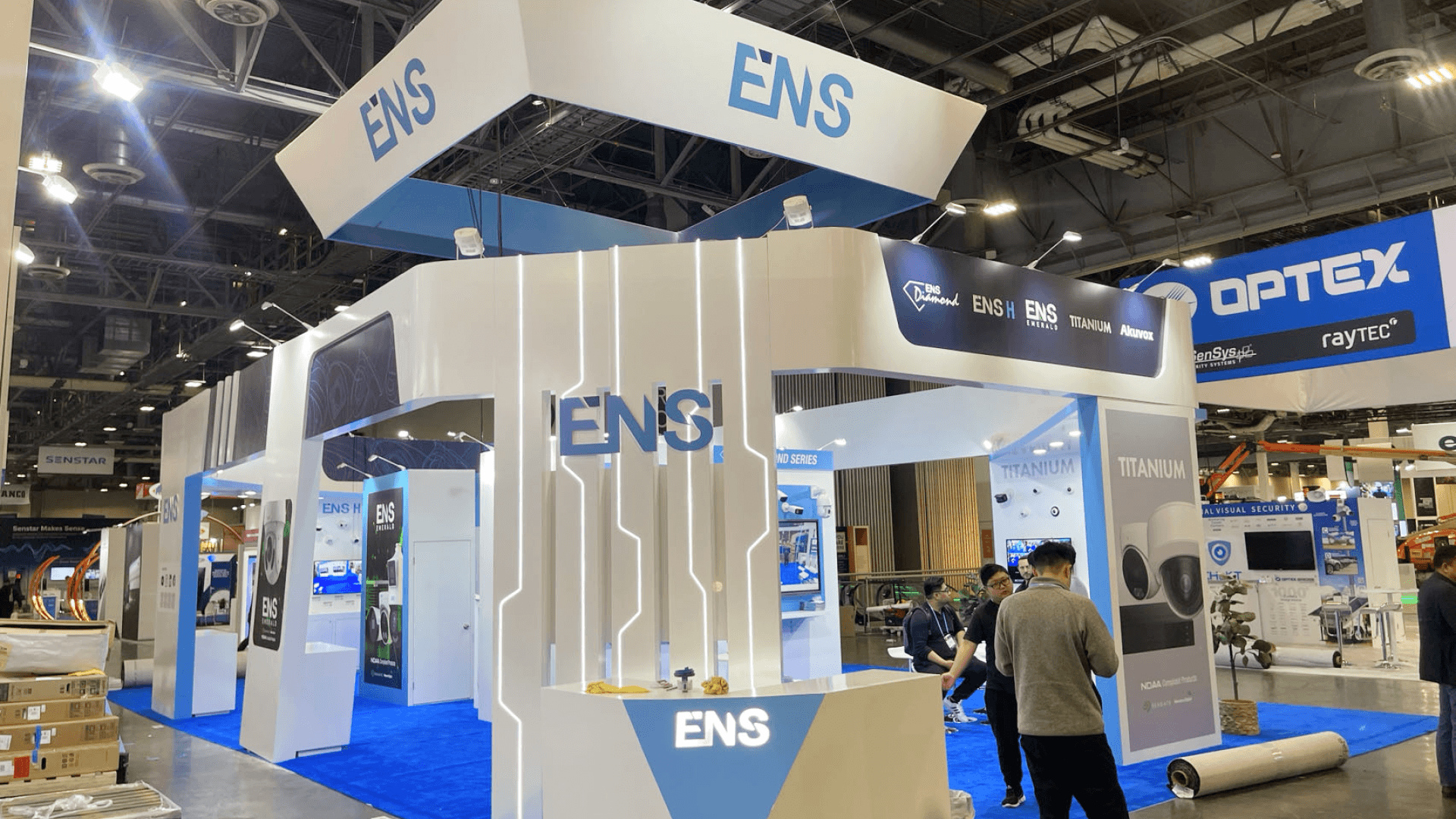
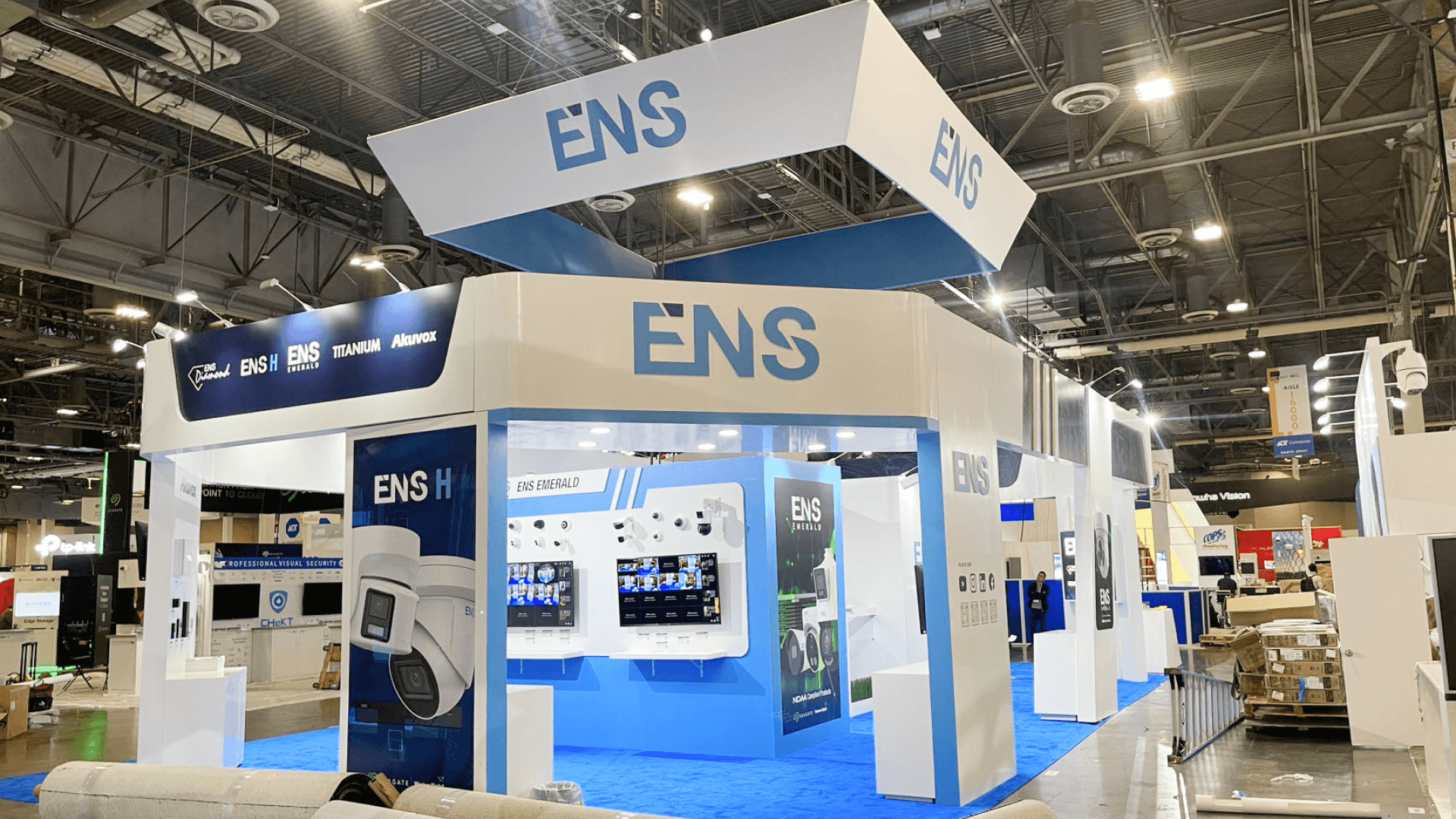
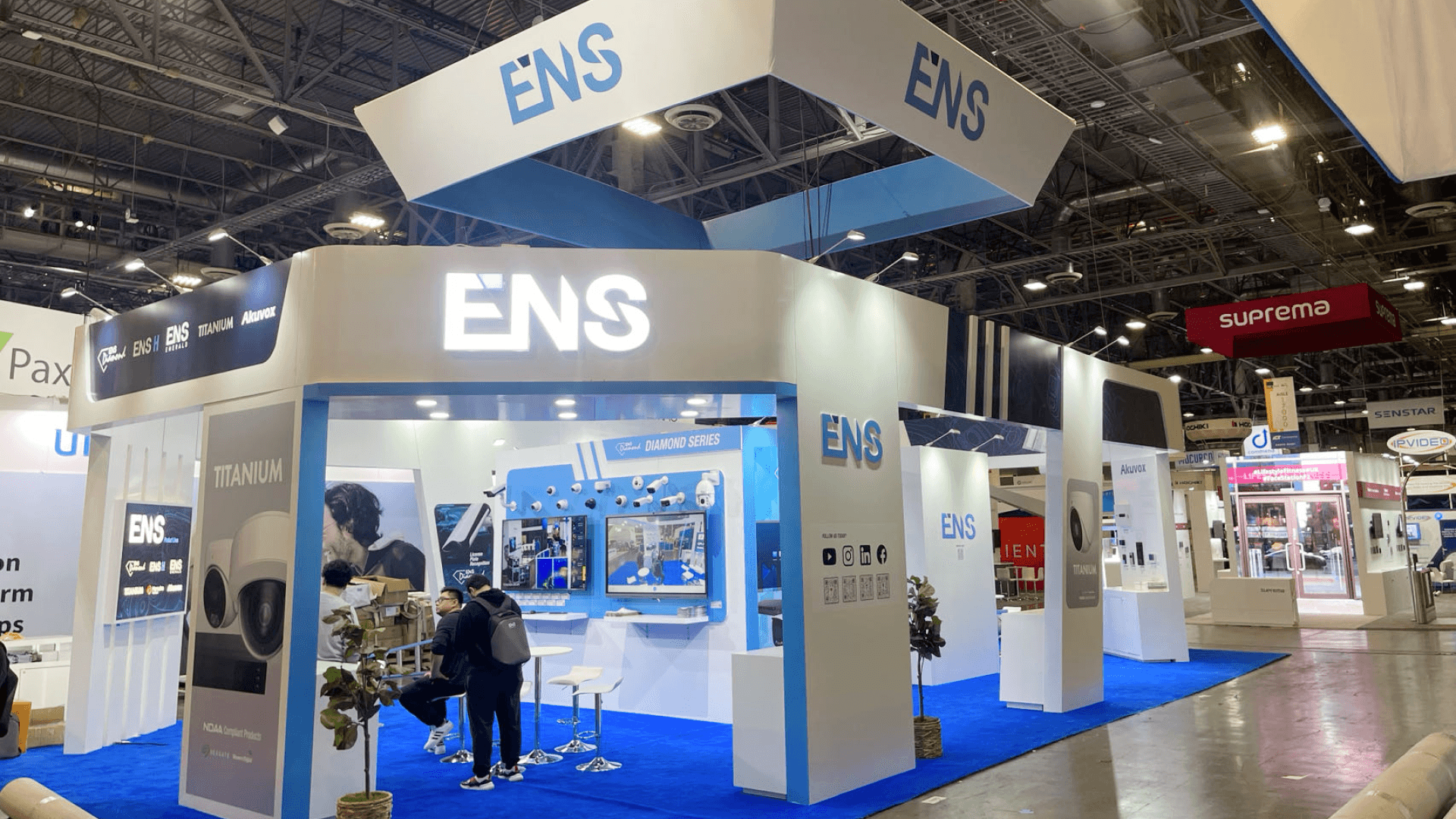
ENS brought a 20x20 booth to ISC West 2023 in Las Vegas, built to make physical security and surveillance technology feel clear, testable, and easy to compare on a fast-moving show floor. Instead of treating the footprint like a static product wall, the booth needed to support hands-on evaluation of security solutions—monitoring interfaces, camera-related hardware, access-control demos, and integration-ready product stories—without turning the front line into a traffic jam. In a show where attendees compare multiple vendors in one pass, the layout had to make “what this booth does” readable in seconds while still supporting serious buyer conversations. ISC West itself is positioned around hands-on evaluation of converged security technology, including video surveillance, access control, intrusion detection, identity/credentials, cybersecurity, and IoT platforms.
Because ISC West traffic is demo-heavy and comparison-driven, we treated screen visibility, device positioning, cable management, and quick-stop interaction as part of the booth system from day one. That allowed the space to support repeatable security product demos and short technical discussions without turning the 20×20 footprint into a crowded device rack. The event page also makes clear that layouts at ISC West have to balance quick hands-on trials with quieter buyer conversations, which is exactly why a compact 20x20 trade show booth size planning framework matters for this type of island booth.
To keep the installation predictable at The Venetian Expo, we planned the booth around power and data readiness, secure handling of demo gear, staged freight timing, and the sequence required to get monitoring screens and demo positions working before traffic built. That same logic sits behind on-site installation and dismantle services, because security-tech booths depend on show-ready testing, union-timed execution, and clean closeout before doors open.
💼
Client:
📅
Year/Exhibition:
📍
Location:
📐
Size:
🏢
Industry:
🏢
Venue Context:
Challenge
The main challenge was density. A 20x20 ISC West booth can support live demos and product comparison, but once monitoring screens, device touchpoints, product walls, and buyer conversations all happen at the same time, the footprint can become crowded very quickly. ENS needed the booth to feel like a real security technology environment rather than a generic trade show display. Visitors had to be able to understand the solutions quickly, compare features, and move naturally through the space without losing sightlines or demo clarity. This design direction is aligned with ISC West’s event context, which emphasizes hands-on evaluation and practical integration stories over purely decorative presentation.
The second challenge came from execution. Security booths depend on more than graphics: live screens, mounted devices, power/data stability, cable control, and secure handling all affect whether the booth feels trustworthy on show day. That is why this case also supports booth fabrication and pre-build checks in Las Vegas. At ISC West, compressed install windows and technical elements going in late make sequencing especially important, so readiness protects both demo reliability and the final presentation state.
Design vs. On-site Execution
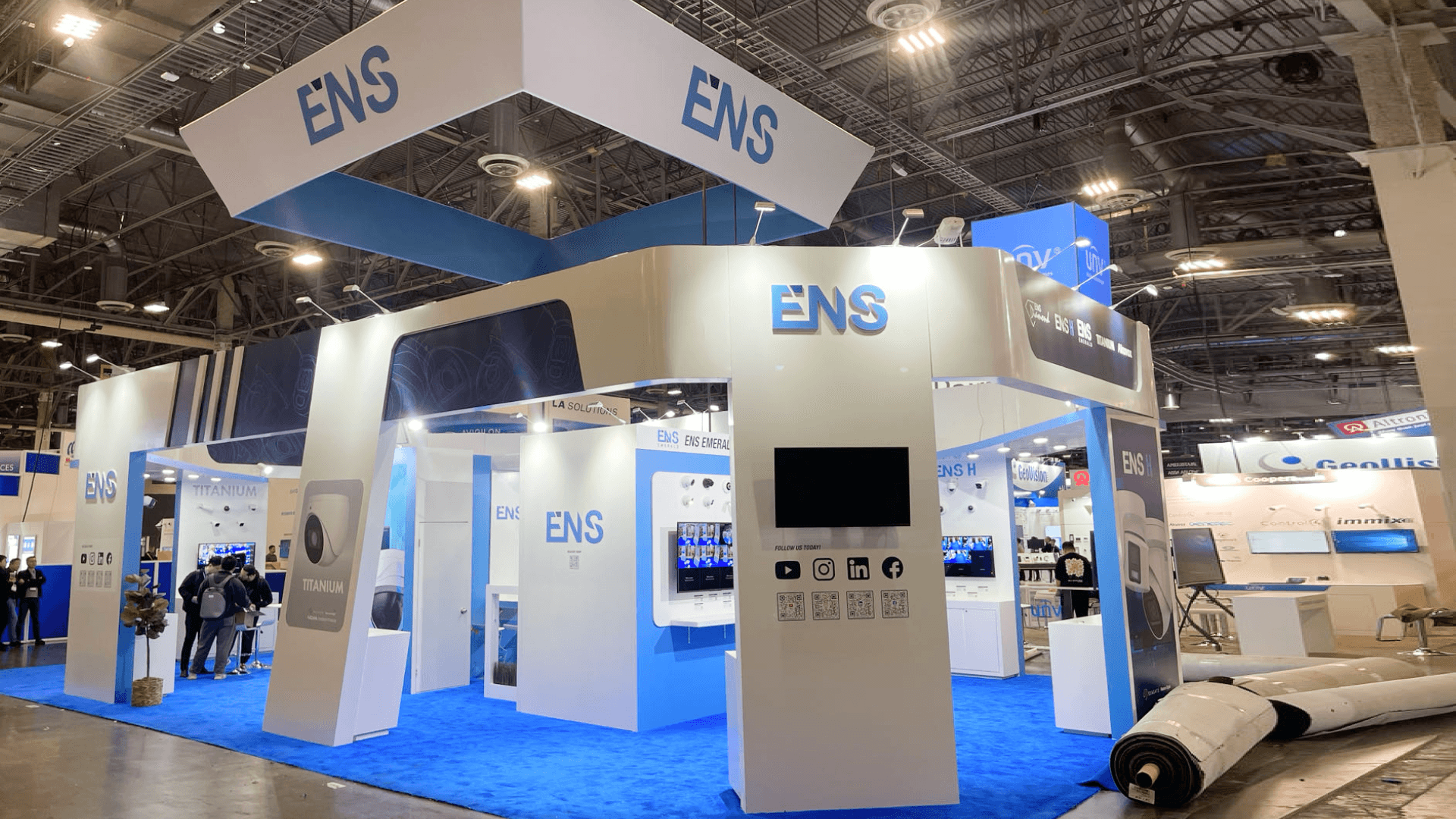
The concept was built around controlled visibility. Instead of filling the booth with too many devices at once, the layout used a clearer front-facing demo edge, a central visual anchor, and organized product positions to help visitors read the booth quickly. The goal was to make the booth feel technically credible without turning it into a hardware maze. For a security brand exhibiting at ISC West, that meant giving each zone a clear job: quick demo, product explanation, screen-based proof, and short buyer conversation.
On site, that concept only worked because the install sequence protected the same priorities as the layout. Demo screens had to stay legible, device walls had to remain clean and serviceable, and the island needed enough breathing room to avoid congestion at the edge. In a booth like this, layout logic and installation order are tightly connected. The goal was not to make the footprint feel bigger than it was, but to make it feel organized, usable, and integration-ready throughout the day. This is an inference grounded in the confirmed ISC West booth conditions and the 20×20 island format.
This project was also featured in our portfolio gallery, showcasing real show-floor visuals and exhibit highlights from the event.
View the ENS Booth at ISC West 2023 project gallery for on-site photos and visual references.
Front-Edge Product Demo Zone
A front-facing demo area helped visitors understand the booth immediately and supported quick evaluation of key security products without forcing them too deep into the footprint on first contact.
Monitoring Screen Anchor
A screen-led anchor zone helped turn product specifications into a visible system story, making it easier for visitors to connect hardware with live interface or monitoring logic.
Device Comparison Wall
A structured display zone allowed product categories to be compared more clearly, helping the booth support feature-driven conversations instead of scattered visual browsing.
Buyer Conversation Corner
A compact conversation zone made it easier to move from quick product trials into practical buyer discussions without interrupting the active demo rhythm of the booth.
On-site Highlights
This booth worked because the execution system protected the same qualities that made the concept effective: demo reliability, technical clarity, and controlled circulation. In an ISC West environment, power and data readiness, secure device handling, cable discipline, labor timing, and staged freight all influence whether a compact island booth can open as a real working demo space. The following highlights show how show-floor execution helped keep the ENS booth test-ready, readable, and operational under real Venetian Expo conditions.
On-Site Execution Highlights
Power + Data Routing for Monitoring Demos
Cable Management + Device Wall Control
Drayage + Staging Control for Technical Install Order
Union Labor Sequencing + Secure Gear Protection
Install Closeout + Demo Readiness for Opening Hours
Outcome
The booth made security products easier to evaluate in a short amount of time, helping visitors move from quick recognition into more practical technical questions.
By combining visible screen-led proof with organized device presentation, the booth felt more like a working security environment than a static product display. This outcome is consistent with the event’s hands-on evaluation culture.
The 20×20 island stayed open enough for walk-up interaction while still holding enough structure for guided demos and buyer conversations. This is an inference grounded in the event page’s guidance that 20×20 islands improve queue flow and demo visibility for ISC West.
Because the booth was planned around demo function, stable power/data, and installation order, it could open in a cleaner and more operational condition for show traffic.
What made this booth effective was not just the security-tech look. It was the fact that the layout behaved like a compact demo environment. At ISC West, that matters more than visual scale. Visitors do not just want to see products on a wall. They want to understand how devices connect, how screens support the story, and whether the booth feels like a credible working system. By giving the booth a clear demo edge, a visible monitoring anchor, and organized device positions, the space turned technical comparison into something easier to approach. This framing is an inference grounded in ISC West’s emphasis on hands-on evaluation and practical integration stories.
Practical takeaway: if a security technology booth needs to support live product trials and real-time screen-based explanation, do not solve it by adding more branding. Solve it with sequence and usability. The strongest booths are the ones where product access, powered demo surfaces, cable discipline, and buyer flow already work together before the hall opens. That is also where an experienced Las Vegas trade show booth builder adds real value—by making sure the booth performs as a working show-floor system under real Venetian Expo conditions.
Quick Q&A
Q: What made this ENS booth different from a typical static security display?
A: The booth was written around live demo readability and quick product comparison, which matches ISC West’s hands-on evaluation culture rather than a purely decorative exhibit approach.
Q: Why was a 20×20 footprint suitable for this booth?
A: ISC West’s own event guidance says a 20×20 island can improve queue flow and keep demos visible from multiple aisles when exhibitors need more than a simple inline setup.
Q: What execution factor matters most for an ISC West demo booth?
A: Reliable power/data planning and clean cable management, because many booths run screens, device demos, and monitoring interfaces that have to stay operational throughout the show.
Q: Why is secure device handling important in this kind of booth?
A: ISC West specifically calls out secure handling and controlled storage for higher-value gear, especially in booths running continuous demos.
Q: What is the most overlooked detail in a compact security-tech booth?
A: Sequence control. When screens, device displays, power, and cable routing are not installed in the right order, even a strong booth concept can lose clarity and usability before opening. This is an inference supported by the event page’s install-sequencing guidance.