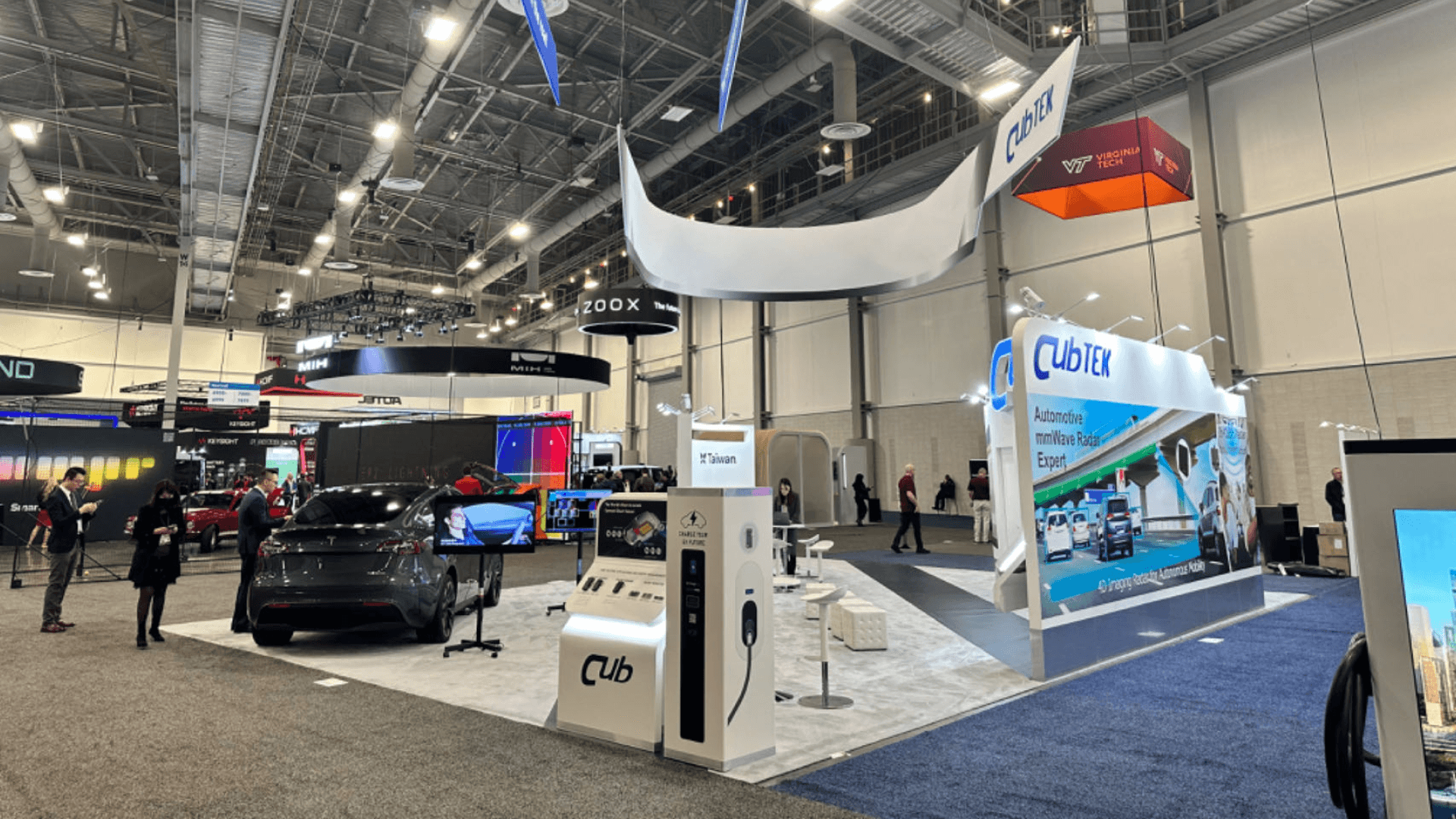
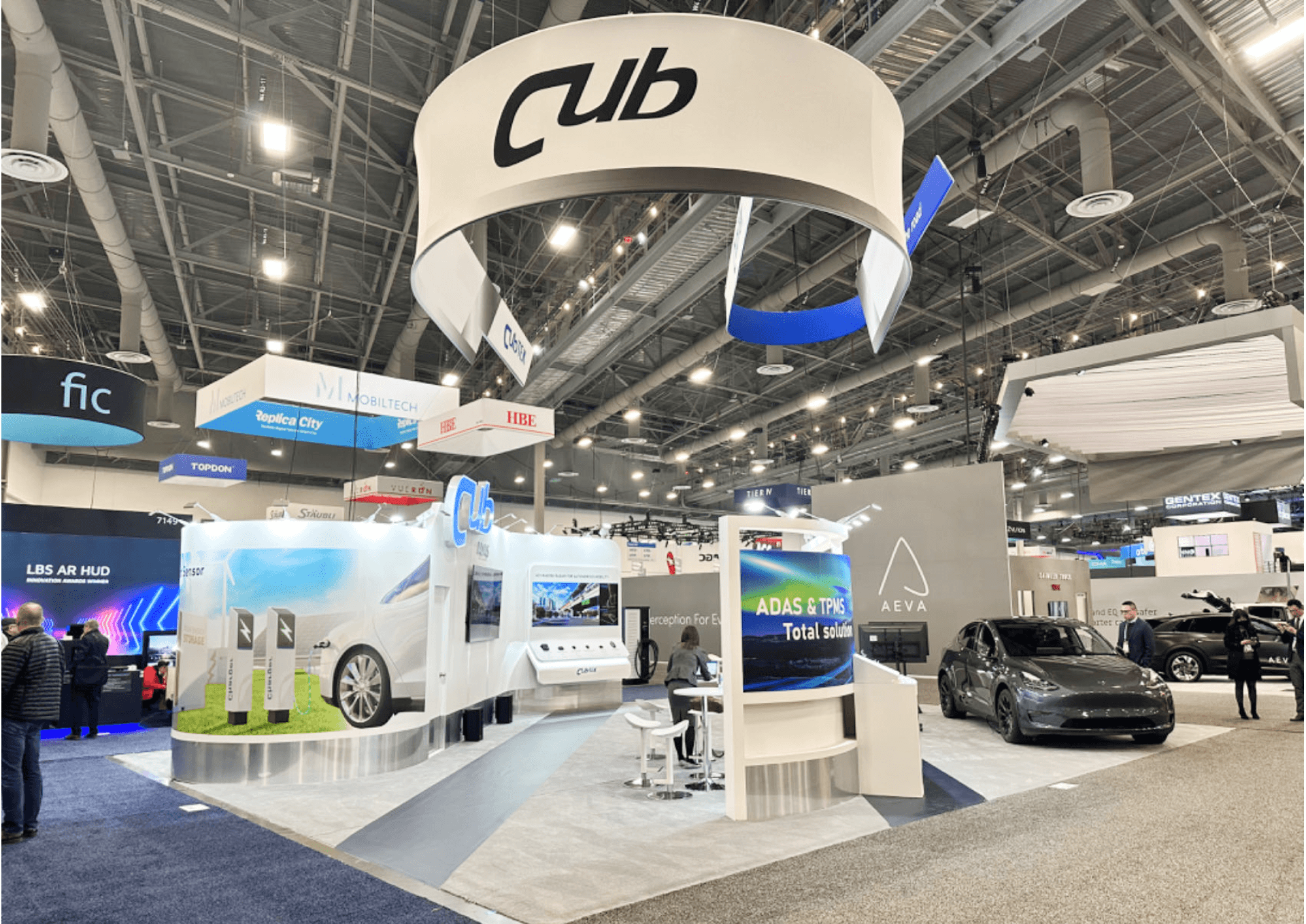
At CES 2024, CUB needed a 30×40 island booth that could communicate automotive technology clearly from a distance while still functioning as a serious walk-up environment for product explanation. The booth had to support multiple message layers at once—ADAS, mmWave radar, EV infrastructure, and mobility electronics—without turning the footprint into a crowded engineering display. In a show environment where visitors compare brands in seconds, the challenge was not only to attract attention, but to make the story readable from every side of the island.
Because this project was delivered inside the CES show environment at LVCC West Hall, the booth also had to perform under real Las Vegas conditions: high hall traffic, suspended visibility, vehicle-centered competition, freight timing, and installation discipline. That broader event context is why this case naturally connects to CES, where large technology exhibits are judged as much by clarity and execution as by scale.
💼
Client:
📅
Year/Exhibition:
📍
Location:
📐
Size:
🏢
Industry:
🏢
Venue Context:
Challenge
The main challenge was not scale alone. A 30×40 footprint gives room for presence, but automotive technology booths become visually crowded very quickly when they try to explain too many systems at once. CUB needed the booth to feel unmistakably automotive from across the aisle while still staying organized enough for visitors to understand ADAS applications, mmWave radar positioning, and EV infrastructure messaging without requiring a long explanation from the team. The layout had to convert pass-by traffic into real product conversations while keeping the island open from multiple entry angles.
A second challenge came from execution. Once a real vehicle, large tech walls, a suspended sign, and multiple product-story zones are involved, the project moves beyond design and into sequencing discipline. Freight arrival, structural assembly, rigging coordination, vehicle positioning, and finish control all had to line up before opening. That is also why this case supports booth fabrication and pre-build checks in Las Vegas: projects like this depend on fit checks, labeled components, and structure-first planning long before they reach LVCC.
Design vs. On-site Execution
The design direction centered on what the booth needed to do first: read clearly, feel open, and let visitors move from recognition to discussion without friction. Rather than breaking the 30×40 footprint into disconnected mini-displays, the layout was built around a strong overhead identity, a vehicle-led focal point, and grouped product-story zones that could support both quick conversations and deeper technical explanations. The goal was to make the booth feel directional without forcing traffic into a rigid path.
On site, that concept only worked because the install sequence respected the hierarchy of the booth. Overhead elements had to establish long-range visibility, the vehicle zone had to stay clean and intentional, and the tech walls had to support explanation rather than act as decoration. In a footprint like this, layout planning and execution sequencing are inseparable, which is exactly why 30x40 trade show booth size planning is the right supporting size page for this case.
This project was also featured in our portfolio gallery, showcasing on-site visuals and key exhibit highlights from the event.
View the CUB booth at CES 2024 project gallery for real show-floor photos and visual references.
Real-World ADAS Vehicle Demo
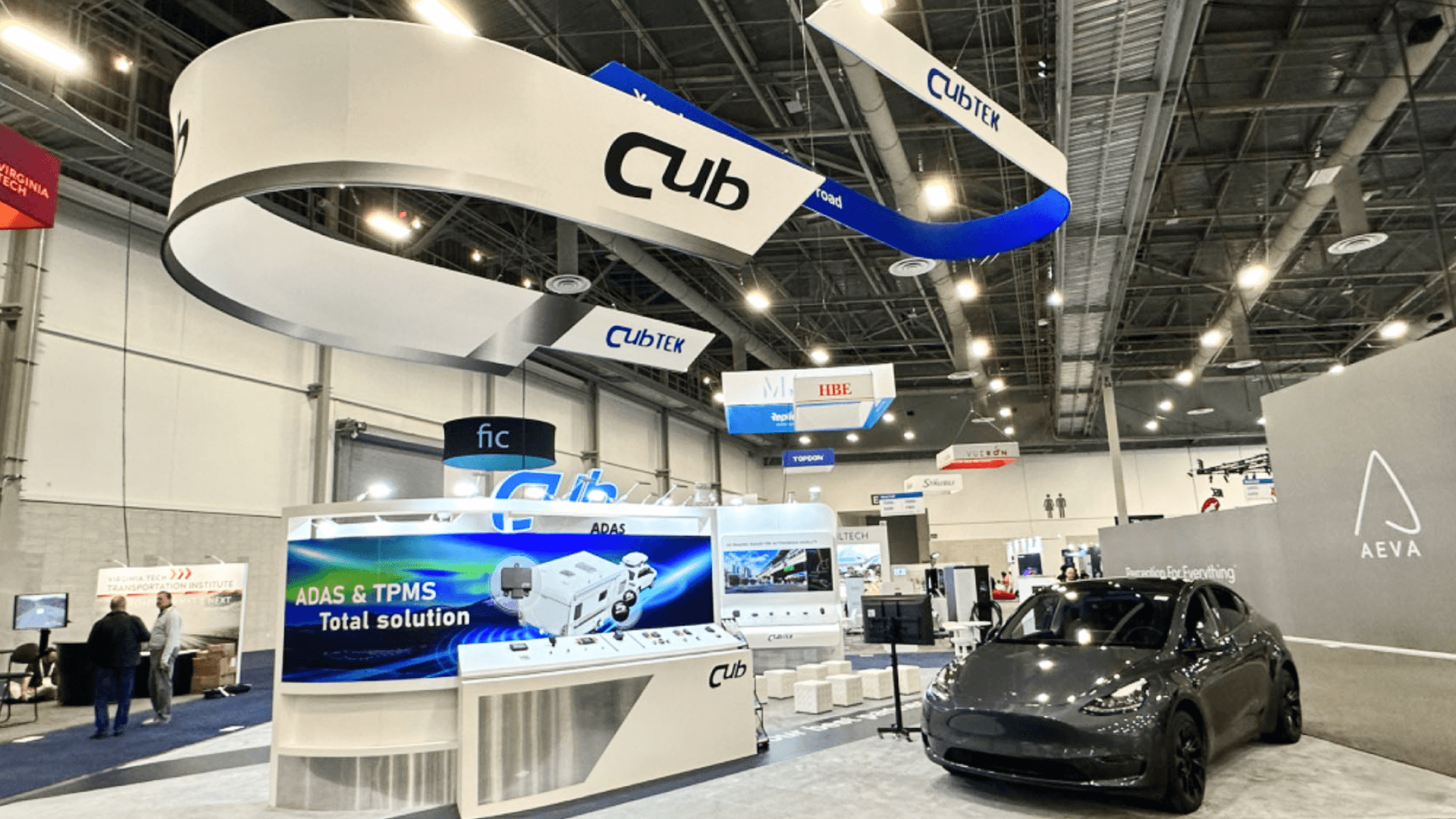
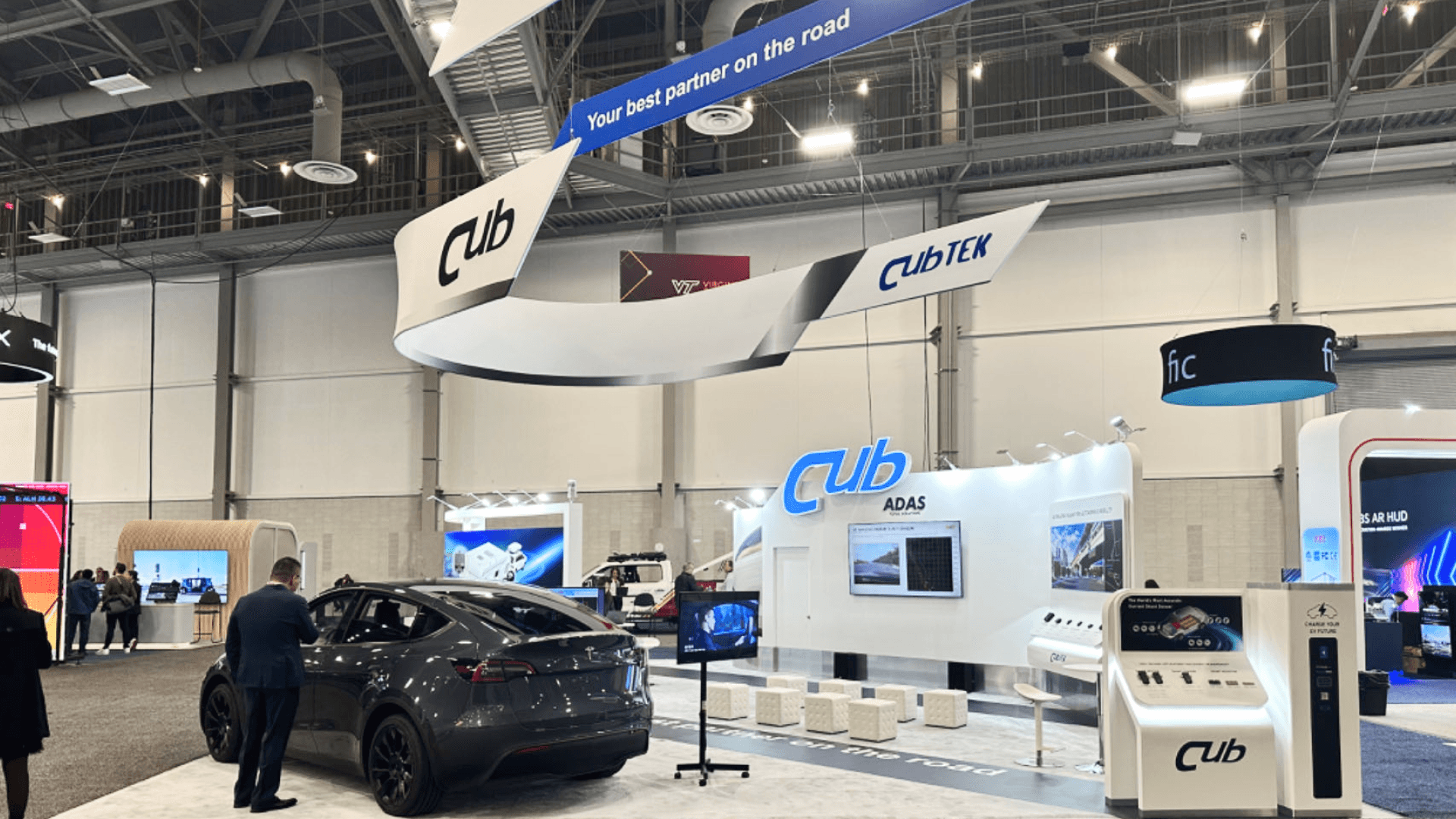
A full vehicle display made the ADAS story concrete instead of abstract. It gave the team a physical reference point for sensor placement, mobility electronics, and road-use discussion, helping visitors understand the technology faster than they would through technical copy alone.
Overhead Halo Landmark
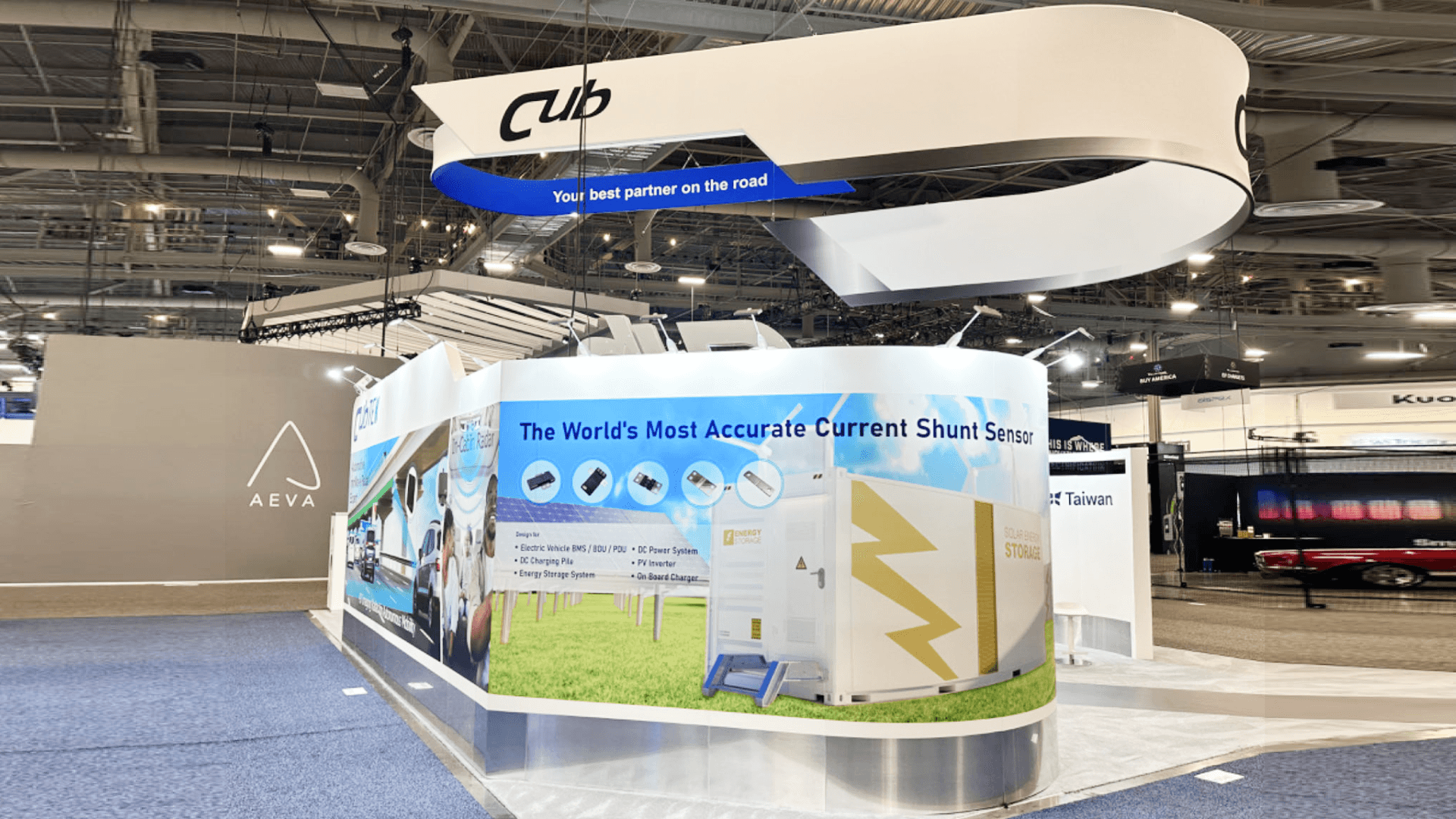
The suspended halo structure gave the booth long-range recognition in West Hall and worked as a navigation anchor during heavy CES traffic. For an island booth approached from multiple sides, overhead visibility was part of the circulation strategy, not just a visual gesture.
EV Infrastructure Product Hub
EV-related messaging was grouped into a dedicated walk-up zone so the booth could explain charging and energy-related products without scattering the story across the entire footprint. This made the transition from overview to technical discussion much easier for booth staff.
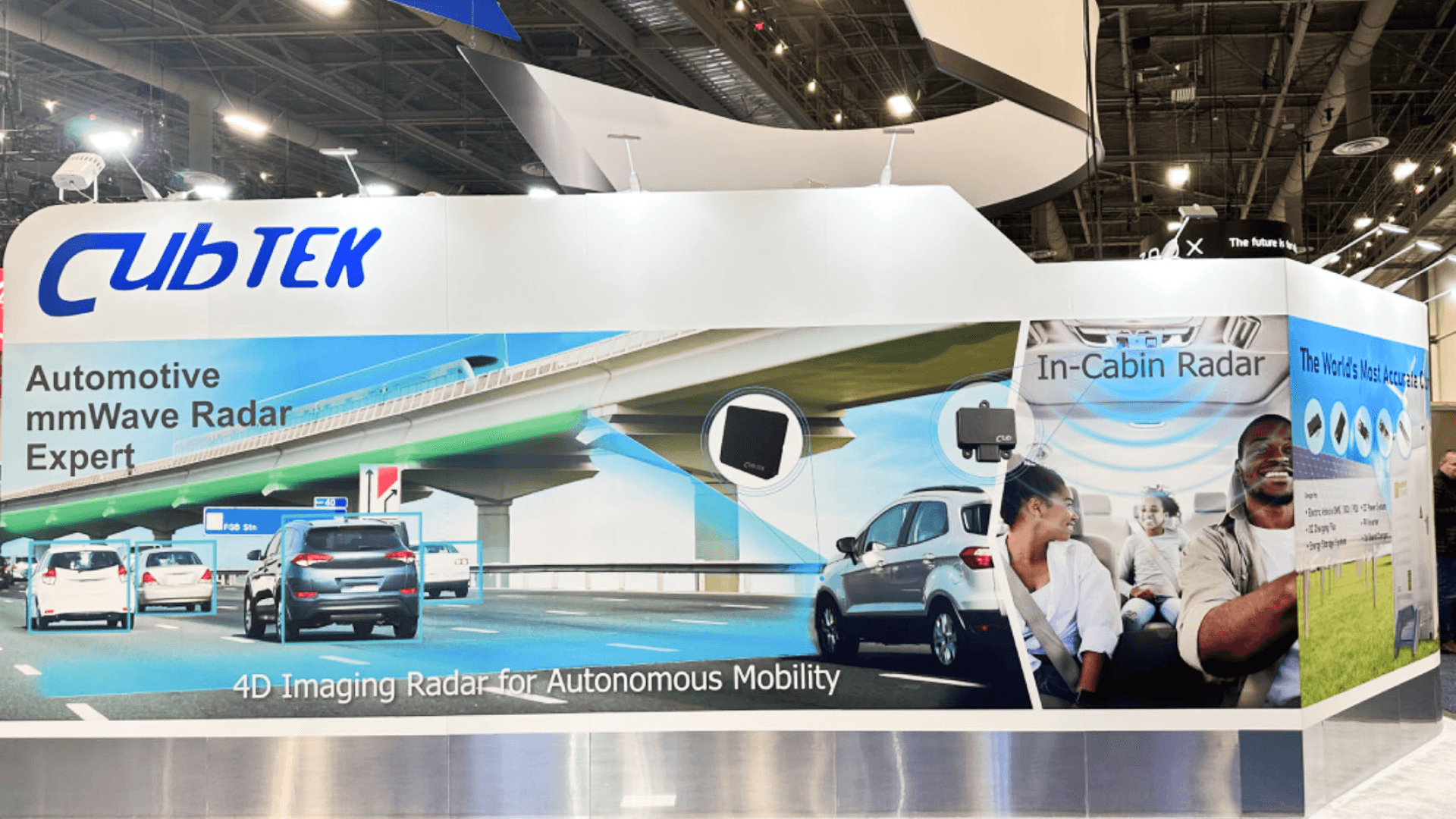
Immersive Radar & Tech Wall Edge
Large-format walls helped frame mmWave radar and mobility electronics as one coherent technology narrative instead of a series of isolated products. Positioned near active conversation points, the walls worked as explanation tools rather than background graphics.
On-site Highlights
This booth succeeded because the execution logic was treated as part of the concept from the beginning. In a CES environment like LVCC West Hall, overhead visibility, vehicle routing, freight order, labor timing, and cable discipline all influence how the booth performs on opening day. The following highlights show how installation sequencing and show-floor coordination helped turn a complex automotive technology concept into a booth that was clear, functional, and presentation-ready.
On-Site Execution Highlights
Overhead Sign Rigging Coordination
Vehicle Display Routing & Placement
Drayage Handling & Freight Sequencing
Tech Wall Power & Cable Planning
Union Labor Installation & Closeout Control
Outcome
The overhead identity and open island planning helped the booth read clearly in a visually crowded CES hall. That improved findability and made the brand easier to recognize from multiple approach angles.
By giving ADAS, vehicle demo, and EV infrastructure clear zones, the booth reduced the amount of explanation needed to start a conversation. Visitors could understand the product world more quickly without being overloaded.
The booth stayed open enough for spontaneous entry while still giving the team structured places to explain technical features. That balance is critical at CES, where many attendees decide whether to stop within only a few seconds.
Because installation was organized around structure, visibility, vehicle placement, and tech-wall functionality, the booth could open in a cleaner and more presentation-ready condition. That reduced last-minute adjustment pressure on show day.
For a 30×40 CES island booth like CUB, the real performance system starts long before opening morning. A booth can look bold in rendering, but once a real vehicle, overhead signage, tech walls, power needs, and multi-entry traffic all come together, execution logic becomes the difference between clarity and chaos. At LVCC West Hall, the project had to work as a controlled install sequence: how freight arrived, how structural elements were prioritized, how the vehicle zone stayed clean, and how the booth preserved readability even under heavy CES traffic.
Practical takeaway: if you want a large automotive tech booth to feel effortless, design the visitor journey and the install journey at the same time. The strongest large booths are the ones where drayage order, union workflow, cable routing, and product-story zoning are already solved on paper before the first crate opens.
Quick Q&A
Q: What breaks most large CES booth installs?
A: Missing sequencing—when critical-path elements such as rigging, structure, power-ready walls, or vehicle placement are delayed by freight arriving or opening in the wrong order.
Q: What is the most overlooked detail in a demo-heavy automotive technology booth?
A: Cable routing and equipment placement. If they are not planned early, the booth quickly becomes visually noisy, and even a strong product story starts to feel less credible.