When Is a WISPAPALOOZA Tabletop Enough?
A Tabletop can work when the conversation is primarily one-to-one and the vendor does not need ISP operators to gather around a shared demo or inspect substantial physical equipment.
That may fit a service provider discussing a focused operating need, or a software company showing one workflow directly to an individual operator. It becomes more restrictive when several visitors need to see the same screen, compare physical products, or speak with different technical and commercial team members at the same time.
WISPA currently includes one complimentary exhibitor pass with a Tabletop, while standard booth purchases include two passes per 10×10 space. Staffing should not determine the choice by itself, but it provides a useful reality check. If the plan depends on a greeter, demo specialist, and technical expert working simultaneously, the intended interaction may already be larger than a Tabletop is designed to handle.
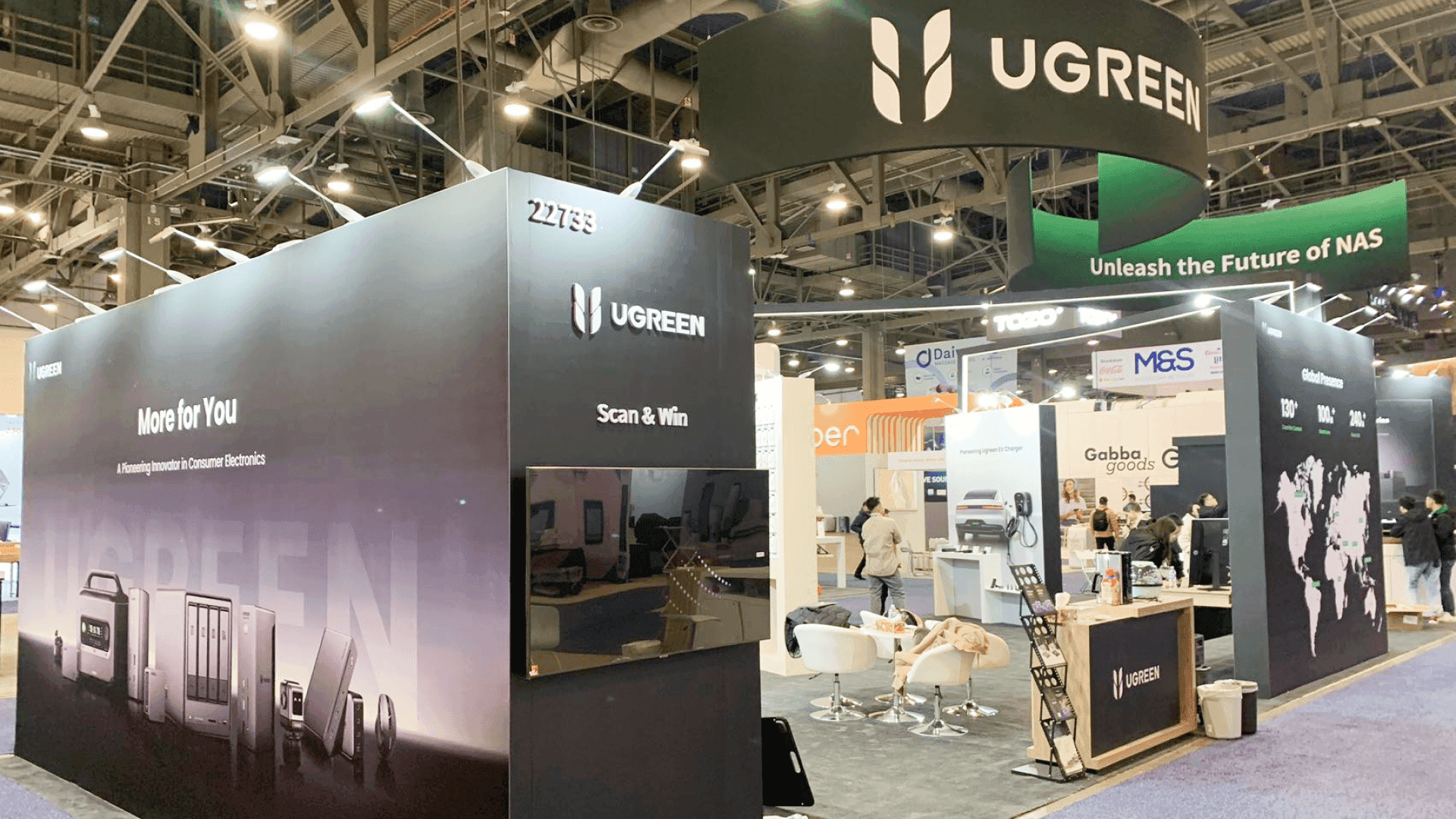
WISPAPALOOZA exhibitors should compare 10×20 aisle and End-Cap configurations against display length, product access, screens, and WISPA sightline rules before reserving space.
When Does a 10×10 Stop Being Enough?
A 10×10 can work when an ISP operator needs one clear proof point to decide whether a deeper conversation is worthwhile. That might be one broadband product family, one deployment story, or one software workflow.
The limitation appears when that first proof and the follow-up discussion need the same space at the same time.
A radio or network appliance may still need to remain accessible while another operator asks about deployment, compatibility, or network fit. A billing, monitoring, or automation workflow may still be running while a qualified visitor begins asking about integration, migration, or implementation.
If both conversations need to continue, the additional working depth of a 10×20 booth allows the primary demo to stay active without forcing the deeper technical discussion into the same visitor area.
The key question is not simply whether more square footage would be useful. It is whether one active ISP conversation is enough for the booth you intend to run.
10×20 Aisle or End-Cap: Do You Need the Full 20 Feet?
This is one of the WISPAPALOOZA booth decisions that cannot be answered by a general trade show size guide.
A 10×20 End-Cap may appear more open, but WISPA does not give it the same usable display area as a 10×20 aisle booth.
If the exhibit needs the full 20 feet of display length, WISPA specifically directs exhibitors to select a 10×20 aisle booth. That can matter for a continuous equipment run, several related radios or network devices, or technical graphics that need uninterrupted linear space.
End-Caps also have their own back-wall, side-aisle, and display-height restrictions. Before selecting one, confirm that walls, screens, equipment, and taller display elements actually fit within the permitted sightlines.
For broadband equipment exhibitors, this choice can affect much more than appearance. Product access, inspection clearance, supporting screens, cable paths, and the sequence in which operators compare devices may all depend on the usable display envelope. Those physical-product requirements are developed further in WISPAPALOOZA broadband equipment booth planning.
An End-Cap should therefore be chosen because the planned exhibit works within its WISPA configuration—not simply because it appears to offer more aisle exposure.
When Does 20×20 or 20×30 Make Sense?
Move beyond 10×20 when several ISP buyer tasks genuinely need to stay active at the same time.
For a broadband equipment vendor, that might mean one operator inspecting a device while another compares deployment requirements with a technical specialist. For a software company, separate ISP teams may be looking at different workflows while another conversation moves into integration or implementation questions.
A 20×20 gives those activities more separation and allows operators to approach from multiple sides without every conversation passing through one narrow demo area.
A 20×30 becomes more reasonable when the exhibit needs several product families, larger equipment, multiple workflow stations, deeper storage, or a meeting function that should not interrupt the main show-floor interaction.
A larger footprint should therefore solve a real WISPAPALOOZA operating problem—not simply create a larger visual presence.
If that choice leads to a 20×20 footprint, the next question is how to divide the island among demos, meetings, storage, and circulation. That is a layout decision after the exhibit space has already been selected.
Check WISPA Booth Rules Before You Reserve the Space
Before booking, compare the preferred booth type with WISPA’s current display rules and what the exhibit actually needs to run.
WISPA currently provides two complimentary exhibitor staff passes per standard 10×10 booth space and one with a Tabletop. Electrical is not included in the booth purchase.
For an ISP software exhibitor, moving from a laptop conversation to several powered screens can change the utility and equipment requirements. For a broadband hardware vendor, powered products, supporting monitors, network devices, and demonstration equipment can create similar dependencies.
The booth-space choice can therefore change more than the floor-space charge. It may also affect staffing, electrical needs, display structure, equipment placement, and installation scope.
Confirm those requirements before the space is reserved rather than discovering them after the booth layout has already been developed.

A 20×20 WISPAPALOOZA booth can support multiple ISP product or software demonstrations while keeping deeper technical conversations separate from the primary demo area.
WISPAPALOOZA Booth Options at a Glance
What the exhibit needs to do | Likely starting direction | Why |
|---|---|---|
Support mostly one-to-one ISP conversations with limited display needs | Tabletop | Works when a public demo or substantial physical product display is not required |
Present one focused broadband product family or ISP software workflow | 10×10 | Gives one primary product or workflow a dedicated visitor-facing area |
Keep a demo active while a deeper technical conversation continues | 10×20 | Provides room to separate the main proof point from follow-up discussion |
Use the full 20-foot length for equipment or technical graphics | 10×20 aisle booth | WISPA specifically directs exhibitors needing the full 20 feet of display length toward an aisle configuration |
Use an End-Cap without requiring the full 20-foot display run | 10×20 End-Cap | Works when walls, products, screens, and taller elements fit WISPA’s End-Cap sightline limits |
Build a longer linear product or demo sequence | 10×30 Inline | Adds display length while keeping the exhibit in a linear configuration |
Run several ISP product, workflow, or technical conversations at once | 20×20 | Provides multi-sided access and more separation between active conversations |
Combine several product families, larger equipment, multiple demos, storage, and a more separated meeting function | 20×30 | Provides additional depth and working area for several active booth functions |
WISPA currently offers Tabletop, 10×10, 10×20, 10×30, 20×20, and 20×30 exhibit-space options. The table above is a planning guide rather than WISPA’s official recommendation for how each size should be used. The important exception is the 20-foot display rule: exhibitors that need the full 20 feet of display length should select a 10×20 aisle booth rather than relying on an End-Cap.
Current availability and booth requirements should always be confirmed before reserving space.
What Should You Actually Reserve?
By this point, the team should be able to identify three things: the smallest option that can still do the job, the preferred configuration, and a fallback if the first choice is unavailable.
For example:
Preferred: 10×20 aisle booth
Why: a full broadband equipment run needs to remain visible while a technical discussion continues
Fallback: 10×10 with fewer products displayed at the same time
Why not End-Cap: the exhibit needs the full 20-foot display length
A software exhibitor might reach a different answer:
Preferred: 20×20
Why: two ISP workflows need to run simultaneously while integration discussions move away from the main screens
Fallback: 10×20 with one workflow demonstrated at a time
The important point is to finish with an actual reservation choice. Saying that several booth sizes could work does not give the exhibit team enough direction to begin design.
Once the footprint is confirmed, the problem changes. Product placement, screens, workflow stations, storage, graphics, and meeting capacity become booth-design questions rather than space-selection questions.
FAQ
Is a WISPAPALOOZA Tabletop enough for a software or service exhibitor?
It can be when the booth is mainly for one-to-one conversations and does not require a shared public demo, substantial physical display, or several staff roles working simultaneously. If multiple ISP operators need to watch, inspect, or discuss at once, a full booth is usually more practical.
Should I choose a 10×20 aisle booth or an End-Cap at WISPAPALOOZA?
Choose based on the usable display area. If the exhibit requires the full 20-foot display length, WISPA directs exhibitors toward a 10×20 aisle booth. An End-Cap makes sense only when the planned walls, equipment, screens, and taller elements fit its sightline restrictions.
Is electrical included with WISPAPALOOZA booth space?
No. Electrical is not included in the booth purchase, so powered broadband equipment, screens, computers, and software demo hardware should be identified before the final booth scope is approved.