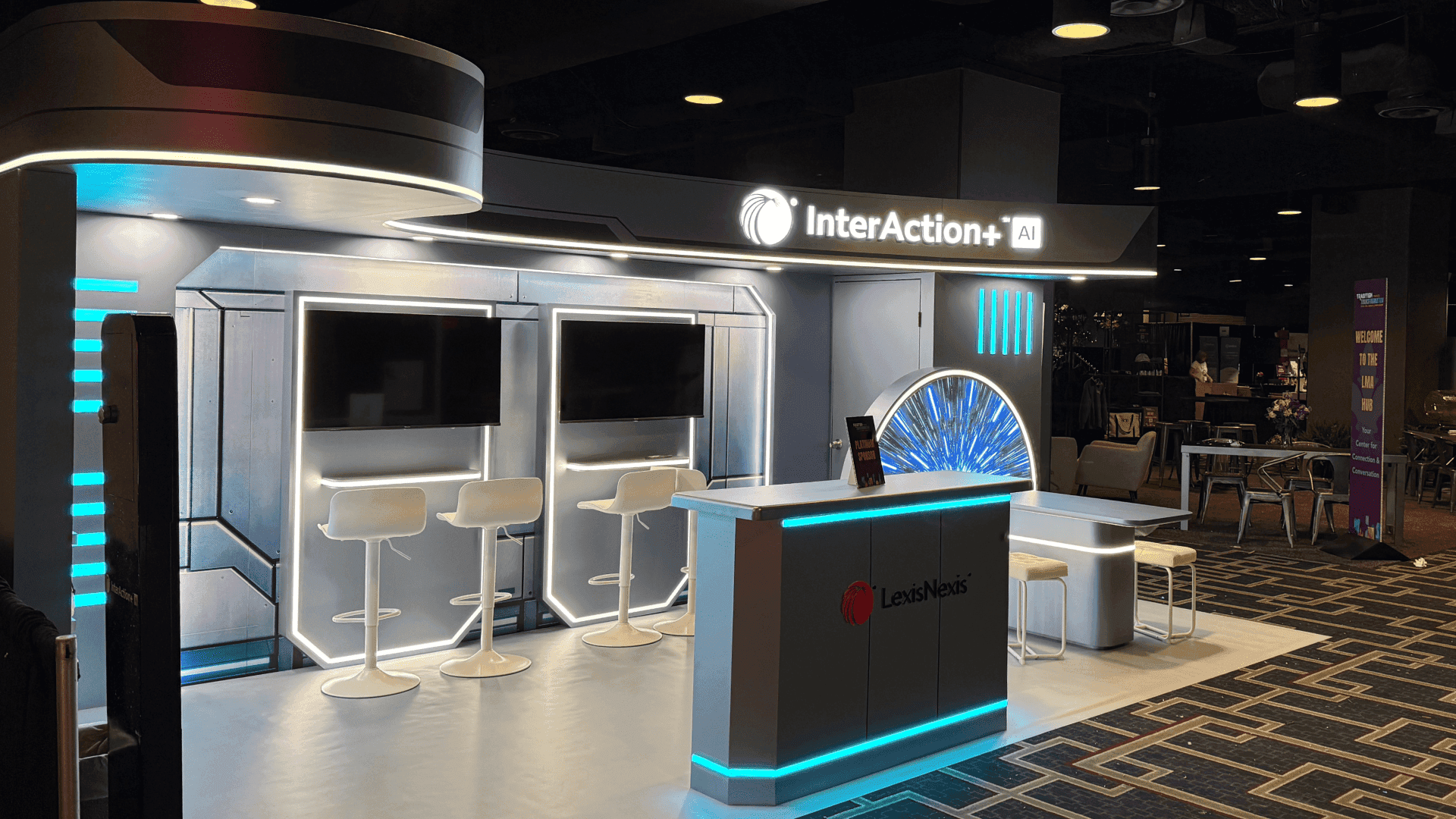
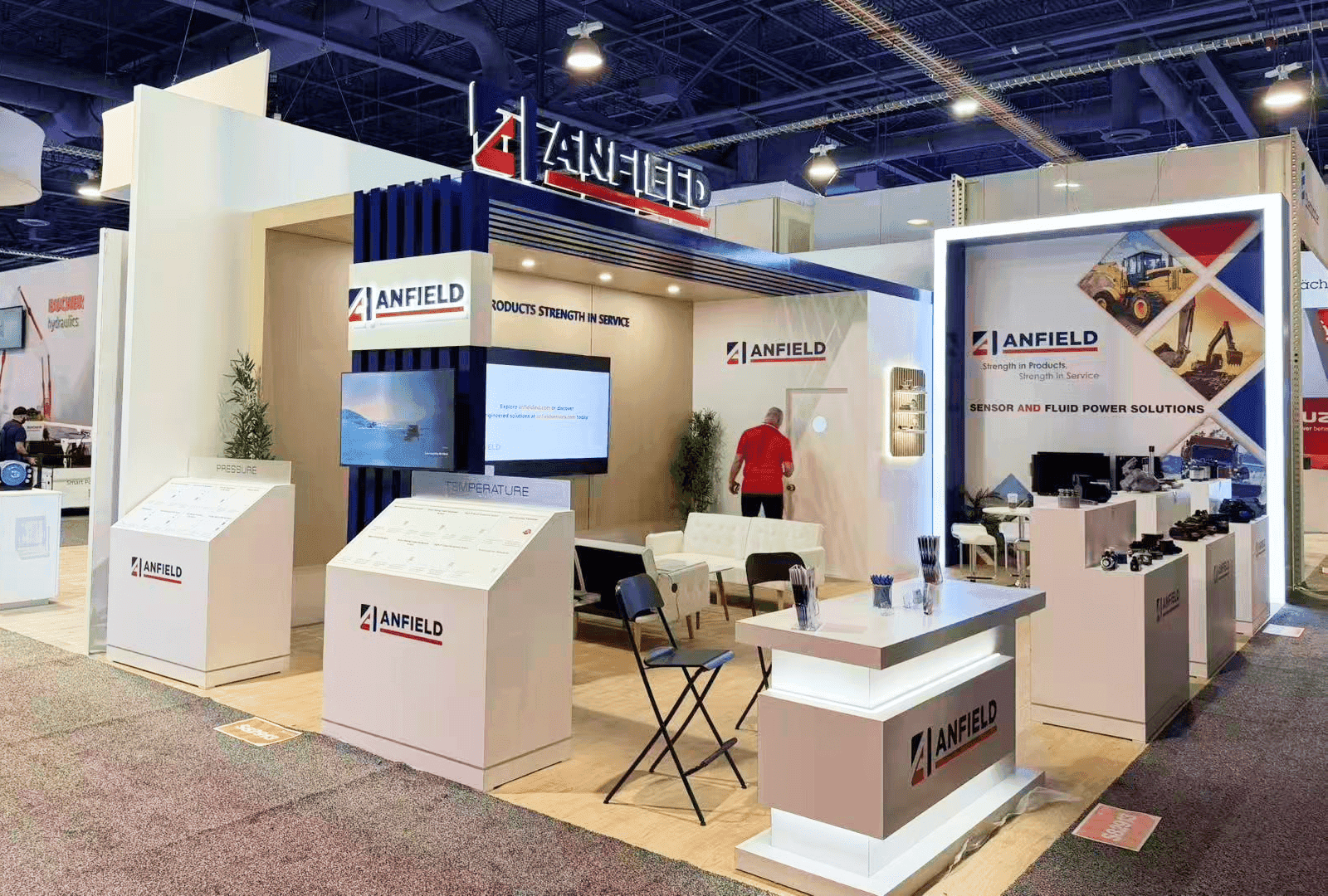
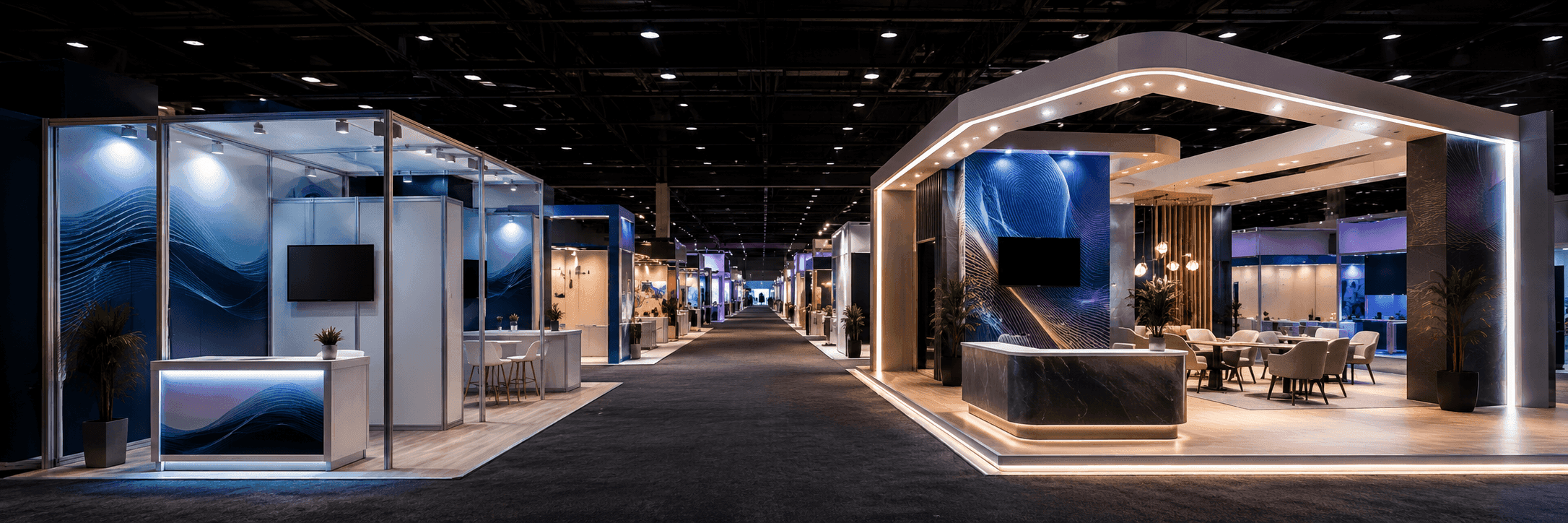
Define the Surface and Detail Buyers Need to See
Identify the surface and detail buyers need to examine: a painted panel’s gloss, a body crease, or the texture of a material sample. Vehicle-and-film exhibits such as UPPF’s SEMA 2023 booth can require checks on both vehicle panels and separate material displays. Confirm with the product team what should be visible on each, using the vehicle or sample planned for the booth.
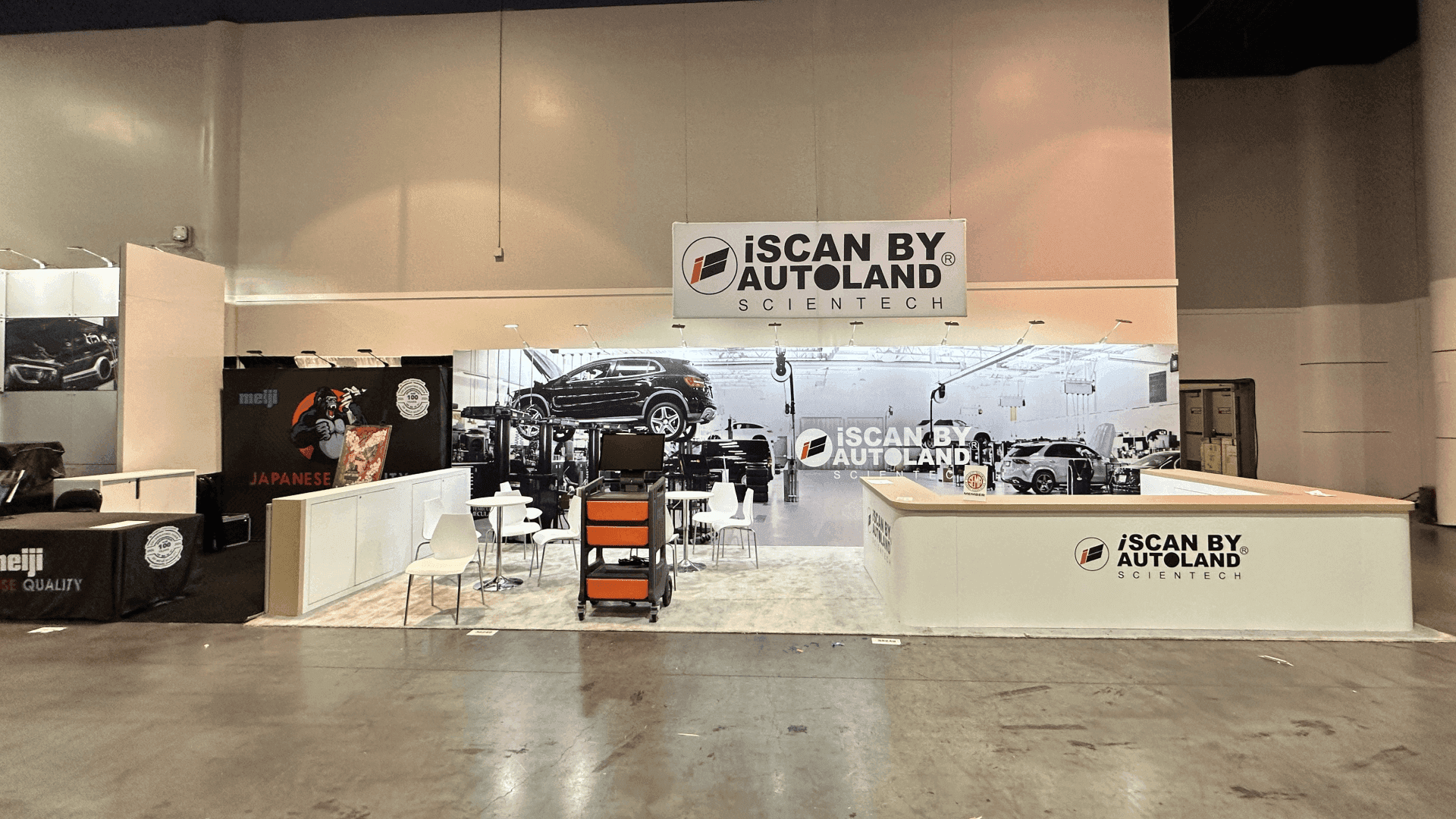
30x40 Vehicle Display Booth at SEMA Show 2026, Las Vegas, NV
Check Reflections and Shadows Where Buyers Will Stand
If a rack or header panel blocks the feature from a required viewing position, review the vehicle and sample display positions before changing the lighting.
Mark each viewing position on the layout and inspect the surface with nearby fixtures, graphics, and screens set for the show:
Does a bright reflection obscure the detail?
Does a shadow hide part of the surface or interrupt the body line?
Does direct or reflected glare make it uncomfortable to inspect the detail?
Note which surface and viewing position each issue affects so the team can return to it after an adjustment.
Adjust the Light and Recheck the Same Detail
Work with the lighting team to change one relevant condition at a time, such as fixture aim, position, output, or light distribution. If a reflection crosses the body crease being inspected, test a different aim or position and return to the original viewing point.
Recheck adjacent surfaces and the other agreed views after each adjustment; a change that clears one panel may leave another detail in shadow. Review the actual finishes with the lighting team before confirming fixture selection, color temperature, and color-rendering requirements.
Review the Required Photographs Separately
If photography is part of the brief, agree on the required shots and camera positions with the photographer. Check the specified finish, contour, or texture in the resulting images, and record any temporary lighting setup. If a lighting change from the shoot will remain during the show, repeat the buyer-view checks before approving it.
Record the Setup and Unresolved Issues
Complete this review template alongside the marked layout.
Review item | What to record |
|---|---|
Surface and detail | The vehicle panel or material sample, and the feature buyers need to see. |
Viewing position | The inspection location, marked on the layout. |
Observed problem | The reflection, shadow, or glare found at that position. |
Adjustment tested | The lighting condition changed and how it was changed. |
Recheck result | What changed and whether the target detail is visible from the original position. |
Selected setup | The fixture positions, settings, and nearby display conditions to use during the show. |
Open issue and owner | Any remaining issue, its owner, and the agreed time or condition for another check. |
Photography, if required | The required shot, camera position, and image-review result. |
Give the completed record and marked layout to the team planning your automotive booth in Las Vegas.
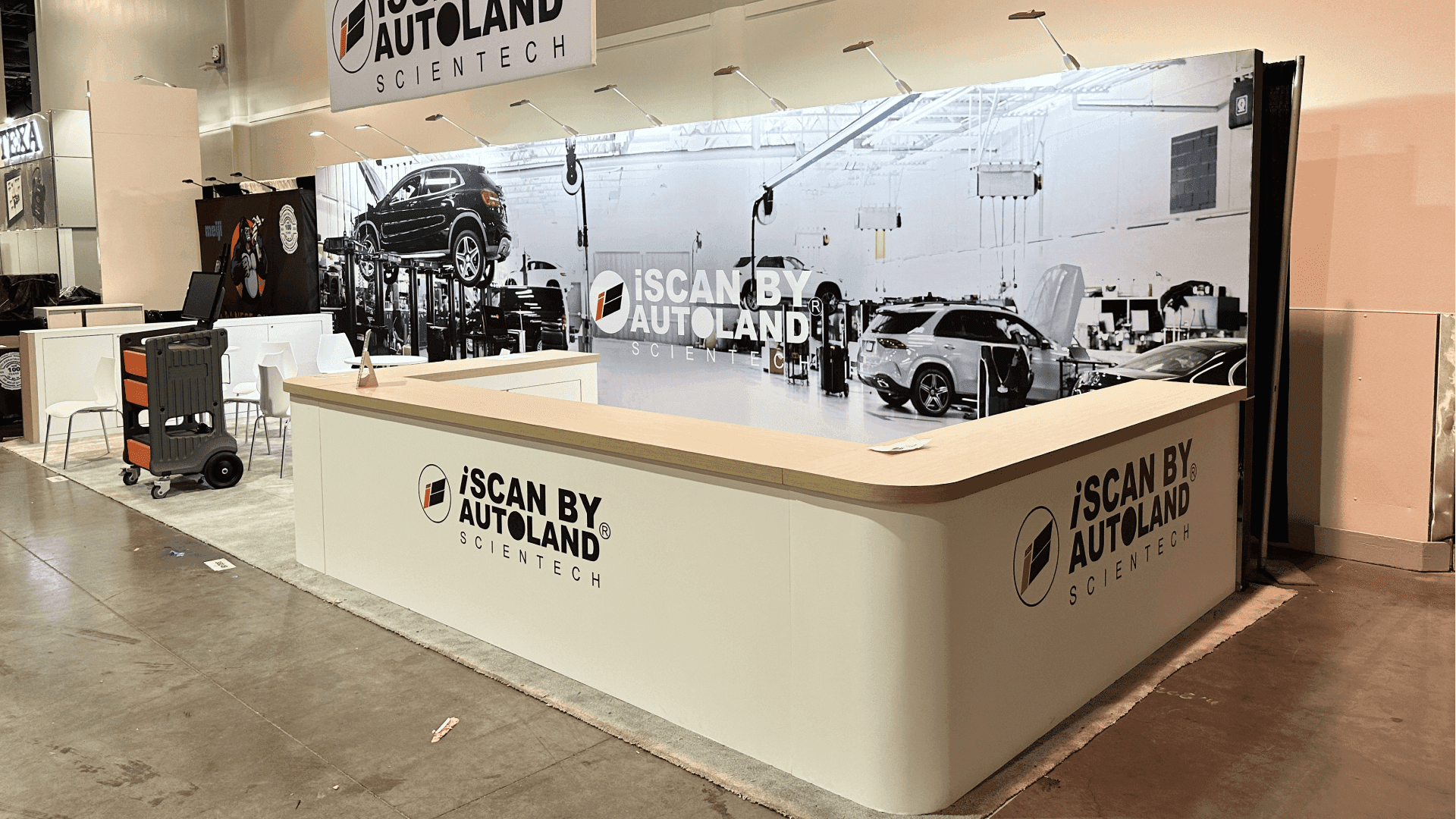
20x30 Automotive Product Display Booth at SEMA Show 2026, Las Vegas, NV
Frequently Asked Questions
Why can a brightly lit vehicle still be difficult to inspect?
A bright reflection can cover a finish detail, while a shadow can hide another part of the same surface. Check the feature from the buyer’s position before deciding what to adjust.
Can a sample panel be used before the vehicle is available?
A representative panel can support an early review of the finish. Use the vehicle for checks that depend on panel curvature, body lines, or the agreed viewing angles.
Is there one color temperature for every SEMA vehicle display?
No. Select it with the lighting team for the materials, fixtures, and display environment, then review the appearance with the product team.
Will lighting approved for the display also work for photography?
Not automatically. Review the required shots with the photographer, checking reflections and detail visibility from the camera position.
When should lighting be checked during installation?
Agree on a review window with the installation team when the vehicle or samples, lighting, and surrounding displays can be checked together. Allow for adjustment and another check before handover, and revisit any view affected by a later change.