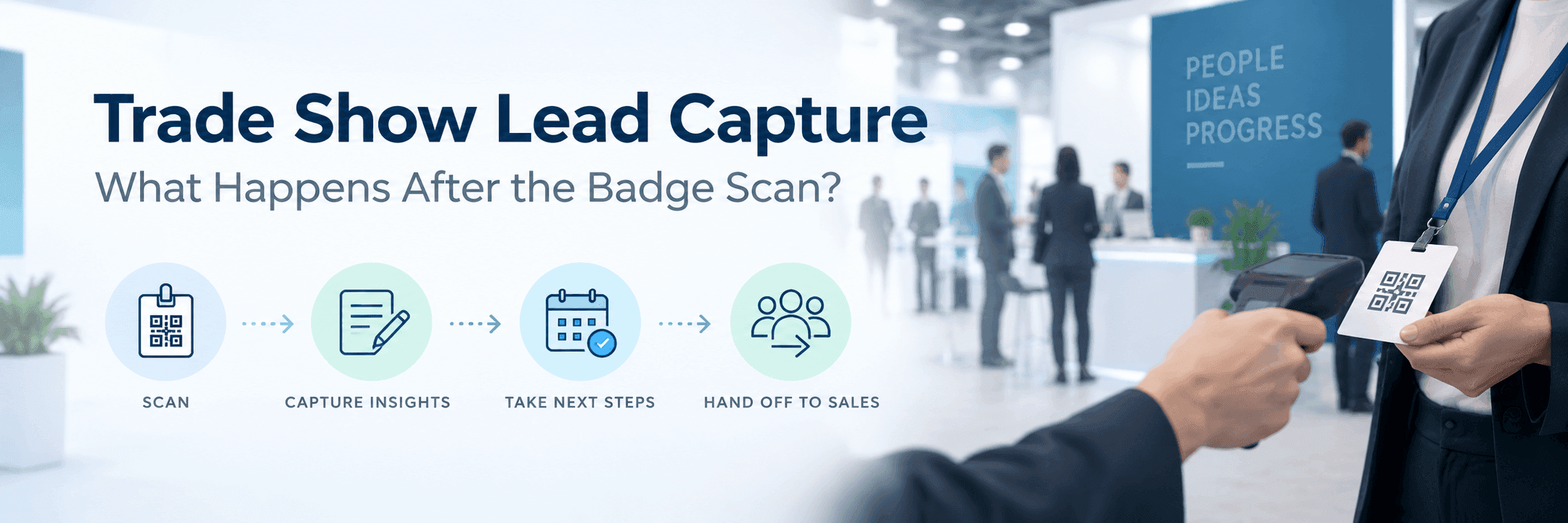
A Badge Scan Tells You Who, Not Why
A badge scan can provide a useful attendee record—typically a name, company, role, contact details, and other registration data available through the event system. What it usually does not preserve is the meaning of the conversation.
Event organizers and technology providers may use the terms lead retrieval and lead capture differently. For a booth team, the practical distinction is simpler: one identifies the attendee; the other preserves enough context to support a useful next action.
Before the show, staff roles, capture expectations, and handoff responsibilities should already be defined as part of the first-time exhibitor checklist, rather than improvised on the show floor.

Useful lead capture goes beyond contact details by preserving why the visitor engaged, what happened in the booth, what should happen next, and who owns the follow-up.
What Should Be Captured After a Booth Conversation?
A useful lead record should preserve enough of the interaction for sales to understand who the visitor is, why the conversation mattered, what already happened, and what should happen next.
Capture Layer | What to Record | Why It Matters |
|---|---|---|
Identity | Name, company, role | Identifies who the visitor is |
Interest | Product, solution, demo, or use case | Shows what drew them into the conversation |
Need / Project Context | Problem, requirement, project, or timing | Shows whether there is a relevant business context |
Interaction Context | Demo watched, product tested, meeting held, or technical question | Preserves what already happened in the booth |
Next Step | Quote, technical call, sample, meeting, or deeper demo | Makes the follow-up action clear |
Ownership | Sales rep, specialist, account owner, or other named owner | Shows who is responsible for moving it forward |
In practical terms, a good record should answer five questions: Who is this person? Why did they engage? What happened? What should happen next? Who owns that action?
The goal is not to recreate a full account history or complete every CRM field while the visitor is still in the booth. Long questionnaires and full discovery interviews can pull attention away from the conversation, so the better standard is simple: capture enough context to make the next action obvious.
Where and When Should Lead Capture Happen in the Booth Journey?
There is no single correct capture point. The best moment is usually close enough to the interaction that staff still understands why it mattered, but not so intrusive that note-taking interrupts a useful conversation.
Quick Walk-Up
For a brief aisle-side exchange, the team may only need the attendee's identity, basic product interest, and a simple follow-up action. Deeper qualification often adds friction without adding much value when the interaction itself was short.
After a Product Demo
A demo creates richer context. Staff can note which product or workflow was shown, the use case that interested the visitor, any technical questions that came up, whether the interest appears tied to a real project, and what should happen next. At a Black Hat SaaS demo booth, for example, the useful record may need to preserve the security use case, technical question, and whether the visitor should move into a deeper technical or sales conversation; simply recording that someone watched the demo leaves most of that value behind.
After a Qualified Conversation
Once the discussion becomes substantive, the notes should shift from basic interest to the details that make a handoff useful:
Business or technical need
Visitor role
Project context
Timing
Relevant technical requirement
Agreed action
Assigned owner
This is often the point where a contact becomes genuinely follow-up ready.
After a Scheduled Meeting
For a scheduled buyer meeting, rescanning a badge matters less than preserving what came out of the discussion. In IMEX America hosted-buyer meetings, for example, the useful record is the discussion outcome, key requirement, commitment, next action, and responsible owner—not another confirmation that the attendee checked in.
When demos, qualification, buyer conversations, and staff handoffs all need usable space, 20×30 booth layouts can help separate attraction, demonstration, discussion, and capture without turning the front of the booth into a checkpoint.
The practical rule is: capture identity when needed, but preserve context where the meaningful interaction actually happens.
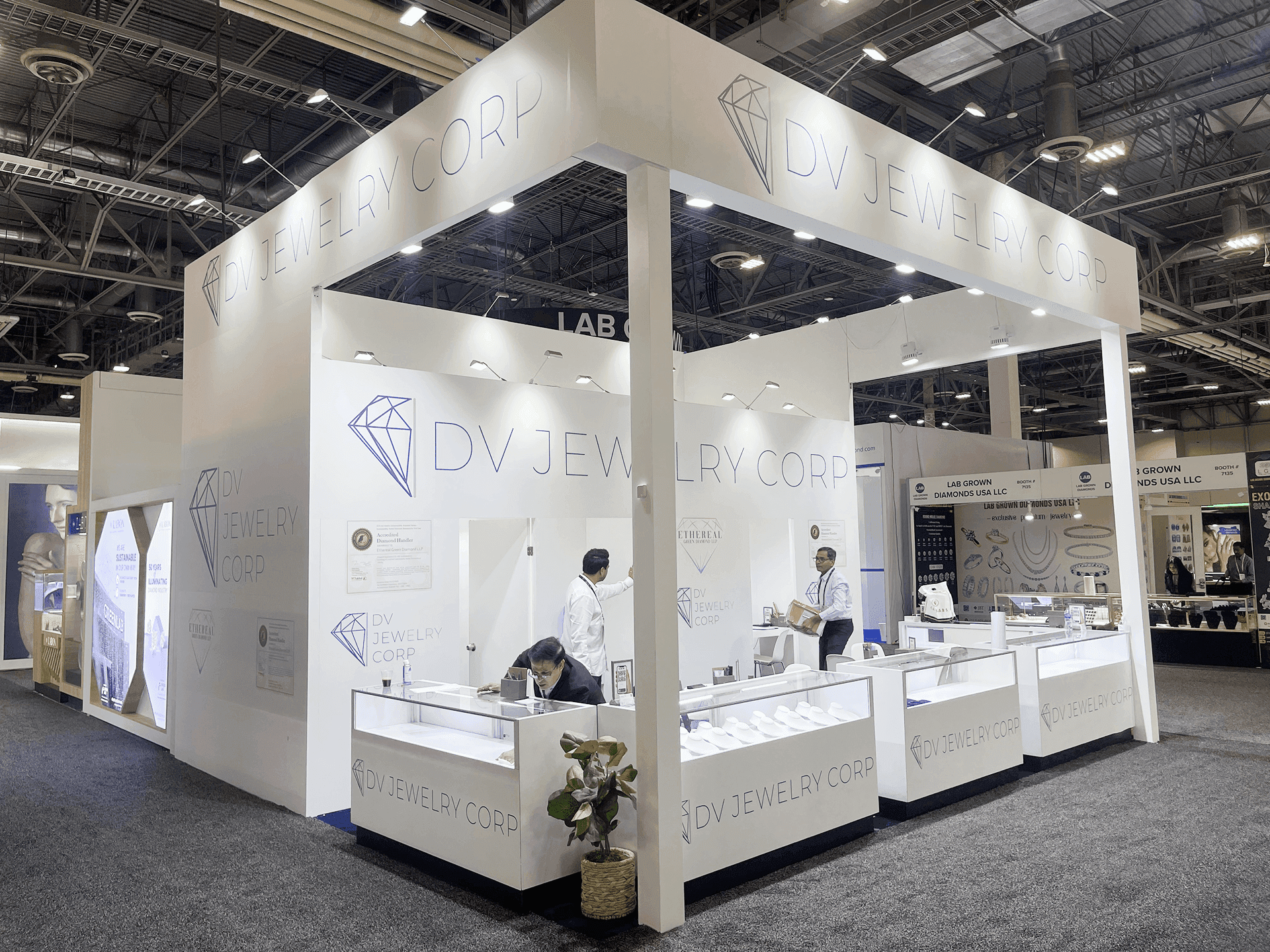
Lead capture should fit the booth journey, with different levels of context recorded after quick interactions, demos, qualified conversations, and buyer meetings.
How Much Qualification Should Happen at the Booth?
Booth qualification should go far enough to determine whether the interaction is relevant and what should happen next, but not so far that the conversation turns into a full sales discovery call. In most cases, staff only needs enough context to understand the visitor's fit, need, role, project situation, and timing, then decide whether the appropriate follow-up is a technical call, deeper demo, quote, sample, meeting, or no immediate action at all.
The booth is usually not the place to complete a long questionnaire, fill every CRM field, or apply a complicated scoring model. Asking too many questions can slow the exchange and shift attention from the visitor to data entry. Treating every badge scan as equally qualified creates the opposite problem: a larger list with very little signal.
A useful qualification process should answer four practical questions:
Is this interaction relevant?
Is there a real need, project, or use case?
Does a next action make sense?
Who should own it?
Qualification should support the next action, not turn the booth conversation into a form-filling exercise.
Record the Next Step, Assign an Owner, and Hand Off the Lead
A useful lead record should end with a clear action, not just a priority label. “Hot,” “warm,” or “high priority” may describe urgency, but they do not tell anyone what actually needs to happen.
A specific follow-up action might be:
Send technical specifications
Schedule a deeper product demo
Prepare a quote
Arrange a technical call
Send samples
Introduce the account manager
Book a buyer meeting
Follow up on a specific project
A qualified lead without a defined next step is still an incomplete handoff. Ownership matters just as much: a technical question may belong with a product specialist, a pricing request with a sales rep, an existing strategic account with the account owner, and a partner opportunity with the channel team. A priority label does not answer the operational question: who is responsible for doing something next?
That responsibility should remain attached to the context created in the booth. When the lead moves into a CRM, lead-retrieval platform, spreadsheet, or another sales system, the receiving team should still be able to see:
Who the visitor is
What product or solution interested them
What need or project was discussed
What interaction already took place
Any important question or objection
The agreed next step
The assigned owner
The system matters less than whether the conversation context survives the handoff. If sales receives only a name and email address, the booth team has captured a contact—not a usable continuation of the conversation.
Lead Capture Checklist
Use this checklist to make sure booth interactions leave the floor with enough context for a useful sales handoff.
Before the Show
Define what makes an interaction worth following up
Decide the minimum context staff should record
Agree on common next steps
Identify likely owners for different lead types
Make sure staff knows where capture fits in the booth journey
During the Show
Identify the contact
Record relevant product, solution, or use-case interest
Capture the need or project context
Note what interaction took place
Record the agreed next step
Assign an owner
Before Sales Handoff
Check that the record contains enough context to understand the conversation
Confirm the next action
Confirm who is responsible
Avoid sending raw badge scans with no explanation
From Lead Capture to Booth ROI
Lead capture answers a near-term question: what happened in the booth conversation, and what should happen next? It preserves the context needed for qualification, ownership, and a useful sales handoff. Once those interactions are consistently captured and handed to sales, the next question is whether they create opportunities, pipeline, and enough financial value to justify the exhibit investment. That downstream measurement belongs in the trade show booth ROI framework. The two processes solve different problems: lead capture preserves the interaction, while ROI measurement evaluates what those interactions ultimately produced.
FAQ
Is a badge scan the same as a qualified lead?
No. A badge scan identifies the attendee, while a qualified lead includes enough context to show why the interaction is relevant and whether a meaningful next action makes sense.
Should exhibitors scan visitors before or after a demo?
There is no single correct order. The better approach is to capture identity and conversation context without interrupting the interaction. In some booths that may happen before the demo; in others, the most useful context appears only after the product discussion.
Should every badge scan be sent to sales?
No. A captured contact should not automatically be treated as a sales-ready lead. The booth team should preserve enough context to distinguish a relevant follow-up action from a contact that requires no immediate sales attention.