Do Not Use the Learning Lab and Booth for the Same Job
If a buyer leaves the Learning Lab understanding the problem and then hears the same explanation again at the booth, the second interaction adds very little. The booth should answer a question the session could not—by showing a system response, giving the buyer something physical to inspect, comparing an application, or providing enough evidence to decide whether a deeper technical discussion is worthwhile.
The solution story can stay consistent across both touchpoints, but the information should advance. Familiar terminology helps buyers connect one stage to the next; replaying the presentation does not.

A Learning Lab can establish the facility problem, operating context, and decision criteria so buyers know what to evaluate when they reach the exhibit booth.
Decide What the Buyer Needs to Understand Before Seeing the Product
A Learning Lab does not need to explain every product feature. Its role is to give attendees enough context to understand why the problem matters and what they should evaluate when they later encounter the solution.
For an NFMT audience, that usually means establishing:
The facility problem — the maintenance, energy, safety, performance, or operational issue being addressed.
The operating context — the building or system conditions under which the issue occurs.
The consequence — how the issue affects day-to-day operation, performance, or maintenance.
The method — the general approach used to address the problem.
What to verify next — the evidence the buyer should look for when evaluating the solution.
That is enough education to make later proof meaningful. Once the session becomes a feature-by-feature product tour, it starts doing work that is usually better handled on the show floor.
Decide What Must Be Proven on the Show Floor
The booth should add evidence the buyer could not get from the Learning Lab alone, and the right proof depends on the type of solution being evaluated.
For connected or digital systems, that may be a visible system response, a workflow change, or a clearer view of how the solution relates to an existing building environment. When buyers need to see controls, connected devices, dashboards, or compatibility in context, smart building system demos require a more deliberate evaluation setup than a standard product presentation.
Physical products create a different evaluation task. Buyers may need to inspect a component, operate equipment, compare configurations, or relate what they see to an actual facility condition. For products that depend on hands-on evaluation, equipment demo planning should focus less on displaying more equipment and more on making the product easy to inspect, operate, and compare.
Service-led solutions may not require a live product at all. Their proof may come from a documented process, a comparable project, measurable results, or a focused consultation that shows how the approach could apply to a similar facility problem.
In each case, the booth only needs to add the next useful piece of evidence. It does not need to resolve every technical or buyer-specific question on the spot.
Give the Buyer One Question to Carry From the Lab to the Booth
A useful handoff is more specific than “visit our booth.” Give the buyer one question that cannot be fully answered until they see the proof.
A session about changing operating conditions, for example, can end by asking buyers to watch how the system responds when those conditions change. A discussion about a recurring failure point can lead to inspecting the component intended to address it, while a method introduced in the Learning Lab can be compared with a live system response or product example on the show floor.
The terminology, diagrams, and visual cues used in the session should still feel familiar when the buyer reaches the exhibit. They do not need to reproduce the presentation; they only need to make the same problem and proof path easy to recognize. Consistent trade show graphics can support that continuity without turning the booth into a second Learning Lab.
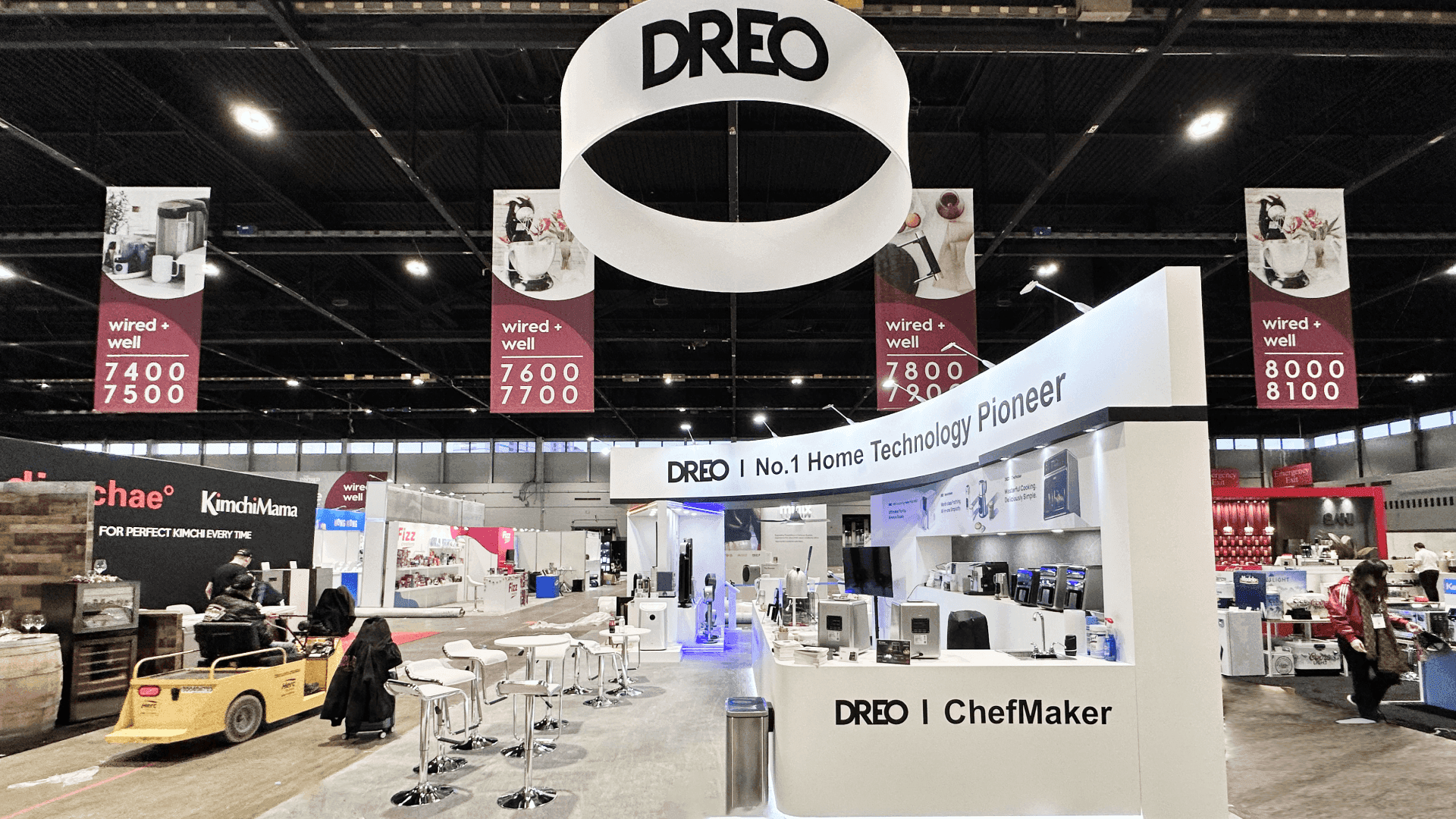
The booth should add new evidence through a live system response, physical inspection, product comparison, or application example rather than repeat the Learning Lab presentation.
Know What Neither the Learning Lab nor the Booth Should Resolve
Some questions cannot be answered responsibly until the buyer’s actual facility conditions and requirements are known. Site-specific engineering, detailed system integration, formal specifications, implementation planning, and proposals that depend on a complete scope usually fall into this category.
The same is true when important facility information is still missing. A show-floor conversation may uncover the right technical question, but it should not force a final answer when dimensions, existing-system information, operating conditions, or other required inputs have not been verified.
Those questions belong in follow-up, where buyer-specific issues can be resolved with the information, specialists, and review time that were not available during the session or on the show floor. Follow-up is therefore part of the evaluation path—not simply another sales contact after NFMT West.
Learning Lab, Booth, and Follow-Up Should Add Different Value
Stage | Main Job | What It Should Add | Avoid |
|---|---|---|---|
Learning Lab | Teach | Problem context, decision criteria, and what the buyer should evaluate | Feature-by-feature product pitch |
Booth | Prove | Observable system, product, or application evidence | Replay of the session |
Follow-Up | Resolve | Buyer-specific engineering, integration, specification, or implementation answers | Re-teaching general context |
The strongest NFMT journey is not the one that tries to say everything at every stage. Teach enough to make the proof meaningful, then prove enough to show what still needs resolution.
FAQ
Should NFMT exhibitors repeat Learning Lab content at the booth?
No. The Learning Lab should establish the problem and give attendees enough context to understand what matters. The booth should add something new through product evidence, a live system response, physical inspection, or a relevant application example.
How much product detail belongs in an NFMT Learning Lab?
Enough to help attendees understand what they should evaluate later, but not a full product feature tour. Detailed product proof is usually more useful once the buyer reaches the booth.
What NFMT questions should wait until after the show?
Questions that depend on buyer-specific engineering, detailed integration, formal specifications, implementation requirements, or incomplete facility information are better handled in technical follow-up.