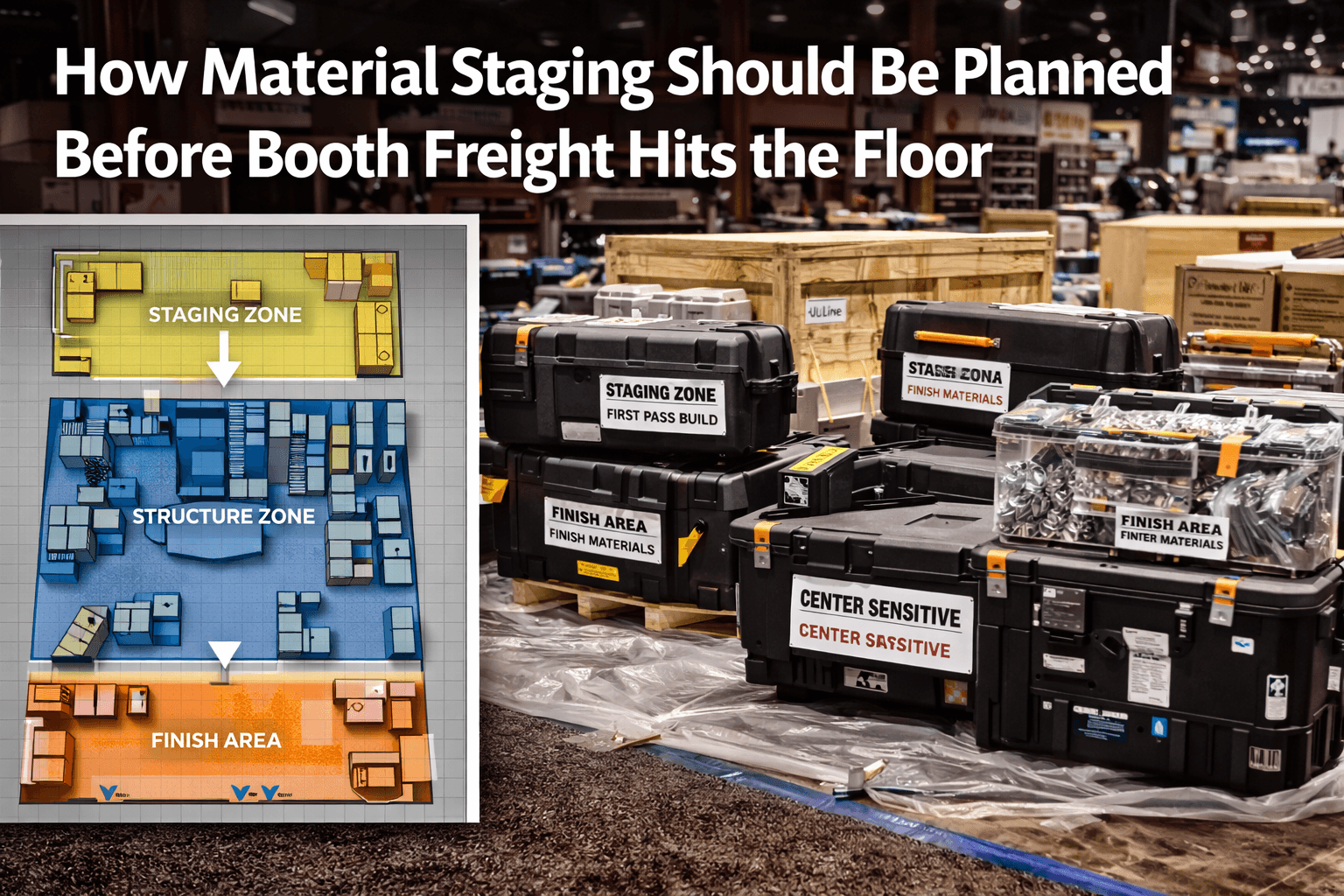
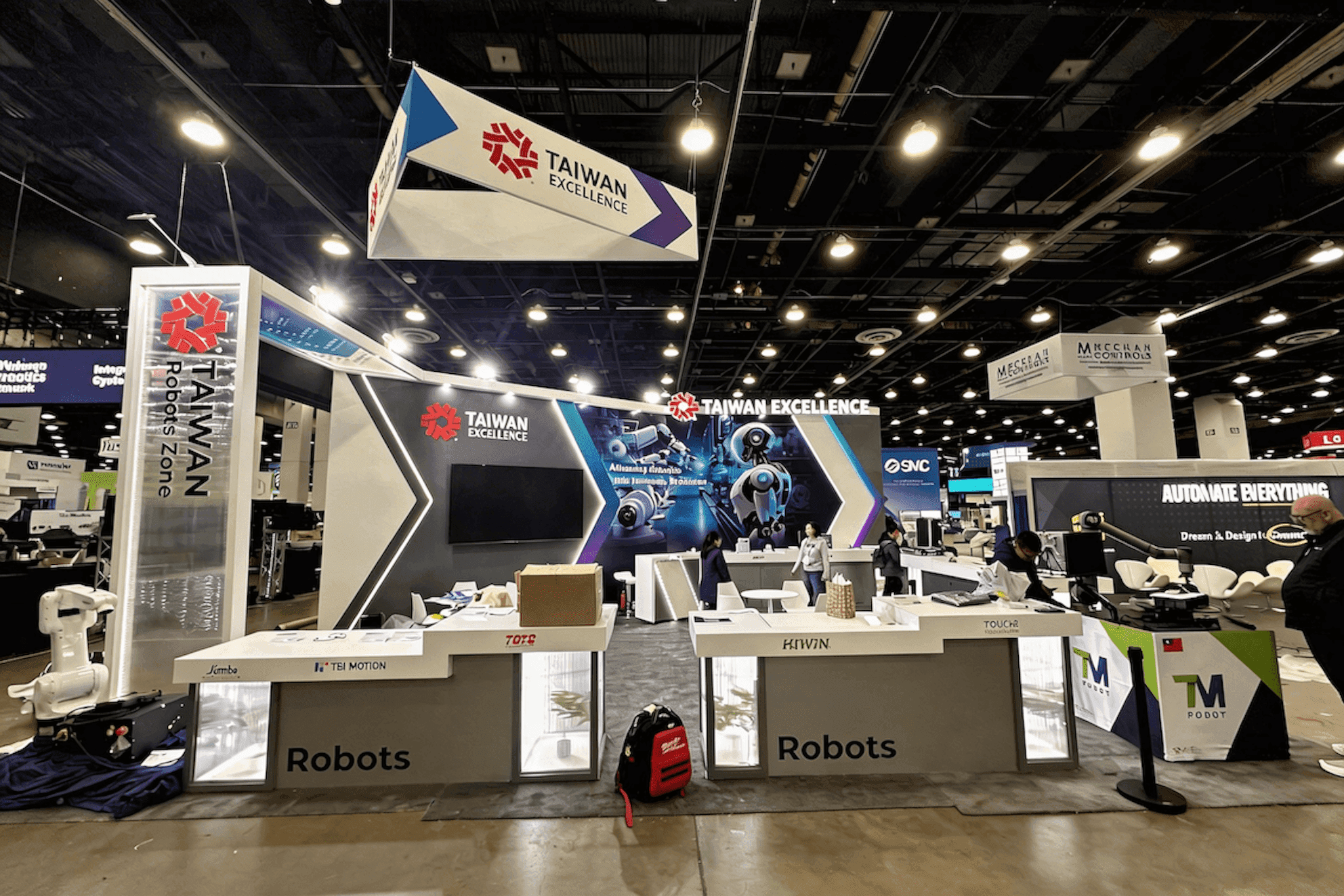
Trade show booth material staging plan with labeled freight cases, floor-zone map, and protected staging area prepared before booth delivery

How Material Staging Should Be Planned Before Booth Freight Hits the Floor

How Material Staging Should Be Planned Before Booth Freight Hits the Floor

Circle Exhibit Team

Industry professionals

Exhibition industry professional dedicated to delivering the latest insights and curated recommendations to you.

Exhibition industry professional dedicated to delivering the latest insights and curated recommendations to you.

Staging logic usually determines whether freight arrival creates order or chaos. When materials are assigned to the right zones before delivery, the booth starts building forward instead of fighting its own floor pressure.

Staging logic usually determines whether freight arrival creates order or chaos. When materials are assigned to the right zones before delivery, the booth starts building forward instead of fighting its own floor pressure.

Staging logic usually determines whether freight arrival creates order or chaos. When materials are assigned to the right zones before delivery, the booth starts building forward instead of fighting its own floor pressure.

Freight does not create progress by itself

A lot of teams feel relieved when booth freight finally arrives.

That reaction makes sense.

But freight on site is not the same thing as a booth moving forward. In many installs, freight arrival is actually the moment when disorder begins. Cases stack up. Crates land too close to the center. Finish materials mix with structure materials. The crew spends the first hours sorting and shifting instead of building.

That is usually not a freight problem.

It is a staging problem.

Staging should be decided before delivery, not after delivery

This is the core rule.

A booth floor becomes chaotic very quickly when the crew is trying to decide staging in real time. By then, the materials are already there. The pressure is already on the floor. Every decision is now reactive.

A better install works the other way around.

Before freight ever hits the floor, the team should already know:

  • what goes to the structure zone

  • what stays protected for later phases

  • what must remain accessible

  • what should stay away from the center

  • what belongs near the first-pass install area

  • what must not be opened too early

That logic is what turns delivery into usable sequence.

The floor should not become a giant temporary storage area

This is one of the most common install mistakes.

When staging is weak, every open corner of the booth starts becoming temporary storage. That feels harmless at first. Then the booth begins losing control.

The result usually looks like this:

  • main access paths narrow too early

  • finish flooring gets pressured before it is ready

  • the center display zone fills before the booth can protect it

  • crews waste time walking around unopened materials

  • the booth starts reacting to freight instead of using it

At that point, the install may still be moving, but not efficiently.

Staging should follow install order, not packing order

This is where many teams get into trouble.

The way materials were packed does not always match the way they should hit the floor. If the crew stages based only on what arrived first or what crate opened first, the booth often starts building in the wrong rhythm.

A better system stages according to install sequence.

That usually means separating materials into practical groups such as:

First-pass structure

Frames, hardware, core wall systems, and anything needed to establish the footprint.

Protected later-phase finish

Graphics, final trim, delicate surfaces, branded skins, and visible finishing elements.

Special-access items

Pieces that must stay available for electrical, rigging, or operator zones.

Center-zone sensitive items

Anything that should not crowd the main display area too early.

Once those groups are clear, staging becomes useful instead of merely convenient.

Good staging protects the center before the booth is finished

This matters a lot in real installs.

The center of a booth is usually where the display, demo, or key visitor moment needs the most control. But it is often the first zone that gets crowded because it looks like “open space.”

That is a mistake.

A better booth protects the center from becoming overflow.

That means cases, crates, parts, and late-phase materials should not drift into the center just because there is floor area available. The center needs to remain readable and workable long before it starts looking finished.

If that space is respected early, the booth usually installs cleaner.

Labeling only works when it matches floor logic

Labels matter, but labels alone are not enough.

A case can be labeled perfectly and still create confusion if the staging zones themselves are not clear. The crew needs more than names and numbers. They need staging logic that matches what those labels actually mean in the field.

That usually works best when each material group is tied to a real floor purpose:

  • build now

  • protect for later

  • keep near access

  • hold outside center

  • open last

  • use only after structure settles

When labeling and floor logic match, the install gets much easier to manage.

Vehicle booths make staging even more important

This becomes especially important at SEMA Show, where a display vehicle may still need a clear path into the booth.

In that type of install, bad staging becomes much more dangerous. It does not just slow the work. It can start closing the exact path the vehicle still needs.

That is why automotive booths usually need even tighter decisions around:

  • entry path protection

  • center-zone discipline

  • what stays out of the booth until after vehicle placement

  • what can safely stage near the perimeter

  • what must not trap the display area too early

The more complex the booth is, the more important pre-decided staging becomes.

Even clean CES booths depend on invisible staging discipline

This matters just as much at CES in Las Vegas, even when there is no display vehicle involved.

CES booths often rely on cleaner finish work, tighter messaging, visible demo surfaces, and strong first-read presentation. That kind of booth performance depends on not letting the floor get overrun before the structure and message layers are ready.

If staging is weak, the booth may technically have all the right materials, but the install becomes visually noisy before the real booth experience is even built.

Good staging is one of the quiet reasons some booths feel controlled from the start and others feel stressed even with strong assets.

Builder planning matters because staging is part of the build system

This is one reason exhibitors benefit from working with a Las Vegas trade show booth builder that treats staging as part of the actual installation strategy.

Because staging is not separate from the build.

It affects:

  • access

  • walking clearance

  • floor protection

  • install speed

  • sequence control

  • how early the booth becomes usable

A floor plan can look perfectly organized on paper and still fail if no one decided what should physically land where once the freight starts arriving.

That is why staging logic belongs in the plan, not just in the crew’s memory.

Logistics planning is what turns the floor into a usable sequence

This is exactly where logistics and pre-show coordination start earning their value.

The goal is not just to get freight delivered.

The goal is to make sure freight arrival creates the right conditions for work.

That means asking better questions before move-in:

  • Which materials should hit the booth first?

  • Which ones should stay closed?

  • Which ones belong to perimeter staging?

  • Which ones cannot be allowed near the main display zone yet?

  • Which ones must stay accessible for the next trade?

Those answers shape whether the booth spends the first day building or recovering.

The best installs usually have staging that looks boring

That is usually a good sign.

Strong staging rarely looks dramatic.
It looks calm.

Materials are where they need to be.
The booth still has room to function.
The center is not under pressure too early.
The crew is opening the right things at the right time.
Nothing important is trapped by something that arrived first but belongs later.

That kind of order is what makes the install feel professional.

A practical staging sequence usually looks like this

The cleanest booth installs often follow a rhythm like this:

1. Define the staging map before freight arrives

Know the floor logic before the first case lands.

2. Protect the center and the key access paths

Do not let open space become accidental storage.

3. Separate first-pass build materials from later finish materials

Do not ask the crew to sort sequence under floor pressure.

4. Keep special-access components available

Anything needed for electrical, rigging, operator areas, or major demo zones should stay reachable.

5. Let staging shrink as the booth stabilizes

The floor should open up as the install progresses, not close down further.

That rhythm usually determines whether the booth becomes more workable or less workable as freight continues arriving.

Final thought

Booth freight does not create order automatically.

Order comes from staging logic.

When the staging plan is clear before the materials arrive, the floor starts helping the build instead of fighting it. The crew moves forward faster. The center stays usable longer. Sensitive finish work stays protected. And the booth becomes workable much earlier.

That is why staging should be planned before freight hits the floor.

Because once the floor is already full, the booth is no longer planning.

It is improvising.

Trying to make booth freight arrival feel more controlled?
Start with stronger logistics and pre-show coordination, then connect it to a Las Vegas trade show booth builder process that turns staging into usable build order instead of floor chaos.
Freight does not create progress by itself

A lot of teams feel relieved when booth freight finally arrives.

That reaction makes sense.

But freight on site is not the same thing as a booth moving forward. In many installs, freight arrival is actually the moment when disorder begins. Cases stack up. Crates land too close to the center. Finish materials mix with structure materials. The crew spends the first hours sorting and shifting instead of building.

That is usually not a freight problem.

It is a staging problem.

Staging should be decided before delivery, not after delivery

This is the core rule.

A booth floor becomes chaotic very quickly when the crew is trying to decide staging in real time. By then, the materials are already there. The pressure is already on the floor. Every decision is now reactive.

A better install works the other way around.

Before freight ever hits the floor, the team should already know:

  • what goes to the structure zone

  • what stays protected for later phases

  • what must remain accessible

  • what should stay away from the center

  • what belongs near the first-pass install area

  • what must not be opened too early

That logic is what turns delivery into usable sequence.

The floor should not become a giant temporary storage area

This is one of the most common install mistakes.

When staging is weak, every open corner of the booth starts becoming temporary storage. That feels harmless at first. Then the booth begins losing control.

The result usually looks like this:

  • main access paths narrow too early

  • finish flooring gets pressured before it is ready

  • the center display zone fills before the booth can protect it

  • crews waste time walking around unopened materials

  • the booth starts reacting to freight instead of using it

At that point, the install may still be moving, but not efficiently.

Staging should follow install order, not packing order

This is where many teams get into trouble.

The way materials were packed does not always match the way they should hit the floor. If the crew stages based only on what arrived first or what crate opened first, the booth often starts building in the wrong rhythm.

A better system stages according to install sequence.

That usually means separating materials into practical groups such as:

First-pass structure

Frames, hardware, core wall systems, and anything needed to establish the footprint.

Protected later-phase finish

Graphics, final trim, delicate surfaces, branded skins, and visible finishing elements.

Special-access items

Pieces that must stay available for electrical, rigging, or operator zones.

Center-zone sensitive items

Anything that should not crowd the main display area too early.

Once those groups are clear, staging becomes useful instead of merely convenient.

Good staging protects the center before the booth is finished

This matters a lot in real installs.

The center of a booth is usually where the display, demo, or key visitor moment needs the most control. But it is often the first zone that gets crowded because it looks like “open space.”

That is a mistake.

A better booth protects the center from becoming overflow.

That means cases, crates, parts, and late-phase materials should not drift into the center just because there is floor area available. The center needs to remain readable and workable long before it starts looking finished.

If that space is respected early, the booth usually installs cleaner.

Labeling only works when it matches floor logic

Labels matter, but labels alone are not enough.

A case can be labeled perfectly and still create confusion if the staging zones themselves are not clear. The crew needs more than names and numbers. They need staging logic that matches what those labels actually mean in the field.

That usually works best when each material group is tied to a real floor purpose:

  • build now

  • protect for later

  • keep near access

  • hold outside center

  • open last

  • use only after structure settles

When labeling and floor logic match, the install gets much easier to manage.

Vehicle booths make staging even more important

This becomes especially important at SEMA Show, where a display vehicle may still need a clear path into the booth.

In that type of install, bad staging becomes much more dangerous. It does not just slow the work. It can start closing the exact path the vehicle still needs.

That is why automotive booths usually need even tighter decisions around:

  • entry path protection

  • center-zone discipline

  • what stays out of the booth until after vehicle placement

  • what can safely stage near the perimeter

  • what must not trap the display area too early

The more complex the booth is, the more important pre-decided staging becomes.

Even clean CES booths depend on invisible staging discipline

This matters just as much at CES in Las Vegas, even when there is no display vehicle involved.

CES booths often rely on cleaner finish work, tighter messaging, visible demo surfaces, and strong first-read presentation. That kind of booth performance depends on not letting the floor get overrun before the structure and message layers are ready.

If staging is weak, the booth may technically have all the right materials, but the install becomes visually noisy before the real booth experience is even built.

Good staging is one of the quiet reasons some booths feel controlled from the start and others feel stressed even with strong assets.

Builder planning matters because staging is part of the build system

This is one reason exhibitors benefit from working with a Las Vegas trade show booth builder that treats staging as part of the actual installation strategy.

Because staging is not separate from the build.

It affects:

  • access

  • walking clearance

  • floor protection

  • install speed

  • sequence control

  • how early the booth becomes usable

A floor plan can look perfectly organized on paper and still fail if no one decided what should physically land where once the freight starts arriving.

That is why staging logic belongs in the plan, not just in the crew’s memory.

Logistics planning is what turns the floor into a usable sequence

This is exactly where logistics and pre-show coordination start earning their value.

The goal is not just to get freight delivered.

The goal is to make sure freight arrival creates the right conditions for work.

That means asking better questions before move-in:

  • Which materials should hit the booth first?

  • Which ones should stay closed?

  • Which ones belong to perimeter staging?

  • Which ones cannot be allowed near the main display zone yet?

  • Which ones must stay accessible for the next trade?

Those answers shape whether the booth spends the first day building or recovering.

The best installs usually have staging that looks boring

That is usually a good sign.

Strong staging rarely looks dramatic.
It looks calm.

Materials are where they need to be.
The booth still has room to function.
The center is not under pressure too early.
The crew is opening the right things at the right time.
Nothing important is trapped by something that arrived first but belongs later.

That kind of order is what makes the install feel professional.

A practical staging sequence usually looks like this

The cleanest booth installs often follow a rhythm like this:

1. Define the staging map before freight arrives

Know the floor logic before the first case lands.

2. Protect the center and the key access paths

Do not let open space become accidental storage.

3. Separate first-pass build materials from later finish materials

Do not ask the crew to sort sequence under floor pressure.

4. Keep special-access components available

Anything needed for electrical, rigging, operator areas, or major demo zones should stay reachable.

5. Let staging shrink as the booth stabilizes

The floor should open up as the install progresses, not close down further.

That rhythm usually determines whether the booth becomes more workable or less workable as freight continues arriving.

Final thought

Booth freight does not create order automatically.

Order comes from staging logic.

When the staging plan is clear before the materials arrive, the floor starts helping the build instead of fighting it. The crew moves forward faster. The center stays usable longer. Sensitive finish work stays protected. And the booth becomes workable much earlier.

That is why staging should be planned before freight hits the floor.

Because once the floor is already full, the booth is no longer planning.

It is improvising.

Trying to make booth freight arrival feel more controlled?
Start with stronger logistics and pre-show coordination, then connect it to a Las Vegas trade show booth builder process that turns staging into usable build order instead of floor chaos.
Message

Leave your message and we will get back to you ASAP

Send a Message

We’ll Be in Touch!

Message

Leave your message and we will get back to you ASAP

Address:

4915 Steptoe Street #300

Las Vegas, NV 89122