Choose One Hero Product Before Choosing the Promotion
Not every new SKU needs to lead the show. The hero product should be the item with the clearest reason for this audience to pay attention—because it solves a timely operating problem, introduces a meaningful new application, or gives buyers something specific to evaluate in person.
For exhibitors bringing several products, the rest of the portfolio can still support the launch. Existing products may provide context, show range, or help explain how the new item fits into a broader offering. They do not need equal prominence across invitations, promotions, and the exhibit.
If buyers remember only one new product after the show, decide which one it should be. That product should lead the launch.
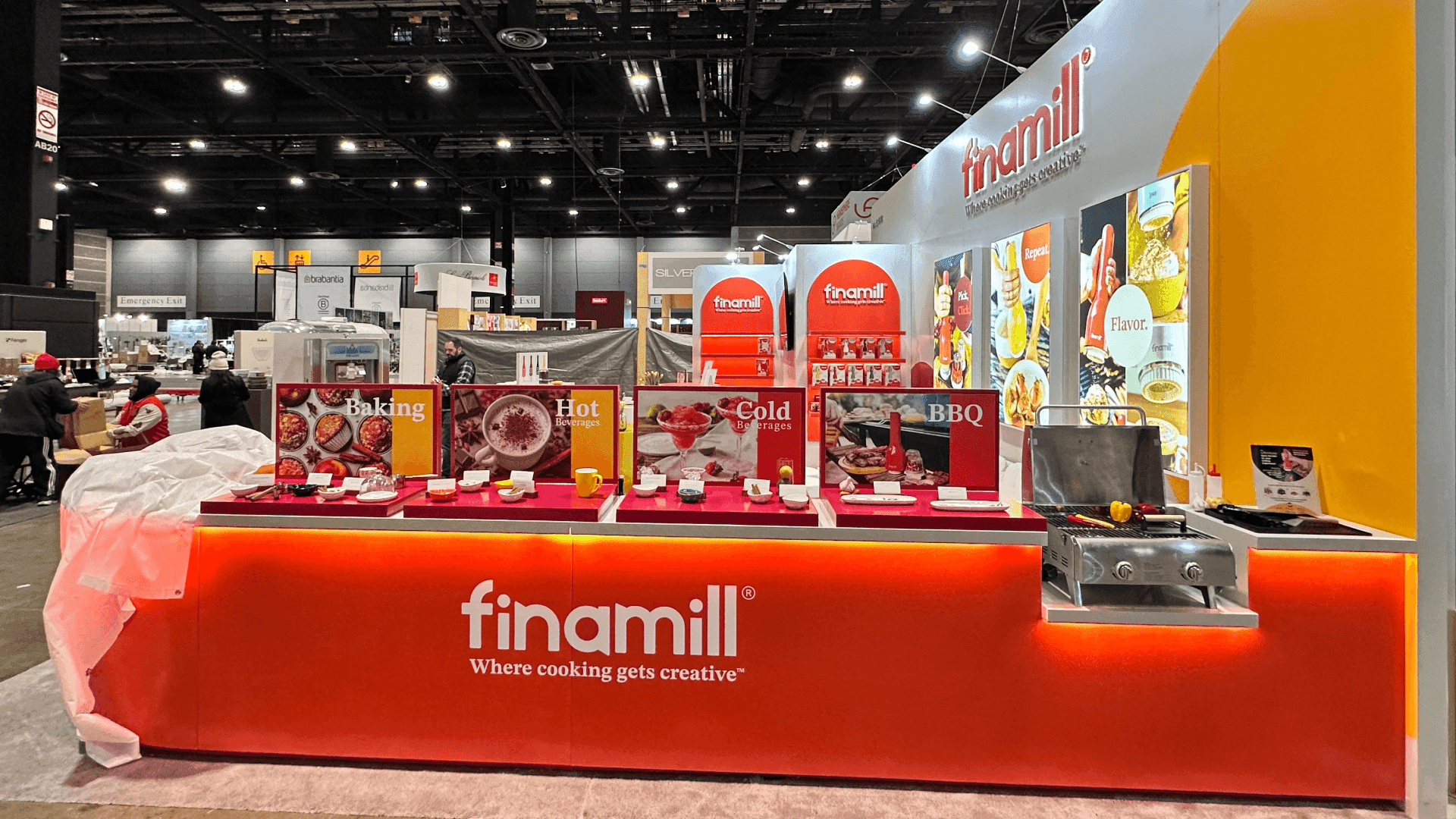
A clear launch connects the invitation, featured product, and booth experience so buyers know what they are coming to see or evaluate.
Give the Launch One Clear Promise
Once the lead product is chosen, define the practical change buyers should recognize. A launch promise should describe what is different for the operator, not rely on adjectives such as “innovative” or “next-generation.”
That change might be a new menu application, a shorter process, one less labor step, a different product format, or a new equipment capability. The strongest promise is usually something the buyer can understand or verify in person.
A food product might introduce a new application worth tasting. Equipment might show a faster or simpler operating step. A technology product might make a workflow easier to understand by showing what changes before and after the new solution is introduced.
Supporting benefits can follow later. They should not compete with the main reason the buyer should stop.
That same promise should carry into the booth’s graphics and brand presentation, so signage and product visuals reinforce the claim instead of introducing a second one.
Make Customer Invitations Promise a Specific Experience
A Customer Invitation should turn the launch promise into a reason to visit. “Come see us at the show” creates awareness; “taste the new application,” “watch the new process,” or “compare the new capability in person” tells the buyer what they will get from making the stop.
The wording does not have to match the booth headline exactly, but the featured product and promised experience should stay consistent. An invitation can be shorter, more direct, or more action-oriented while still setting up the same product story buyers will encounter on the show floor.
A good invitation leaves the buyer knowing what will be worth seeing when they arrive.
Use Operator’s Choice and Show Specials to Reinforce the Launch
Operator’s Choice and Show Specials can support the same launch in different ways.
Operator’s Choice can help a new product get noticed and add another discovery cue around the launch. It should strengthen interest in the featured product, not replace its value proposition with an award message.
Show Specials serve a different job: giving an interested buyer a commercial reason to continue the conversation. A launch offer, trial opportunity, bundle, or other show-specific incentive works best when it stays connected to the same product and promise.
One helps draw attention; the other can help move interest toward a commercial discussion. Neither needs a separate product story.
Make the Booth Deliver What the Promotion Promised
The launch only works if the on-floor experience proves what buyers were told to expect.
If tasting is the proof point, the launch also depends on food and beverage sampling that lets buyers reach the product experience without making the serving process the main story.
When the claim depends on seeing a machine operate, the launch also depends on equipment demo booth planning that makes the operating change easy for buyers to see.
For technology, the proof may be a workflow or capability that buyers can follow without a long explanation. Whatever the format—taste, watch, compare, or interact—the on-floor experience should make the launch promise visible.
Before the show, exhibitors should be able to complete one sentence clearly: “We invited buyers to experience ___, and when they arrive, they will be able to ___.” If those two answers do not match, the promotion and the booth are telling different stories.
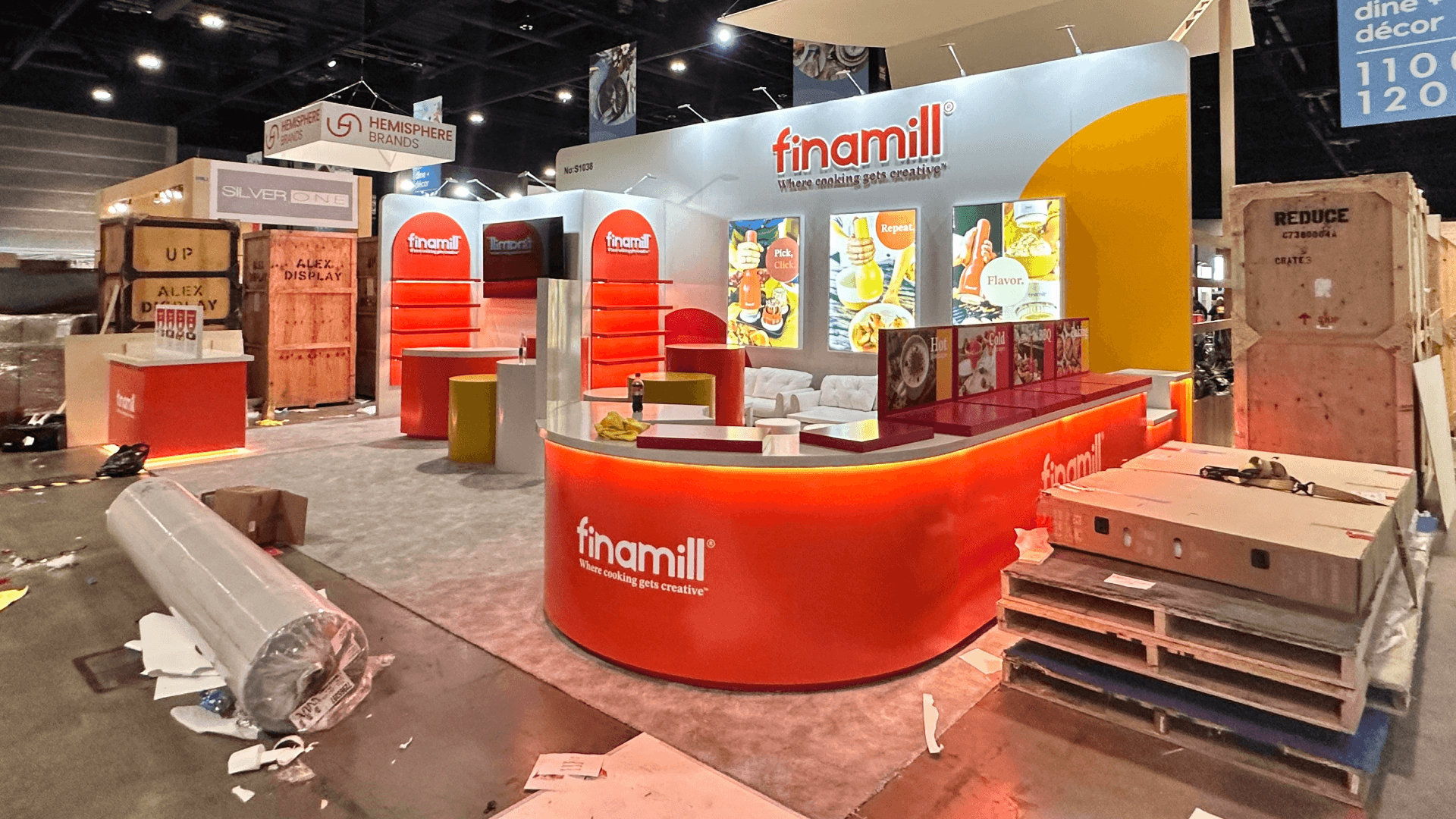
Product demonstrations, show promotion, and staff conversations should reinforce the same new-product story from first interest through the buyer discussion.
Carry the Launch Into the Buyer Conversation
A tasting, demonstration, or product walkthrough is only the start of the conversation. Staff should know which product is being introduced, what claim the experience is meant to prove, and what question should follow once the buyer has seen it in action.
The first follow-up question should stay close to what the buyer just experienced. A labor-saving claim can lead into how that task is handled today; a new menu application can lead into where the buyer sees it fitting in the operation.
From there, the discussion can move into sourcing, technical requirements, or sales depending on what the buyer actually needs.
If notes are taken, record what application caught the buyer’s attention, what problem they are evaluating, and what they want to discuss next. A strong handoff keeps the next conversation tied to the product interest that brought the buyer in.
Before You Finalize the Launch
Before final show preparation, six decisions should point to the same product story:
Launch Element | Decision to finalize |
|---|---|
Hero Product | Name the one new product the launch should make memorable. |
Launch Promise | Define the practical change or benefit the buyer should recognize. |
Customer Invitation Promise | State what invited buyers should expect to see, taste, compare, or evaluate. |
Operator’s Choice / Show Specials | Give each promotion a clear role without changing the featured product or core promise. |
Booth Experience | Make the on-floor interaction prove what was promoted. |
Staff Handoff | Move product interest into the relevant sourcing, technical, or sales discussion. |
When those six decisions support one another, a buyer can move from the first invitation or show promotion to the booth experience and staff conversation without having to interpret a different product story at each step.
FAQ
Do Customer Invitations and the booth need to use the exact same wording?
No. The wording can change by touchpoint, but the featured product, core promise, and expected experience should stay consistent.
Does every Florida Restaurant Show product launch need a tasting or live demo?
No. The booth needs a clear way for buyers to understand or verify the launch promise, but that proof may be a tasting, demonstration, comparison, workflow, product display, or another relevant interaction.
What if we are introducing two new products to different buyer groups?
Avoid forcing both products into one equal launch story. Choose one to lead the main show message, or give the products clearly separated supporting paths when they genuinely address different buyer groups.