What Changes When an International Exhibitor Enters the U.S. Show System?
In practice, the difference often appears in the gaps between decisions. At many U.S. trade shows, approving one part of the exhibit does not automatically trigger the service, contractor approval, or logistics step that follows.
For example:
Booth design approved does not mean electrical has been ordered.
An exhibit partner is hired does not mean material handling is included.
Freight reaches the venue does not mean it has reached the booth.
An outside installer is selected does not mean show-floor access has been approved.
Event-specific rules can also change which provider controls a service or which approval path applies.
A missed handoff can later appear as an unplaced service order, an unapproved contractor, freight waiting in the receiving system, installation labor without access, or a charge with no clear approver.
For an international exhibitor, the first U.S. planning task is to identify these responsibility boundaries before the project moves too far into production or on-site execution.

U.S. show execution is often split across several parties. International exhibitors should confirm who owns each service, approval, order, and handoff before production and move-in.
Who Owns What in a U.S. Trade Show Project?
A U.S. trade show project can involve several companies without any one company owning the entire execution. The useful question is where each party's responsibility begins and ends.
Party | Typical Role | What International Exhibitors Should Confirm |
|---|---|---|
Show Organizer / Show Management | Manages the booth-space program, publishes show rules and deadlines, and identifies event service providers | What the space package includes, which requirements are event-specific, and which providers are designated for the show |
General Service Contractor (GSC) | May provide or coordinate selected services within the show's service structure | Which services the GSC actually provides or coordinates for this event |
Official / Exclusive Provider | May be designated for electrical, rigging, internet, catering, cleaning, or other event-specific services | Which services must go through that provider rather than the outside exhibit partner |
Exhibitor Appointed Contractor (EAC) | An outside contractor the exhibitor wants to use for permitted on-site work, subject to event requirements | Whether registration, insurance, COI, deadlines, approval, or scope restrictions apply |
Exhibit Partner | May handle design, fabrication, graphics, project coordination, logistics coordination, and agreed execution work | What the partner provides directly, what it only coordinates, and what remains outside its scope |
Freight Carrier | Transports booth materials or products to and from the designated receiving point | Where carrier transportation ends and show-site freight handling begins |
Exhibitor | Owns contracts, approvals, products, staff, unresolved orders, and internal decisions | Who inside the company approves each remaining service, order, and handoff |
Use the table as a responsibility map: every required service should have a clear owner, approval path, and handoff before execution begins.
Why GSC, EAC, COI, and Official Providers Change the Execution Path
These terms matter because they affect two different questions:
Who is allowed to perform the work?
and
Who controls the service?
Contractor Access and Approval
An Exhibitor Appointed Contractor (EAC) is an outside contractor the exhibitor wants to use for permitted on-site work. Depending on the event, that contractor may need to be registered or approved before it can work on the show floor.
A Certificate of Insurance (COI) may be part of that approval or access process. Insurance and documentation requirements vary by event.
This matters for international exhibitors that already have a design, fabrication, or booth contractor overseas. That partner can still be involved in the U.S. project, but the existing relationship does not automatically give it unrestricted show-floor access.
Service Control
The General Service Contractor (GSC) may provide or coordinate selected show services, while other services may be assigned to official or exclusive providers.
An outside exhibit company may therefore design around a requirement or coordinate it without being the company that physically performs the service.
Hiring an exhibit company does not automatically mean that company can perform every task on the show floor.
An overseas design or fabrication partner can remain part of the project, but any U.S. on-site work still needs to fit the contractor and provider rules of the specific event.
What Can Your Exhibit Partner Handle—and What May Still Sit Outside Its Scope?
An exhibit partner can often manage a large part of the booth project, including design, fabrication, graphics, project coordination, and agreed execution work. The finished booth may still depend on services outside that direct scope.
Depending on the event, these can include:
Material handling
Electrical
Rigging
Internet / telecom
Certain labor scopes
Cleaning
Catering
The important distinction is between coordination and service delivery.
An exhibit partner may identify the electrical load, rigging points, internet requirements, or freight timing and help coordinate the order. The actual electrical connection, rigging work, internet service, or material handling may still be performed by the provider designated for that show.
Coordination is not always the same as providing the service.
Before approving the project scope, confirm:
Who defines the requirement?
Who places or coordinates the order?
Who actually performs the service on-site?
The exhibitor manual is the event-specific source of truth for provider assignments, contractor requirements, service deadlines, freight receiving, labor conditions, and show-specific exceptions.
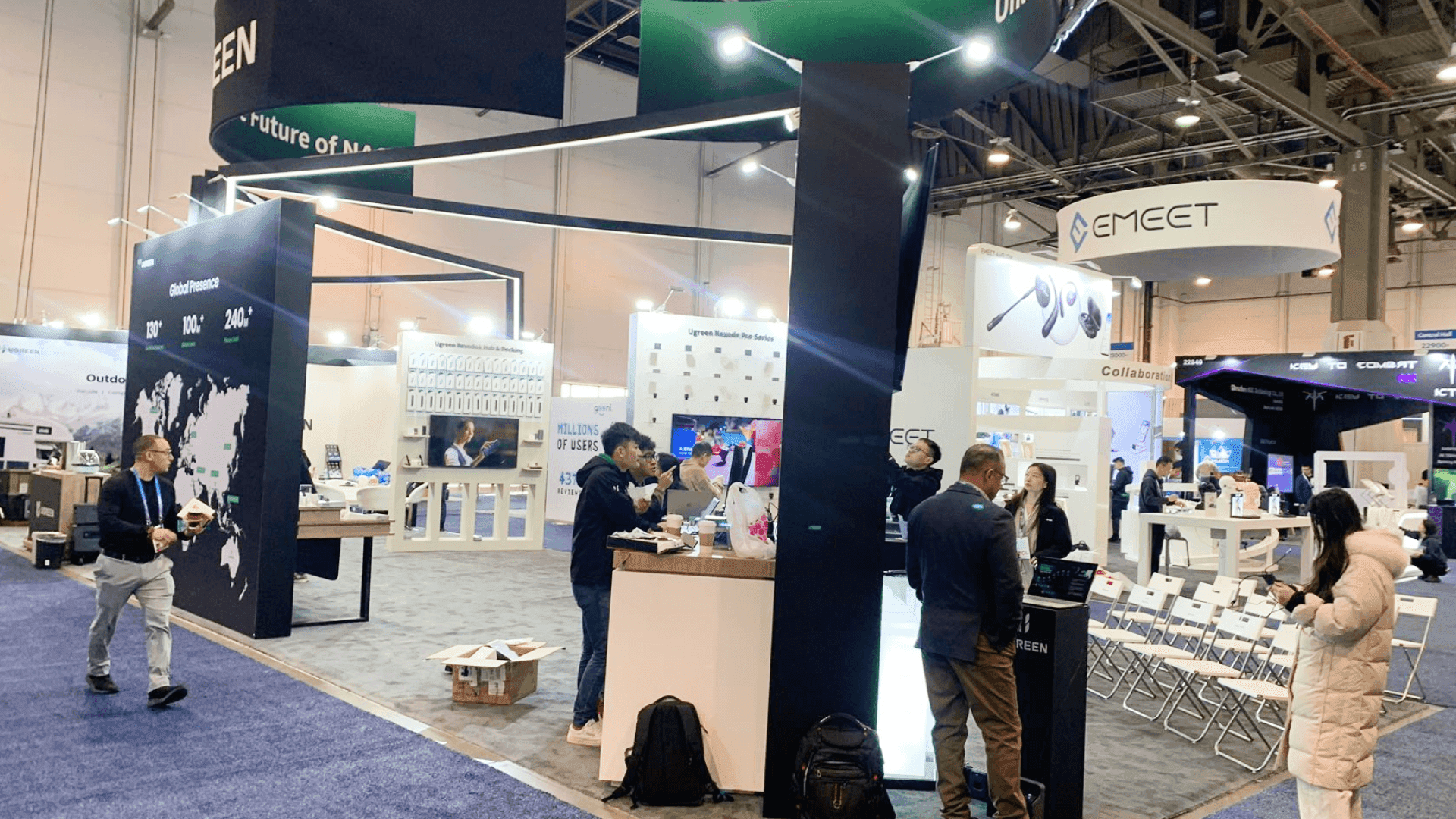
Freight delivery, material handling, installation, and official service connections are separate handoffs. Each stage should have a clear owner before the shipment moves.
Where Do Freight, Material Handling, and Installation Responsibilities Hand Off?
International exhibitors can lose track of responsibility where transportation ends and show-site execution begins.
A typical handoff looks like this:
Exhibitor / Exhibit Partner → Freight Carrier → Designated U.S. Receiving Point → Material Handling / Drayage → Booth → Permitted Installation / EAC Labor → Official Service Connections → Show-Ready Exhibit
Freight Carrier
The freight carrier transports booth materials or products to the designated receiving point. Its role is transportation rather than the show-floor movement that follows.
Material Handling
Once freight enters the show receiving system, responsibility shifts from transportation to material handling. The trade show drayage and material handling guide explains what happens from receiving and booth delivery through empty-container and outbound handling.
Installation
After booth materials are available at the exhibit space, installation can begin under the contractor and labor rules that apply to that event. Depending on the show, the work may involve an approved EAC, other permitted labor, or a designated provider.
Official Service Connections
A physically installed booth may still require electrical, rigging, internet, or other service connections before it can operate.
Freight delivery, material handling, installation, and service connection are separate handoffs.
Why U.S. Trade Show Costs May Come From Several Providers
International exhibitors may be used to receiving one stand or booth quote that covers most of the project. In the U.S., the finished exhibit can involve several cost owners because responsibility is divided across different parties.
Separate charges may relate to:
Booth space
Exhibit design, fabrication, or rental
Freight
Material handling
Installation and dismantle
Electrical
Internet
Rigging
Those invoices may come from the organizer, exhibit partner, freight carrier, GSC, official service provider, EAC, or labor provider.
Cost fragmentation is often a result of responsibility fragmentation.
Several invoices do not necessarily mean several unplanned services. They may simply reflect how the U.S. show system divides the work.
For international exhibitors, the useful question is not only:
How much is the booth?
It is also:
Which parts of the finished exhibit are billed by the exhibit partner, and which sit with the organizer, freight carrier, GSC, official providers, or another contractor?
Those separate provider charges still need to come together in one working event budget. The trade show exhibiting cost breakdown connects booth space, exhibit scope, logistics, show services, and labor in that wider budget view.
What Should International Exhibitors Confirm Before Production, Shipping, and Move-In?
Before production is released or freight is booked, the U.S. execution path should be clear enough that no required service is sitting between two parties with no owner.
Confirm that:
The current exhibitor manual has been reviewed.
The booth-space package and configuration are understood.
The GSC and its relevant role have been identified.
Relevant official or exclusive providers are known.
EAC requirements have been checked for outside contractors expected to work on-site.
COI or other insurance requirements are confirmed where applicable.
The exhibit partner's scope clearly separates what it provides, coordinates, and does not cover.
Electrical, internet, and rigging each have an owner for planning, ordering, approval, and connection.
The freight receiving route is confirmed.
Material-handling responsibility is assigned once freight enters the show receiving system.
Installation and move-in responsibilities are clear.
Outbound freight and the post-show handoff have owners.
The purpose is not to make one contractor responsible for everything. It is to make sure every required service, approval, order, and handoff has a clear owner before changes become harder to make.
U.S. Show-System Readiness Check
Before production, freight, or on-site execution is locked, the team should be able to answer:
Who controls each required service?
Which services require an official provider or approved contractor?
Who places each remaining order or approval?
Where does one party's responsibility end and the next begin?
If any answer is still unclear, the responsibility map is not complete.
Clear ownership is only part of show readiness. Once service and approval responsibilities are mapped, pre-show coordination before move-in helps confirm that the drawings, graphics, technical requirements, product details, material priorities, and installation handoffs are still aligned.
FAQ
Can an international booth contractor install our exhibit at a U.S. trade show?
Sometimes, but not automatically. An outside contractor may need to qualify as an Exhibitor Appointed Contractor (EAC), provide required insurance documentation, and work within the scope permitted by the event. Some services may still remain with official or exclusive providers.
What is the difference between a GSC and an EAC?
A General Service Contractor (GSC) is appointed by the show and may provide or coordinate selected event services. An Exhibitor Appointed Contractor (EAC) is an outside contractor selected by the exhibitor for permitted on-site work, subject to the event's contractor requirements.
Why might an EAC need a Certificate of Insurance (COI)?
A Certificate of Insurance (COI) may be required as part of contractor registration or show-floor access. Required coverage, documentation, and deadlines vary by event, so exhibitors should use the current exhibitor manual.
Does hiring an exhibit partner mean all show services are included?
No. An exhibit partner may provide the booth, graphics, project coordination, and agreed execution work, while services such as electrical, rigging, internet, material handling, or certain labor scopes may still be ordered or delivered through other providers.
What should international exhibitors confirm before production or shipping begins?
Confirm the exhibit partner's scope, GSC and official-provider responsibilities, EAC and COI requirements, freight receiving route, material-handling ownership, installation responsibility, and any remaining service orders or approvals.