Is the Chicago Build Starting Space Final?
The first check is whether the drawing is based on the space that has actually been booked.
Chicago Build's exhibitor materials currently use both Pipe & Drape Booth Package and Shell Scheme Package for the organizer-provided setup, while Raw Space represents a different starting condition. For fabrication purposes, the terminology matters less than knowing exactly which condition applies to the project.
Before freezing the design, confirm the footprint, open sides, and which organizer-provided booth elements will remain in the finished exhibit. The issue at this stage is not whether the supplied package or Raw Space is the better option. It is whether the project is still being designed around an assumption that may change.
If the starting condition is not final, the drawing is still a working concept rather than a fabrication-ready plan.
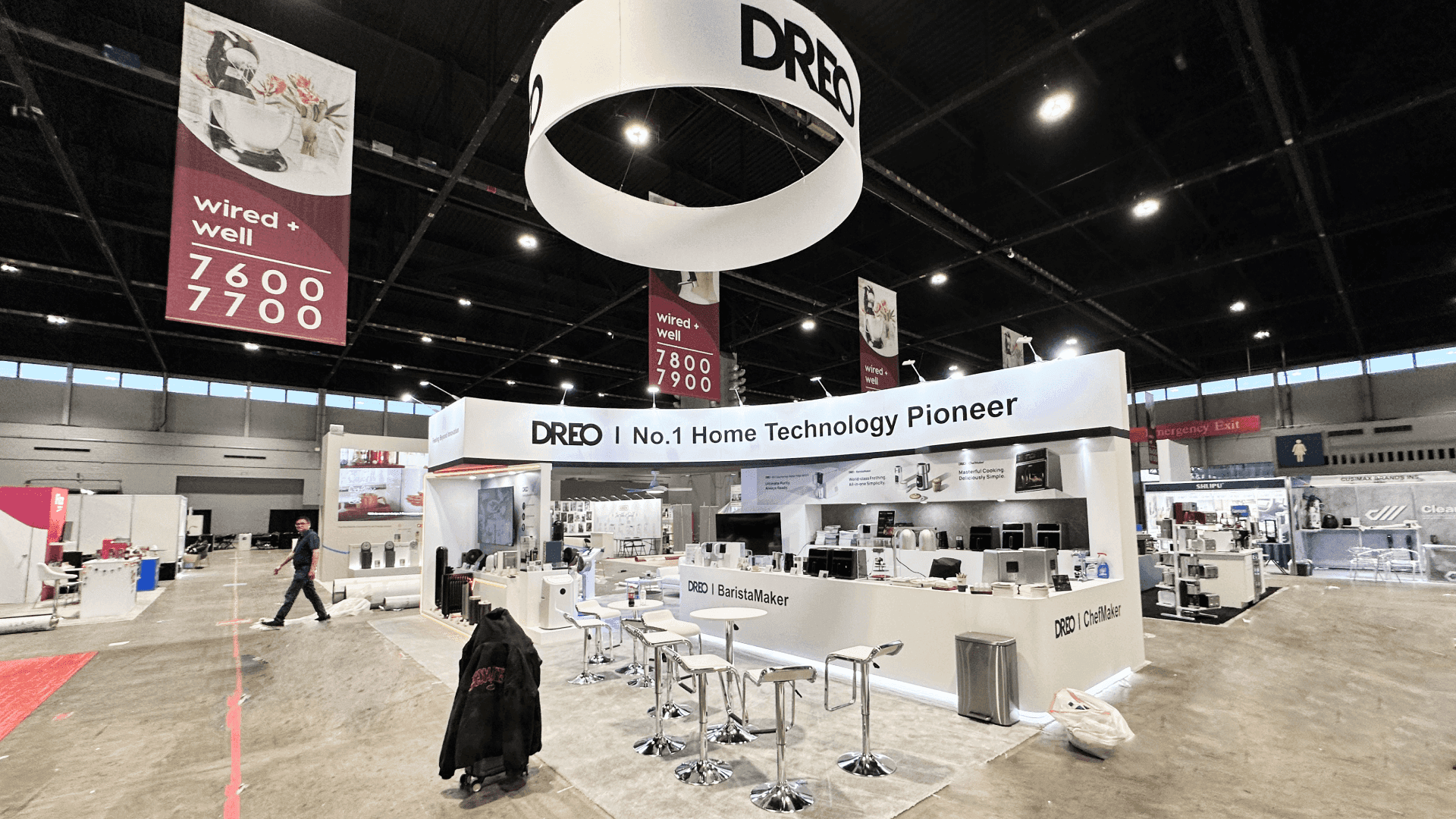
Reviewing booth dimensions, product placement, graphics, and technical interfaces before the design is released for fabrication.
Does the Drawing Match What Chicago Build Actually Provides?
Once the starting condition is known, the next review is more practical: does the drawing actually reflect it?
A branded wall may conflict with a retained booth boundary. Graphics may be sized to a surface that will not exist. Flooring or furniture shown in the rendering may belong to a different scope. Even a small mismatch can change finished dimensions, fixture positions, mounting points, or required clearances.
The purpose of this review is not to inventory every supplied item. It is to identify assumptions in the drawing that no longer match the physical space the team will receive.
If the booked condition and the design still describe different physical environments, the drawing is not ready to freeze.
Can the Product or Demo Inputs Still Change the Booth?
At Chicago Build, the exhibit itself can drive fabrication as much as the booth structure. An HVACR unit may determine access and clearance. A building-product display may require a specific fixture or mounting method. A screen-led BIM station can lock in monitor size, workstation position, power, and standing space.
Before the booth is built around the product, confirm the inputs that physically shape it:
final dimensions, weight, and required clearance;
mounting or support method;
screen or workstation position;
power and connection requirements.
If an AI or BIM team is still deciding where the screen sits, how visitors watch the demo, or where the technical conversation continues, planning the Chicago Build digital workflow demo should come before those physical positions are frozen.
The product story can continue to evolve. The inputs that determine the physical booth cannot.
Can Power, Screens, or Connectivity Still Move Something?
Power and connectivity do not need to be fully ordered before every fabrication task begins, but their physical interfaces need to be understood.
If a later service decision can still move a screen, change a counter, create a new cable route, or require access behind a finished wall, that part of the exhibit is not yet stable.
A useful test is:
Would changing this service later force something already being fabricated to move?
If the answer is yes, checking those utility interfaces against the booth engineering should happen before the affected dimensions are released.
Can the Booth Be Installed in the Order the Design Assumes?
A booth can work perfectly in the shop and still create problems on the show floor if the design assumes an installation sequence that cannot actually happen.
For Chicago Build 2026, the current service schedule gives Raw Space and exhibits of 800 square feet or larger targeted move-in access on October 26 from 1–6 p.m. All exhibitors install on October 27 and must be fully installed by 5 p.m. Direct shipments are accepted during the published exhibitor move-in windows.
Those conditions make access and sequence part of the design-freeze decision. Large equipment may need to enter before a wall closes an opening. Utility work may need access before counters or fixtures are positioned. Screens or graphics may depend on other components being complete first.
If the physical sequence depends on when equipment or freight reaches the booth, aligning pre-show logistics with the installation plan should happen before the drawings are frozen.
The practical test is straightforward: can the finished design be installed without undoing completed work simply to reach the next step?
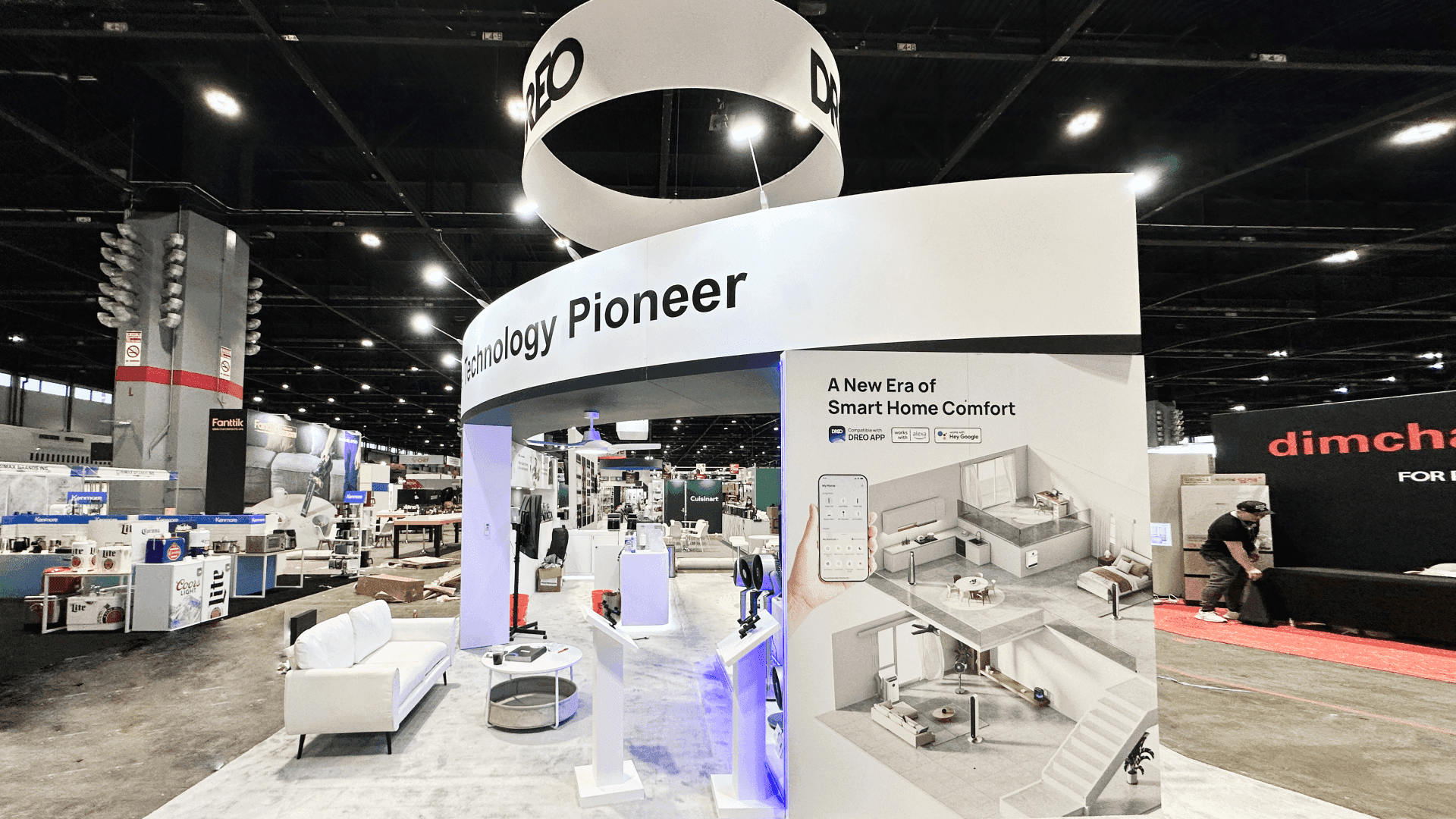
Coordinating freight access, equipment placement, utilities, and installation order so the approved booth can be built as planned at McCormick Place.
Release or Hold?
The earlier checks lead to one final gate. The goal is not to close every administrative detail, but to make sure nothing unresolved can still change the physical exhibit.
Release Check | Ready? |
|---|---|
Starting space and footprint confirmed | Yes / No |
Organizer-provided scope agrees with the drawings | Yes / No |
Product and equipment inputs are frozen | Yes / No |
Graphic dimensions and mounting surfaces are final | Yes / No |
Screen and equipment positions are fixed | Yes / No |
Technical interfaces no longer change the build | Yes / No |
Freight access works with the layout | Yes / No |
Installation sequence is executable | Yes / No |
Ready to Release
Release the design when the remaining open items are administrative or operational and no longer affect the physical exhibit.
Hold
Keep the project on hold when an unresolved decision can still change structure, dimensions, graphics, mounting, cable routing, flooring, equipment access, or installation order.
A design freeze is complete when fabrication can begin without building around assumptions that are still likely to change.
FAQ
Can Chicago Build graphics go into production as soon as the concept is approved?
Only when the final graphic dimensions and mounting surfaces are stable. If walls, counters, frames, or product fixtures can still change, graphics should remain on hold.
Can booth fabrication start while product dimensions are still changing?
Not when those changes affect fixtures, mounting, access, clearance, or surrounding structure. Physical product inputs should be stable before the booth is built around them.
Can Chicago Build move-in or freight conditions affect the design freeze?
Yes, when they change how the booth can actually be installed. Freight access, equipment placement, or installation timing becomes a design-freeze issue only when it forces physical or sequencing changes.
When the Booth Is Ready to Move Forward
A Chicago Build design freeze does not require every show-day detail to be finished. It requires the physical dependencies to stop moving.
If the team is still changing the product story, demo capacity, meeting needs, or footprint, it has not reached that gate yet. Those decisions belong earlier in Chicago Build booth planning.
Once the remaining questions are administrative rather than structural, the project can move from approved concept to fabrication with much less risk of avoidable rework.