Decide Where Each Type of Technical Evidence Belongs
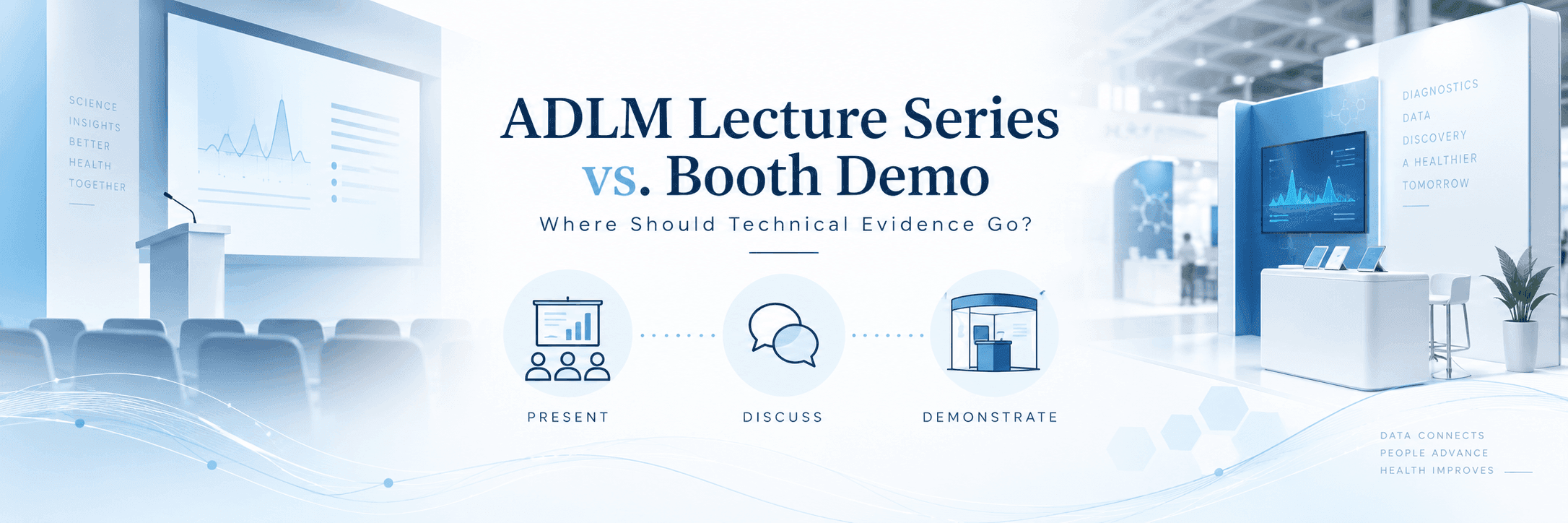
The table below is a planning framework, not an ADLM rule. The right split depends on what buyers need to understand, see, and discuss before they can evaluate the technology.
Evidence or Question | Lecture Series | Booth | Specialist Conversation |
|---|---|---|---|
Diagnostic problem / clinical need | Establish the problem and why it matters | Reinforce the context around the product | Apply it to the buyer’s laboratory |
Scientific rationale | Explain the core method or technical logic | Connect the rationale to visible proof | Go deeper when needed |
Physical analyzer operation | Introduce what the instrument is designed to do | Show operation, interface, or visible output | Discuss application fit and operating conditions |
Assay or sample workflow | Explain the workflow logic at a high level | Demonstrate or visualize the important steps | Discuss lab-specific workflow fit |
Automation workflow | Introduce the system concept and why integration matters | Show connected physical-digital proof | Discuss connectivity and integration requirements |
Software or middleware | Explain its role in the diagnostic process | Show interface, data flow, or workflow behavior | Discuss technical integration with existing systems |
Results, performance, or product comparison | Set the criteria buyers should pay attention to | Show meaningful differences or outputs in context | Discuss buyer-specific tradeoffs |
Implementation, configuration, and exceptions | Set expectations without buyer-specific detail | Identify requirements that affect evaluation | Handle configuration, implementation constraints, and technical exceptions |
Placement matters because some evidence loses value in the wrong setting. Physical analyzer operation is difficult to judge from a verbal explanation alone; buyers usually understand it better when they can watch the equipment work. Buyer-specific integration has the opposite problem: once the answer depends on an existing laboratory environment or system configuration, a public demonstration is no longer the right place to resolve it.
Once the evidence split is clear, exhibit design and engineering can turn those proof requirements into practical demo zones, screens, product displays, and discussion areas. The physical plan becomes easier to define when each part of the exhibit has a specific job.
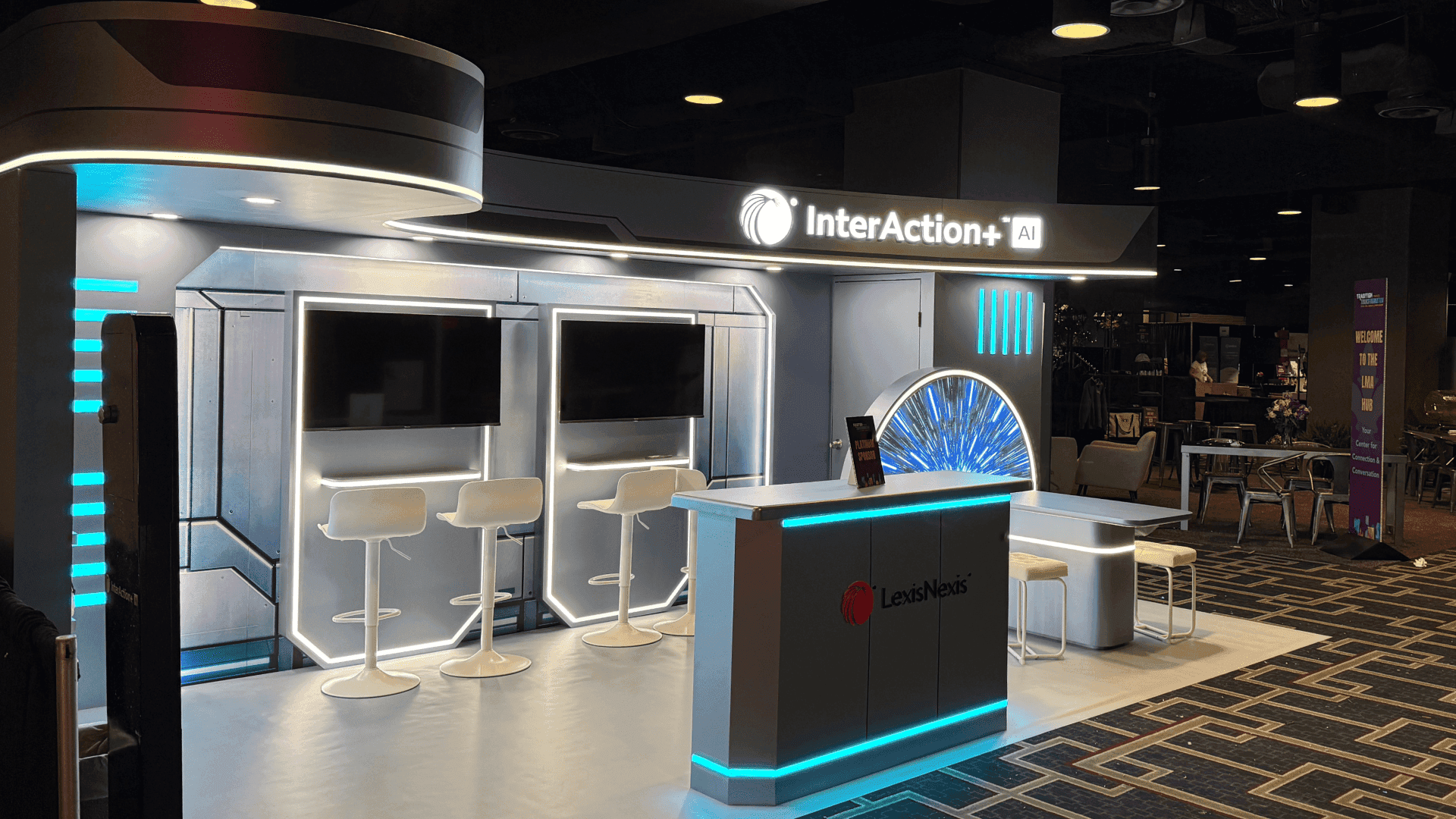
ADLM exhibitors can use the Lecture Series to establish technical context, then move buyers into booth-based product or workflow proof that is easier to evaluate in person.
What the 20-Minute Lecture Series Should Accomplish
Twenty minutes is enough to explain the diagnostic problem and why a different approach matters. It is not enough to recreate an entire product evaluation. A useful session leaves attendees with a clear understanding of the problem being addressed, the scientific or technical logic behind the approach, and one reason the technology deserves a closer look.
For an instrument company, that might mean explaining why a testing method matters or what limitation the analyzer is designed to address. An automation or software exhibitor may instead need to show where an existing workflow breaks down and why a different system concept changes the process. In either case, the presentation gives the proof context rather than trying to replace it.
A simple test is whether attendees can leave the session answering one question: What is different here, and why should I look more closely? If answering the next question requires watching the product operate, following a workflow, exploring an interface, or comparing outputs, that evidence belongs on the show floor.
What the Booth Still Needs to Prove
The booth becomes important when the buyer needs evidence that is difficult to understand on stage. A physical analyzer can be watched in operation, a workflow can be followed in sequence, and an interface or result can be examined against questions the attendee already has.
That is why the booth should not replay the Lecture Series in another format. Once the session has established the diagnostic problem and technical rationale, the show-floor experience can move directly into proof instead of rebuilding the same explanation.
When buyers need to see a real analyzer operate, ADLM instrument demo planning addresses how that physical proof is supported on the show floor. This article stops at the content decision: operation belongs where buyers can see it; the child page deals with how the booth supports that operation.

A practical ADLM evidence path: use the Lecture Series for context, the booth for product or workflow proof, and specialist conversations for buyer-specific integration and implementation questions.
Instrument and Automation Exhibitors Need Different Proof
A diagnostic instrument company and a laboratory automation company may share the same ADLM audience, but they are asking buyers to evaluate different things. Instrument exhibitors need buyers to judge a physical product and its operation. Automation exhibitors need buyers to understand how several devices, software layers, and process steps work together.
For an instrument exhibitor, the Lecture Series can establish the diagnostic problem, scientific principle, and high-level value. The booth then makes the proof tangible through actual operation, a physical interface, sample handling, or visible output. Questions that depend on application fit or a particular laboratory are better moved to a specialist.
Automation exhibitors require a different split. The session can explain the workflow problem, the system concept, and why integration matters; the booth then shows enough of the physical and digital process for buyers to understand how the major stages connect.
When the proof is a connected process rather than a single machine, ADLM automation workflow planning addresses how instruments, software, screens, and process stages become understandable as one system. The distinction is useful: an instrument exhibitor proves how the product works, while an automation exhibitor proves how the system works together.
What Should Wait for the Specialist Conversation
Public explanation stops being efficient once the answer changes according to the buyer’s own laboratory. Integration with existing instruments or software, configuration choices, implementation constraints, technical exceptions, and application-specific requirements usually need more context than a stage presentation or public demo can provide.
A practical stop rule is straightforward: if the answer depends on the buyer’s laboratory, systems, configuration, or implementation requirements, move the discussion to the appropriate specialist. The Lecture Series establishes context, and the booth provides proof; the specialist conversation is where that proof becomes specific to the buyer.
FAQ
Should an ADLM Lecture Series presentation include the full product demo?
Usually not. The Lecture Series is better used to establish the diagnostic problem and technical context, while proof that depends on operation, interfaces, workflow, or direct comparison belongs in the booth.
What technical details are better left for the booth?
Physical operation, workflow evidence, software interfaces, visible results, and product comparisons are easier to evaluate on the show floor, where buyers can see the technology in context and ask follow-up questions.
When should a technical question move to a specialist conversation?
Move the discussion to a specialist when the answer depends on the buyer’s laboratory environment, integration requirements, configuration, implementation constraints, or other conditions specific to that organization.