IpstisEdge brought a 10x20 booth to RE+ in 2023 to present utility-scale energy storage products, intelligent power edge solutions, manufacturing capacity, and battery system applications. The booth needed to make a large technical product feel clear inside a compact inline footprint.
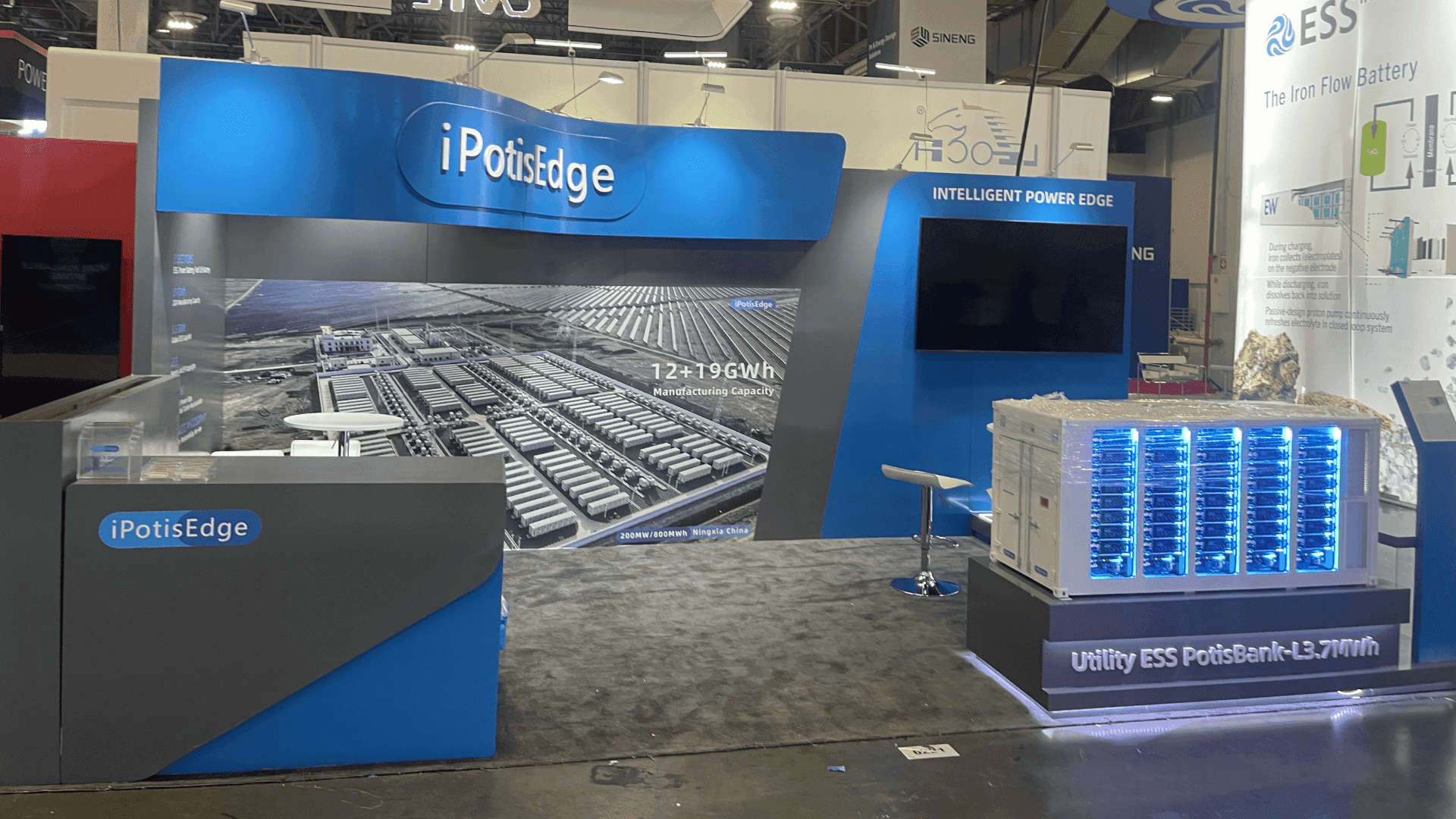
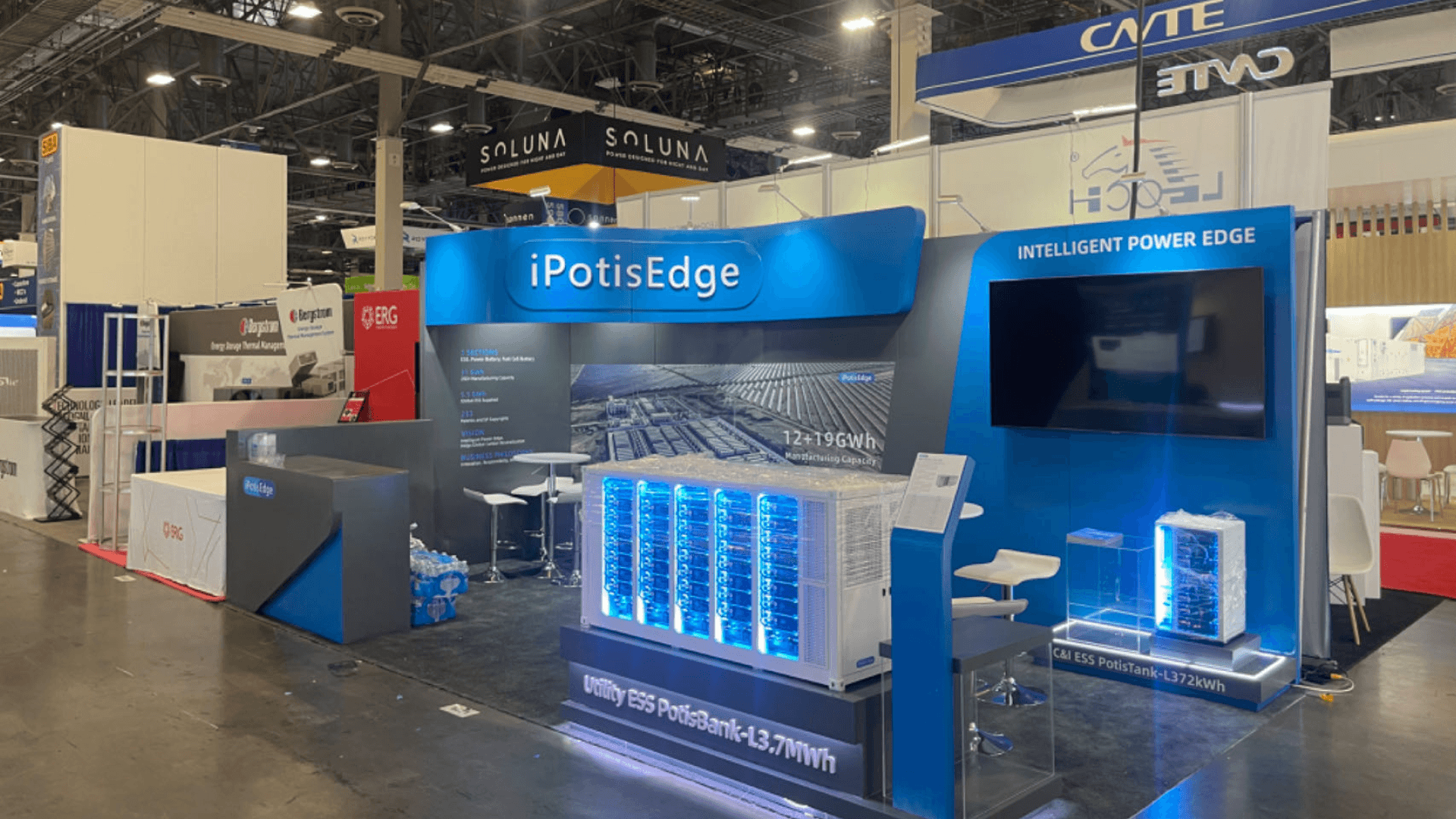
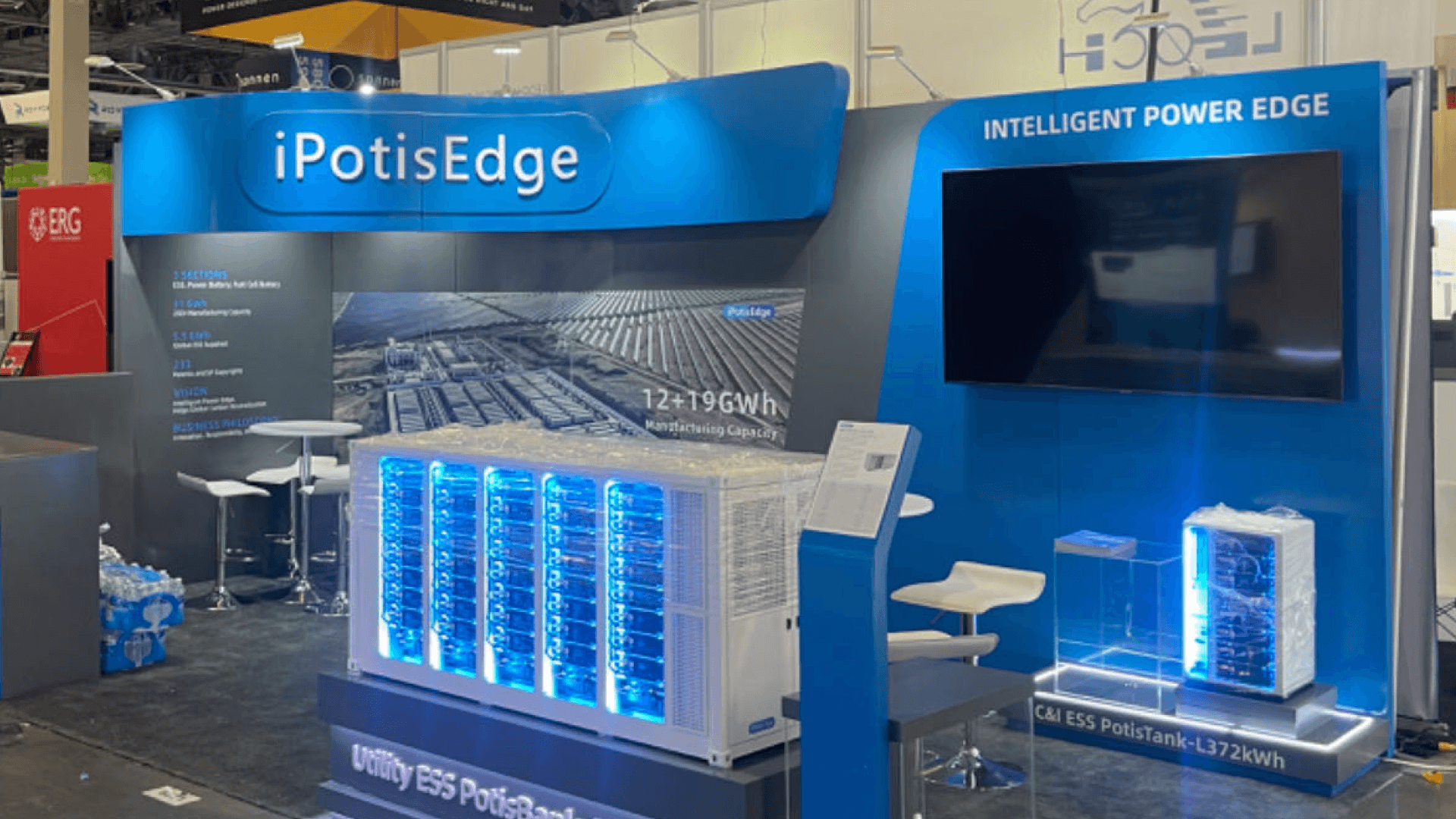
The layout used a blue and gray brand structure, a large manufacturing capacity graphic, monitor content, a reception counter, and two illuminated ESS product displays. The main product model became the anchor point, while the backwall graphics helped explain scale, capacity, and energy storage use cases.
The final 10x20 booth gave IpstisEdge a focused RE+ presence built around battery visibility, power storage messaging, visitor explanation, and controlled product display handling on the Las Vegas show floor.
💼
Client:
📅
Year/Exhibition:
📍
Location:
📐
Size:
🏢
Industry:
🏢
Venue Context:
Challenge
The main challenge was scale. IpstisEdge needed to present utility energy storage equipment, large manufacturing capacity, and intelligent power edge messaging inside a 10x20 booth. The product category was technical, but the booth still had to read quickly from the aisle.
The second challenge was product handling. The illuminated ESS display model and smaller battery display needed stable placement, clean lighting, and enough viewing space for visitors to inspect details without blocking the booth entrance.
The third challenge was setup order. Graphics, monitor content, product bases, counters, stools, lighting, and cable paths had to be coordinated before opening. For this type of clean energy booth, logistics and pre-show coordination helped keep product placement and final reset controlled.
Design vs. On-site Execution
The concept was to let the product model do the first part of the explanation. The illuminated ESS unit was placed forward, close to the aisle, so visitors could see the technology before reading the deeper technical graphics.
For a 10x20 trade show booth, this kind of layout works best when the message is not spread across too many zones. IpstisEdge used one main product anchor, one backwall story, one monitor area, and one reception point.
The backwall graphic supported the product display with manufacturing capacity, facility imagery, and energy storage context. The monitor area added flexibility for digital explanation, while the reception counter gave staff a clear first contact point for visitor questions.
Main ESS Product Display
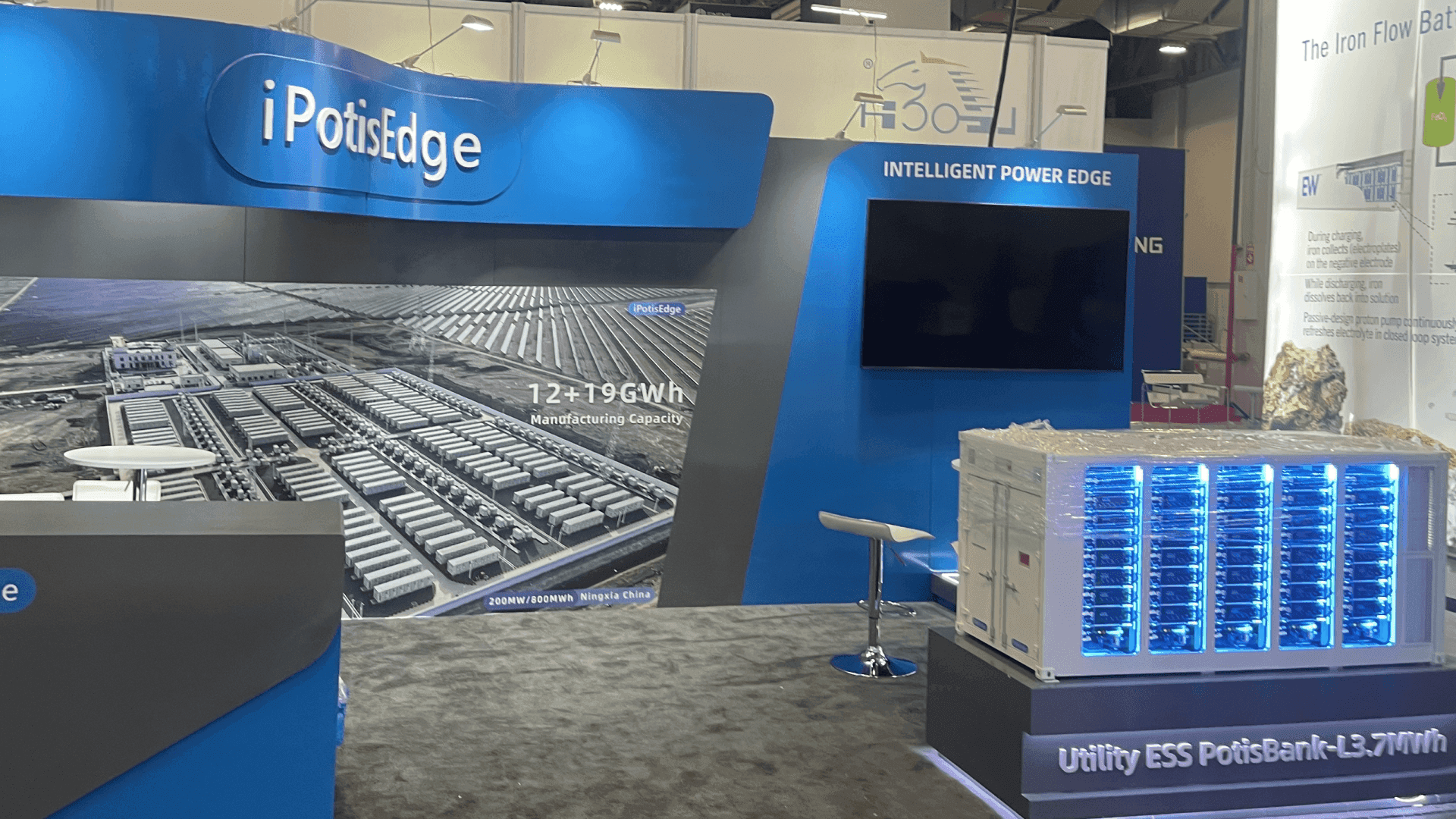
The illuminated Utility ESS PotisBank display was positioned near the aisle to act as the booth’s strongest technical product anchor.
Manufacturing Capacity Backwall
The large facility graphic helped communicate production scale, energy storage capacity, and company capability without relying only on brochures.
Monitor Explanation Zone
The monitor wall supported product videos, system diagrams, and technical explanation for visitors who needed more detail after seeing the product model.
Reception and Staff Point
The front counter gave staff a clear place to greet visitors, answer first questions, and guide conversations toward the ESS product displays.
On-site Highlights
This booth was built around a compact but technical RE+ product story. The 10x20 space had to support a large illuminated ESS display, a smaller battery model, manufacturing graphics, monitor content, staff interaction, and clean visitor access. The on-site work focused on product base placement, power routing, graphic alignment, lighting checks, counter positioning, and final cleaning so the booth could open with a clear energy storage presentation.
Utility ESS Product Flow for a 10×20 RE+ Booth
Aisle-Forward Product Anchor
Capacity Graphic Support
Blue Brand Recognition
Monitor-Based Explanation
Controlled Product Staging
Outcome
The illuminated battery model gave visitors an immediate visual reference for IpstisEdge’s energy storage solution.
The backwall capacity graphic and monitor area helped explain manufacturing scale, system value, and product applications.
The product displays, counter, and seating were placed to keep the booth open enough for short technical conversations.
Lighting, graphics, product bases, monitor placement, and counters were checked together before RE+ visitor traffic began.
What made this booth work was the way it avoided overloading a compact footprint. IpstisEdge did not try to turn the 10x20 booth into a full technical showroom. The main ESS model carried the first visual impression, while the backwall and monitor supported deeper explanation.
The practical takeaway is that energy storage booths should be planned around product hierarchy. Visitors at RE+ often compare battery systems, ESS capacity, deployment scenarios, and supplier capability quickly. For exhibitors preparing for RE+ or another Las Vegas clean energy event, an experienced Las Vegas trade show booth builder can help turn a compact booth into a clearer product display environment.
Quick Q&A
Q: Why was the main ESS model placed near the aisle?
A: The product model needed to attract attention first. Placing it forward helped visitors understand the booth category before reading the graphics.
Q: Why did the booth use a large manufacturing graphic?
A: Energy storage buyers often care about production scale and supply confidence. The graphic helped support that conversation.
Q: What mattered most during setup?
A: Product base placement, lighting, monitor readiness, graphic alignment, cable control, and final booth cleaning were the key execution points.
Q: Is a 10x20 booth enough for ESS products?
A: Yes, if the booth focuses on one main product story, one support graphic, and one clear staff interaction point.
Q: How should energy storage exhibitors avoid a crowded booth?
A: Keep the product hierarchy simple. Use one main display, supporting graphics, and enough open space for technical conversations.