What Can a 10–15 Minute Main Stage Session Actually Accomplish?
The Main Stage does not need to explain the entire product. In a short slot, the more useful goal is to make three things clear:
what is new;
which ISP network or operating problem it addresses;
why an operator may want to investigate it further.
For a broadband hardware company, that could mean introducing a new radio, appliance, fiber-related component, or network capability around a real deployment problem.
For a software provider, it could mean showing the outcome of a new monitoring, automation, subscriber-management, billing, or network-management capability without walking through the entire platform.
Specifications, workflow details, integration paths, and deployment conditions can wait until the operator has a reason to ask about them.
A useful outcome is simple: the operator leaves the stage knowing what they want to look at next.

WISPAPALOOZA Emerging Tech participants who also exhibit should have the booth ready before the Main Stage session ends, so ISP operators can move directly into product proof, workflow demos, and technical questions.
What Should Operators Be Able to See at the Booth?
The booth should pick up where the presentation stops.
For radios, routers, fiber components, network appliances, and similar products, the next question may be physical: form factor, connections, mounting, deployment context, or the difference between related devices. When hands-on access matters, broadband equipment booth planning needs to leave products accessible even while a technical conversation is underway.
Software creates a different next step. If the presentation introduces a new monitoring, automation, billing, subscriber-management, or network-management capability, an operator may want to follow one relevant workflow or ask how it fits an existing ISP environment. ISP software booth planning therefore needs to keep that workflow readable while leaving room for integration and implementation questions.
The booth does not need to explain the company's full product line. It needs to give the operator the specific proof that did not fit on the Main Stage.
How Do Tuesday and Wednesday Change the Follow-Up?
Tuesday: Be Ready Before the Showcase Starts
On Tuesday, November 3, Emerging Tech Showcase Round 1 is scheduled from 4:00–5:00 PM. The Exhibit Hall Happy Hour begins immediately at 5:00 PM and runs until 6:45 PM. A 1:1 Scheduled Meetings block also runs from 4:00–6:45 PM.
For a participating exhibitor, there is little time to reset between the presentation and the next Exhibit Hall window. The relevant product, workflow, screens, booth staff, and lead-capture process should already be ready before the speaker heads to the Main Stage.
The booth should not depend on the presenter returning first to switch on a demo, brief the team, or prepare the product.
Wednesday: Plan for Two Follow-Up Windows
On Wednesday, November 4, Emerging Tech Showcase Round 2 is scheduled from 10:00–11:00 AM. The Showcase Showdown follows from 12:30–12:45 PM, immediately before the Exhibit Hall opens for lunch from 12:45–2:30 PM. A 1:1 Scheduled Meetings block then runs from 2:30–4:45 PM.
That creates two useful paths: an operator can move from the Showdown directly into the Exhibit Hall, or a conversation that starts at the booth can continue later in a scheduled meeting.
None of these time blocks guarantees traffic to a particular exhibitor. What they provide is a clear WISPAPALOOZA sequence:
Main Stage → Exhibit Hall → technical discussion or scheduled follow-up
That sequence is why the Showcase and booth should be prepared together rather than treated as separate activities.
Don't Restart the Pitch for Visitors Who Saw the Showcase
Someone arriving after the Showcase may already know what was announced and why it matters. Starting again with the full company introduction wastes that context.
Booth staff should know exactly what was shown on stage and what visitors can examine in more depth. A simple question such as:
Which part did you want to look at more closely?
can move the conversation straight to the operator's interest.
One person may want deployment details. Another may want to see the workflow behind a software claim. Others may already be asking about compatibility, implementation, availability, or purchasing.
If one discussion becomes detailed, staff should know where it can continue without taking over the main product or demo area.
If that follow-up depends on a particular product display, screen arrangement, demo position, or conversation area, those requirements should be built into the booth design and engineering before the layout is finalized.
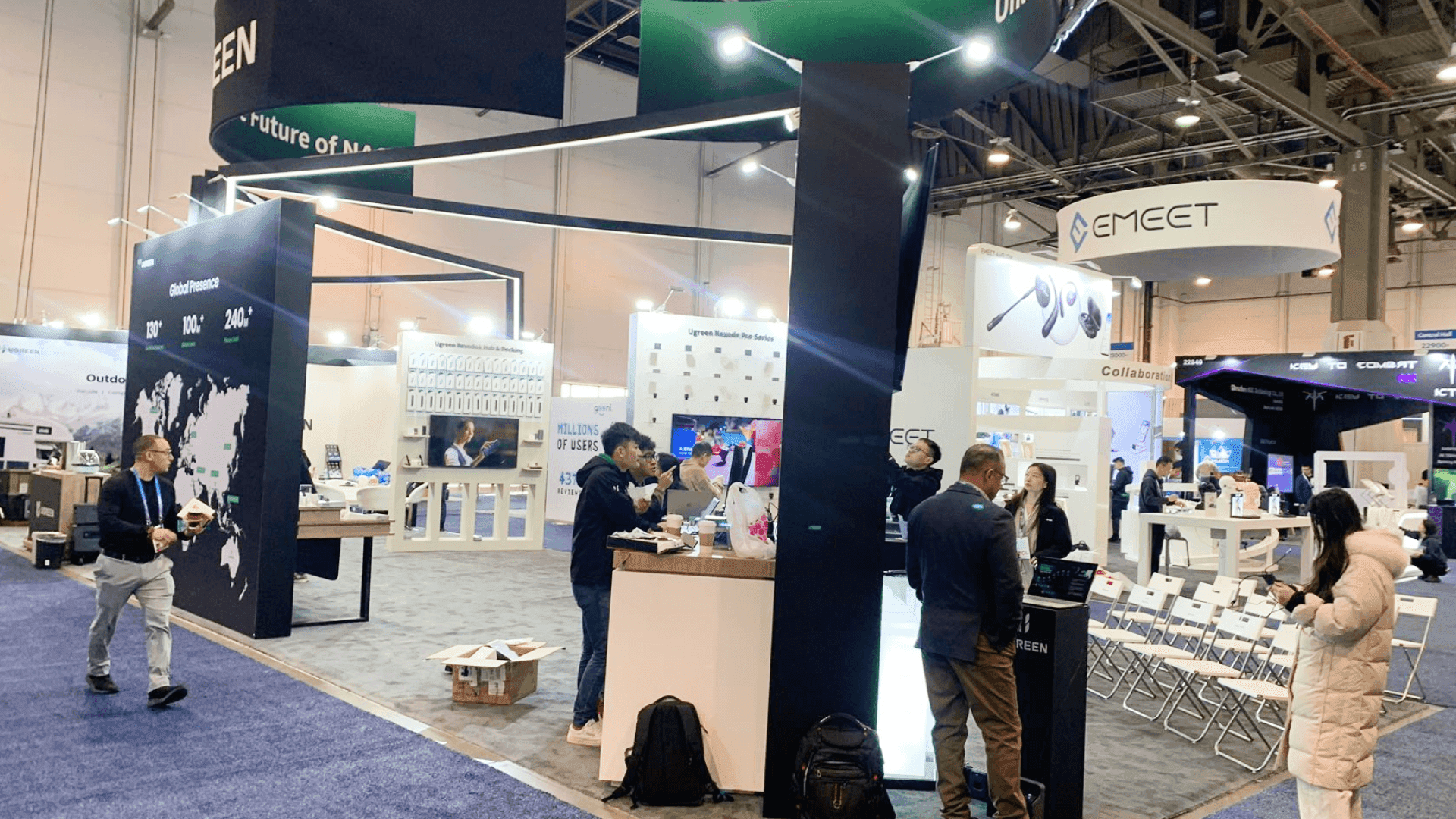
The booth should continue the Emerging Tech Showcase with the proof operators still need—such as broadband equipment access, software workflows, deployment details, or integration discussions.
Record the Next Question, Not Just the Badge Scan
A badge scan tells the team who stopped. It does not capture what the operator wants to evaluate next.
For a visitor coming from the Emerging Tech Showcase, useful notes might record:
deployment fit;
equipment compatibility;
another software workflow;
integration or migration;
pricing or availability;
a deeper technical demo;
a follow-up meeting.
Instead of writing:
Attended Emerging Tech presentation.
record the question that matters:
Saw the new automation workflow; wants to review integration with the current billing environment.
Or:
Interested in the new radio; wants to discuss deployment fit and compatibility after the show.
The next conversation should start with that question, not another introduction.
Before Show Day, Test the Full Handoff
Before the presentation is considered ready, walk through the sequence once from the operator's point of view:
What single ISP problem or new capability should be clear when the stage session ends?
What will the operator need to inspect or understand at the booth?
Will that product or workflow be ready before the next relevant Exhibit Hall period?
Does booth staff know exactly what was presented?
Who handles deployment, integration, compatibility, or purchasing questions?
How will the team record what the visitor wants to explore next?
Recheck the published WISPAPALOOZA agenda and current Emerging Tech Showcase requirements before the event. Both can change. The current official agenda explicitly remains subject to change.
FAQ
How long is each WISPAPALOOZA Emerging Tech Showcase presentation?
Each participating company currently receives a 10–15-minute presentation slot. That is enough time to establish the new product or capability and why it may matter to an ISP operator, while deeper technical proof can continue afterward.
Does the Emerging Tech Showcase presentation have to include a live demo?
No. WISPA encourages a show-and-tell format and permits slides, props, or a live demonstration. The format should fit the product or service rather than forcing every participant into the same presentation style.
Does Emerging Tech Showcase participation include an Exhibit Hall booth?
WISPA's current list of Showcase benefits does not list Exhibit Hall booth space. It lists the presentation, show branding, event app and website inclusion, a Monday meet-and-greet, and post-event recognition. Companies planning stage-to-booth follow-up should therefore confirm their booth participation separately.