The Showcase Gets the Product Noticed. What Happens at Your Booth?
By the time a buyer follows a Showcase product back to your booth, the first introduction may already have happened. Repeating the same presentation in a second location adds little.
What the booth can add is context and access.
A buyer may want to pick up the product, compare it with another model, see how a feature works, ask where it sits within the line, or talk directly with someone who can answer a more detailed question. Those are things a standalone Showcase presentation cannot fully replace.
The booth therefore needs to answer a simple question:
What can the buyer learn or do here that they could not do when they first saw the product?
That answer should shape how much attention, space, and interaction the featured product receives in the exhibit.

The featured product should be easy for buyers to recognize again when they arrive at the booth, without overwhelming the rest of the product line.
Can Buyers Find the Featured Product Right Away?
A buyer who comes looking for a product they have already seen should not have to search through a wall of SKUs to find it again.
Keep enough continuity that the product is immediately familiar. Its name, key imagery, and main message should not suddenly change between the Showcase and the booth. At the same time, the product needs enough visual priority to stand out from the supporting items around it.
That does not mean making the entire booth about one product. The featured item should be easy to locate first; related products can then help buyers understand what else is relevant.
If the Showcase product needs to sit within a larger visual system at the booth, the graphics and brand presentation should preserve that recognition while keeping the rest of the exhibit coherent.
What Do Buyers Still Need to See, Try, or Compare?
Once buyers find the product, the next question is practical: what do they still need to do before they really understand it?
The answer depends on the product rather than on whether the booth has a formal demo area.
If buyers need to pick up or inspect the product, keep it within comfortable reach and leave enough room to handle it.
If buyers need to compare models, place the relevant products close enough for an actual side-by-side comparison.
If the product needs to be operated, resolve the working surface, clearance, and power before the display fixture is finalized.
If one feature needs a short demonstration, make sure buyers can see it without the activity blocking normal booth traffic.
If related models matter, keep only the products nearby that help explain the differences buyers are likely to ask about.
These requirements can affect more than the product display itself. Handling space may change a counter dimension; a powered product may change electrical planning; comparison may require more usable surface than a static presentation.
When product use starts affecting counters, supports, power access, or clearance, those requirements should be addressed during booth design and engineering, before the physical display is locked.
Where Does the Featured Product Fit in the Rest of the Line?
The New Product Showcase naturally puts attention on one item. At your booth, buyers may need enough context to understand what that item means for the rest of the range.
Is it a completely new product? Is it part of an existing family? Does it replace an earlier model? Is it a new size, feature set, or extension of something buyers may already know?
The answer determines which products belong near it.
A new model may make more sense beside the version it improves on. A line extension may only need one or two related products to make the family clear. A genuinely new category may need more separation so buyers do not mistake it for another variation of an existing item.
The goal is not to surround the featured product with the entire catalog. Show enough of the line to answer the next question without burying the product that brought the buyer to the booth.
If the featured product starts changing how several product families, demonstrations, buyer conversations, or storage need to work together, the issue has moved beyond one Showcase item and into the overall booth plan for The Inspired Home Show.
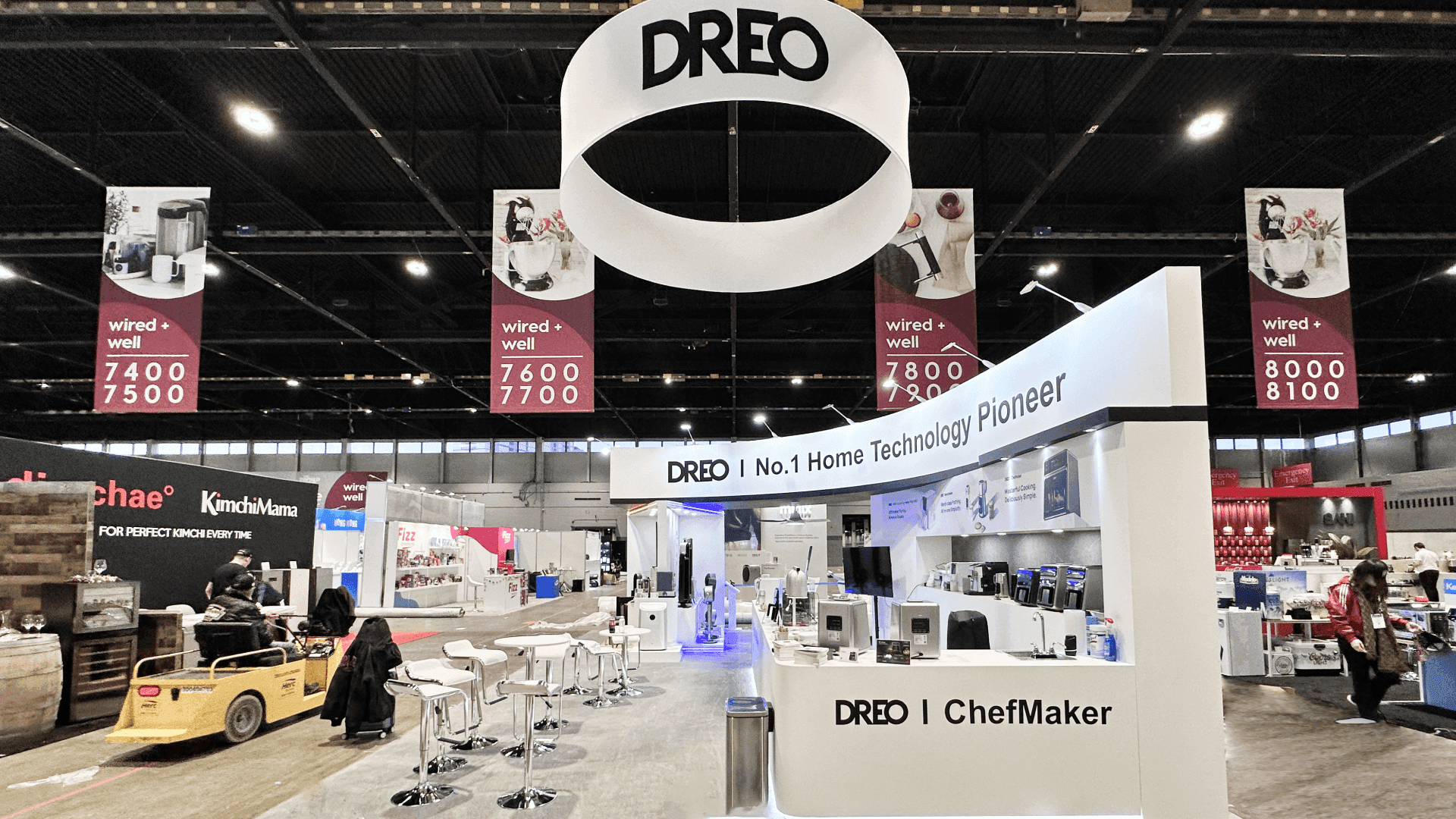
The booth should support the way buyers actually need to inspect, compare, operate, or see the featured product in use.
When Does Product Interest Turn Into a Buyer Conversation?
Not every buyer who stops for the featured product needs a formal meeting.
Some may only want to clarify a material, feature, model, or use case. If the answer is simple, the conversation can stay close to the product and remain brief.
Other buyers will start asking about related products, the wider line, retail fit, distribution, or other commercial details. That is where interest in a single product begins turning into a broader business discussion.
Staff should be able to support that shift without making it feel forced. The next relevant product, sample, or piece of information should be easy to reach, and a longer conversation should have somewhere to continue if more time is needed.
At the same time, the featured product should remain accessible to other visitors. One deeper conversation should not block the display that created the interest in the first place.
Some buyers will leave after getting one useful answer. Others will want to see more of the line or continue the discussion. The booth should make both outcomes easy.
Frequently Asked Questions
Should the booth repeat the New Product Showcase display?
No. The Showcase has already introduced the product. At the booth, buyers should be able to go further by seeing more context, handling or comparing the product when necessary, looking at relevant products around it, and speaking with the exhibitor’s team.
How prominently should a Showcase product appear in the booth?
It should be easy for buyers who have already seen it to find again without overwhelming the rest of the exhibit. Give the featured product enough priority to remain recognizable, then use nearby products only where they help explain the wider line.
What should buyers be able to do with the product once they reach the booth?
That depends on what makes the product understandable. Buyers may need to pick it up, inspect a material, compare models, operate a feature, or see a short demonstration. The booth should support the interaction that helps answer the buyer’s next question.