Why the Expo Hall and Makers Market Start with Different Questions
The planning difference begins before a visitor reaches a screen or starts talking with staff.
In the Expo Hall, the first question is often close to: What does this company offer, and is it relevant to us? Recognizing the solution is only the start. A visitor may then look for credible proof, ask about technical fit, and decide whether the conversation should continue with a product, implementation, or business specialist.
Makers Market starts closer to the creation itself. The first question is more likely to be: What did this maker build? The visitor needs enough context to recognize the use case and enough working proof to decide whether there is something worth exploring further.
That changes the starting point for display planning. An Expo Hall display should shorten the path from solution recognition to evaluation. A Makers Market display should shorten the path from creation recognition to understanding.
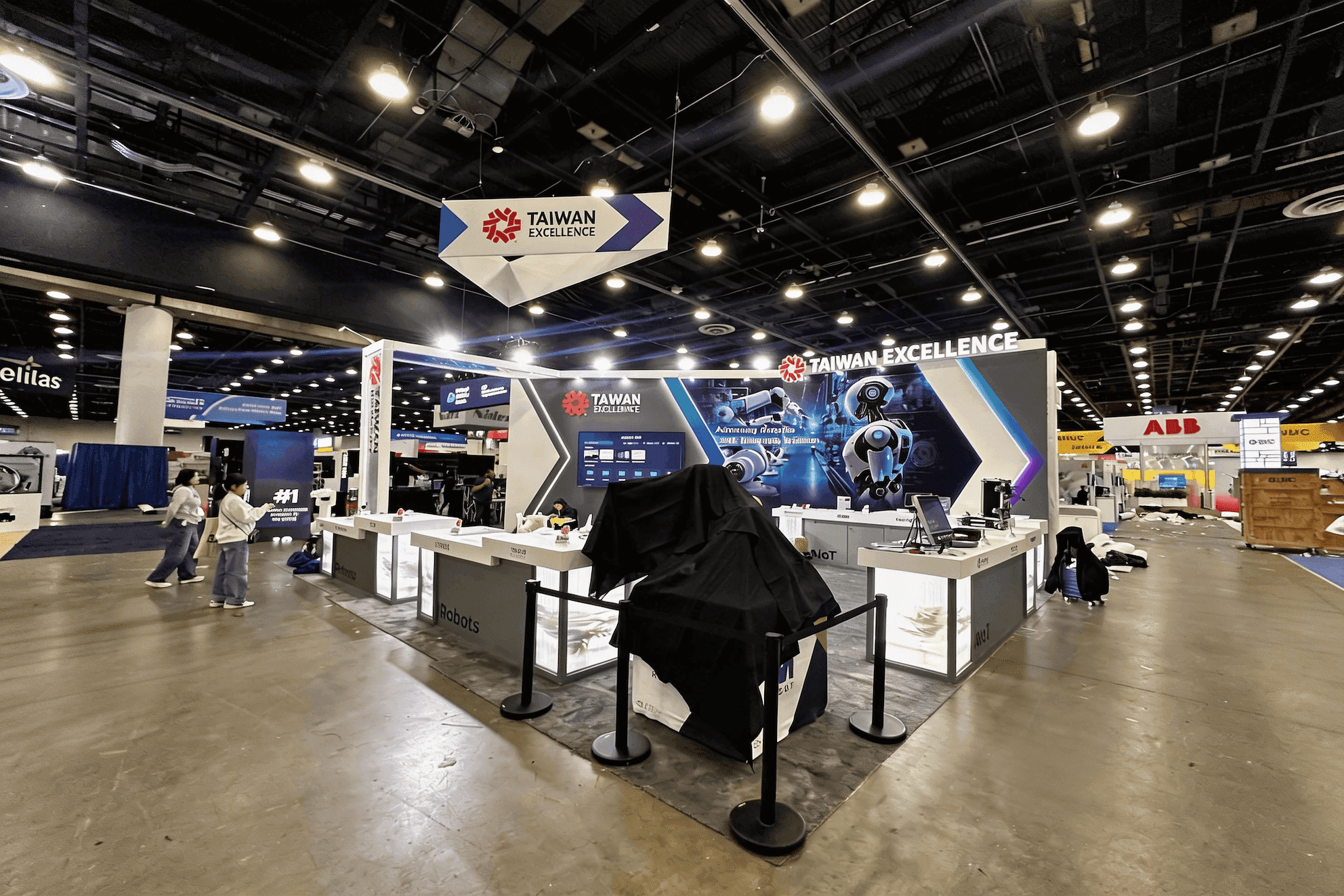
Expo Hall displays should make the provider’s role, solution value, and path to deeper technical evaluation easy to understand.
What Visitors Need to Understand First
The first message should reflect that difference instead of trying to explain the entire Power Platform stack at once.
In the Expo Hall, a visitor should be able to identify the solution category, understand the provider’s role in the Power Platform ecosystem, and see why that role matters. An exhibitor may specialize in AI agents, governance, implementation, integration, automation, data, consulting, or managed services, but those capabilities need context before detailed product information becomes useful.
Makers Market can start closer to the problem being solved. The visitor should understand what the maker created and what outcome it produces before having to interpret the technology behind it.
For example, “AI Agent for Customer Service Escalation” gives a visitor an immediate reason to look closer. Leading with “Copilot Studio + Dataverse + Power Automate + Azure” asks the visitor to decode the technology before knowing why the solution matters.
The same graphics may appear in both environments, but they perform different jobs. Expo Hall graphics establish solution context and provider value. Makers Market graphics make the creation and use case recognizable.
One Copilot Studio Agent, Two Ways to Present It
Consider one AI service agent built with Copilot Studio and Power Automate.
In the Expo Hall, it might be introduced as:
AI Service Agent for Enterprise Customer Support
That framing gives visitors a basis for evaluating business fit. The next questions may concern integration with existing systems, governance, implementation requirements, deployment support, or whether the provider has the expertise to take the solution beyond a demonstration.
The display therefore needs to establish the provider’s role, show credible evidence, and make a deeper specialist conversation easy to enter.
In Makers Market, the same technology could be introduced more directly:
I built an agent that routes and escalates customer requests automatically.
The likely response is simpler: Show me.
Now the visitor is first deciding whether the creation makes sense and is worth exploring further.
The technology has not changed. The display changes because the visitor is making a different first decision.
The Same Solution Needs Different Proof
That different first decision also changes what proof needs to accomplish.
In the Expo Hall, proof supports evaluation. A guided demonstration, workflow, integration example, architecture view, or customer scenario can help a visitor judge whether the solution addresses the right problem, fits existing systems, appears credible, and deserves a deeper conversation about implementation or governance.
When an AI workflow is difficult to reduce to one visible proof, the principle behind trade show booth design for AI products becomes useful: show the information needed for the next evaluation decision instead of exposing the entire technical architecture at once.
Makers Market proof has a narrower first job. The visitor needs to see enough of the creation working to understand what was built. A clear trigger, a visible action, and an understandable result may be enough to move the conversation forward.
The distinction is not simply “more detail” versus “less detail.” Expo Hall proof should create confidence for further evaluation; Makers Market proof should create understanding quickly.
What Happens After the Demo Changes Too
What happens after the first proof has a direct effect on staffing and interaction capacity.
An Expo Hall conversation may continue into implementation, governance, integration, pricing, deployment, or business fit. That often creates a need for deliberate staff handoff. The person introducing the solution may not be the same person answering a deeper architecture or implementation question.
Longer conversations also affect space. If one specialist discussion occupies the primary demo position, the next visitor may have no obvious way to begin evaluating the solution.
Makers Market has a different rhythm. A visitor discovers what was built, watches a short proof, asks a peer or technical question, and may connect with the maker before continuing through the market. A deeper discussion can still happen, but it should not prevent another visitor from discovering the display.
The physical consequence follows the visitor journey: Expo Hall displays may need more capacity for specialist handoff and longer conversations, while Makers Market displays need to protect visibility and keep the main discovery point available.
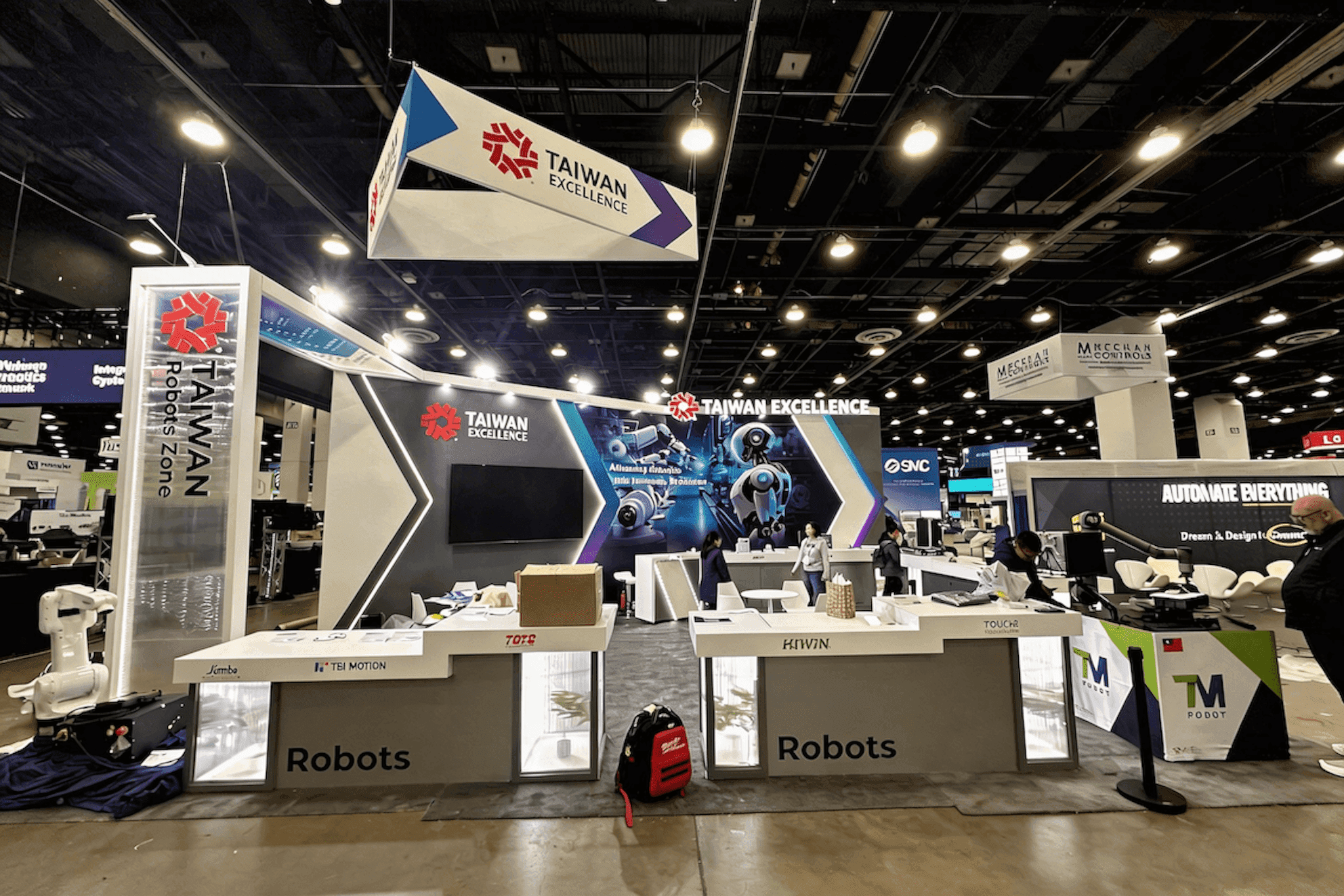
Makers Market displays work best when visitors can quickly understand what was built, see a short working proof, and move into a technical question.
PPCC Display Planning at a Glance
The useful comparison is not which booth style looks better. It is which visitor decision each environment needs to support.
Planning Decision | Expo Hall | Makers Market |
|---|---|---|
Visitor first question | What do you offer? | What did you build? |
Primary task | Solution evaluation | Maker discovery |
First message | Provider role and solution value | Problem, creation, and result |
Proof goal | Build confidence for deeper evaluation | Make the creation understandable quickly |
Staff role | Product or specialist handoff | Maker explanation |
Conversation pattern | Qualification and deeper discussion | Technical question and continued discovery |
Space priority | Evaluation and conversation capacity | Visibility and interaction efficiency |
Graphics role | Positioning and solution logic | Use case, workflow, and result |
Likely next step | Technical or business follow-up | Connect and continue |
Both environments still benefit from a recognizable use case, credible proof, readable graphics, and a clear next interaction. What changes is the job those elements perform.
Once the visitor task is clear, display design and engineering can translate those priorities into practical decisions about screen positions, demo areas, staff locations, cable access, and conversation space.
FAQ
Can the same Power Platform solution be presented in both PPCC environments?
Yes. The underlying solution may stay the same, but its first message and proof goal can change. Expo Hall presentation should support deeper evaluation, while Makers Market presentation should make the creation easy to recognize and understand quickly.
Should an Expo Hall display include more technical detail than a Makers Market display?
Not necessarily during the first interaction. The difference is what happens next. Expo Hall visitors may continue into implementation, governance, integration, or business discussions, while Makers Market visitors first need to understand what was created before deeper technical detail becomes useful.
Can exhibitors choose between the PPCC Expo Hall and Makers Market?
Current public PPCC information confirms that Expo Hall and Makers Market are different onsite experiences, but it does not provide enough detail to assume every exhibitor can freely choose between them. Current eligibility and participation details should be confirmed with PPCC before making that decision.
Expo Hall and Makers Market can use many of the same display elements, but those elements should not perform the same job. The strongest PPCC display starts with the visitor’s first decision, then lets messaging, proof, staff handoff, and physical space follow from that task.
Teams that still need to determine overall footprint, meeting capacity, or PPCC show-site requirements can continue that planning through Power Platform Community Conference booth planning.