Which Conversations Need to Stay Beside the Product?
Keep the conversation close to the booth when the product is still doing part of the explaining. A visitor may want to inspect a component again, compare physical details, watch the system run another time, or ask a question immediately after the demo. If stepping away from the product would make the discussion harder to continue, it still belongs near the exhibit.
This matters most with more involved technology systems, where inspection, demonstration, and technical questions may all depend on the same product area. OSET arthroplasty booth planning looks more closely at how those interactions can share the space without one activity blocking another.
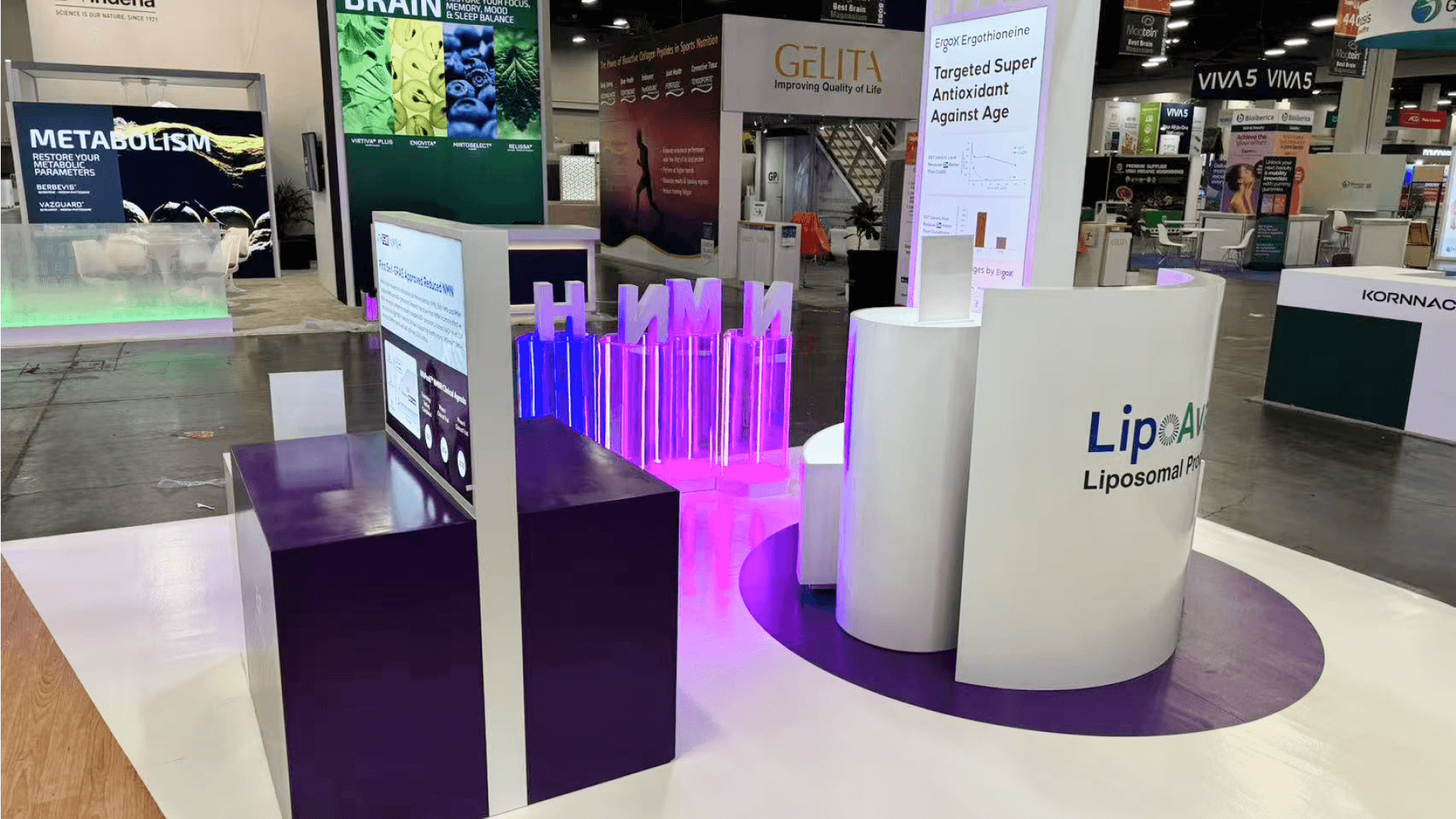
Technical conversations can stay beside the product while visitors still need the demo, model, or physical system to continue the evaluation.
When Does In-Booth Meeting Space Start Hurting the Demo?
A longer conversation becomes a booth problem when it starts interfering with the next product interaction. It may occupy the demo station, narrow the visitor path, block part of the display, or use space that would otherwise support storage or another staff conversation.
There is no useful fixed time limit. A brief discussion may create no problem in one layout but hold up the exhibit in another. What matters is whether other visitors can still reach the product, watch the demo, and speak with staff while the conversation continues. Once those activities begin competing for the same space, keeping the meeting inside starts working against the booth.
When Is the Exhibit-Floor Meeting Room the Better Choice?
Once the product is no longer needed to keep the conversation going, there is less reason to keep the discussion inside the booth. Pre-scheduled meetings, longer follow-ups, and conversations involving several participants are easier to move when the product or demo is no longer part of the explanation.
OSET offers exhibit-floor meeting room options in 10×10 and 10×20 formats, giving exhibitors another place for discussions that have moved beyond the initial hands-on interaction. The value is not simply having a separate place to talk. Moving the conversation can also keep product display, demo space, and visitor access available on the show floor.
When Does a Hybrid Setup Work Better?
A hybrid setup makes sense when the conversation changes purpose as the visitor moves through the interaction. The first stage may require close product inspection, a short demo, and immediate questions. Once that work is complete, the discussion may shift toward technical details, follow-up questions, or a longer conversation that no longer requires the display.
The handoff should happen at that natural stopping point. Staff can finish the product interaction, confirm that a deeper discussion is worthwhile, and move the group to the meeting room instead of leaving the demo station occupied. The booth then stays available for product evaluation while the meeting room carries the conversation forward.

Longer or scheduled discussions can move to an exhibit-floor meeting room once the conversation no longer depends on direct access to the product or demo.
How Does the Meeting Decision Affect Booth Size?
Every square foot used for a longer conversation is space that cannot be used for product display, demonstrations, storage, or visitor movement. Keeping meetings inside the booth may also require more circulation around the discussion area and enough separation for another staff member to continue working with incoming visitors.
Moving longer discussions outside the exhibit reduces that pressure. If product evaluation and extended conversation both need to remain inside, 20×20 booth planning shows how a larger footprint can provide more separation between those activities. The meeting decision does not automatically determine booth size, but it does change how many jobs the same footprint has to support.
Use This Checklist Before Locking the Floor Plan
Before approving the layout, answer five questions:
Product Dependency: Does the conversation still need the product, model, or demo nearby?
Duration: Is it usually a quick follow-up or an extended discussion?
Scheduling: Does it happen naturally after a walk-up interaction, or is it usually arranged in advance?
Participant Count: Is it typically one-to-one, or do several people need to join?
Opportunity Cost: What booth function is lost if the meeting stays inside?
The answers should point toward one of three setups:
Situation | Setup | Why |
|---|---|---|
The conversation still needs the product, model, or demo to continue | Booth | The physical exhibit is still part of the discussion |
The discussion is longer or scheduled and no longer depends on the product or demo | Meeting Room | The conversation can continue without occupying evaluation space |
The interaction starts with product evaluation and then becomes independent of the demo | Hybrid | The booth and meeting room support different stages of the same visit |
FAQ
Should an OSET technical discussion stay inside the booth?
Keep it in the booth when the discussion still depends on the product, model, or demonstration. If the product is no longer needed and the conversation begins interfering with the next evaluation, moving it elsewhere usually makes more sense.
When is an OSET exhibit-floor meeting room a better choice?
It is better suited to scheduled, longer, or multi-person discussions that no longer require direct access to the product or demo. Moving those conversations also keeps the booth available for continued product interaction.
Can an OSET exhibitor use both booth meeting space and a meeting room?
Yes. The booth can handle product inspection, demonstrations, and immediate questions, while the meeting room handles longer or scheduled follow-up after the initial evaluation is complete.