Choose One Claim You Can Prove
A recycled material display should lead with one result: material recovery, recycled-content use, renewable input, performance retention, material traceability, a closed-loop application, or emissions reduction.
Avoid asking one display to prove every sustainability claim. When flakes, pellets, finished parts, charts, certifications, and process graphics carry equal weight, visitors may not know what the evidence supports. Choose the primary claim first, then organize each sample and data point around it.
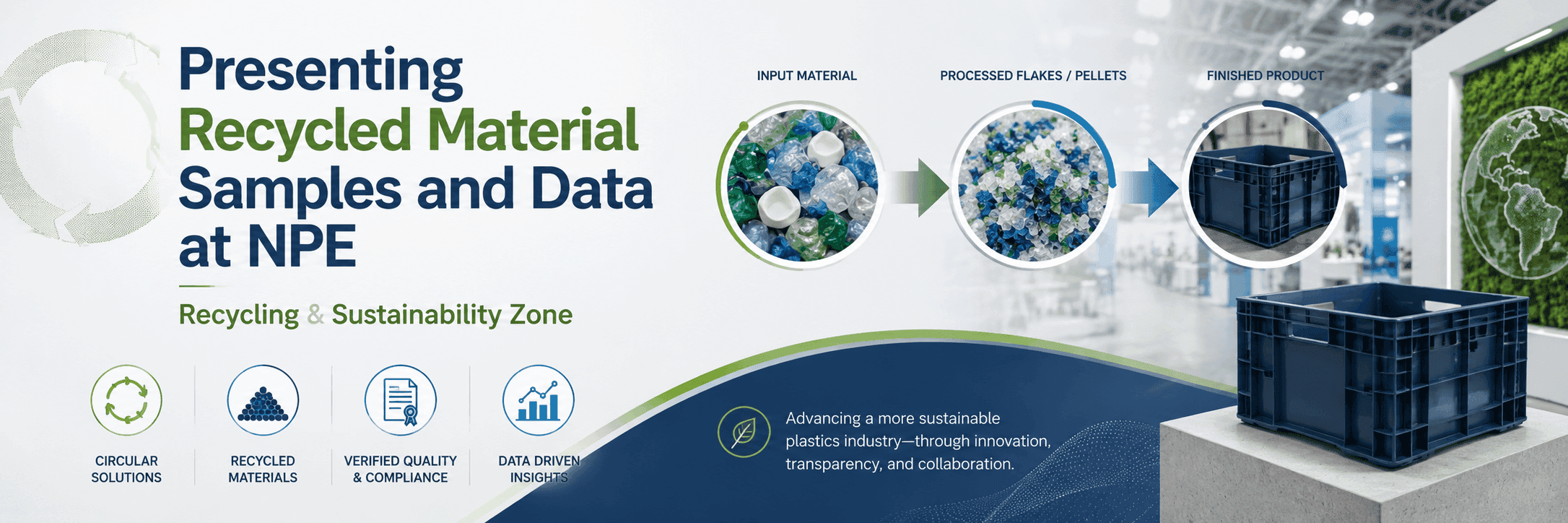
For material recovery, show the input material, processing stage, recovered output, and finished application. For recycled-content use, place the recycled-content percentage beside the exact sample or product it describes. A closed-loop application should show the material source, processing route, and return application. Performance retention or emissions reduction claims need test results, methods, or verified evidence beside the relevant sample.
Secondary claims can remain available for technical discussions, but the main recycled material display claim should be clear within a few seconds. This makes a verified circularity claim easier to examine and compare.
Material Journey
The sequence from input material and processing to recovered output and finished application.
Recycled-Content Percentage
The share of a material or product that comes from recycled sources, tied to a specific sample or application.
Traceability
Information showing where the material came from, how it was processed, and where it went.

A clear material journey helps visitors follow the change from input material and processing to recovered output and final use.
Show the Material Journey From Input to Application
A material journey display should read in one direction, from the original feedstock or waste stream to the finished application. Visitors should be able to follow the sequence without waiting for a staff explanation.
Recommended sequence:
Feedstock or waste stream
Sorting or processing
Flakes or pellets
Compound or component
Finished application
Supporting evidence
Keep each sample close to the stage it represents. Short labels, arrows, or numbered steps should identify the input material, what happened during the processing stage, and the recovered output. The purpose is not to explain every technical detail, but to make the circular plastics material flow visible at a glance.
Do not place the original waste stream at one end of the booth and the finished application at the other without a visible connection. Sample placement, closed-loop process graphics, and supporting data should follow the same reading direction.
Use screens only for steps that cannot be shown through physical materials, such as sorting, washing, extrusion, or compounding. Screen content should remain tied to the sample being viewed rather than interrupting the sequence with a general sustainability video.

Keeping input and output samples in the same view makes recycled resin comparisons easier to understand.
Put Input and Output Samples in the Same View
Before-and-after recycled material samples are easier to compare when the input and output appear together. A feedstock display should connect directly to washed flakes, recycled pellets, compounds, components, packaging, or finished application samples.
Avoid presenting several similar-looking pellets without context. In a recycled resin sample comparison, color and shape alone may not reveal differences in recycled content, processing method, performance, or intended use. Sample labeling should explain both what the material is and what changed.
A label beside washed flakes might identify the waste stream and cleaning step. A plastic pellet sample display could note the recycled-content percentage, compounding method, or intended processing conditions. Finished application samples should show where the recovered material is used and which performance result matters.
Keep labels brief. Material source, processing step, recycled content, one relevant performance point, and final use are usually enough to turn flakes and pellets into a useful material comparison display.
Example Scenario
Post-consumer feedstock, washed flakes, recycled pellets, and a molded component appear within the same comparison area. Each stage carries one short note explaining the source, cleaning, pelletization, or final application.
Keep backup samples, extra pellets, replacement labels, and handling supplies separate from the visible display so working stock does not interrupt the comparison.
Match Data and Certifications to the Material
A recycled-content data display should let visitors match each sample with the claim that belongs to it. Start with the material or finished application, followed by the recycled-content percentage or performance result. Add the relevant certification or test reference, then the traceability detail. Wider lifecycle data, emissions data, or company sustainability context can follow after the material-specific evidence is clear.
A certification display should identify its scope. Visitors need to know whether a mark applies to the feedstock, recycling process, compound, component, or finished product. Test results should also identify the material grade, sample, or application they describe. When several materials are compared, use the same test method, unit, and reporting basis so visitors are not comparing results produced under different conditions.
The data hierarchy should separate four kinds of statements:
Verified result: Supported by testing, certification, or documented evidence.
Current specification: The material or product specification currently available.
Company target: A defined target that may not yet apply to the displayed sample.
Future goal: A forward-looking commitment rather than a verified current result.
Verified sustainability evidence belongs closest to the sample. Targets and future commitments should not carry the same visual weight as tested results.
Detailed sourcing records, batch references, chain-of-custody information, and longer test documentation can move into a secondary material traceability display for recycled plastics or a digital layer.
Coordinating sample labels, process graphics, recycled-content data, and certification references through graphics and brand presentation planning helps keep each claim attached to the material it supports. Brand messaging can frame the wider story, but it should not replace test results, traceability, or verified evidence.

Data, certifications, and traceability should remain close to the material they support, with detailed records available for technical review.
Let Samples Lead and Screens Support the Review
A recycled material display with samples and screens is easier to read when the physical materials lead and the screen supports them. Keep the public sample density low enough for visitors to compare the main feedstock, flakes, pellets, components, or finished applications without sorting through several nearly identical versions.
Use a process screen for sorting, washing, extrusion, compounding, or other steps that physical samples cannot show. The screen should follow the same sequence as the samples nearby. General company videos are less useful when they do not explain the material comparison in front of the visitor.
The main display only needs the information required for a first comparison: material source, recycled-content percentage, key performance result, and intended use. Longer test reports, lifecycle data, processing conditions, and traceability records belong in a buyer review area for recycled material data.
Keep backup samples, packaging, replacement labels, and working materials in concealed sample storage. The technical discussion area should sit beside the display rather than block the main reading path.
Because this type of exhibit relies on materials and data rather than operating machinery, it can often fit within a reusable Orlando trade show booth rental, with separate areas for the sample display, process screen, storage, and buyer review.
Common Mistakes
Common problems include showing too many samples without a clear relationship, attaching percentages to no specific material, separating certifications from the sample they support, placing input and output too far apart, or using screen content unrelated to the physical display.
Material-Led or Proof-Led: Which Should Lead?
A recycled material booth can lead with either the physical material or the proof behind the claim. Both may use samples, screens, technical data, and buyer discussions, but visitors should know which element matters first.
Material-Led Display
A material-led recycling exhibit starts with feedstock, flakes, pellets, compounds, components, or finished application samples. The physical comparison carries the story, while labels and supporting data explain the material journey.
This approach suits a recycled resin booth where buyers need to compare appearance, consistency, processing form, recycled content, or end-use potential. Input and output samples should remain within the same view, and similar materials need clear labels.
Example: A recycled resin supplier displays post-consumer feedstock, washed flakes, recycled pellets, and a molded component. A nearby screen shows the processing stages, while the recycled-content percentage and performance result sit beside the finished component.
Proof-Led Display
A proof-led sustainability display starts with traceability, certifications, test results, lifecycle data, emissions data, or another verified claim. Samples show which material or application the evidence describes.
The proof should be easy to scan, with certifications and test references kept beside the material they support. Longer records can move into a buyer review area. A traceability exhibit or circular plastics evidence display still needs physical samples; otherwise, the data can feel disconnected from the material.
Example: A recycling technology provider shows input and recovered-output samples beside a screen explaining sorting, washing, and extrusion. Certifications, performance data, and material traceability remain with the recovered output, while detailed records are available for technical review.
Some exhibits combine both approaches. A 20x20 recycled material booth layout can give samples, one process screen, concealed storage, and buyer discussions enough separation without turning the page into an equipment-planning guide.
FAQ: Recycled Material Displays at NPE
How should recycled material samples be grouped?
Group samples by material journey, processing stage, or finished application. A clear sequence may move from feedstock to flakes, pellets, compounds, components, and final products. Avoid grouping only by color, container, or sample shape because those arrangements do not show how the material changed.
Where should recycled-content percentages appear?
Place the recycled-content percentage beside the exact material, component, package, or finished application it describes. The label should state whether the figure applies to the whole product, one layer, a specific component, or a particular material grade.
What evidence supports a circularity claim?
Evidence for circularity claims may include recycled-content data, certifications, traceability records, test results, lifecycle information, processing records, and finished applications. The evidence should match the claim being made. Certifications need a clear scope, while test results and traceability should relate to the relevant sample or application.