Where Is Your NBAA-BACE Project Now?
Before ordering another service or locking the next production step, identify what is actually unresolved.
Drawing and Approval Confirmed
Move into contractor coordination, final service locations, freight timing, and installation planning.
Drawing Still Unresolved
Do not treat affected structure, overhead elements, or service locations as final. Those decisions may still change with the approved booth scope.
EAC Status Unresolved
Confirm the labor and installation path that is still permitted before assigning show-site responsibilities.
Layout Approved, but Rigging or Utilities Still Open
Return to the final positions of screens, demos, equipment, and overhead elements before the services tied to those positions are locked.
For 2026 NBAA-BACE, this is more than a generic planning check. Booth drawings, rigging submissions, and EAC notification were due Aug. 7. Exhibitors dealing with unresolved work after that date need to work from the options still permitted by NBAA rather than assuming the original pre-deadline path remains available.
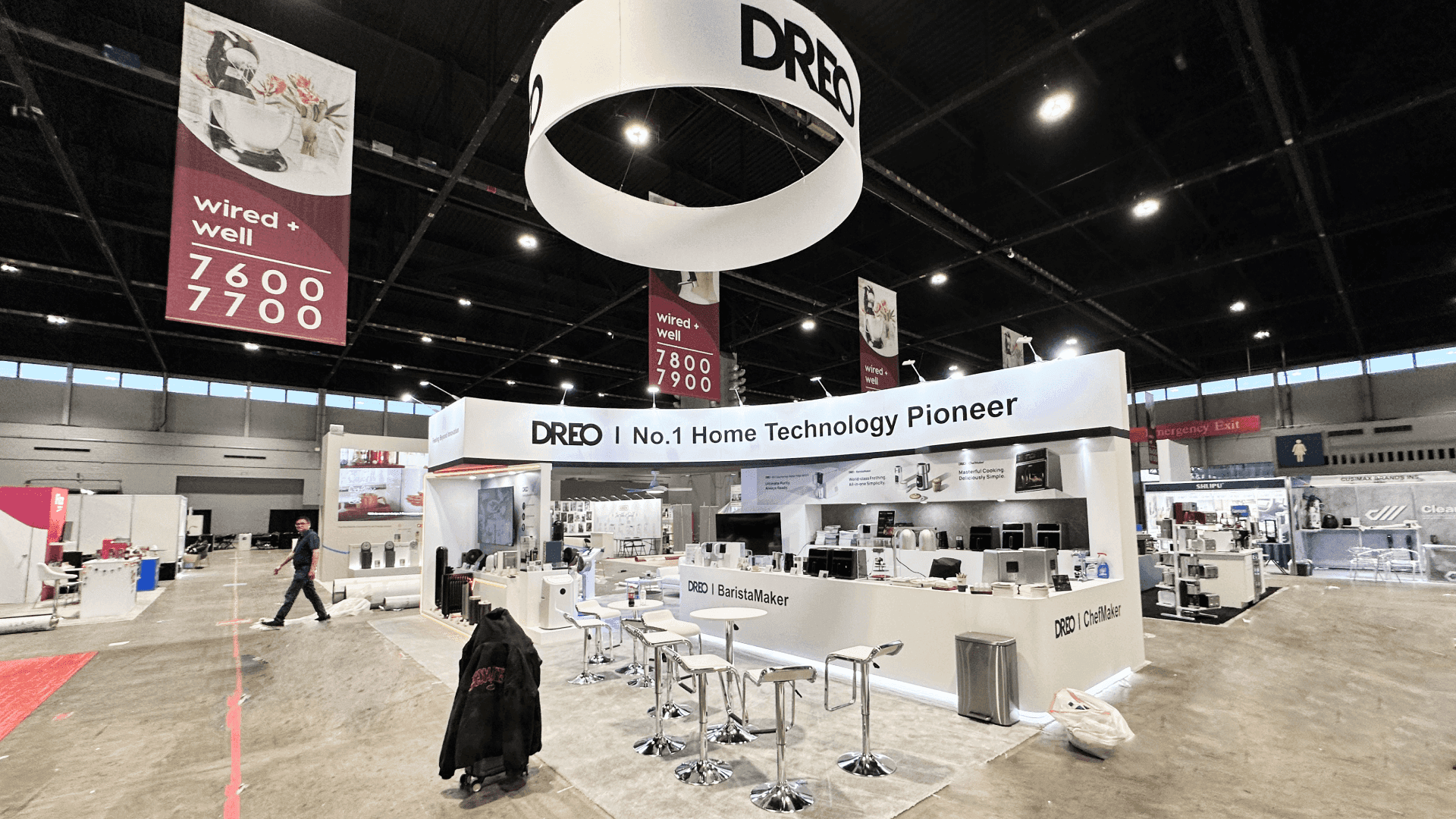
Booth approval and EAC status determine which parts of the build can be finalized and which show-site responsibilities still need to be confirmed.
Approval Defines What Can Be Built
Booth approval sets the boundary between what can safely move into final production and what should remain open.
NBAA requires specific indoor exhibits to submit booth drawings, and multilevel or covered island exhibits are subject to NBAA and LVCC approval. Certain larger or covered exhibits also require Nevada-stamped engineered plans. Those requirements make approval part of the physical build process, not simply a document submission.
Within the Las Vegas Convention Center execution environment, an unresolved structural condition can affect what comes next. A changed overhead element can move a rigging point; a revised screen or demo position can change electrical or data requirements; a structural revision can alter what the fabrication team should actually build.
The useful question is therefore not simply whether the booth is “approved.” It is which parts of the booth are stable enough to lock into production, and which still depend on approval.
If approval is unresolved, affected structural, overhead, and service-dependent work should remain open rather than being finalized around an assumption.
EAC Status Defines the Labor Path
At NBAA-BACE, EAC status changes the installation path that is actually available.
For 2026, exhibitors using an EAC must complete NBAA's designation process and required contractor documentation, including insurance. NBAA states that an EAC that has not been properly registered or has not completed the required contract and insurance requirements cannot work onsite. It also states that booth drawings are not reviewed until the required EAC designation, application, and insurance documentation are received.
The Aug. 7 deadline creates a particularly clear consequence: exhibitors that failed to register their EAC by the deadline are required to use Freeman for installation and dismantling.
That makes the contractor decision inseparable from the execution plan. When an outside booth partner is carrying fabrication into the show floor, Las Vegas booth fabrication and show-site execution has to follow both the approved physical scope and the labor path that NBAA actually permits.
Do not assign installation responsibilities around the contractor you expected to use. Confirm the permitted labor path first, then assign the work.

Rigging, electrical, and internet locations should follow the final booth layout because screens, demos, equipment, and overhead elements create specific service requirements.
Who Owns What in the Execution Path?
NBAA-BACE execution crosses several responsibility boundaries. An approved booth design does not mean the same contractor can perform every task.
Execution Item | Main Responsibility |
|---|---|
Booth design and fabrication scope | Exhibitor + build partner |
Booth drawing and approval coordination | Exhibitor + design/build/EAC team |
EAC registration, insurance, and documentation | Exhibitor + EAC |
Hanging signs and rigging labor | Official provider |
Internet and telecom services | Venue-designated provider |
Material handling from dock to booth | Official service contractor |
For 2026 NBAA-BACE at LVCC, Freeman has exclusive labor responsibility for hanging equipment, trusses, and signs, while Cox Communications is the exclusive internet and telephone provider. NBAA's EAC rules also make clear that outside contractors may perform only work that is not designated as an exclusive service.
The value of this distinction is practical: it prevents a task from reaching move-in with two parties assuming the other one owns it.
The Approved Layout Drives Rigging, Power and Internet
Rigging, electrical, and internet all depend on physical positions inside the approved booth.
A powered demo determines where electricity needs to land. A connected product or live software demonstration creates a data requirement in a specific part of the exhibit. Hanging signs, lighting trusses, and security rigging depend on what sits below them and where those elements ultimately need to be supported.
NBAA requires rigging requests to be submitted with booth drawings and approved in advance. For 2026, both booth drawings and rigging requests carried the Aug. 7 submission date. Freeman is also the exclusive labor provider for installation of hanging equipment, trusses, and signs at LVCC.
That is why ordering services around a layout that is still moving creates risk. If the screen shifts, the power point may shift. If the demo changes position, the data drop may move. If an overhead element changes, the rigging plan may have to change with it.
Stabilize the physical layout before treating the services attached to it as final.
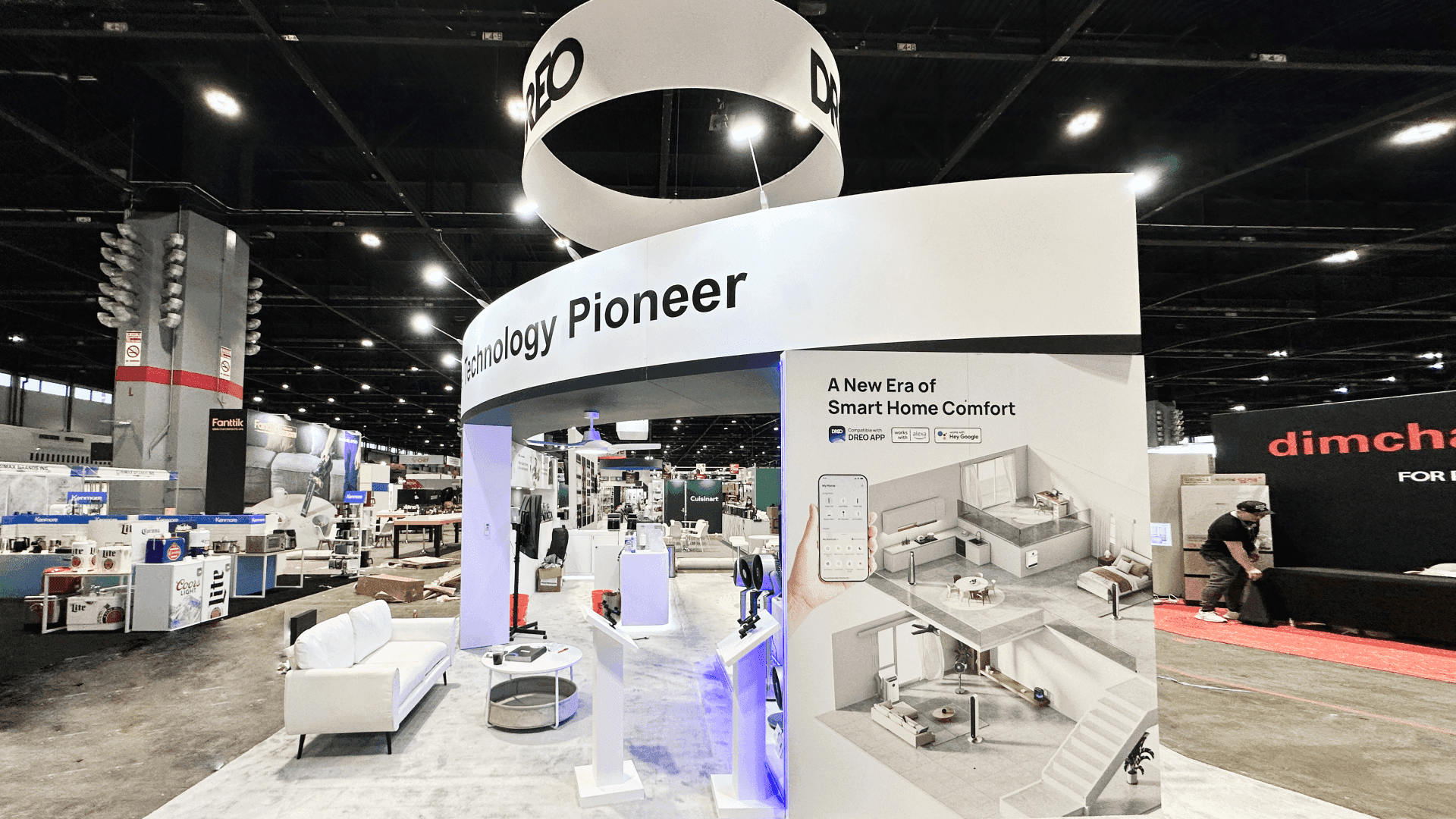
Freight arrival, targeted move-in, installation, and testing need to stay aligned so the exhibit reaches opening day fully operational.
Freight, Move-In and Installation Must Follow One Sequence
Freight is not a separate shipping problem once the booth enters show-site execution. The installation crew can only build with the structure, products, equipment, and materials that have actually reached the booth.
For 2026 NBAA-BACE, indoor freight delivery to LVCC follows a targeted schedule beginning Oct. 14. NBAA also states that target move-in changes will no longer be approved beginning Sept. 30, giving vendors lead time before freight begins arriving.
Freight Has to Match the Move-In Plan
A delivery date by itself does not tell the installation team enough. The important question is whether each shipment arrives when the build sequence needs it.
If primary structure is not available, later booth elements may have nothing reliable to attach to or build around. If equipment needed early in the installation arrives late, completed areas may have to be reopened or rearranged.
When freight timing has to match a targeted move-in window and the actual build order, pre-show logistics coordination becomes part of the installation plan rather than a separate shipping task.
Installation Follows Physical Dependencies
The exact sequence varies by exhibit, but the dependency is consistent. Primary structure needs to be available before many large products, graphics, AV elements, furniture, and finishing components can be positioned reliably.
The goal is not to create one universal install sequence. It is to prevent work from arriving before the booth is physically ready for it.
Testing Needs Protected Time Before Opening
The last part of installation is not cosmetic cleanup. Screens, network-dependent demos, lighting, powered equipment, and other show-floor systems need to work in their final positions.
When freight or installation falls behind, testing is often the easiest time to lose. A workable targeted move-in plan should therefore protect that final operating window rather than assuming the booth is finished when assembly stops.
Before the Exhibit Is Ready to Open
Installation is not complete simply because the structure is standing.
Before opening, confirm that the booth still matches the approved scope, power and internet are live, AV and demos work in their final positions, products and equipment are set, graphics are complete, and the buyer path is clear. Remaining punch-list items should be closed while the installation team and relevant providers can still act on them.
A standing structure is not the same as an opening-ready exhibit.
FAQ
Can fabrication be treated as final before booth approval is resolved?
Not reliably. NBAA approval requirements can affect structural, engineered, covered, or overhead elements already built into the fabrication scope. Work tied to those conditions should remain open until the relevant physical scope is stable.
Why does EAC status matter before installation?
Because NBAA-BACE EAC status affects onsite access and the labor path available to the exhibitor. For 2026, exhibitors that failed to register their EAC by the Aug. 7 deadline are required to use Freeman for installation and dismantling.
Why should freight and move-in be planned together?
Because NBAA-BACE uses a targeted indoor freight schedule at LVCC. Freight arrival determines when structure, equipment, and products become available to the installation crew, which directly affects the time remaining for setup and testing.