Which Money20/20 Conversations Actually Need Booth Space?
Booth space earns its value when being close to the product improves the conversation. A software walkthrough, product comparison, technical clarification, hands-on interaction, or first qualification usually works better when the buyer can still see the interface, refer to a display, or bring technical staff into the discussion.
Pricing, partnership structure, procurement, implementation scope, and executive discussion are different. They may be more commercially important than the first product conversation, but they often need time and privacy rather than continuous access to the exhibit.
A practical test is:
Does this conversation become less useful if it moves away from the product?
If the answer is yes, it probably belongs in or beside the booth. If not, there may be little reason to reserve permanent exhibit space for it.
Three short terms help clarify the rest of the decision:
Product proximity — how much a conversation depends on immediate access to the product, demo, screen, or technical team.
Booth workload — the mix of activities the exhibit must handle at the same time.
Hybrid presence — a setup in which the booth handles discovery, product proof, and qualification while longer conversations continue elsewhere.

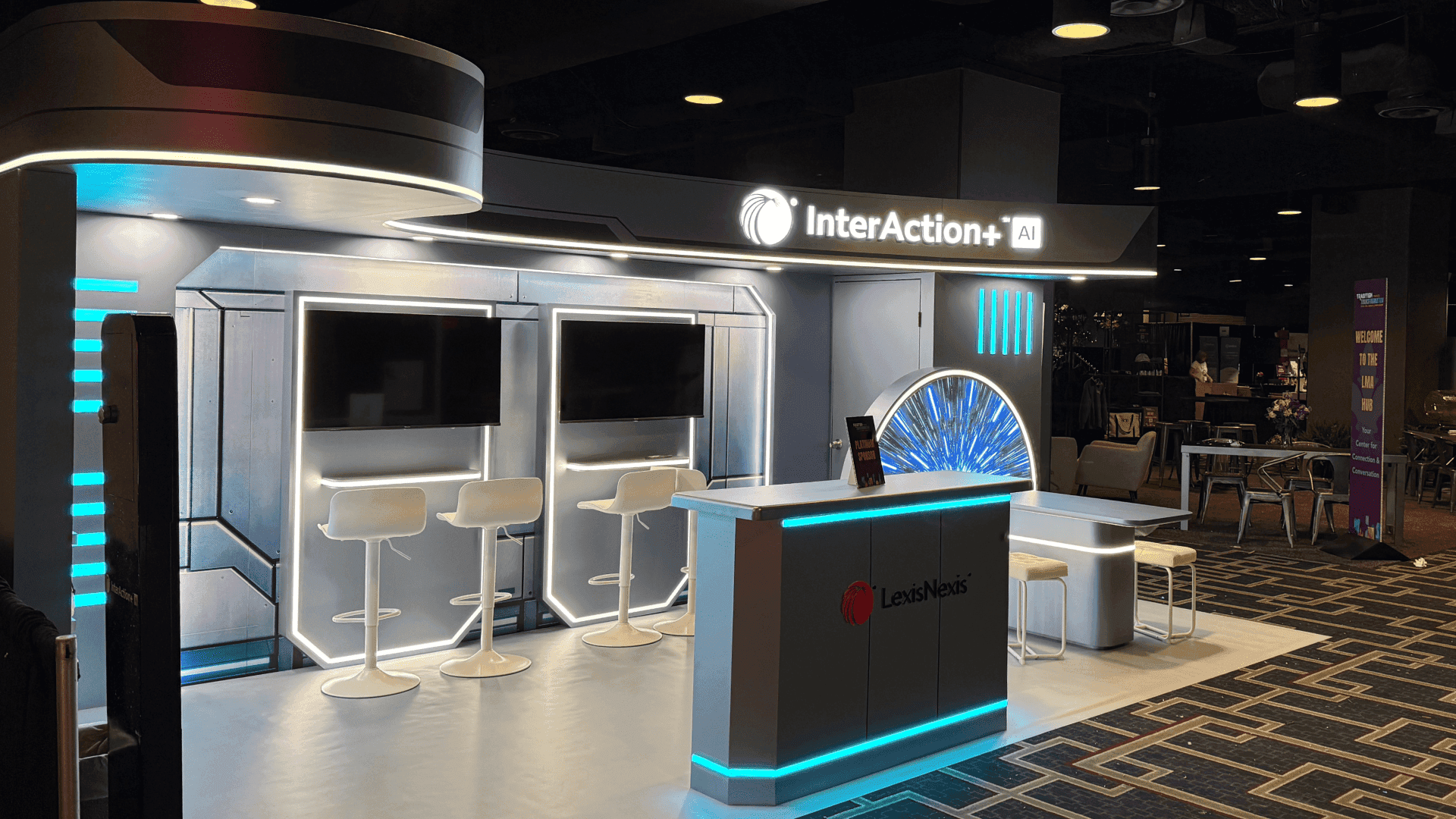
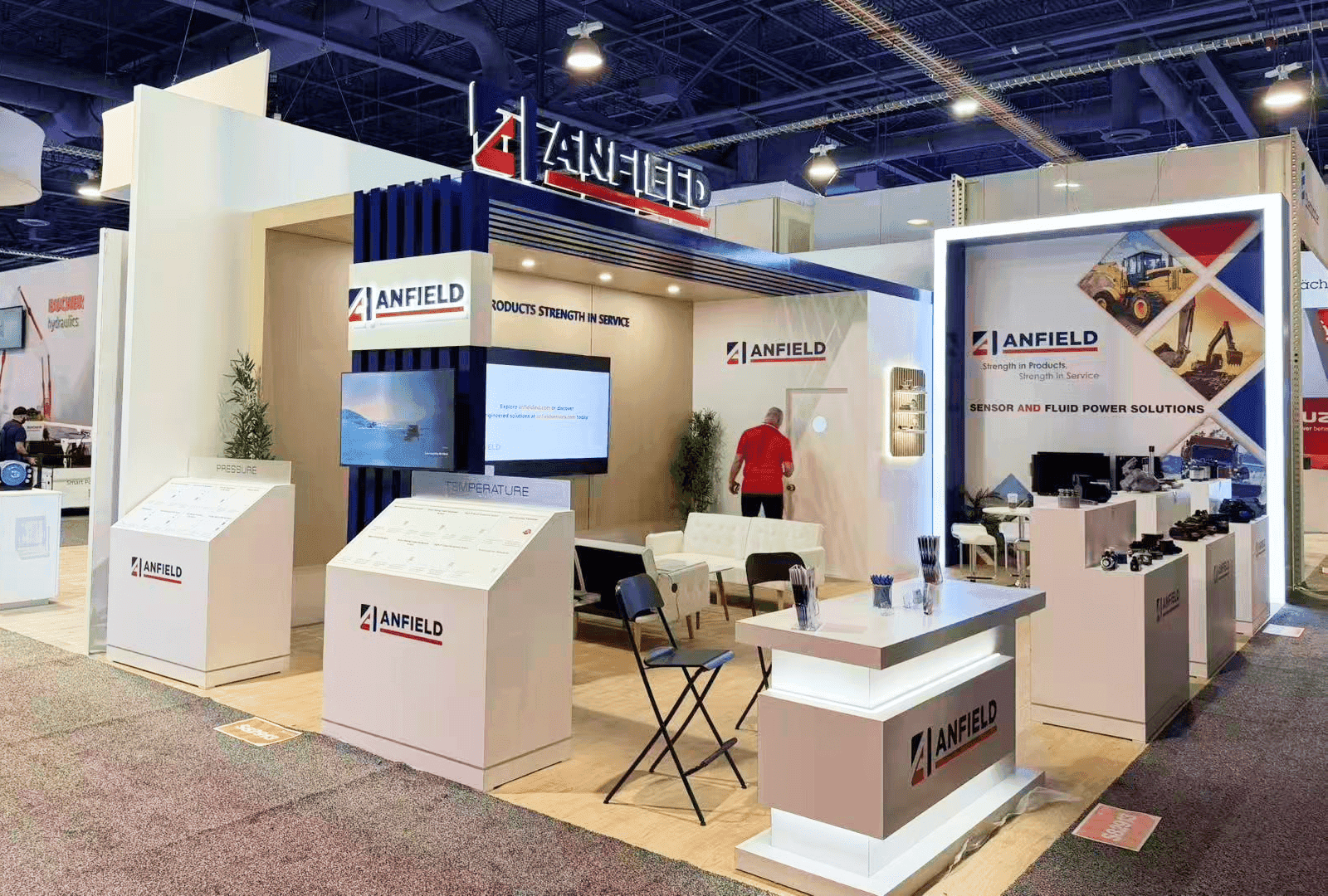
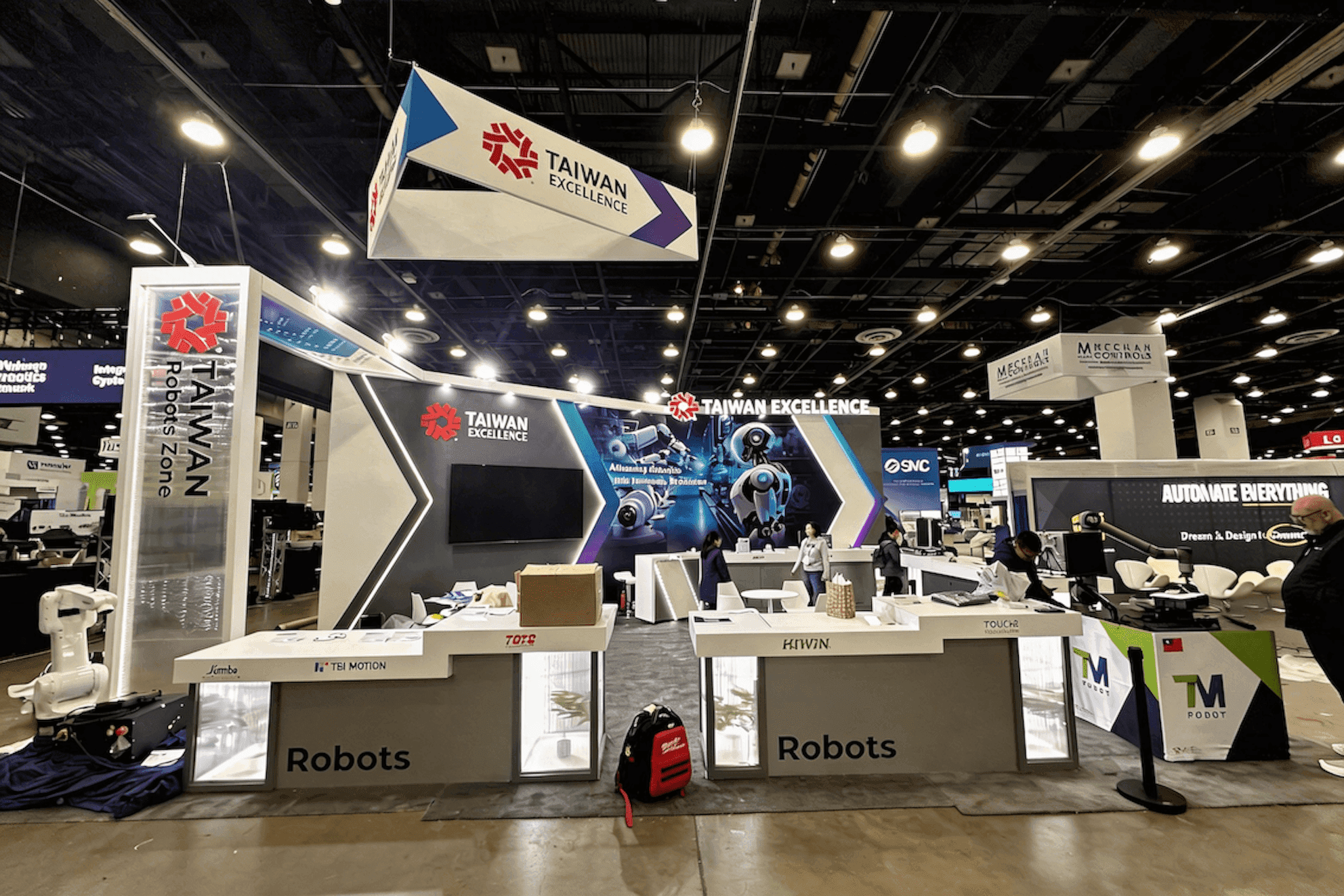
Product demos, walk-up traffic, meetings, and staff availability can all compete for the same Money20/20 booth footprint.
Five Factors That Shape the Space Decision
Product Proximity
A live software demo can put one visitor at the interface, several people around the screen, and another buyer waiting for the technical team. Once those activities overlap, the issue is no longer simply where the screen goes; that is the operating problem behind Money20/20 fintech demo booth planning, where viewing space, active use, staff access, and the handoff into a deeper conversation all begin to shape the footprint.
Privacy
Some discussions need separation from show-floor traffic even after the product itself stops being central. Commercial terms, partnership structures, implementation details, procurement questions, and sensitive operational topics can fall into this group, so the real question is whether that privacy is important enough to justify permanent space inside the exhibit.
Appointment Volume
A team arriving with a strong calendar of pre-booked meetings does not need the booth to carry every deeper discussion. That does not automatically mean the footprint should be smaller; it means more of the space can remain available for product proof, short conversations, qualification, and visitor movement when longer meetings already have another destination.
Walk-Up Importance
Sponsors that rely on spontaneous discovery still need an exhibit that is easy to see, approach, and enter. Adding enclosed rooms or too much seated meeting space can increase nominal meeting capacity while weakening the booth's ability to attract and qualify walk-up visitors, so open access should be protected when discovery remains important.
Staff Overlap
Square footage is not always the real constraint. A technical specialist may be expected to run a demo, answer walk-up questions, and join a scheduled buyer meeting within the same hour, and a larger footprint will not solve that conflict. Before adding space, determine whether the bottleneck is physical capacity or the availability of the people needed to make each interaction work.
Booth-First, Hybrid, or Distributed?
These are planning categories rather than official Money20/20 sponsorship package names. Their purpose is to clarify how much of the buyer journey the booth is expected to carry.
Presence Model | What Stays in the Booth | What Can Move Elsewhere | Use This Model When |
|---|---|---|---|
Booth-First | Product proof, qualification, and deeper product-led discussion | Mainly overflow or conversations needing more privacy | Buyers still need the product or technical team nearby through much of the discussion |
Hybrid | Discovery, product proof, qualification, and short follow-up | Longer commercial, partnership, procurement, or executive meetings | The booth needs to create and qualify interest but not carry the full sales conversation |
Distributed | Brand presence, short product proof, and qualification | Most scheduled and relationship-led discussions | A strong meeting, hospitality, or networking program already carries the deeper conversations |
The main difference is not how much seating each model contains. It is how far through the buyer conversation the booth is expected to carry someone.
For a hybrid program, moving longer meetings elsewhere can keep the exhibit focused on discovery and proof. In that situation, a 20x20 booth may provide enough room for a primary demo or proof area, short staff conversations, circulation, and compact storage without turning the footprint into a meeting suite.
A distributed approach makes more sense when the team already has a strong meeting calendar or hospitality program outside the exhibit. The objective is not to reduce booth size for its own sake, but to avoid paying for permanent exhibit space to support conversations that already have a better setting.
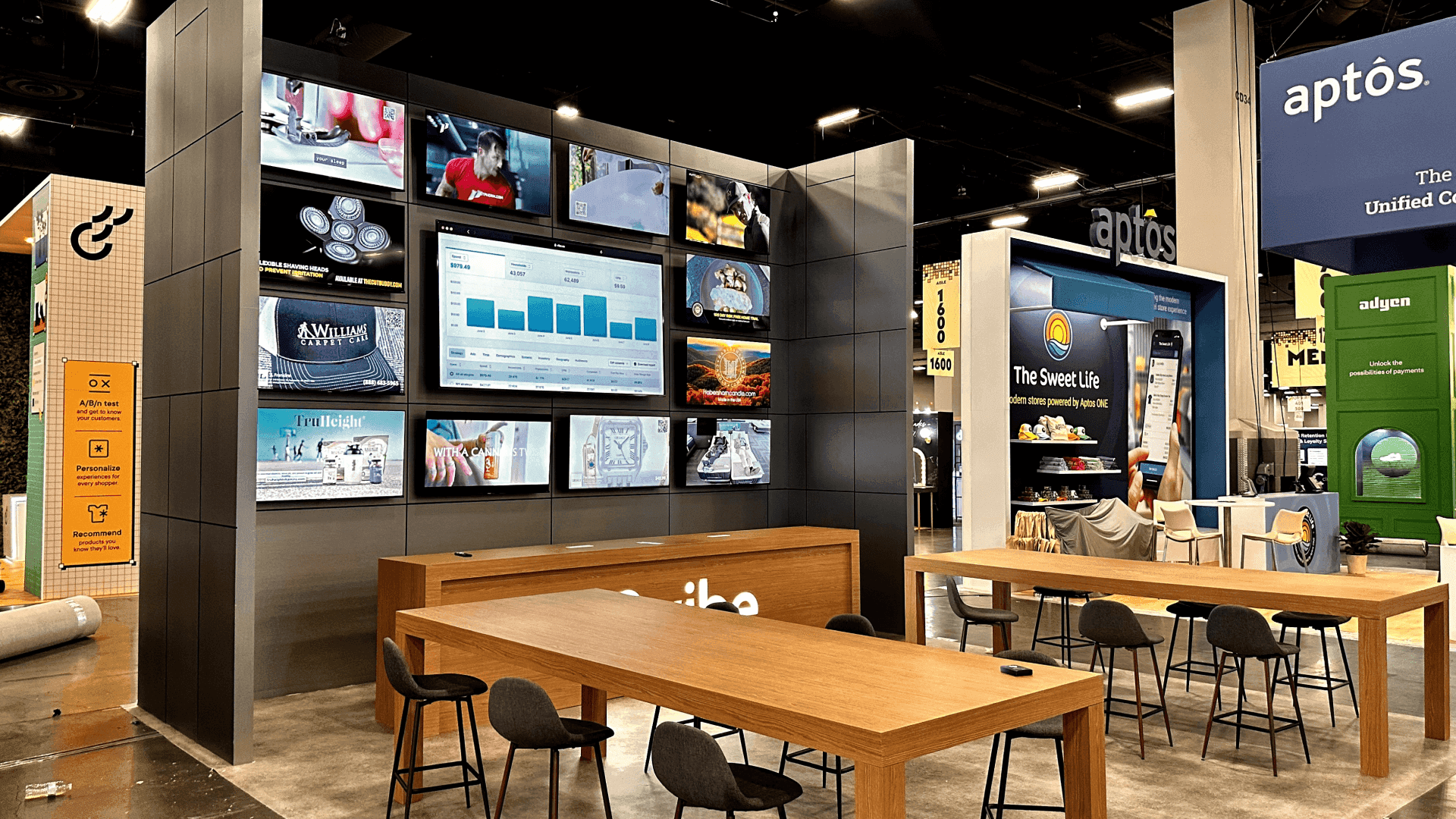
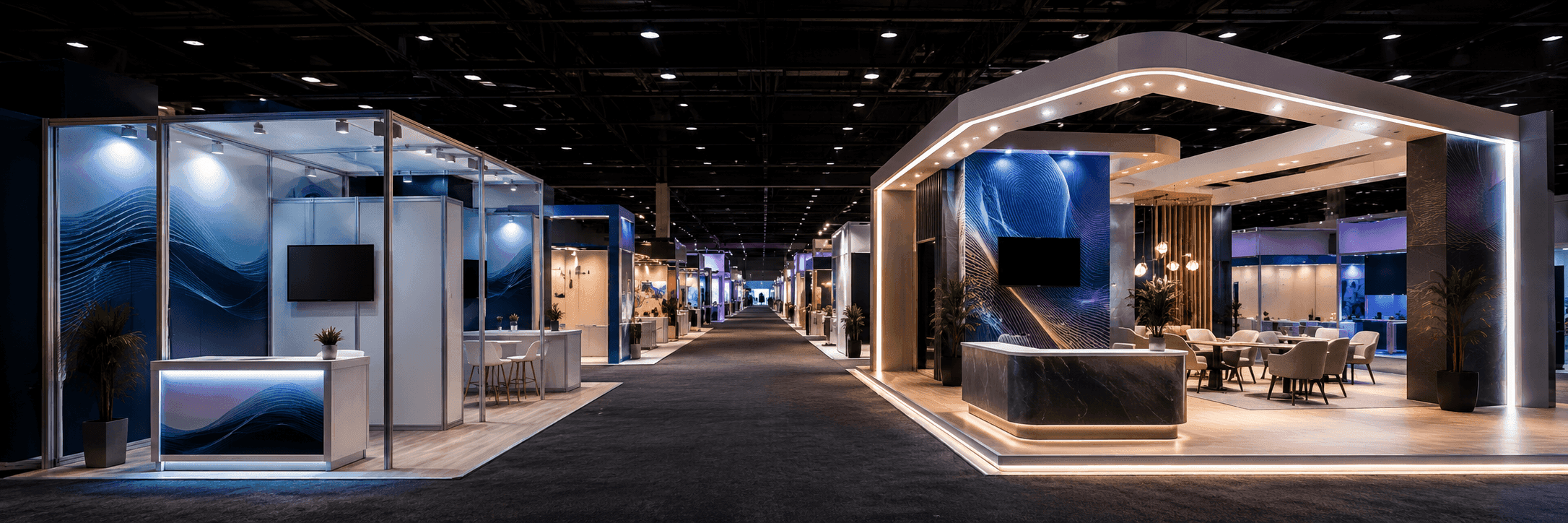
A hybrid Money20/20 presence keeps discovery and product proof in the booth while moving longer buyer conversations to other meeting environments.
When Does a Larger Booth Actually Solve the Problem?
A larger footprint is useful when additional space removes a specific operating conflict. Demo viewers may be blocking staff conversations, scheduled meetings may be taking over areas needed for walk-up traffic, product proof and private discussion may no longer coexist comfortably, or storage may be cutting into usable visitor space.
Ask one question before increasing the footprint:
What specific conflict disappears if the booth becomes larger?
If there is a clear answer, additional floor space may be justified. If the real problem is weak messaging, an inefficient demo, insufficient staffing, or unclear team roles, a larger booth will simply reproduce the same issue at greater cost.
Choose the Build Method After the Presence Strategy
The planning order should remain simple:
Business Activity → Space Allocation → Footprint → Build Method
When the operating model can be supported with modular structure, integrated screens, counters, storage, and practical conversation space, a Las Vegas trade show booth rental may meet the brief without custom-building every element. Custom fabrication becomes more relevant when the program depends on greater privacy, integrated technology, distinctive architecture, or several functional zones that need to work as one environment.
The physical solution should follow the way the Money20/20 presence needs to operate, not the other way around.
FAQ
Should I put a private meeting room inside my Money20/20 booth?
Only when important conversations need both privacy and continued access to the product or team. If the discussion can happen just as effectively elsewhere, permanent booth space may be more useful for product proof, qualification, and visitor movement.
Do scheduled Money20/20 meetings reduce the booth space I need?
They can reduce the amount of meeting capacity required inside the exhibit, but they do not automatically justify a smaller footprint. Demo activity, walk-up traffic, staffing, circulation, and storage still determine how much space the booth needs.
When does a hybrid sponsor presence make more sense than a booth-first setup?
A hybrid model makes sense when the booth needs to attract visitors, prove the product, and qualify buyers, while longer commercial or executive conversations can continue elsewhere without losing access to anything essential.