How Las Vegas Booth Builders Coordinate Graphics, Lighting, and Installation Before Move-In
Published:
Jan 6, 2026
Updated:
Jan 6, 2026

Circle Exhibit Team
Industry professionals
Exhibition industry professional dedicated to delivering the latest insights and curated recommendations to you.
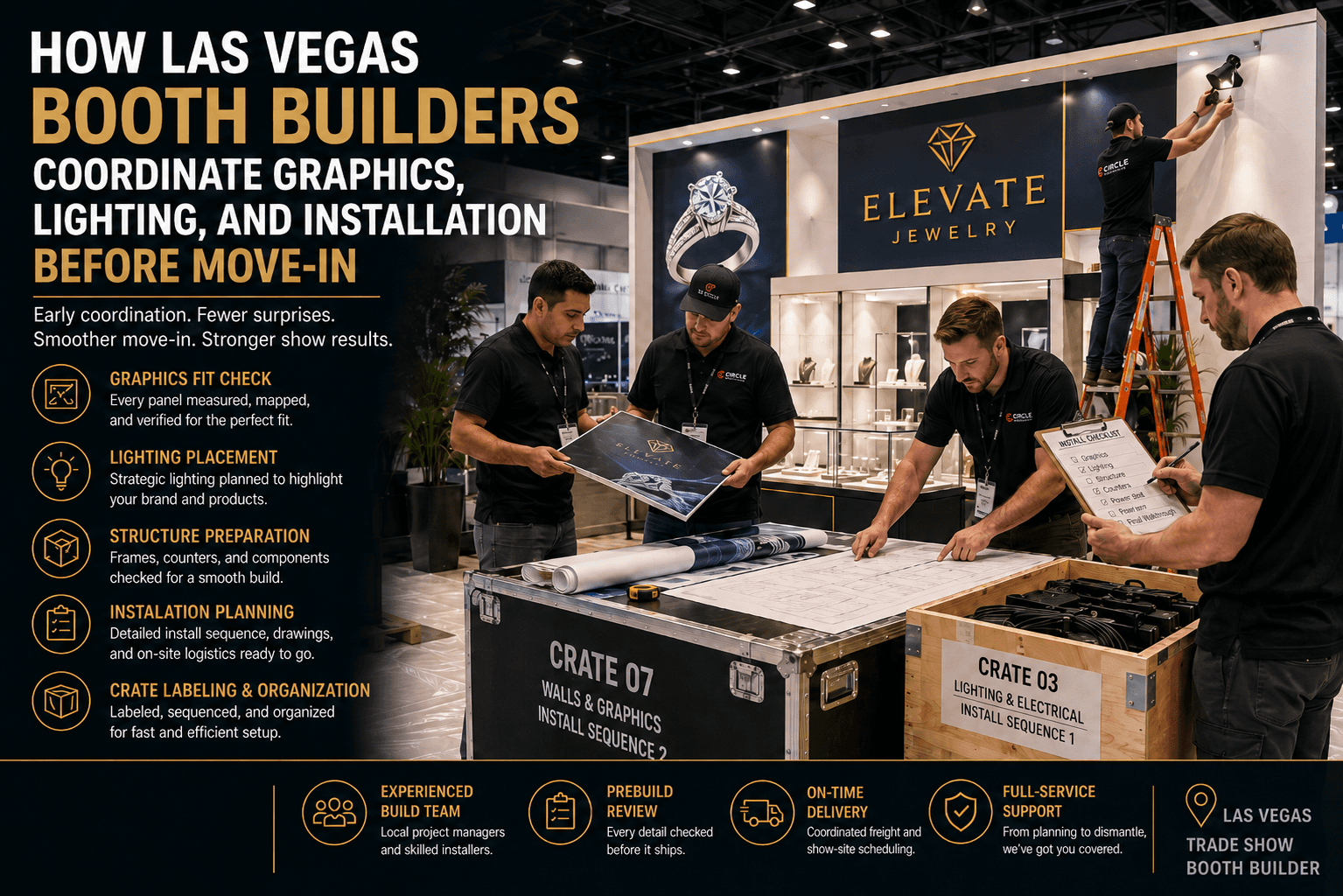
A booth build becomes smoother when graphics, lighting, and installation details are coordinated before freight reaches the hall. Early checks help reduce fit problems, missing parts, lighting conflicts, and setup delays during move-in.
Las Vegas booth builder, booth build support in Las Vegas, booth graphics coordination, trade show booth lighting placement, booth fabrication and prebuild checks, trade show booth installation labeling, crate organization trade show booth, move-in readiness, booth installation planning, on-site installation and dismantle support, graphics and brand presentation coordination, trade show booth structure preparation
Quick Answer: Why should booth builders coordinate graphics, lighting, and installation before move-in?
Booth builders should coordinate graphics, lighting, structure, crate labeling, and installation details before move-in because these elements affect how quickly the booth can be assembled on site. Early coordination helps reduce fit issues, missing parts, lighting conflicts, and installation delays at the venue.
Quick Answer: Why should booth builders coordinate graphics, lighting, and installation before move-in?
Booth builders should coordinate graphics, lighting, structure, crate labeling, and installation details before move-in because these elements affect how quickly the booth can be assembled on site. Early coordination helps reduce fit issues, missing parts, lighting conflicts, and installation delays at the venue.
A trade show booth does not become show-ready only during installation. Much of the real coordination happens before move-in, when the booth team checks graphic fit, lighting placement, structure readiness, crate labels, hardware, and installation sequence. For Las Vegas shows, this pre-move-in work can decide whether the booth setup feels controlled or rushed once materials reach the venue.
Move-In Goes Better When Coordination Starts Earlier
A smoother booth build usually starts before freight reaches the hall.
By the time materials arrive on the show floor, there is limited room for major corrections. If a graphic panel does not fit, a light is aimed at the wrong surface, a crate is mislabeled, or hardware is missing, the installation team has to solve the issue under venue pressure.
That is why booth build support in Las Vegas should connect design, fabrication, graphics, lighting, crate organization, and installation planning before move-in.
The goal is simple:
The crew should not discover basic fit or sequence problems on the show floor.
Pre-move-in coordination usually checks:
graphics fit
structure readiness
lighting placement
hardware and fasteners
install drawings
crate labels
first-needed components
power and AV locations
installation sequence
final punch-list risks
This work is not flashy, but it protects the booth from avoidable setup delays.
Graphics Fit Should Be Checked Before the Booth Ships
Graphics should be checked against the actual booth structure.
A booth graphic may look correct in the design file but still create problems if the panel size, wall frame, SEG channel, counter wrap, lightbox, or installation surface does not match the final structure. These are the kinds of issues that become expensive in time once the booth is already in the venue.
A good graphics check should confirm:
final graphic dimensions
panel order
trim and bleed requirements
fabric or rigid material fit
wall and counter placement
lightbox compatibility
viewing direction
installation method
backup or replacement needs
This is where graphics and brand presentation coordination matters. Graphics are not only brand assets. They are physical booth components that need to fit, align, and install cleanly.
If the graphics are checked too late, the booth may still stand, but the brand presentation can suffer.
Lighting Placement Should Match Graphics, Products, and Visitor Flow
Lighting should be coordinated with the booth layout before move-in.
It is not enough to decide that a booth needs lights. The team needs to know what those lights are supposed to support. A product wall, reception counter, screen area, meeting zone, logo wall, or feature display may each need a different lighting approach.
Lighting placement should account for:
main brand wall visibility
product display focus
screen glare
demo counter lighting
meeting area comfort
aisle-facing visibility
graphic surface finish
electrical access
installation height and mounting points
Lighting can help a booth feel finished, but it can also create problems if it conflicts with screens, graphics, or visitor sightlines.
A light aimed at the wrong surface can wash out a graphic. A fixture installed too late can slow down the crew. A lighting plan that ignores power access can create last-minute cable issues.
Good lighting coordination makes the booth easier to read from the aisle and easier to finish during setup.
Structure Preparation Keeps the Install Sequence Clear
The booth structure should be prepared for the order in which it will be built.
Walls, counters, frames, cabinets, monitor mounts, shelving, flooring, and storage units should not be treated as separate items. They need to be organized around installation sequence.
A structure preparation review should answer:
Which frame or wall installs first?
Which components depend on that first structure?
Where do counters connect?
Which graphics install before lights?
Which hardware is needed for each stage?
Which parts need protection during move-in?
Which components must remain accessible for power or cable work?
This is where booth fabrication and prebuild checks protect the final install. A booth that has been checked before shipping gives the installation crew fewer unknowns on site.
The structure does not need to be complicated to create setup problems.
Even a simple booth can slow down if parts are packed, labeled, or staged in the wrong order.
Prebuild Review Connects Design Intent With Show-Site Reality
A prebuild review helps confirm that the booth can actually be installed as planned.
It is easy for a rendering to look clean. It is harder to make sure every graphic, counter, light, fastener, cabinet, screen mount, and wall section works together in a real move-in window.
A useful prebuild review may check:
Prebuild Item | Why It Matters |
|---|---|
Wall and frame fit | Confirms the booth structure can be assembled cleanly |
Graphics alignment | Reduces panel order, fit, or finish issues |
Counter and cabinet placement | Confirms demo, reception, storage, and meeting zones |
Lighting positions | Prevents glare, dark zones, or fixture conflicts |
Hardware inventory | Reduces missing-part delays during installation |
Crate sequence | Helps the crew access first-needed components |
Install drawings | Gives the on-site team a clear reference |
Punch-list risks | Identifies likely problems before the hall |
The point of a prebuild review is not perfection.
The point is to catch the problems that are easiest to solve before move-in.
Installation Labeling Helps the Crew Move Faster
Labels turn booth parts into an install sequence.
When crates, frames, graphics, counters, shelves, and hardware are labeled clearly, the crew can work faster and with fewer questions. When labels are vague, the crew may waste time searching for the right part or opening crates in the wrong order.
Good labeling should identify:
crate number
booth area
component type
install order
fragile items
graphic panel order
hardware location
first-needed materials
client or show reference
This may sound basic, but it matters during move-in.
A busy Las Vegas convention hall is not the place to guess which crate contains the first wall section or the correct graphic panel.
Clear labeling supports installation speed and reduces avoidable confusion.
Crate Organization Should Match Move-In Priorities
Crate organization should follow the order of the booth build.
A booth can be packed well but still be hard to install if the most important materials are buried. The first two hours of move-in often depend on whether the crew can access floor plans, structure, tools, hardware, and first-stage components quickly.
A practical crate organization plan should separate:
first-stage structure
hardware and fasteners
graphics and printed panels
counters and cabinets
lighting components
AV or monitor mounts
flooring or floor protection
product display elements
tools and spare parts
The first-needed crate should not be the last one opened.
Good crate organization supports move-in readiness because it lets the booth team begin in the right order.
Graphics, Lighting, and Structure Need to Be Checked Together
Graphics, lighting, and structure should not be reviewed separately.
A graphic depends on the wall or frame where it will be installed. Lighting depends on what the booth needs to highlight. Installation depends on which structure goes up first. If each team checks only its own part, conflicts can still show up on site.
For example:
Coordination Issue | What Can Go Wrong |
|---|---|
Graphic wall and lighting not aligned | Important graphics may look dim, washed out, or uneven |
Screen placement and lighting not checked | Glare can weaken demos or video content |
Counter wrap and hardware not reviewed | Final branded surfaces may install late or poorly |
Crates not labeled by sequence | Crew opens materials in the wrong order |
Graphics packed away from wall components | Install slows while teams search for matching panels |
Lighting added after structure review | Power access or mounting conflicts appear during setup |
The booth should be reviewed as one working system.
That is the difference between a booth that looks good in pieces and a booth that installs cleanly.
Move-In Readiness Depends on What Happens Before Freight Arrives
Move-in readiness is not just about freight arriving on time.
A booth may reach the venue but still be difficult to build if the components are not organized, checked, and sequenced. Freight timing matters, but the condition and readiness of that freight matter too.
Before move-in, the booth team should confirm:
booth drawings are final
graphics are complete and packed correctly
lighting locations are reviewed
hardware is inventoried
crates are labeled clearly
first-needed materials are accessible
installation sequence is understood
power and AV requirements are noted
punch-list risks are already identified
Once freight reaches the hall, the crew should be able to start with confidence.
The goal is to reduce decision-making during setup.
Installation Support Should Begin Before the Crew Arrives
Installation support should not start at the venue door.
The on-site crew needs clear information before they begin building. That includes drawings, crate maps, graphic references, lighting notes, hardware locations, and any special instructions for structure, screens, product displays, or storage.
Strong on-site installation and dismantle support should connect pre-show planning with real setup behavior.
A useful installation packet may include:
booth layout
install sequence
crate list
graphics map
lighting notes
hardware notes
power or AV references
client walkthrough priorities
dismantle and repacking notes
The installation team should not have to reverse-engineer the booth on site.
They should know the order of work before the first crate is opened.
Why Las Vegas Booth Builds Need Early Coordination
Las Vegas shows often compress many moving parts into a tight move-in window.
The booth team may need to coordinate freight release, drayage, crew schedule, electrical access, graphics installation, screen mounting, lighting, counters, storage, and final cleaning under venue deadlines. A delay in one part can affect the rest of the booth.
Early coordination is especially important when the booth includes:
large graphics
lightboxes
LED walls or monitors
product demo counters
custom counters or cabinets
modular structures
meeting zones
AV or power needs
multiple crates
tight show opening deadlines
A Las Vegas booth builder is not only building structure.
The builder is coordinating the pieces that make the booth ready for show opening.
What Happens When Pre-Move-In Coordination Is Weak?
The booth may still get built, but the setup becomes reactive.
Weak coordination often creates small problems that stack up:
graphics fit issues
missing hardware
unclear crate labels
lighting conflicts
wrong installation order
delayed counter placement
blocked access to power points
crew waiting for clarification
late-stage punch-list pressure
rushed final cleaning or client handoff
None of these problems needs to be dramatic to hurt the setup.
A booth can lose time through small delays repeated across graphics, lighting, structure, and installation.
Pre-move-in coordination exists to prevent that.
Pre-Move-In Coordination Checklist
A practical checklist helps keep the booth build controlled before materials reach the hall.
Checklist
Are final booth drawings approved and shared with the install team?
Have graphics been checked for size, order, and installation surface?
Are lighting locations aligned with graphics, products, and screens?
Has the booth structure been reviewed for assembly order?
Are hardware and fasteners inventoried?
Are crates labeled by booth area and install sequence?
Are first-needed components easy to access?
Are power, AV, and cable needs noted before move-in?
Does the crew have a graphics map and lighting reference?
Has the team identified likely punch-list risks before setup?
Is dismantle and repacking logic documented?
Can the booth be installed without solving basic questions on site?
This checklist keeps coordination practical.
It helps the booth team arrive with a plan instead of a pile of parts.
Final Takeaway
A Las Vegas booth build becomes smoother when graphics, lighting, structure, fabrication checks, crate labeling, and installation details are coordinated before move-in.
The booth does not become ready only when the crew starts building at the venue. It becomes ready when the team has already checked how the parts fit, how they are packed, how they are labeled, and how they should be installed.
Good coordination reduces show-site risk.
It helps the crew work in the right order, protects the brand presentation, and gives exhibitors a better chance of reaching opening day without rushed corrections.
Move-In Goes Better When Coordination Starts Earlier
A smoother booth build usually starts before freight reaches the hall.
By the time materials arrive on the show floor, there is limited room for major corrections. If a graphic panel does not fit, a light is aimed at the wrong surface, a crate is mislabeled, or hardware is missing, the installation team has to solve the issue under venue pressure.
That is why booth build support in Las Vegas should connect design, fabrication, graphics, lighting, crate organization, and installation planning before move-in.
The goal is simple:
The crew should not discover basic fit or sequence problems on the show floor.
Pre-move-in coordination usually checks:
graphics fit
structure readiness
lighting placement
hardware and fasteners
install drawings
crate labels
first-needed components
power and AV locations
installation sequence
final punch-list risks
This work is not flashy, but it protects the booth from avoidable setup delays.
Graphics Fit Should Be Checked Before the Booth Ships
Graphics should be checked against the actual booth structure.
A booth graphic may look correct in the design file but still create problems if the panel size, wall frame, SEG channel, counter wrap, lightbox, or installation surface does not match the final structure. These are the kinds of issues that become expensive in time once the booth is already in the venue.
A good graphics check should confirm:
final graphic dimensions
panel order
trim and bleed requirements
fabric or rigid material fit
wall and counter placement
lightbox compatibility
viewing direction
installation method
backup or replacement needs
This is where graphics and brand presentation coordination matters. Graphics are not only brand assets. They are physical booth components that need to fit, align, and install cleanly.
If the graphics are checked too late, the booth may still stand, but the brand presentation can suffer.
Lighting Placement Should Match Graphics, Products, and Visitor Flow
Lighting should be coordinated with the booth layout before move-in.
It is not enough to decide that a booth needs lights. The team needs to know what those lights are supposed to support. A product wall, reception counter, screen area, meeting zone, logo wall, or feature display may each need a different lighting approach.
Lighting placement should account for:
main brand wall visibility
product display focus
screen glare
demo counter lighting
meeting area comfort
aisle-facing visibility
graphic surface finish
electrical access
installation height and mounting points
Lighting can help a booth feel finished, but it can also create problems if it conflicts with screens, graphics, or visitor sightlines.
A light aimed at the wrong surface can wash out a graphic. A fixture installed too late can slow down the crew. A lighting plan that ignores power access can create last-minute cable issues.
Good lighting coordination makes the booth easier to read from the aisle and easier to finish during setup.
Structure Preparation Keeps the Install Sequence Clear
The booth structure should be prepared for the order in which it will be built.
Walls, counters, frames, cabinets, monitor mounts, shelving, flooring, and storage units should not be treated as separate items. They need to be organized around installation sequence.
A structure preparation review should answer:
Which frame or wall installs first?
Which components depend on that first structure?
Where do counters connect?
Which graphics install before lights?
Which hardware is needed for each stage?
Which parts need protection during move-in?
Which components must remain accessible for power or cable work?
This is where booth fabrication and prebuild checks protect the final install. A booth that has been checked before shipping gives the installation crew fewer unknowns on site.
The structure does not need to be complicated to create setup problems.
Even a simple booth can slow down if parts are packed, labeled, or staged in the wrong order.
Prebuild Review Connects Design Intent With Show-Site Reality
A prebuild review helps confirm that the booth can actually be installed as planned.
It is easy for a rendering to look clean. It is harder to make sure every graphic, counter, light, fastener, cabinet, screen mount, and wall section works together in a real move-in window.
A useful prebuild review may check:
Prebuild Item | Why It Matters |
|---|---|
Wall and frame fit | Confirms the booth structure can be assembled cleanly |
Graphics alignment | Reduces panel order, fit, or finish issues |
Counter and cabinet placement | Confirms demo, reception, storage, and meeting zones |
Lighting positions | Prevents glare, dark zones, or fixture conflicts |
Hardware inventory | Reduces missing-part delays during installation |
Crate sequence | Helps the crew access first-needed components |
Install drawings | Gives the on-site team a clear reference |
Punch-list risks | Identifies likely problems before the hall |
The point of a prebuild review is not perfection.
The point is to catch the problems that are easiest to solve before move-in.
Installation Labeling Helps the Crew Move Faster
Labels turn booth parts into an install sequence.
When crates, frames, graphics, counters, shelves, and hardware are labeled clearly, the crew can work faster and with fewer questions. When labels are vague, the crew may waste time searching for the right part or opening crates in the wrong order.
Good labeling should identify:
crate number
booth area
component type
install order
fragile items
graphic panel order
hardware location
first-needed materials
client or show reference
This may sound basic, but it matters during move-in.
A busy Las Vegas convention hall is not the place to guess which crate contains the first wall section or the correct graphic panel.
Clear labeling supports installation speed and reduces avoidable confusion.
Crate Organization Should Match Move-In Priorities
Crate organization should follow the order of the booth build.
A booth can be packed well but still be hard to install if the most important materials are buried. The first two hours of move-in often depend on whether the crew can access floor plans, structure, tools, hardware, and first-stage components quickly.
A practical crate organization plan should separate:
first-stage structure
hardware and fasteners
graphics and printed panels
counters and cabinets
lighting components
AV or monitor mounts
flooring or floor protection
product display elements
tools and spare parts
The first-needed crate should not be the last one opened.
Good crate organization supports move-in readiness because it lets the booth team begin in the right order.
Graphics, Lighting, and Structure Need to Be Checked Together
Graphics, lighting, and structure should not be reviewed separately.
A graphic depends on the wall or frame where it will be installed. Lighting depends on what the booth needs to highlight. Installation depends on which structure goes up first. If each team checks only its own part, conflicts can still show up on site.
For example:
Coordination Issue | What Can Go Wrong |
|---|---|
Graphic wall and lighting not aligned | Important graphics may look dim, washed out, or uneven |
Screen placement and lighting not checked | Glare can weaken demos or video content |
Counter wrap and hardware not reviewed | Final branded surfaces may install late or poorly |
Crates not labeled by sequence | Crew opens materials in the wrong order |
Graphics packed away from wall components | Install slows while teams search for matching panels |
Lighting added after structure review | Power access or mounting conflicts appear during setup |
The booth should be reviewed as one working system.
That is the difference between a booth that looks good in pieces and a booth that installs cleanly.
Move-In Readiness Depends on What Happens Before Freight Arrives
Move-in readiness is not just about freight arriving on time.
A booth may reach the venue but still be difficult to build if the components are not organized, checked, and sequenced. Freight timing matters, but the condition and readiness of that freight matter too.
Before move-in, the booth team should confirm:
booth drawings are final
graphics are complete and packed correctly
lighting locations are reviewed
hardware is inventoried
crates are labeled clearly
first-needed materials are accessible
installation sequence is understood
power and AV requirements are noted
punch-list risks are already identified
Once freight reaches the hall, the crew should be able to start with confidence.
The goal is to reduce decision-making during setup.
Installation Support Should Begin Before the Crew Arrives
Installation support should not start at the venue door.
The on-site crew needs clear information before they begin building. That includes drawings, crate maps, graphic references, lighting notes, hardware locations, and any special instructions for structure, screens, product displays, or storage.
Strong on-site installation and dismantle support should connect pre-show planning with real setup behavior.
A useful installation packet may include:
booth layout
install sequence
crate list
graphics map
lighting notes
hardware notes
power or AV references
client walkthrough priorities
dismantle and repacking notes
The installation team should not have to reverse-engineer the booth on site.
They should know the order of work before the first crate is opened.
Why Las Vegas Booth Builds Need Early Coordination
Las Vegas shows often compress many moving parts into a tight move-in window.
The booth team may need to coordinate freight release, drayage, crew schedule, electrical access, graphics installation, screen mounting, lighting, counters, storage, and final cleaning under venue deadlines. A delay in one part can affect the rest of the booth.
Early coordination is especially important when the booth includes:
large graphics
lightboxes
LED walls or monitors
product demo counters
custom counters or cabinets
modular structures
meeting zones
AV or power needs
multiple crates
tight show opening deadlines
A Las Vegas booth builder is not only building structure.
The builder is coordinating the pieces that make the booth ready for show opening.
What Happens When Pre-Move-In Coordination Is Weak?
The booth may still get built, but the setup becomes reactive.
Weak coordination often creates small problems that stack up:
graphics fit issues
missing hardware
unclear crate labels
lighting conflicts
wrong installation order
delayed counter placement
blocked access to power points
crew waiting for clarification
late-stage punch-list pressure
rushed final cleaning or client handoff
None of these problems needs to be dramatic to hurt the setup.
A booth can lose time through small delays repeated across graphics, lighting, structure, and installation.
Pre-move-in coordination exists to prevent that.
Pre-Move-In Coordination Checklist
A practical checklist helps keep the booth build controlled before materials reach the hall.
Checklist
Are final booth drawings approved and shared with the install team?
Have graphics been checked for size, order, and installation surface?
Are lighting locations aligned with graphics, products, and screens?
Has the booth structure been reviewed for assembly order?
Are hardware and fasteners inventoried?
Are crates labeled by booth area and install sequence?
Are first-needed components easy to access?
Are power, AV, and cable needs noted before move-in?
Does the crew have a graphics map and lighting reference?
Has the team identified likely punch-list risks before setup?
Is dismantle and repacking logic documented?
Can the booth be installed without solving basic questions on site?
This checklist keeps coordination practical.
It helps the booth team arrive with a plan instead of a pile of parts.
Final Takeaway
A Las Vegas booth build becomes smoother when graphics, lighting, structure, fabrication checks, crate labeling, and installation details are coordinated before move-in.
The booth does not become ready only when the crew starts building at the venue. It becomes ready when the team has already checked how the parts fit, how they are packed, how they are labeled, and how they should be installed.
Good coordination reduces show-site risk.
It helps the crew work in the right order, protects the brand presentation, and gives exhibitors a better chance of reaching opening day without rushed corrections.
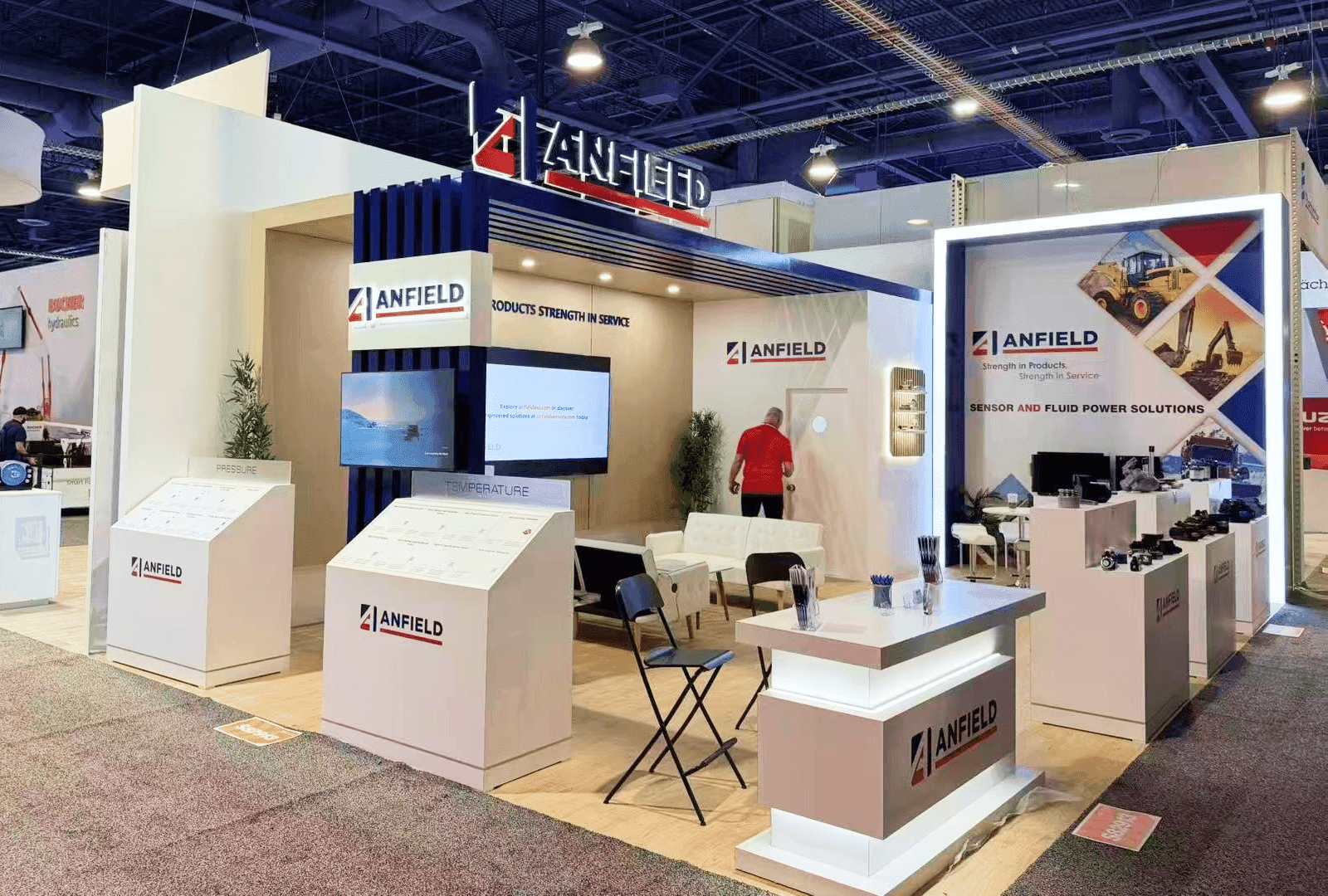
Planning a Las Vegas Booth Build Before Move-In?
Start with booth build coordination, then align graphics, lighting, fabrication checks, crate organization, installation labeling, and show-site setup before freight reaches the hall.
The first two hours of setup can affect floor marking, crate access, structure staging, graphics checks, power confirmation, and final closeout. Circle Exhibit teams help exhibitors plan on-site installation and dismantle support so booth components move into place with a clear crew sequence.
Exhibition Cases
Industry Observation

How Jewelry Brands Should Plan Showcases, Lighting, and Buyer Inspection Areas for JCK Booths

Las Vegas Trade Show Booth Planning Guide: Rental, Size, Drayage, and Installation

Creating Memorable Experiences: The Power of Experiential Events