Start With the Buyer Review Path
Label printing booths can become crowded when samples, screens, press demos, counters, and staff all compete for attention. The first planning question should be simple: how will a buyer move from first interest to a useful conversation?
A good booth should help visitors notice the label printing focus from the aisle, stop at the press demo or strongest sample display, review printed labels at a counter or wall, and then ask more detailed questions about substrate, ink, finish, workflow, or production fit.
This keeps the booth from becoming a wall of samples. It also helps staff guide the conversation instead of trying to explain everything at once.
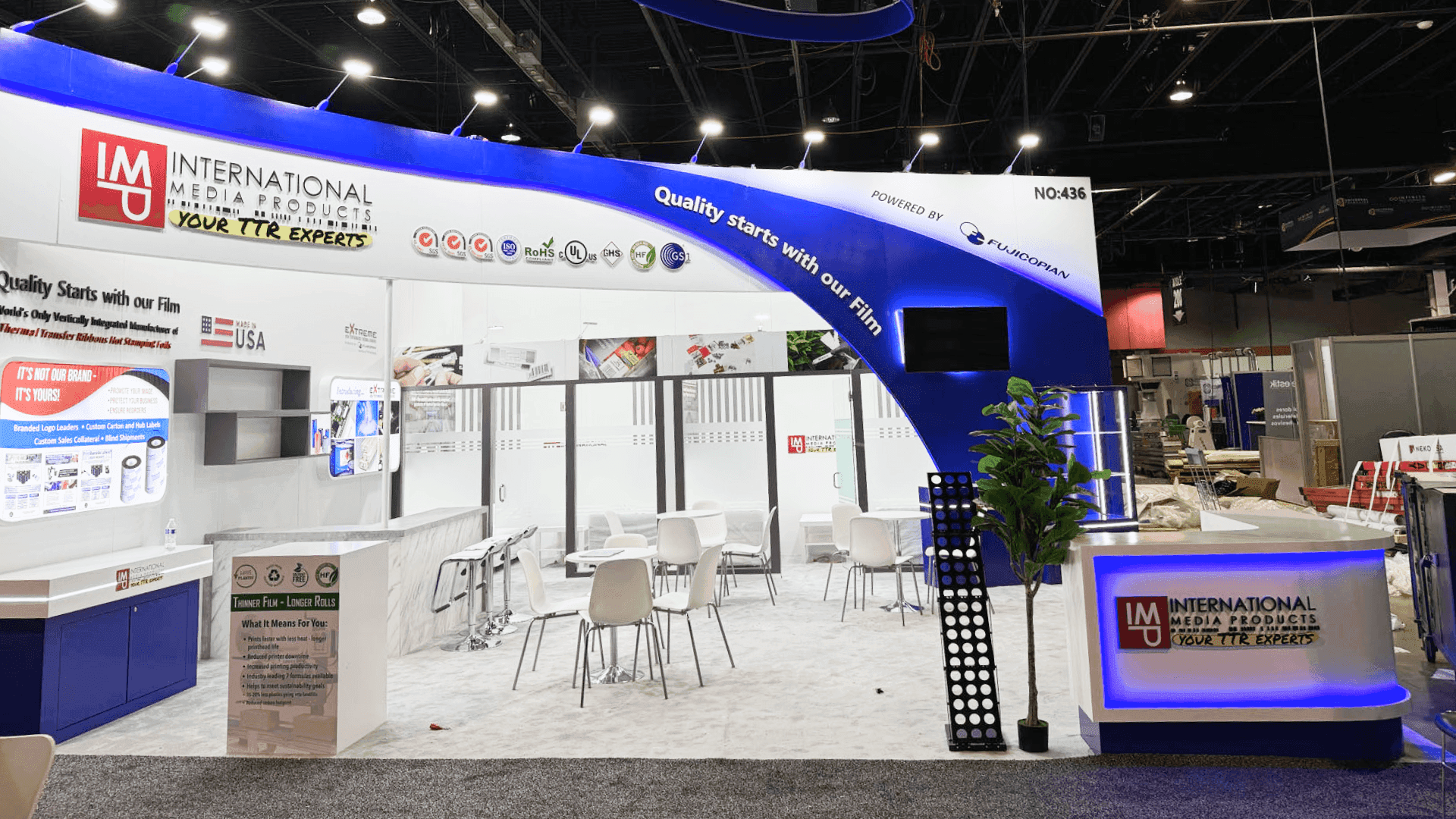
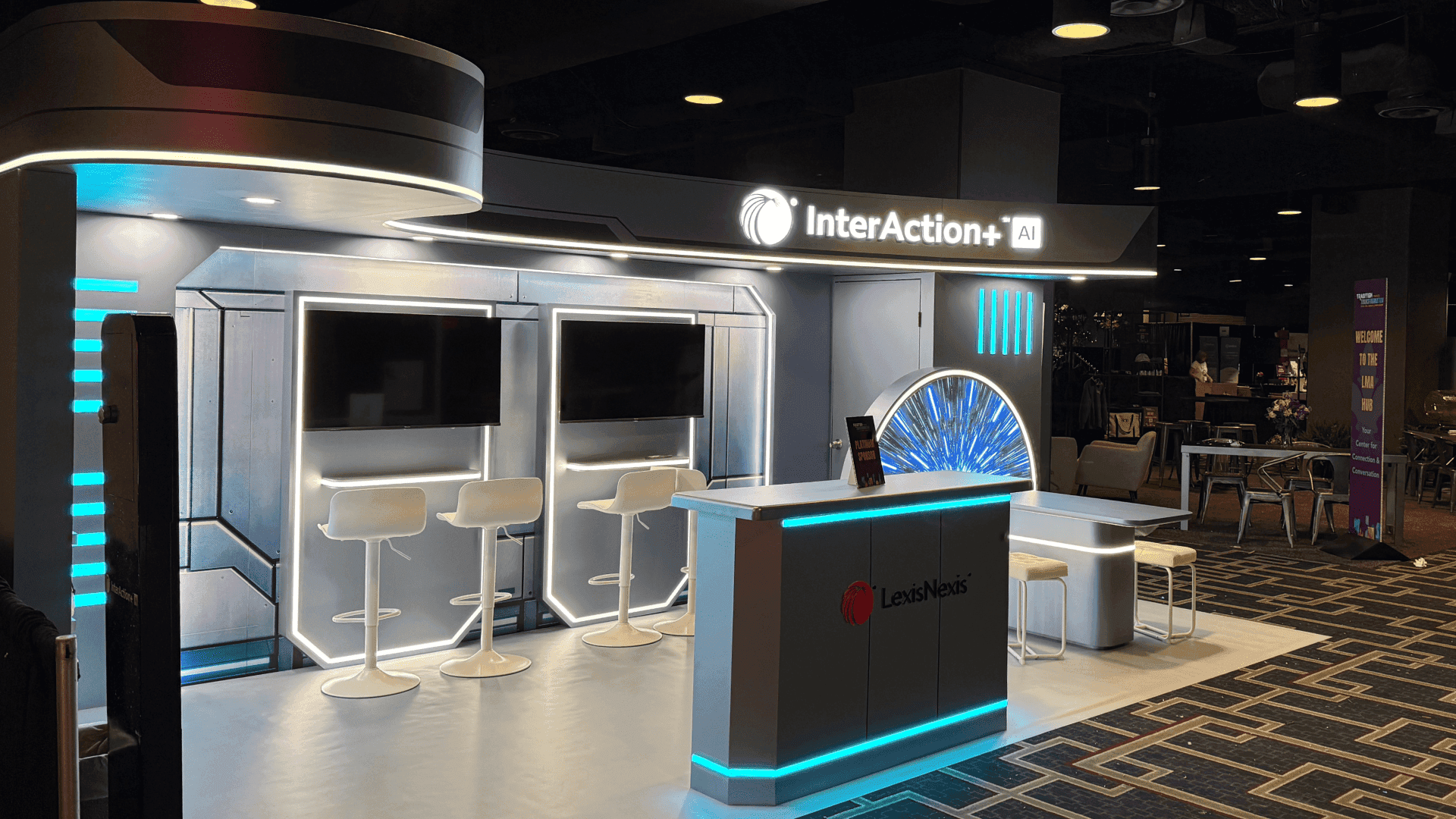
A label printing booth should guide buyers from the aisle to a clear review point where they can inspect samples, ask questions, and continue the conversation without blocking booth traffic.
Label Printing Booth Areas and Their Roles
Booth Area | Main Job | Planning Note |
|---|---|---|
Press demo area | Show the printing process or workflow | Keep it visible, but do not let it block sample review |
Sample wall | Display print quality and label range | Group samples by substrate, finish, application, or print method |
Substrate display | Help buyers compare material options | Use clear category labels and avoid overcrowding |
Demo counter | Support hands-on sample review | Place it close to the sample wall or demo area |
Screen content | Explain workflow or production process | Keep video loops short and focused |
Booth graphics | Clarify category, application, and brand message | Use graphics to guide buyers, not overload the booth |
Storage | Hide sample books, boxes, tools, and backup materials | Keep storage close to staff but out of buyer view |
Staff position | Turn sample interest into qualified conversations | Staff should not stand in front of the main display |
Use the Sample Wall Carefully
A sample wall is useful only when buyers can understand it quickly. If every material, finish, application, and print sample is shown at the same level, the wall becomes visual noise.
A stronger sample wall groups labels around buyer decisions. That may include paper labels, film labels, specialty substrates, pressure-sensitive materials, gloss or matte finishes, foil effects, texture, durability, or end-use applications such as food, beverage, health, beauty, industrial, or retail packaging.
The goal is not to show everything. The goal is to make comparison easier. Clear category labels, product callouts, and controlled booth graphics can help buyers understand what they are looking at before staff steps in. This is where trade show booth graphics and brand presentation should support the booth plan.
For a real Labelexpo reference, the IMP Labelexpo Americas 2024 20x20 booth case study shows how a technical label-supply brand used aisle-facing branding, front counter interaction, product graphics, sample-led conversations, meeting space, and concealed storage to keep booth traffic organized. The related IMP Label Expo project gallery can also help exhibitors review booth photos, display placement, and visitor flow.
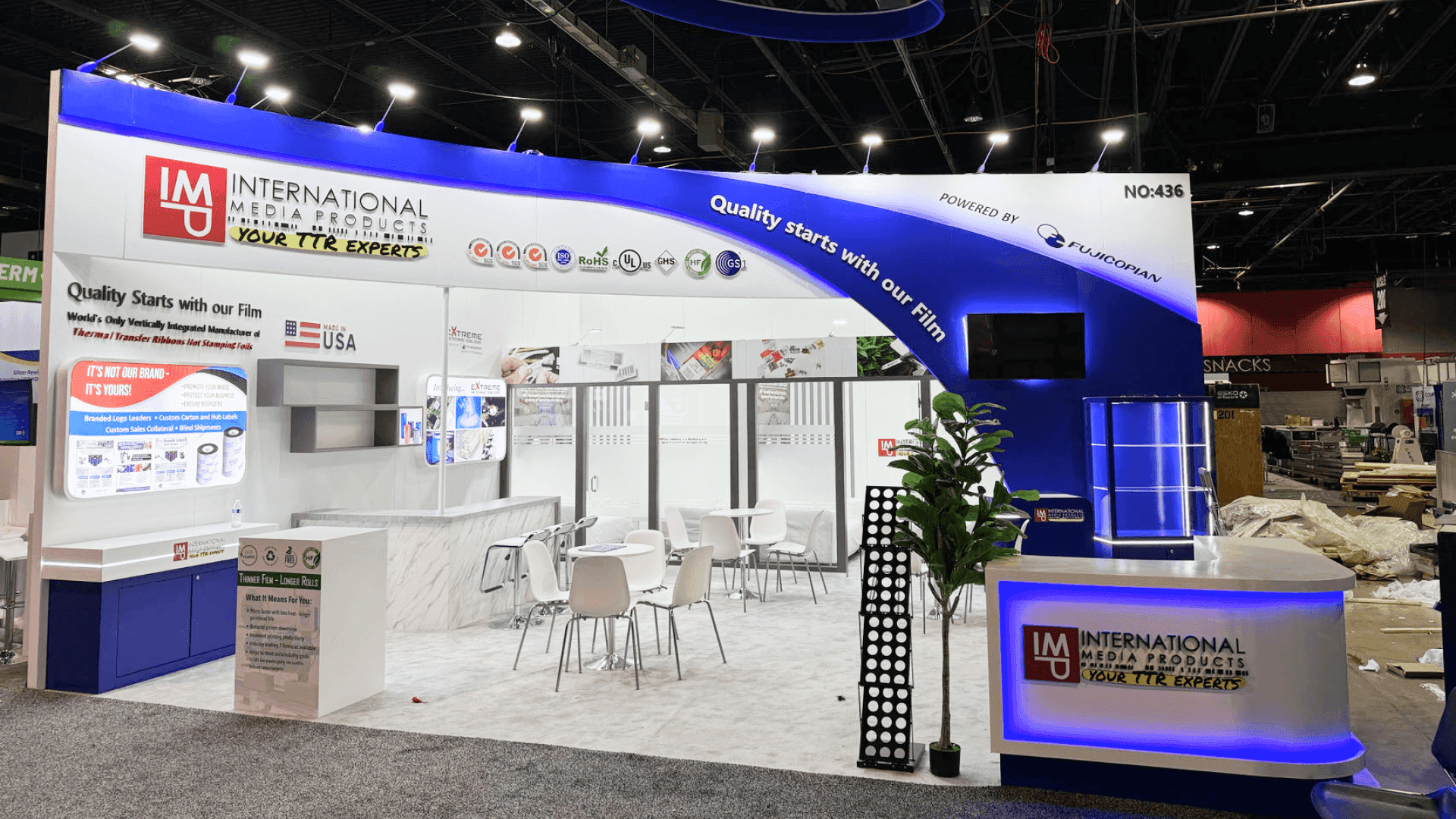
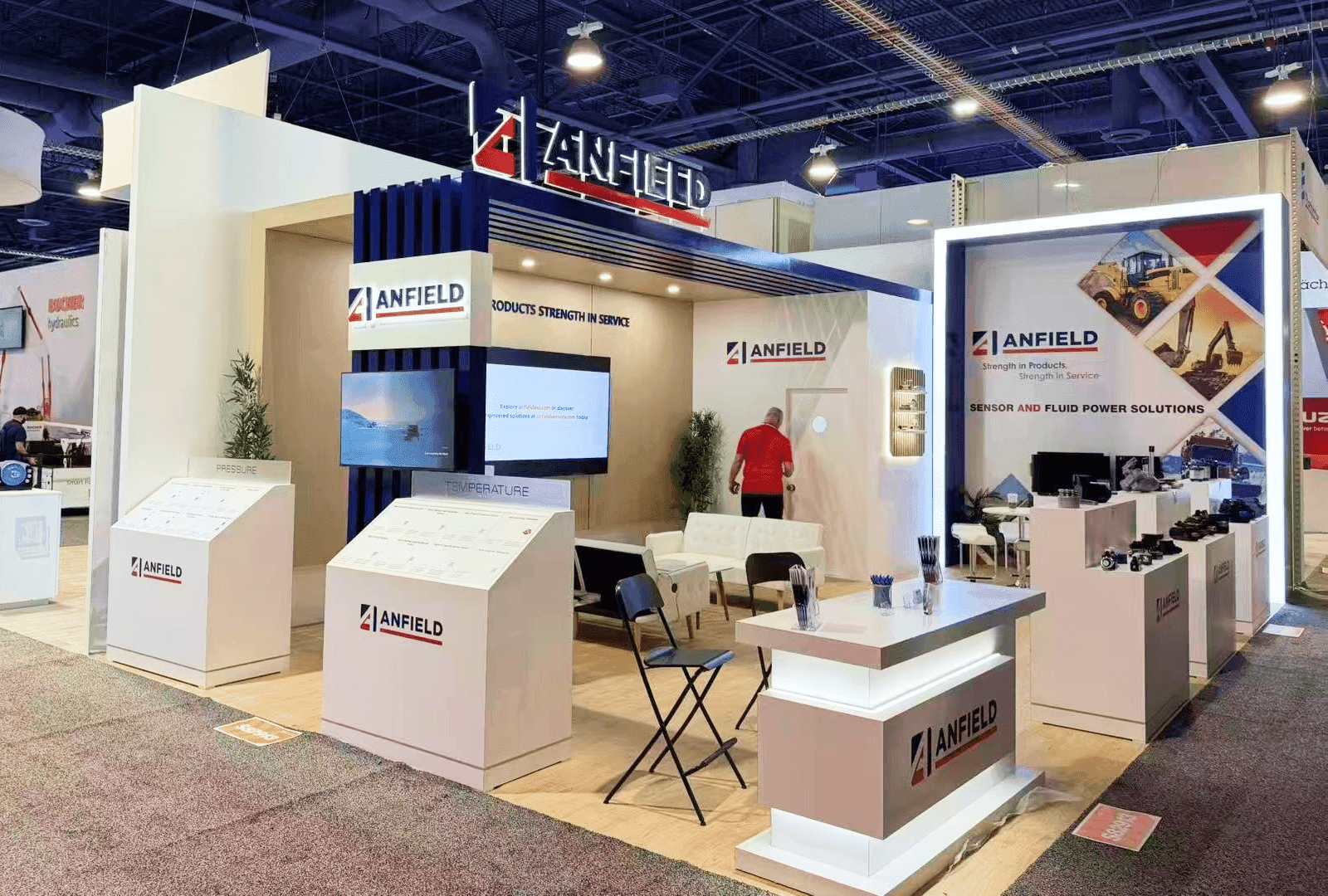
A well-planned label sample wall helps buyers compare substrates, finishes, applications, and print quality without making the booth feel crowded or difficult to read.
Keep the Press Demo Connected to Sample Review
The press demo should not feel separate from the rest of the booth. If a visitor watches the demo but cannot easily move to the sample wall or review counter, the booth loses the moment of interest.
A stronger layout keeps the demo area, sample wall, and buyer counter close enough to support one conversation. This matters because label printing buyers often ask practical questions about print quality, substrate compatibility, color consistency, finishing, workflow, production speed, and application use.
For booths with larger demo equipment, the exhibit plan should also account for footprint, clearance, power, freight timing, and installation sequence before the booth design is finalized. These show-site details often affect how the demo area can actually work on the floor.
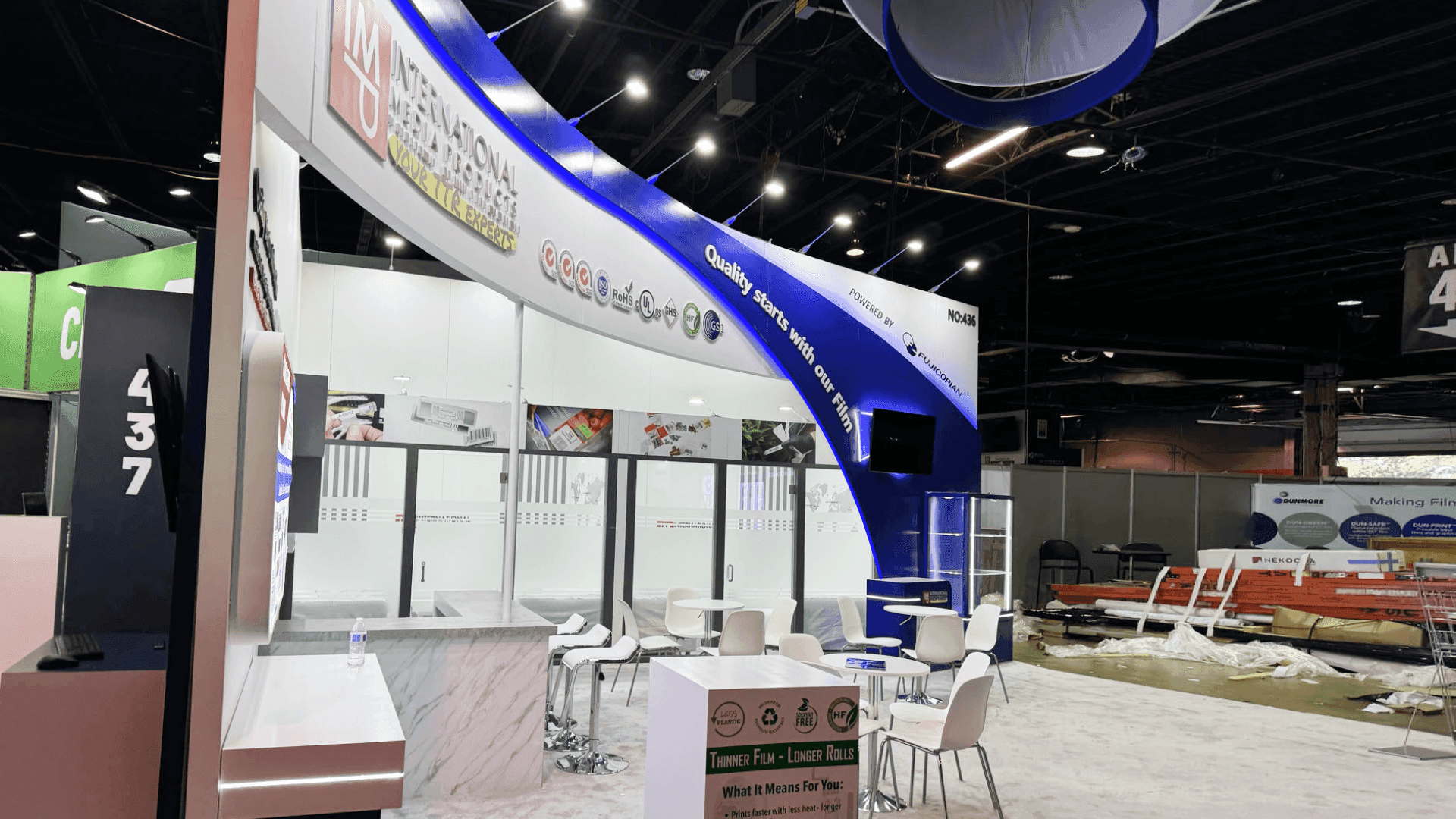
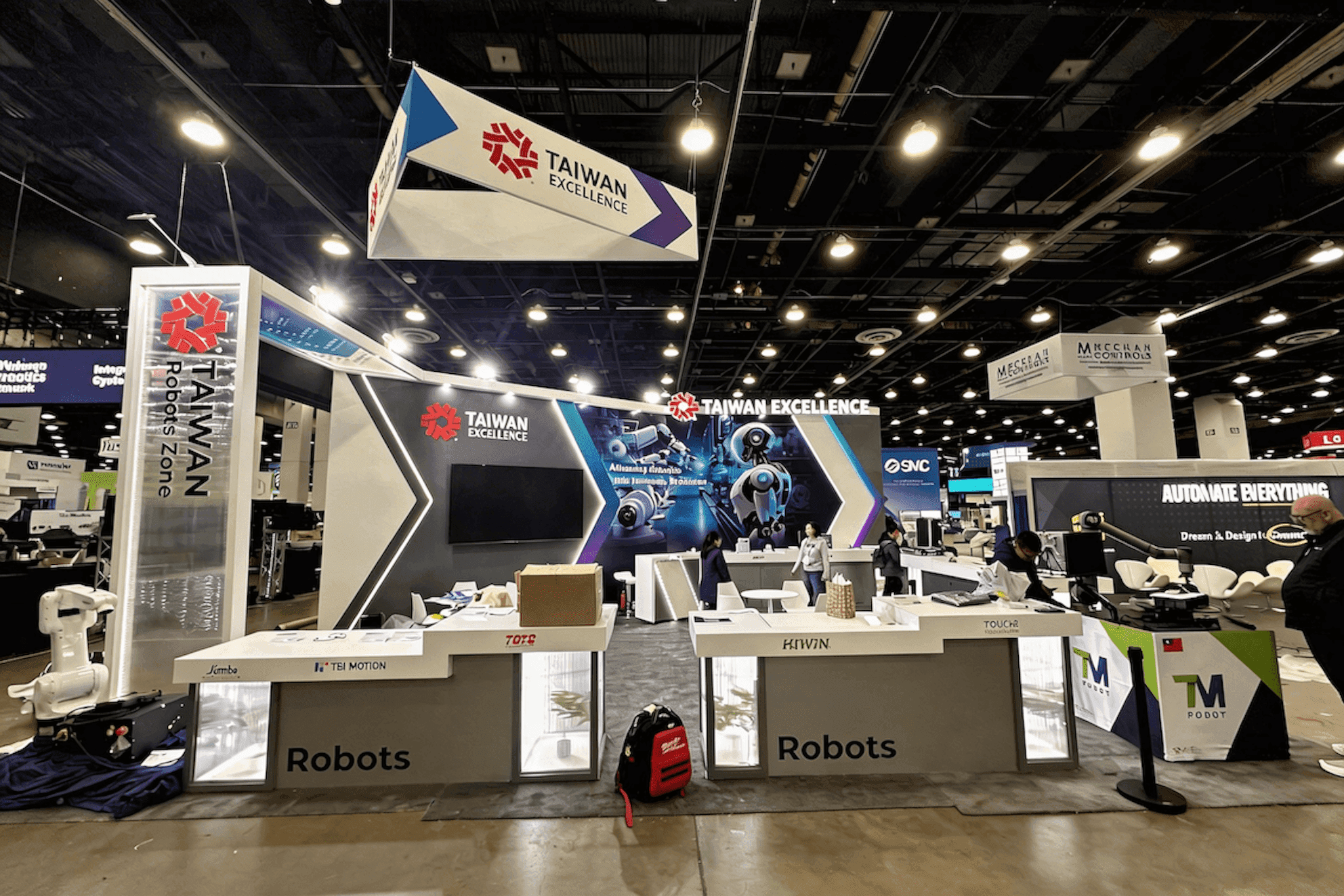
The press demo, sample wall, and buyer counter should work together so visitors can understand the printing workflow, review label samples, and move into technical questions naturally.
When a 20x30 Booth Makes Sense
A 10x20 or 20x20 booth can work for a narrow sample display, but many label printing exhibitors need more working space. A 20x30 booth often gives enough room to separate display, demo, storage, and buyer conversation without moving into a large island booth.
A 20x30 booth may be a better fit when the exhibitor needs a label press demo or workflow feature, a sample wall, a substrate or ink display area, a counter for buyer review, screen content, hidden storage, short meeting space, and clearer staff movement. For exhibitors comparing booth sizes, 20x30 booth planning is a useful reference because it can support both product display and buyer interaction in one layout.
Label Printing Booth Planning Checklist
Before finalizing a LOUPE Americas label printing booth, review these points:
Is the main label printing message clear from the aisle?
Can buyers identify the press demo or strongest sample area quickly?
Are samples grouped by substrate, finish, application, or print method?
Is there counter space for hands-on sample review?
Does the screen explain the workflow without distracting from the samples?
Are storage, tools, sample books, and backup materials hidden?
Can staff answer questions without blocking the main display?
Is lighting planned for print detail, finish, and color review?
Do graphics help buyers understand the product category?
Does the booth size match the demo, sample wall, storage, and traffic flow?
For broader planning, the main LOUPE Americas booth planning page can connect this label printing direction with flexible packaging, finishing equipment, booth size, and show-site setup.
FAQ
What should a label printing booth show first?
A label printing booth should show the clearest sample, press demo, or workflow message first. Buyers should understand the label printing focus before staff begins a deeper technical conversation.
Does a label printing booth need a sample wall?
Most label printing booths benefit from a sample wall because buyers need to compare print quality, substrate, finish, and application. The wall should be organized by buyer decision instead of showing every sample at once.
What booth size works well for label printing exhibitors?
A 20x20 booth can work for a focused sample display. A 20x30 booth is often better when the exhibitor needs a press demo, sample wall, buyer counter, screen content, storage, and short conversations.
Final Takeaway
A LOUPE Americas label printing booth should not be planned as a sample display alone. The booth needs a clear buyer review path from aisle visibility to press demo, sample comparison, technical questions, and follow-up conversation.
Start with the label printing story, then organize the demo area, sample wall, substrate display, counter space, screen content, booth graphics, storage, and staff flow around how buyers actually inspect labels during the show.