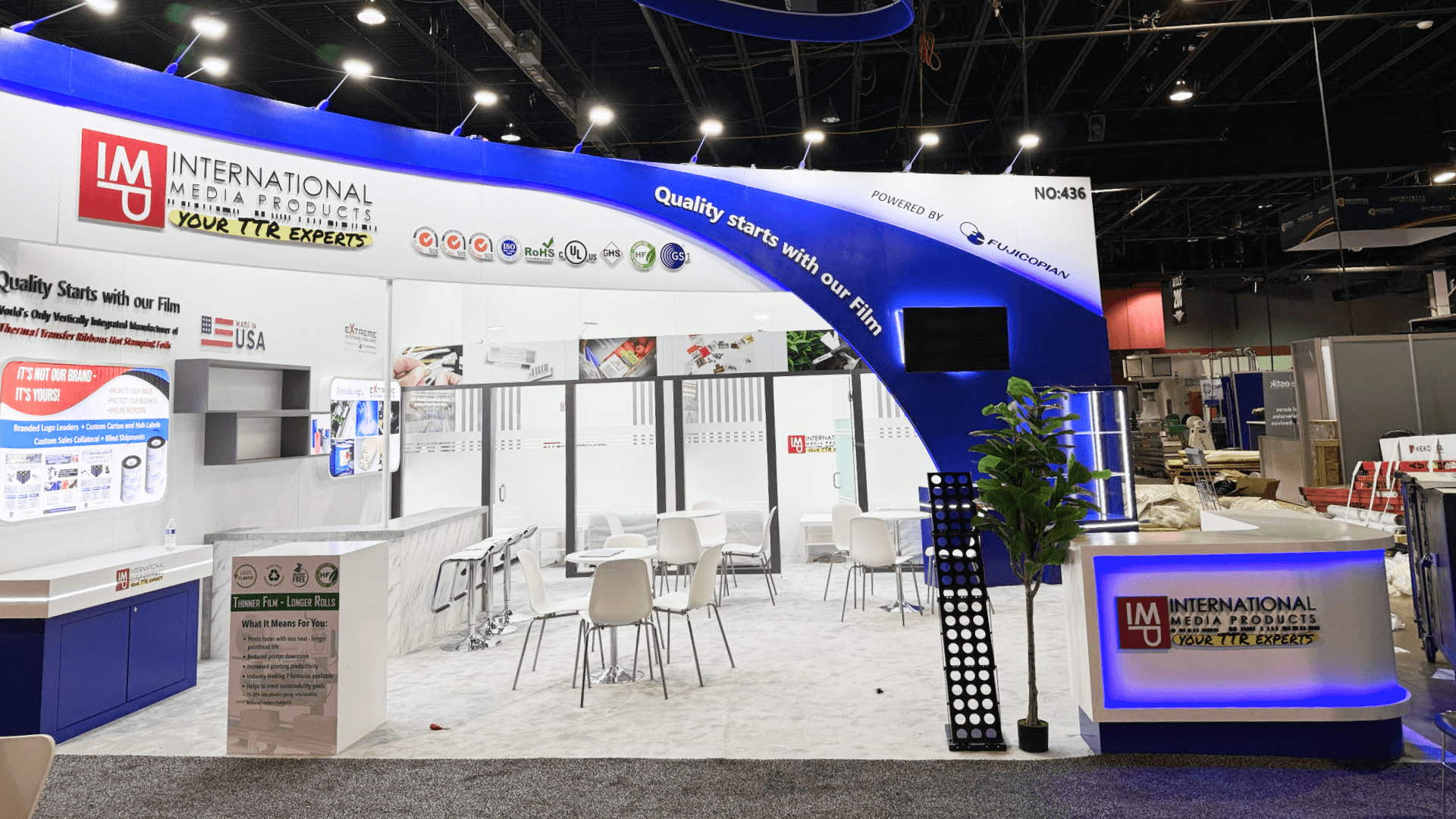
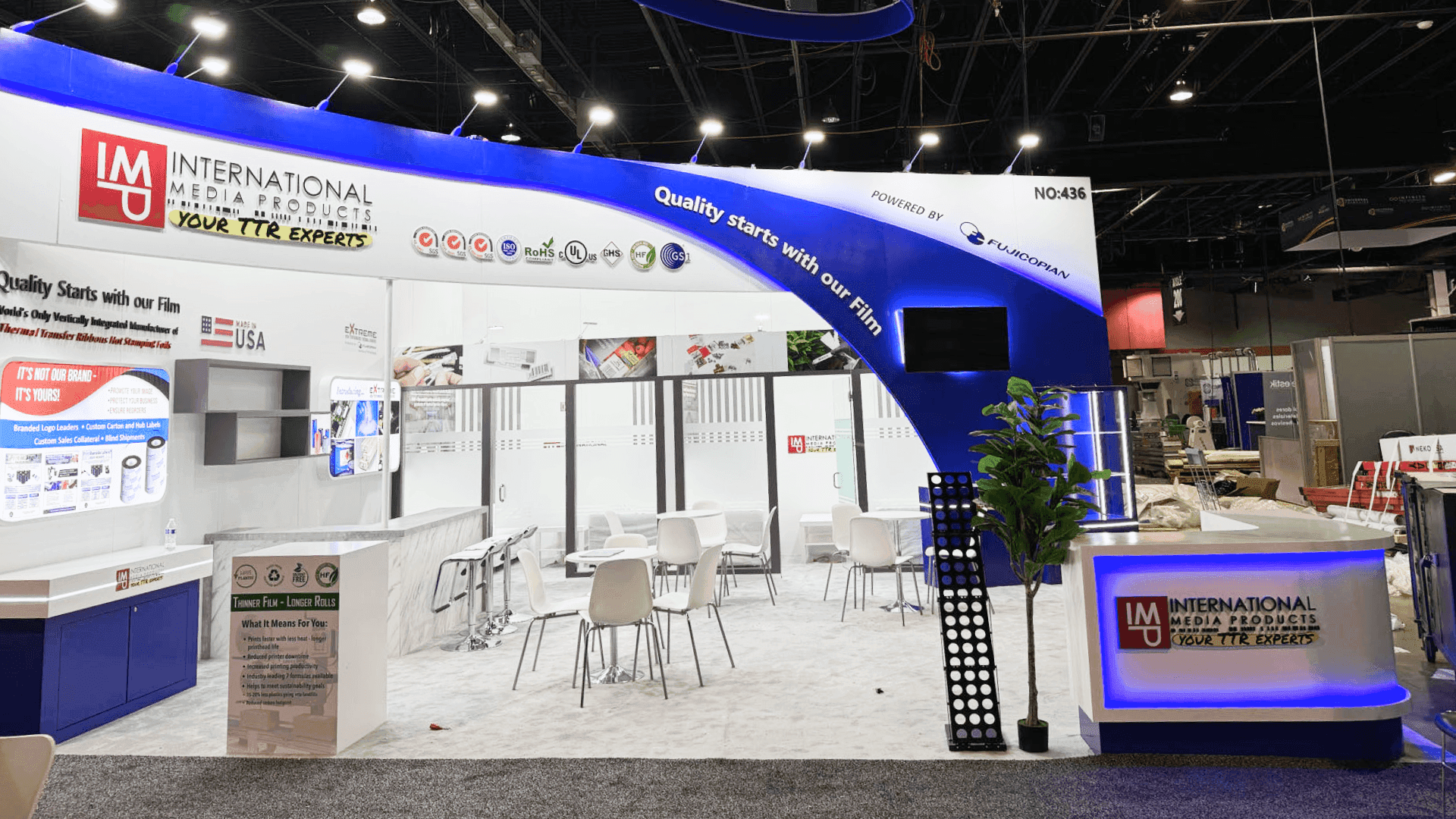
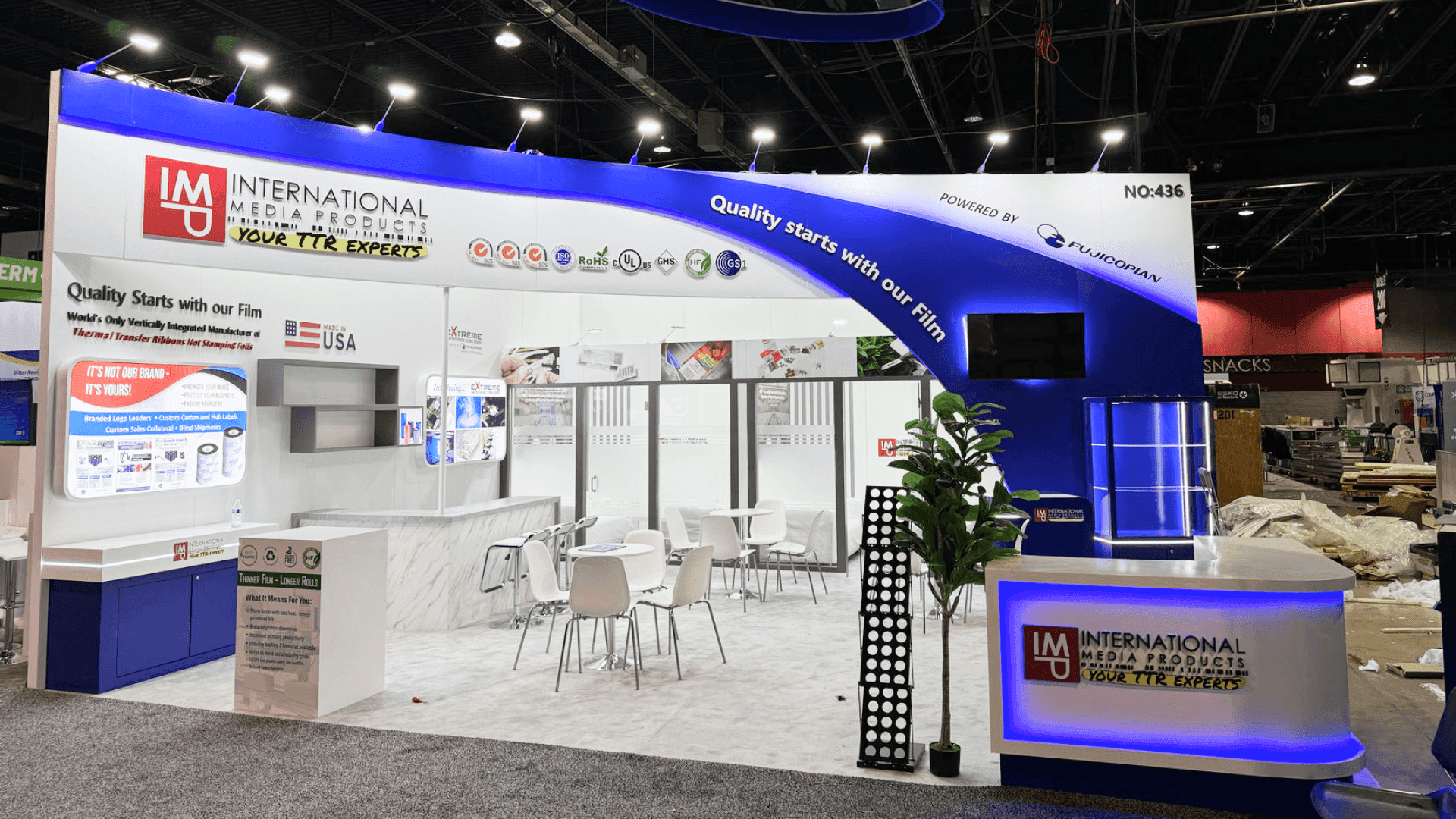
IMP’s Labelexpo Americas 2024 booth was built to sell a technical product with a “fast read” footprint: thermal transfer ribbons, label films, and printing consumables need credibility on first glance, then quick sample-led conversations. We used a bold curved fascia for aisle recognition, a clean front counter for walk-ups, and an enclosed back-wall layout to keep storage and staff reset out of sight. If you’re exhibiting at Labelexpo Americas, the booth usually wins on two things: how clearly the category reads from the aisle, and how smoothly you can move from “spec question” to “sample in hand” without blocking your meeting zone.


💼
Client:
📅
Year/Exhibition:
📍
Location:
📐
Size:
🏢
Industry:
🏢
Venue Context:
Challenge
Label industry buyers don’t stop for “pretty”—they stop for clarity: ribbon grades, resin/wax-resin performance, substrate compatibility, and turnaround reliability. The challenge for IMP was presenting a broad product scope without cluttering the perimeter or burying the meeting area behind sample cases. We also had to plan for show-floor realities: drayage timing, labor call windows, and the need to keep storage concealed so the booth stays clean even when samples and cartons are moving. To keep the schedule predictable, we aligned freight staging and install milestones with logistics and pre-show coordination —so critical structure and graphics landed first, not last.
Design vs. On-site Execution
The design leaned on a high-contrast curved fascia that could be read at “walking speed,” plus a front counter that invites fast qualification conversations. On-site execution was all about sequencing: set the main structure and fascia alignment first, then route power/data cleanly to the reception and display areas, then finish surfaces and graphics so nothing gets scratched during late installs. For a footprint like this, a 20×20 island booth layout is the sweet spot—big enough for meetings and storage logic, but only if the demo/sample flow stays disciplined.
Curved Fascia “Aisle Beacon” + First-Read Category Clarity
The curved header acted as the long-range identifier so buyers could spot IMP before they reached the booth edge. We kept the perimeter visually quiet—letting the fascia and brand block do the work—so the space reads premium instead of crowded.
Reception Counter for Spec Questions + Sample Handoff
The front counter was planned for fast conversations: “What printer model? What label stock? What durability?” Staff can hand off ribbon/film samples and literature without pulling visitors into the meeting area, keeping the booth edge from becoming a traffic jam.
Product Story Panels + Credibility Markers (Certs / Standards)
Back-wall messaging and visuals supported quick trust building—showing applications and quality markers buyers expect in the label supply world. The goal is to shorten the explanation time and move directly into the sample + requirement match.
Meeting Tables + Hidden Storage Reset (Back-of-House Logic)
A quiet meeting zone only works if samples, cartons, and personal items don’t spill into it. We maintained a clean “buyer-facing” edge while keeping storage and staff reset functions tucked behind the scenes.
On-site Highlights
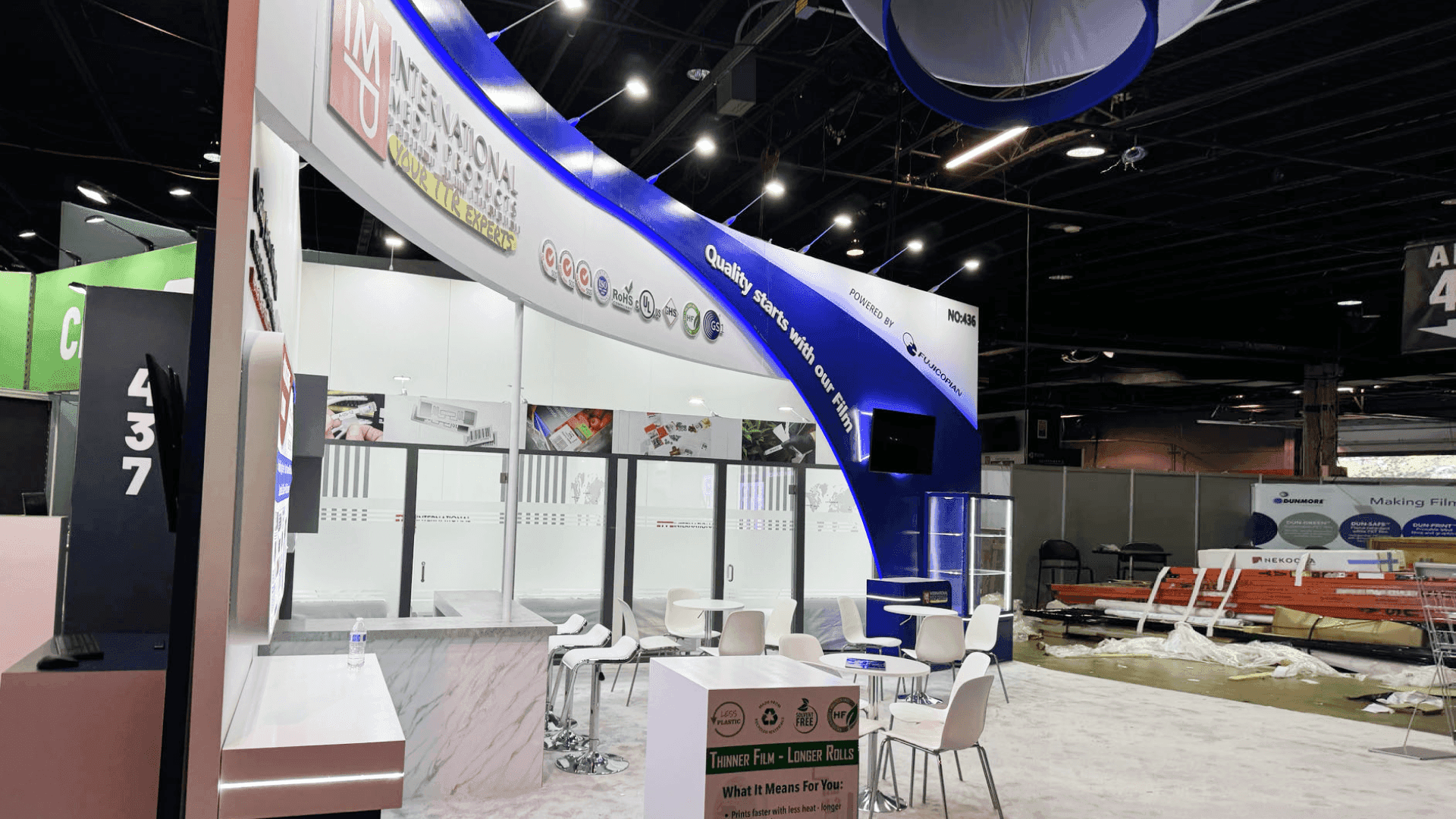
On-site execution focused on clean fascia alignment, predictable drayage timing, and cable discipline—so the booth stayed sharp even during peak move-in.
1.Fascia Alignment + Long-Range Readability Checks (DES Convention Center)
We set and verified the curved fascia geometry early, then checked sightlines from multiple aisles so the brand stayed readable above crowd height and neighboring structures.
2. Power + Data Routing for Reception and Display
We routed electrical and low-voltage lines to keep the reception counter and display areas stable while hiding cable paths behind clean faces—no exposed runs breaking the premium look.
3.Drayage Staging + “Right-Order” Freight Sequencing
We managed drayage timing so critical elements arrived in the correct build order—structure and fascia first, then counters and panels, then finishing—minimizing re-handling on a busy floor.
4.Union Labor Task Sequencing + Finish Protection
We sequenced union labor tasks for install, adjustments, and final checks while protecting high-finish surfaces and edges, keeping the booth photo-clean through closeout.
5.Punch-List Closeout + Buyer-Ready Reset
We completed closeout with leveling checks, door/lock verification where applicable, lighting checks, and a final wipe-down so the booth was client-ready on schedule.
Design Highlights — Curved Brand Signature + Clean Sample-First Flow
Curved fascia for aisle recognition in a crowded label-printing hall
Walk-up counter that supports spec questions and sample handoffs
Clean back-wall storytelling for applications and credibility
Meeting zone separated from edge traffic
Hidden storage logic to keep the booth “quiet” all day
Outcome
Equipment, samples, and process messaging were organized into one clear production story, helping visitors quickly understand how the label printing system connects to packaging and production needs.
Visitors could see the printing equipment, review label samples, and understand packaging applications in one controlled demo path without crowding the display area or interrupting staff conversations.
Fixture placement, power access, and demo visibility were planned together, allowing the booth to support technical presentation needs while keeping the on-site setup cleaner and more predictable.
Open sightlines, controlled display zones, and clean messaging helped the compact booth feel more organized, more technical, and more buyer-ready within a limited 20×20 footprint.
For label and packaging supply brands, the booth has to do two jobs at once: look trustworthy from 20 feet away, and handle sample movement without chaos. We treat these builds like a controlled lab + showroom—clear category read, clean handoff points, and a protected meeting zone.
Q&A
Q: What makes a label-supply booth feel “professional” instead of crowded?
A: A strong top-level brand read, fewer perimeter messages, and one clear walk-up counter for sample handoffs—then keep meetings behind that front lane.
Q: What causes congestion at the booth edge during Labelexpo?
A: Mixing walk-up questions with seated meetings in the same footprint. Separate “fast questions + samples” from “sit-down pricing/spec” zones.
Q: What should teams lock first during move-in?
A: Fascia/structure alignment and power routing. Once those are stable, graphics and finish can be completed without rework.